Using fermentation crocks makes making homemade sauerkraut less intimidating because they come with features that guide you through the process and reduce worries about spoilage. Traditional crocks have weights and water seals to keep out air, while modern ones offer airtight lids and built-in spigots for easy sampling. These tools create a steady environment for beneficial bacteria to thrive, making fermentation straightforward. Stay with us to discover more about choosing the right crock for your fermenting journey.

Get health and wellness essentials delivered free with Prime
- Fast, free delivery on millions of items
- Prime Video, Amazon Music and more included
- Member-only deals all year
Key Takeaways
- Modern crocks with features like airtight lids and spigots simplify the fermentation process and reduce mess.
- Traditional crocks offer a straightforward, manual method that connects you to historic food preservation.
- Both types create a controlled environment that encourages beneficial bacteria growth, making fermentation easier.
- Easy-to-use weights and clear designs help beginners monitor and manage their sauerkraut without guesswork.
- Choosing the right crock improves confidence, ensuring successful fermentation and less intimidation for home cooks.
If you’re interested in making delicious, tangy sauerkraut at home, choosing the right fermentation crock is essential. The process can seem intimidating at first, but the right vessel makes it straightforward and even enjoyable. Fermentation crocks come in a variety of styles, from traditional techniques rooted in history to modern designs that simplify the process. Understanding these options helps you feel more confident as you set out on your homemade sauerkraut journey.
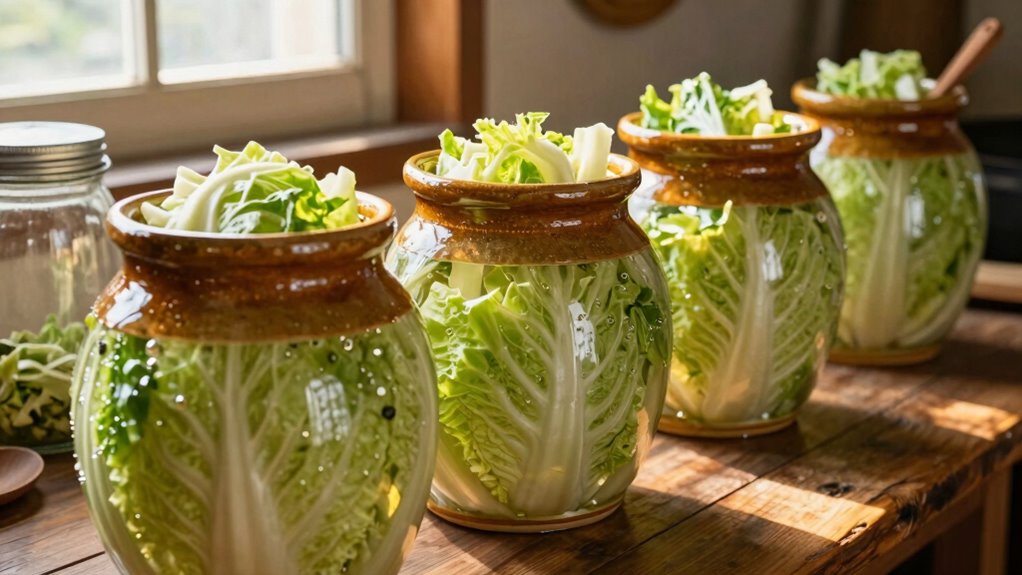
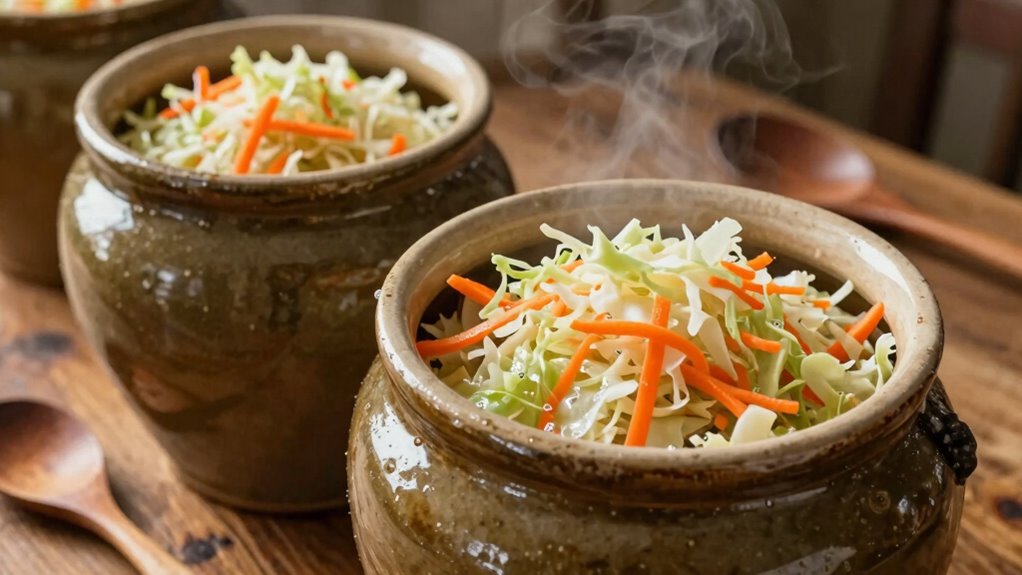
Traditional fermentation techniques often involve ceramic crocks with weights and water seals. These old-fashioned methods have been used for centuries and are prized for their natural, time-tested results. They rely on a simple principle: submerging the cabbage under a brine to keep out air and prevent spoilage. The weight presses down on the cabbage, ensuring it stays submerged, while the water seal creates an anaerobic environment essential for fermentation. These crocks typically have a wide mouth for easy filling and cleaning, and their thick ceramic walls help maintain a consistent temperature, fostering steady fermentation. Though they might seem bulky or old-fashioned, many fermenters swear by their reliability and the rich flavors they produce. Additionally, traditional fermentation techniques often require more manual effort and attention, but many enthusiasts appreciate the hands-on approach. This connection to centuries of fermentation can be quite rewarding for those interested in historic food preservation methods. Proper maintenance of these crocks can also extend their lifespan, making them a worthwhile investment for long-term fermenting projects. Moreover, traditional crocks often develop a unique patina over time, which many collectors and fermenters find appealing.
Traditional ceramic crocks with weights and water seals ensure reliable fermentation and rich, authentic flavors.
Modern crock designs focus on user-friendly features that make the process less intimidating. These often include airtight lids with silicone seals, built-in spigots for easy sampling or draining, and stackable components for compact storage. Some models integrate fermentation weights that are easier to handle, eliminating the need for additional supplies. Modern crocks are designed with convenience in mind, reducing the need for constant monitoring and manual adjustments. They often come with clear instructions or built-in guides, which can be a huge help if this is your first time fermenting. Because they’re made with food-grade materials and innovative engineering, modern crocks allow you to focus more on the craft and less on managing the vessel itself.
Both types of crocks serve the same fundamental purpose: creating an environment where beneficial bacteria thrive, transforming cabbage into tangy sauerkraut. Choosing between them depends on your preferences, kitchen space, and comfort level with traditional versus modern methods. Traditional crocks connect you to centuries of fermentation practices, offering a sense of authenticity and a chance to experience the process as our ancestors did. Modern designs, however, bring convenience, cleaner handling, and often faster results, which can make the whole process less intimidating. Additionally, fermentation environments provided by different crocks can influence the flavor and texture of your sauerkraut. Understanding how different environments impact microbial activity is essential for achieving the desired taste and texture in your finished product. By selecting the right crock, you can create a favorable fermentation environment that encourages healthy bacteria growth. Either way, selecting the right fermentation crock puts you on the path to making delicious, homemade sauerkraut with confidence.
fermentation crock for sauerkraut
As an affiliate, we earn on qualifying purchases.
As an affiliate, we earn on qualifying purchases.
Frequently Asked Questions
How Long Does Homemade Sauerkraut Typically Ferment?
Homemade sauerkraut typically ferments for about 1 to 4 weeks. During this fermentation duration, you’ll notice flavor development as the natural bacteria break down the cabbage, creating that tangy taste you love. You can taste-test periodically to find your preferred level of tartness. Keep it submerged and at a consistent temperature to guarantee proper fermentation. After the desired flavor develops, store it in the fridge to slow down fermentation.
Can Fermentation Crocks Be Used for Other Fermented Foods?
Yes, fermentation crocks are versatile and can be used for other fermented foods like kimchi, pickles, or even yogurt. They offer an easy, traditional alternative fermentation method that’s perfect for experimenting with creative fermentation recipes. With a fermentation crock, you get controlled conditions, making it less intimidating to try new techniques. Plus, they’re great for ensuring even fermentation, resulting in delicious, homemade fermented foods beyond just sauerkraut.
Are Fermentation Crocks Dishwasher Safe?
Fermentation crocks aren’t typically dishwasher safe, so you should hand wash them carefully. Use gentle cleaning tips like warm water and mild soap, avoiding harsh scrubbers that could damage the material. Check the material safety of your crock—most are ceramic or stoneware—before putting them in the dishwasher. Proper cleaning maintains the crock’s integrity and guarantees safe, delicious fermentation every time, making your homemade projects easier and more enjoyable.
What Size Fermentation Crock Is Best for Beginners?
For beginners, a 5 to 7-quart fermentation crock is ideal. It’s large enough to make a good batch of sauerkraut without feeling overwhelming. When choosing the right size, consider your space and how much you want to ferment regularly. Material considerations matter too—ceramic or food-grade plastic crocks are durable and easy to clean. This size strikes a balance, making fermentation approachable and manageable for new enthusiasts.
How Do I Prevent Mold in My Fermentation Crock?
To prevent mold in your fermentation crock, prioritize fermentation safety by keeping everything clean and submerged. Use a proper weight to make certain the cabbage stays below the brine, which inhibits mold growth. Regularly check for any surface mold and skim it off immediately. Keep the crock in a cool, dark place, and maintain a consistent temperature. Proper mold prevention techniques help guarantee your homemade sauerkraut ferments safely and tastes delicious.
ceramic fermentation crock with weights
As an affiliate, we earn on qualifying purchases.
As an affiliate, we earn on qualifying purchases.
Conclusion
Using fermentation crocks can make making homemade sauerkraut feel much easier and less intimidating. Did you know that nearly 90% of Americans who try fermenting see it as a fun and rewarding activity? With the right crock, you’ll enjoy a hassle-free process and delicious results every time. So, don’t hesitate—grab a fermentation crock and start your sauerkraut journey today. It’s simpler than you think, and your taste buds will thank you!
modern fermentation crock with spigot
As an affiliate, we earn on qualifying purchases.
As an affiliate, we earn on qualifying purchases.
As an affiliate, we earn on qualifying purchases.
Cold & flu season Picks
humidifiers
As an affiliate, we earn on qualifying purchases.