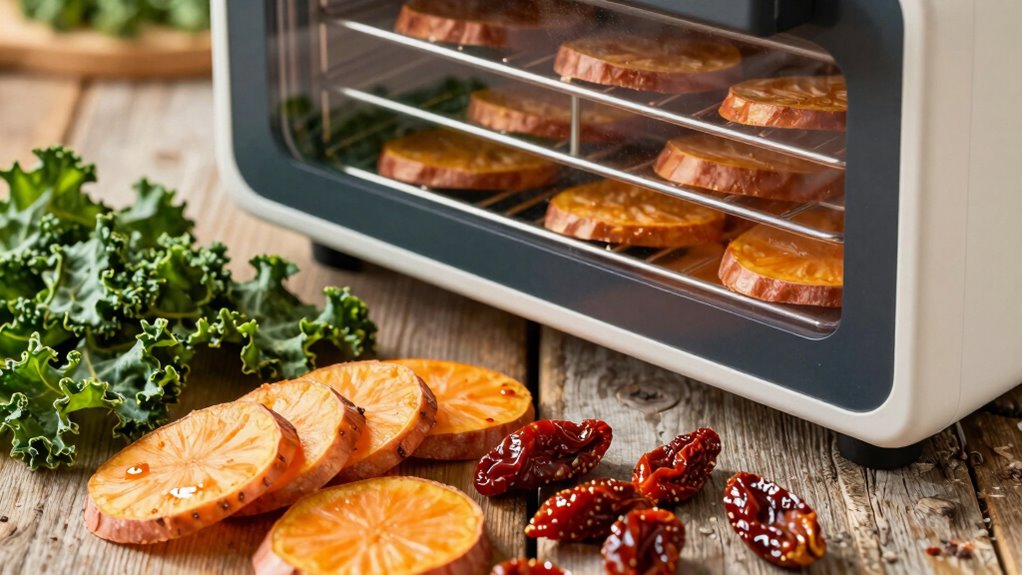

One of the first dehydration mistakes you might make is ignoring proper temperature control. Setting your dehydrator too high can cause almond cheese to melt or burn, ruining the texture, while too low can leave it moist and prone to spoilage. Fruit leather can become brittle or sticky if not dehydrated at the right temperature. Maintaining a consistent environment and patience is key to perfect results. Keep going, and you’ll discover more tips to optimize your vegan snacks.

Get health and wellness essentials delivered free with Prime
- Fast, free delivery on millions of items
- Prime Video, Amazon Music and more included
- Member-only deals all year
Key Takeaways
- Using incorrect dehydration temperatures can ruin snack texture and flavor.
- Overcrowding trays prevents even drying, leading to inconsistent results.
- Rushing the process by opening the dehydrator frequently causes moisture retention.
- Neglecting proper slicing and spacing results in uneven dehydration.
- Not maintaining a consistent environment and temperature affects snack quality and shelf life.
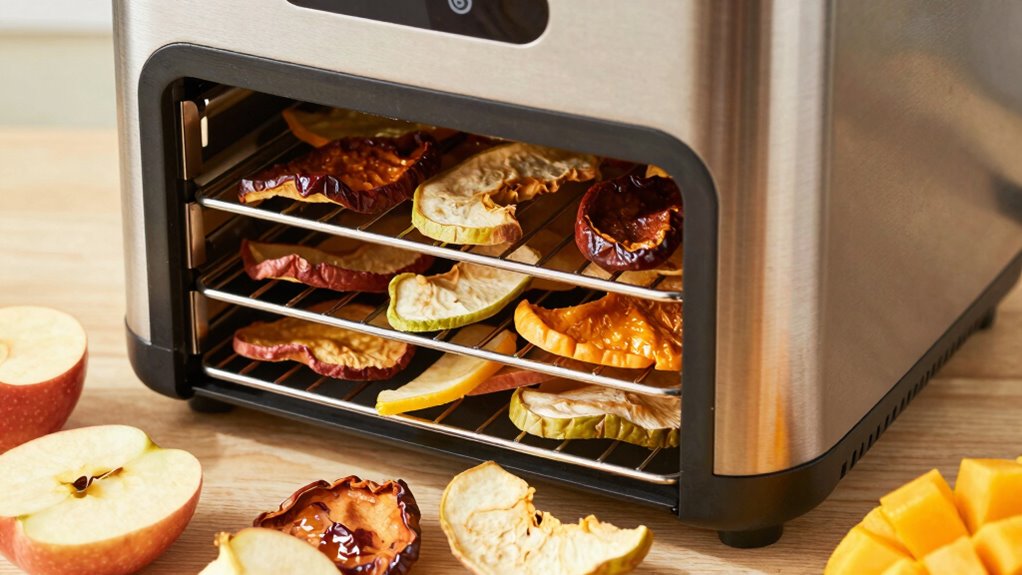
Are you making common dehydration mistakes that ruin your vegan snacks? If you’re new to using a dehydrator, it’s easy to fall into some common traps that can compromise the quality of your treats. One of the biggest errors is not paying attention to temperature settings, which can turn your carefully prepared almond cheese or fruit leather into a tough, flavorless mess. Almond cheese, for instance, requires a specific dehydration process to develop that perfect, creamy texture. If you set the temperature too high, you risk melting or burning it, losing that smooth consistency you’re after. Conversely, setting it too low might leave it too moist, risking spoilage or bacterial growth. The key is to find that sweet spot—usually around 115°F to 125°F—that preserves nutrients and maintains the right texture.
Pay close attention to temperature settings to ensure your vegan snacks turn out perfectly textured and flavorful.
Similarly, when making fruit leather, temperature plays a crucial role in achieving that chewy, pliable finish. If you dehydrate it at too high a temperature, the fruit leather can become brittle or overly dry, losing its vibrant flavor and necessary flexibility. If you don’t dehydrate it long enough or at the right temperature, it’ll remain sticky or soggy, making it difficult to peel or store properly. This mistake is common among beginners who overlook the importance of patience and precise temperature control, resulting in a product that doesn’t last or taste as good as it could. Paying attention to dehydration times and settings can greatly improve your results. Additionally, understanding the ideal dehydration environment ensures consistent, quality outcomes. Proper temperature control is essential to avoid these common pitfalls and achieve optimal results. Maintaining a consistent environment helps prevent fluctuations that can compromise your snacks’ texture and flavor. Being aware of humidity levels is also important, as excess moisture can hinder the dehydration process and impact shelf life.
Another mistake many make is ignoring the importance of proper slicing and spacing. For almond cheese or fruit leather, even slices ensure even dehydration. Overcrowding trays or stacking pieces too tightly prevents air circulation, leading to uneven drying. You might end up with some parts over-dried while others remain damp, which compromises texture and shelf life. Invest in a good layout and make sure each piece has enough space to allow air to circulate freely. This way, your vegan snacks will dehydrate uniformly, retaining the right taste and consistency.
Lastly, some people underestimate the importance of patience. Rushing the process by opening the dehydrator frequently or thinking dehydration happens quickly can ruin your snacks. Almond cheese needs enough time to firm up without becoming brittle, and fruit leather requires patience to reach that perfect chewy point. Trust the process and resist the urge to check constantly—it’s tempting, but it often leads to uneven results. When you pay attention to temperature, spacing, and patience, your vegan snacks will turn out just right, with the ideal flavor, texture, and longevity. Developing a dehydration routine can help you achieve consistent, satisfying results every time.
dehydrator with adjustable temperature control
As an affiliate, we earn on qualifying purchases.
As an affiliate, we earn on qualifying purchases.
Frequently Asked Questions
Can I Dehydrate Wet Vegan Snacks Without Pre-Drying?
You can dehydrate wet vegan snacks without pre-drying, but it’s not ideal. Skipping pre-drying may cause uneven dehydration, risking spoilage or mold. Pre-drying helps improve flavor enhancement and guarantees better texture preservation. It reduces moisture content upfront, making the dehydration process more efficient. For best results, gently pre-dry your snacks to maintain their flavor and texture, and avoid the common mistake of dehydrating wet snacks directly.
How Do I Prevent Sticking When Dehydrating Vegan Snacks?
To prevent sticking when dehydrating vegan snacks, make sure you evenly space them on the dehydrator trays, allowing proper air circulation. Lightly oil or use non-stick sheets to maintain flavor preservation and avoid sticking. Turning or flipping snacks halfway through dehydration enhances texture, guaranteeing they stay intact. Properly prepared snacks will retain their flavor, and the improved texture makes for a delicious, enjoyable vegan treat.
What’s the Ideal Humidity Level for Vegan Snack Dehydration?
Imagine your snacks turning into soggy sponge monsters—that’s what high humidity can do! Keep humidity control tight, ideally around 10-15%, to guarantee your vegan snacks stay crispy and perfect. Lower humidity levels prevent excess moisture from sneaking in and ruining snack texture. With proper humidity control, you’ll create dehydrated snacks that crunch with every bite, maintaining that irresistible, snack-worthy texture everyone loves.
How Long Should Vegan Snacks Typically Be Dehydrated?
You should typically dehydrate vegan snacks for 6 to 12 hours, depending on the snack type and thickness. Use proper dehydration techniques like evenly spacing items and maintaining consistent temperature to guarantee snack preservation. Check your snacks periodically; they’re done when they’re crispy and firm. Proper dehydration prevents spoilage and extends shelf life, making your vegan snacks more enjoyable and long-lasting.
Can I Dehydrate Raw Vegan Snacks at Low Temperatures?
Absolutely, you can dehydrate raw vegan snacks at low temperatures! Nearly 80% of raw food enthusiasts prefer low-temperature dehydration to guarantee flavor preservation and better texture enhancement. Keeping your dehydrator at 105°F or lower helps retain nutrients and natural flavors without compromising the snack’s integrity. This gentle process ensures your snacks stay raw, vibrant, and full of flavor, making them more enjoyable and healthy.
As an affiliate, we earn on qualifying purchases.
Conclusion
Avoiding these dehydrator mistakes is like steering clear of rocky waters—you’ll navigate smoothly toward delicious, crispy vegan snacks. Remember, every slip-up is just a gentle wave teaching you what to tweak. With a little patience and attention, your dehydrator will become a trusty compass guiding you to snack perfection. So, keep experimenting and trust your instincts—soon, you’ll be sailing confidently toward snack heaven, with every bite feeling like a small victory on your flavorful voyage.
As an affiliate, we earn on qualifying purchases.
As an affiliate, we earn on qualifying purchases.
Halloween Picks
halloween
As an affiliate, we earn on qualifying purchases.