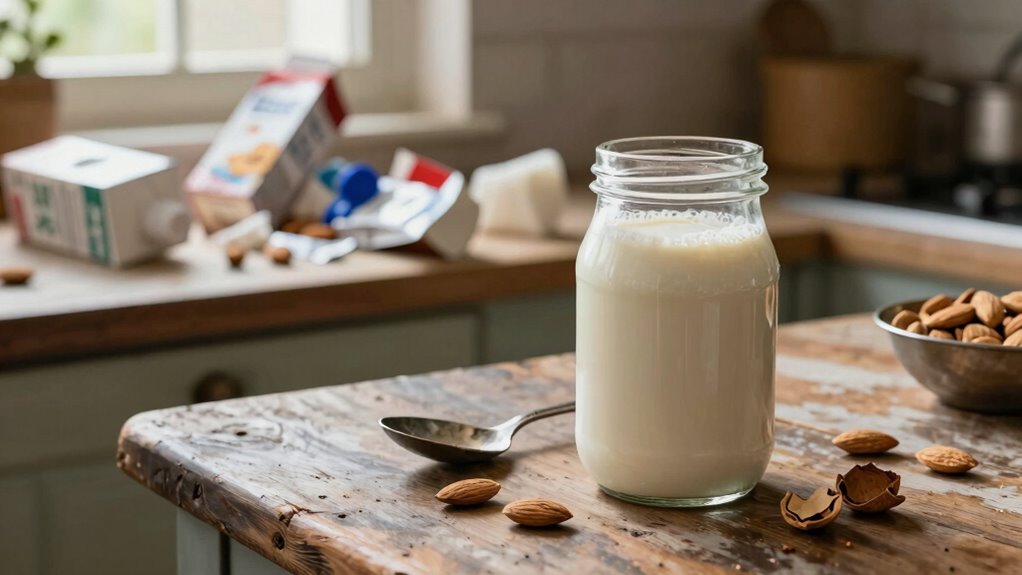

Homemade plant milk isn’t always the most sustainable choice because it can use more water and energy than store-bought versions, especially with ingredients like almonds. The process involves soaking, blending, and straining, which require resources and can result in waste if not stored properly. While it reduces packaging waste, the overall environmental impact may be higher. To understand how these factors balance out and discover ways to make your homemade milk more eco-friendly, keep exploring.

Get health and wellness essentials delivered free with Prime
- Fast, free delivery on millions of items
- Prime Video, Amazon Music and more included
- Member-only deals all year
Key Takeaways
- Homemade plant milk often requires significant water and energy for soaking, blending, and boiling, which can outweigh its environmental benefits.
- Shorter shelf life increases waste from spoilage, reducing the eco-friendly advantage of homemade options.
- Ingredients like almonds demand high water usage, making their sustainability questionable compared to store-bought alternatives.
- Production processes at home may be less efficient, leading to higher resource consumption than commercial manufacturing.
- Sourcing ingredients sustainably and using energy-efficient methods is essential; otherwise, homemade milk may have a larger environmental footprint.
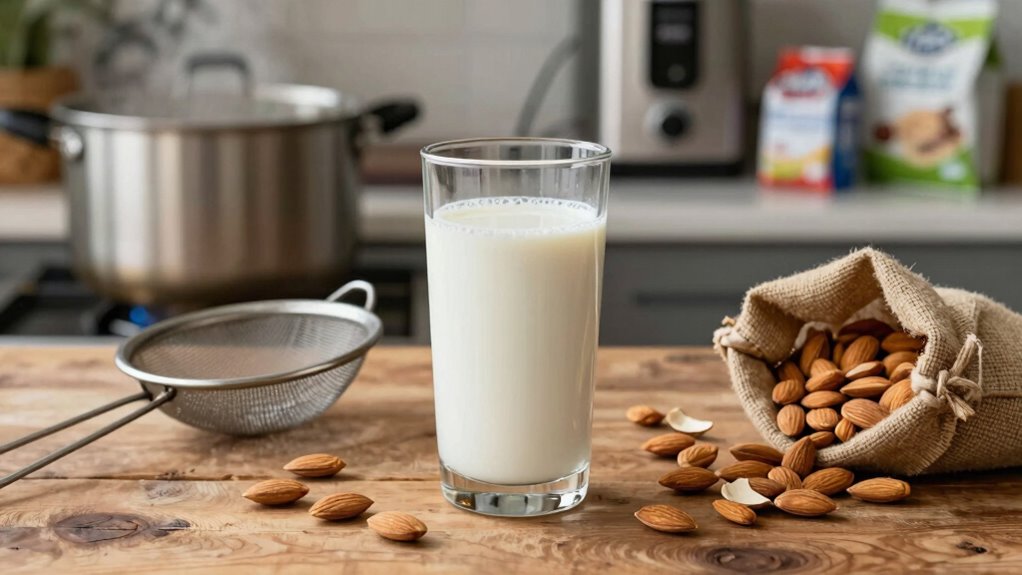
Homemade plant milk offers a sustainable alternative to store-bought versions, allowing you to control ingredients and reduce packaging waste. When you make your own dairy alternatives, you avoid the excessive plastic containers and cartons that often come with commercial products. This reduces the packaging impact, which is a significant factor in the environmental footprint of plant milk. However, despite these advantages, homemade plant milk isn’t always the sustainability winner. It’s essential to understand that producing your own milk may involve energy use, water consumption, and resource considerations that can offset some of its eco-friendly benefits.
One of the main challenges with homemade plant milk revolves around efficiency. Commercial producers often leverage large-scale equipment and optimized processes to create dairy alternatives that are both cost-effective and energy-efficient. When you make milk at home, you might use a blender, boil water, or soak nuts and seeds, which all consume electricity or water. Depending on your local energy sources and water availability, this can sometimes lead to a higher overall environmental impact compared to buying in bulk from a store. Additionally, homemade plant milk typically has a shorter shelf life, which can lead to waste if you don’t consume it quickly. This waste adds to the environmental concerns, especially if you end up discarding spoiled milk. Sustainable practices in ingredient sourcing and process efficiency can help mitigate some of these issues. Furthermore, considering the life cycle assessment of homemade versus store-bought milk can provide a clearer picture of their respective impacts. It’s also worth noting that resource efficiency in ingredient sourcing plays a crucial role in the overall sustainability of homemade options.
Another aspect to evaluate is the sourcing of ingredients. While you may choose organic or locally grown nuts, grains, or seeds, the environmental footprint of producing those ingredients can vary widely. For example, almonds require a significant amount of water to produce, and if you’re using large quantities at home, the water impact can add up quickly. This makes homemade dairy alternatives potentially less sustainable than you’d expect, especially if you’re not mindful of the ingredients’ origins. Moreover, the energy used in soaking, blending, and straining can be substantial, especially if you’re making milk frequently. Additionally, energy-intensive processes involved in homemade methods can sometimes negate the environmental benefits. Furthermore, utilizing high-performance projectors for entertainment at home highlights the importance of energy efficiency, which applies similarly to how we consider the energy footprint of homemade food production. Being conscious of resource use can help ensure that homemade options remain a truly sustainable choice.
As an affiliate, we earn on qualifying purchases.
Frequently Asked Questions
How Does Homemade Plant Milk Compare Cost-Wise to Store-Bought Versions?
Homemade plant milk can be more cost-effective than store-bought versions, especially if you make it regularly. The cost comparison depends on ingredients and how much you use, but buying whole ingredients in bulk often saves money. Plus, homemade allows ingredient flexibility—you choose the type of nuts or grains, which can reduce costs and customize flavor. However, initial setup and equipment might be a little pricier upfront.
What Are the Common Safety Concerns When Making Plant Milk at Home?
Like Pandora’s box, homemade plant milk can open up safety concerns. You should be cautious about food safety and contamination risks, especially if you don’t sterilize equipment properly. Always rinse your ingredients thoroughly and boil or pasteurize the milk if possible. Neglecting these steps can introduce bacteria or mold, which could make you sick. Stay vigilant to enjoy fresh, safe plant milk without unintended health consequences.
Can Homemade Plant Milk Be Stored as Long as Commercial Varieties?
Homemade plant milk generally has a shorter shelf life than commercial varieties, typically lasting 3 to 5 days when refrigerated. To extend its freshness, you can use preservation methods like storing it in airtight containers and keeping it cold. However, always check for signs of spoilage like sour smell or curdling before consuming. Commercial options often include preservatives, so homemade versions require more attentive storage.
Does Homemade Plant Milk Have the Same Nutritional Benefits?
Homemade plant milk may not have the same nutritional benefits as commercial versions due to nutritional consistency and fortification challenges. When you make it yourself, you miss out on added vitamins and minerals found in store-bought options, like calcium or vitamin D. This makes it harder to guarantee you’re getting a balanced intake. While homemade is fresh, it might not provide the same consistent nutritional profile as fortified commercial plant milks.
Are There Specific Equipment Requirements for Making Plant Milk at Home?
You’ll need a blender or food processor to make plant milk at home, along with a fine mesh strainer or nut milk bag for straining. Ensuring equipment safety and kitchen hygiene is essential; always wash your tools thoroughly to prevent contamination. Use clean, sanitized containers for storage. With proper equipment and hygiene, homemade plant milk can be fresh, safe, and easy to prepare, offering a satisfying DIY experience.
As an affiliate, we earn on qualifying purchases.
Conclusion
You might think making your own plant milk is the most eco-friendly choice, but the reality isn’t so simple. While it cuts down on packaging, it often requires copious water and energy, especially when scaled up. The truth is, commercial options sometimes have a smaller carbon footprint thanks to optimized production. So, next time you choose your milk, remember—what seems greenest might not always be the case. Sometimes, the best choice is more nuanced than it appears.
eco-friendly blender for plant milk
As an affiliate, we earn on qualifying purchases.
As an affiliate, we earn on qualifying purchases.
stainless steel strainer for nut milk
As an affiliate, we earn on qualifying purchases.
As an affiliate, we earn on qualifying purchases.
Evergreen bestsellers Picks
bestsellers
As an affiliate, we earn on qualifying purchases.