

Choosing local superfoods like hemp, lupins, and chickling vetch supports sustainable nutrition by promoting eco-friendly farming practices that reduce chemical use and conserve natural resources. These crops help protect soil health, support biodiversity, and empower small-scale farmers. They offer nutritious options aligned with environmental conservation, fostering resilient and diversified food systems. Keep exploring to discover how these superfoods can contribute to a healthier planet and your well-being in more ways.
Key Takeaways
- Hemp, lupins, and chickling vetch are eco-friendly crops that require fewer resources and promote sustainable farming practices.
- These crops enhance soil health through nitrogen fixation and deep-rooted growth, reducing the need for chemical fertilizers.
- Growing local superfoods supports biodiversity, preserves native plant varieties, and encourages resilient ecosystems.
- Cultivating these crops benefits small-scale farmers by fostering traditional, environmentally conscious agricultural methods.
- Incorporating hemp, lupins, and chickling vetch into diets promotes sustainable nutrition and reduces environmental impact of food production.
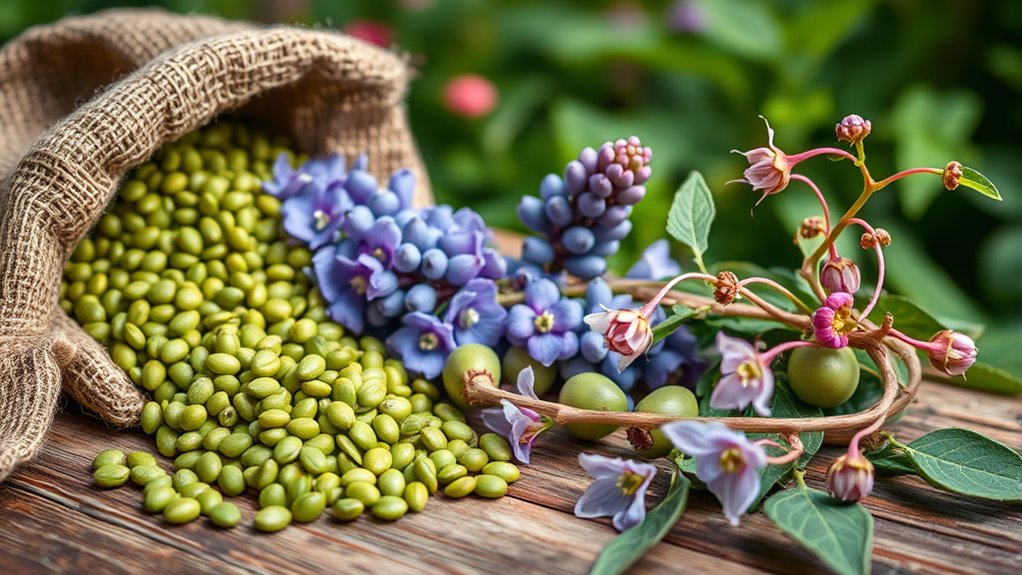
Superfoods are gaining recognition not just for their health benefits but also for their role in promoting sustainable nutrition. When you choose local superfoods like hemp, lupins, and chickling vetch, you’re supporting farming practices that prioritize environmental health. These crops are often cultivated using methods that reduce the need for synthetic fertilizers and pesticides, which helps protect soil quality and water resources. By encouraging sustainable farming practices, you contribute to a more resilient agricultural system that can withstand climate challenges and reduce pollution. Additionally, these crops are typically well-suited to local conditions, requiring fewer inputs and less energy to grow, making them more eco-friendly options for your diet.
Choosing local superfoods like hemp and lupins supports sustainable farming and protects the environment.
Incorporating these superfoods into your meals also benefits biodiversity conservation. Growing diverse crops like hemp and lupins supports the preservation of native plant varieties and encourages a balanced ecosystem. Unlike monoculture farming, which often depletes soil nutrients and diminishes wildlife habitats, cultivating these resilient plants fosters a variety of insects, birds, and other creatures that rely on diverse habitats. Hemp, in particular, has deep roots that help improve soil structure and prevent erosion, further contributing to the health of local ecosystems. Similarly, lupins and chickling vetch are legumes that fix nitrogen in the soil, reducing the need for chemical fertilizers and helping maintain the natural fertility of farmland. Choosing crops that are well-adapted to local environments supports sustainable farming and reduces the reliance on external resources.
By choosing these local superfoods, you’re also helping to sustain small-scale farmers who often rely on traditional, sustainable farming methods. These crops adapt well to local environments, meaning farmers can grow them with minimal external inputs, which supports both economic viability and ecological balance. Supporting such crops can lead to a more diversified agricultural landscape, resisting the homogenization caused by large-scale monocultures. This diversity is essential for maintaining a healthy environment, as it promotes resilience against pests, disease, and climate fluctuations.
Ultimately, when you prioritize superfoods like hemp, lupins, and chickling vetch, you’re making a conscious choice that aligns your health with environmental stewardship. You’re promoting farming practices that conserve biodiversity, protect natural resources, and build a sustainable food system. These crops exemplify how local superfoods can be part of a broader effort to nourish both people and the planet, ensuring that future generations can enjoy a rich, diverse, and healthy environment.

Manitoba Harvest Organic Hemp Seeds, 18oz, 10g Plant Based Protein and 12g Omega 3 & 6 per Srv, smoothies, yogurt & salad, Non-GMO, Vegan, Keto, Paleo, Gluten Free
ORGANIC HEMP SEEDS ARE A PROTEIN-PACKED SUPERFOOD: With 10g of plant protein per serving, Hemp Hearts have two…
As an affiliate, we earn on qualifying purchases.
As an affiliate, we earn on qualifying purchases.
Frequently Asked Questions
How Do Local Superfoods Compare Nutritionally to Imported Options?
You’ll find that local superfoods like hemp, lupins, and chickling vetch often have comparable or even superior nutritional profiles compared to imported options. Nutritional comparisons show they’re rich in essential proteins, healthy fats, and fiber, offering numerous health benefits. Plus, consuming locally grown superfoods reduces carbon footprint and supports local farmers, making them a smart, sustainable choice for your diet.
Are There Any Environmental Risks Associated With Cultivating These Superfoods?
Yes, cultivating these superfoods can pose environmental risks. You might cause pollution runoff, which can harm nearby water sources, and habitat disruption, threatening local wildlife. If you don’t manage farming practices carefully, these issues could worsen. To minimize risks, adopt sustainable methods like crop rotation and proper waste management. This way, you support environmental health while enjoying the benefits of local superfoods.
Can These Superfoods Be Integrated Into Traditional Recipes Easily?
Think of these superfoods as culinary chameleons—you can seamlessly adapt them into your favorite recipes. Hemp, lupins, and chickling vetch boast remarkable culinary versatility, making recipe adaptation straightforward. Whether adding hemp seeds to smoothies or incorporating lupin flour into baked goods, you won’t need to overhaul your cooking. These superfoods enhance flavor and nutrition, proving that sustainability and tradition can deliciously coexist in your kitchen.
What Are the Economic Benefits of Promoting Local Superfoods?
Promoting local superfoods boosts economic growth by creating new markets and attracting investments. You’ll see increased local employment as farms, processing plants, and distribution channels expand, providing more job opportunities. Additionally, supporting regional agriculture reduces reliance on imports, keeping money within the community. This cycle encourages sustainable development, enhances food security, and strengthens local economies, making your community more resilient and prosperous.
How Do Farming Practices for These Superfoods Impact Local Biodiversity?
Your farming practices for these superfoods can positively impact biodiversity conservation by encouraging diverse crop rotations and reducing reliance on monoculture risks. When you diversify your fields, you support a variety of plant and animal species, which strengthens the ecosystem. However, if you grow them in large, uniform plots, you risk harming local biodiversity. Maintaining varied practices helps protect the environment while reaping the benefits of these sustainable superfoods.
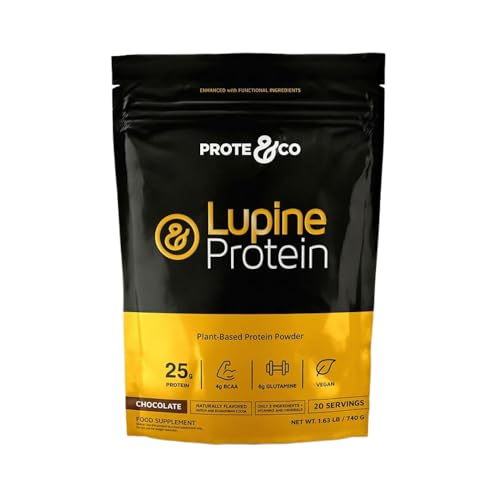
Prote&Co Lupin Protein – 24g of Vegan Plant Based Protein Powder. Non GMO, No Added Sugar, Lactose Free, Gluten Free, Soy Free. 20 Servings – Chocolate
Future-Food Super Legume – 100% Andean lupin vegan protein powder; 24 g complete protein per scoop, naturally smooth.
As an affiliate, we earn on qualifying purchases.
As an affiliate, we earn on qualifying purchases.
Conclusion
As you explore these local superfoods—hemp, lupins, and chickling vetch—you reveal more than just nutritious options. Their true potential lies in transforming your approach to sustainable eating, but there’s a deeper story waiting to unfold. Will you embrace these ancient crops and help shape a resilient future? The choice is yours, and what happens next could redefine not only your plate but the entire planet’s well-being. The next step is yours to take.
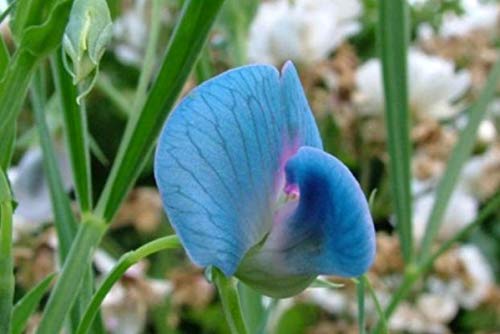
Chickling Vetch Seeds (25+ Seeds)
seeds
As an affiliate, we earn on qualifying purchases.
As an affiliate, we earn on qualifying purchases.

Healthworks Superfood Shelled/Hulled Hemp Seeds Canadian – 32 Oz / 2 Lbs – Premium & All-Natural – Contains Omega 3 & 6, Fiber and Protein – Packaging May Vary
RAW HEMP SEEDS: Healthworks Hemp Seeds are all-natural, raw, vegan, vegetarian, keto and paleo friendly, soy-free & dairy-free!…
As an affiliate, we earn on qualifying purchases.
As an affiliate, we earn on qualifying purchases.