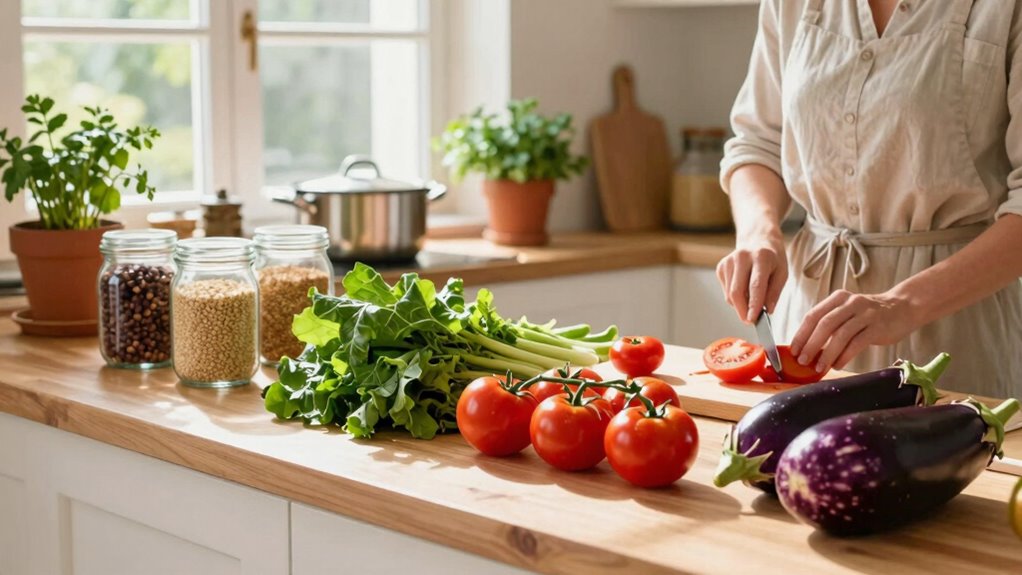

To build a lasting plant-based lifestyle, focus on enjoying a variety of tasty, nutrient-rich foods like tofu, tempeh, and colorful vegetables. Plan meals ahead to stay balanced and prevent last-minute temptations. Experiment with different recipes and cooking techniques to keep things exciting. Connect with supportive communities for encouragement. Remember, progress matters more than perfection, and setbacks are part of the process. Keep exploring new ideas, and you’ll discover how sustainable and enjoyable this journey can be.

Get health and wellness essentials delivered free with Prime
- Fast, free delivery on millions of items
- Prime Video, Amazon Music and more included
- Member-only deals all year
Key Takeaways
- Incorporate a variety of plant-based proteins and ingredients to keep meals interesting and nutritionally balanced.
- Plan meals ahead to ensure consistency, reduce stress, and promote healthy eating habits.
- Experiment with cooking techniques and flavors to maintain enjoyment and prevent boredom.
- Develop supportive habits like batch cooking and portioning to ensure accessible, healthy options.
- Connect with communities and resources for motivation, inspiration, and shared experiences.
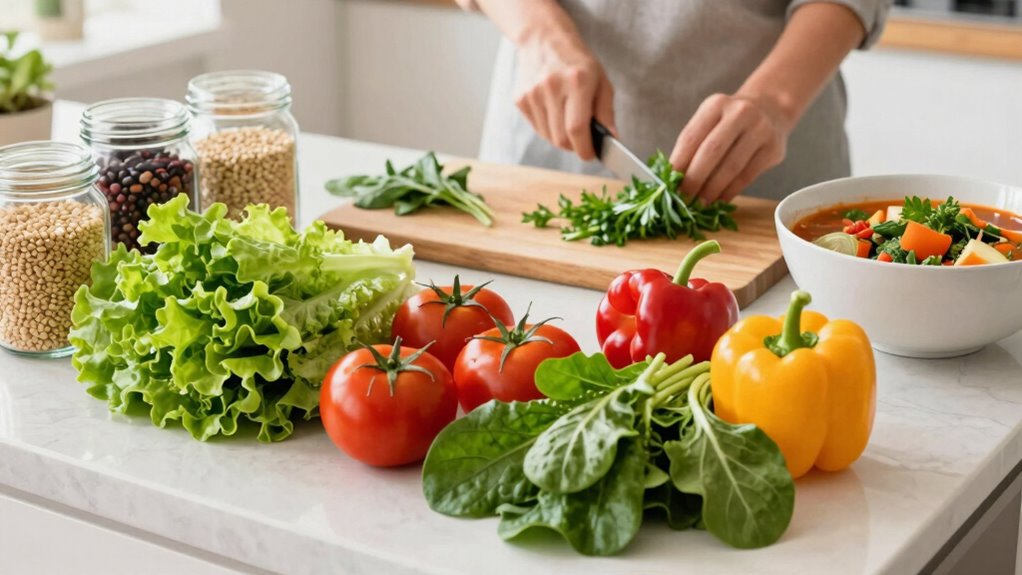
Starting a long-term plant-based lifestyle can be a rewarding journey, but it requires more than just switching out meat and dairy. To truly make it sustainable, you need to focus on incorporating satisfying meat alternatives and effective meal planning into your routine. Meat alternatives are key because they help fulfill your cravings for familiar textures and flavors, making the transition easier. From tofu and tempeh to plant-based burgers and seitan, these options provide protein and variety, ensuring you don’t feel deprived. Experimenting with different meat substitutes allows you to discover what tastes best to you and keeps meals interesting. Over time, you’ll find that these alternatives can be prepared in endless ways, from stir-fries to wraps, keeping your diet exciting and diverse. Developing a growth mindset around trying new foods can also help you stay open to exploring different plant-based options.
Incorporate diverse meat substitutes and plan meals to make your plant-based journey sustainable and enjoyable.
Meal planning is another essential component. When you plan your meals ahead of time, you ensure your diet remains balanced and aligned with your goals. It helps you avoid last-minute temptations or resorting to less nutritious options. Take some time each week to outline your meals, including breakfast, lunch, dinner, and snacks. This way, you can shop efficiently, buying only what you need and reducing food waste. Incorporating a wide variety of fruits, vegetables, grains, legumes, and nuts to meet your nutritional needs and keep your palate engaged is also crucial. Planning also encourages you to explore new recipes, making the process enjoyable rather than a chore. Additionally, understanding the role of protein sources in plant-based diets can help you make informed choices to meet your nutritional needs. Including a diverse range of landscape-inspired ingredients can further enhance your meals’ appeal and nutritional profile. Exploring different cooking techniques can also add variety and excitement to your meals, helping you stay motivated.
Building a long-term plant-based lifestyle isn’t just about what you eat but how you approach it. You’ll want to develop habits that support your commitment, like batch cooking and meal prep. Preparing larger portions ahead of time means less stress during busy weekdays and ensures you always have healthy options available. Keep a flexible mindset; some days may be easier than others, and that’s okay. The key is consistency over perfection. When you encounter setbacks, remind yourself of your motivation and the benefits you’ve already experienced, like increased energy or better digestion.
Finally, connecting with supportive communities or resources can bolster your resolve. Sharing recipes, tips, or simply talking about your journey keeps you motivated. Remember, building a plant-based lifestyle isn’t about perfection; it’s about creating a sustainable way of eating that fits your life. By focusing on incorporating appealing meat alternatives and mastering meal planning, you set yourself up for success that lasts well beyond the initial transition.
As an affiliate, we earn on qualifying purchases.
Frequently Asked Questions
How Can I Ensure Balanced Nutrition on a Plant-Based Diet?
To guarantee balanced nutrition on a plant-based diet, focus on smart meal planning that includes a variety of fruits, vegetables, legumes, nuts, and seeds. Pay attention to nutrient timing by spreading out protein and iron-rich foods throughout the day to maximize absorption. Incorporate fortified foods or supplements for nutrients like B12 and omega-3s. Regularly evaluate your diet to maintain balance and prevent nutrient gaps.
What Are Beginner-Friendly Plant-Based Protein Sources?
Wondering where to start? Your best beginner-friendly plant-based protein sources include lentils, chickpeas, and beans—rich in plant protein and easy to prepare. Tofu and tempeh are versatile options that add variety and nutritional balance to your meals. Quinoa and edamame also pack a punch, providing essential amino acids. These foods make it simple to build a nourishing, sustainable diet without feeling overwhelmed initially.
How Do I Handle Social Situations While Plant-Based?
When steering through social dining and family acceptance, plan ahead by bringing your own plant-based dish or suggesting restaurants with vegan options. Communicate openly about your lifestyle change, and stay confident while explaining your choices. Focus on enjoying the company, not just the food. Over time, family and friends will likely become more supportive as they see your commitment and enthusiasm for a plant-based lifestyle.
What Are Common Challenges Faced Long-Term and How to Overcome Them?
About 80% of people struggle with meal planning and food cravings long-term. To overcome these challenges, stay consistent with your meal prep, so you always have tasty, satisfying options. When cravings hit, find healthy plant-based alternatives or indulge occasionally to avoid feeling deprived. Remember, flexibility is key—adapt your habits as needed, and celebrate small wins to stay motivated on your plant-based journey.
How Can I Stay Motivated to Maintain a Plant-Based Lifestyle?
You can stay motivated by focusing on meal planning and mindful eating. Plan your meals ahead to keep variety and prevent last-minute temptations. Practice mindful eating by savoring your food and recognizing how it makes you feel, reinforcing your commitment. Celebrate small victories and remind yourself of your reasons for choosing a plant-based lifestyle. These strategies keep you engaged and motivated to maintain your healthy habits long-term.
meal prep containers for plant-based diets
As an affiliate, we earn on qualifying purchases.
As an affiliate, we earn on qualifying purchases.
Conclusion
By embracing your plant-based journey, you’re planting seeds for a healthier, more vibrant life that will grow stronger over time. Remember, it’s not about perfection but progress—like tending a garden, patience and consistency nurture your habits. Keep your eyes on the long-term harvest, and don’t be discouraged by setbacks. With each small step, you’re weaving a sustainable lifestyle that blossoms into lasting wellness. Your future self will thank you for tending this beautiful, everlasting garden.
As an affiliate, we earn on qualifying purchases.
As an affiliate, we earn on qualifying purchases.
Halloween Picks
halloween
As an affiliate, we earn on qualifying purchases.