
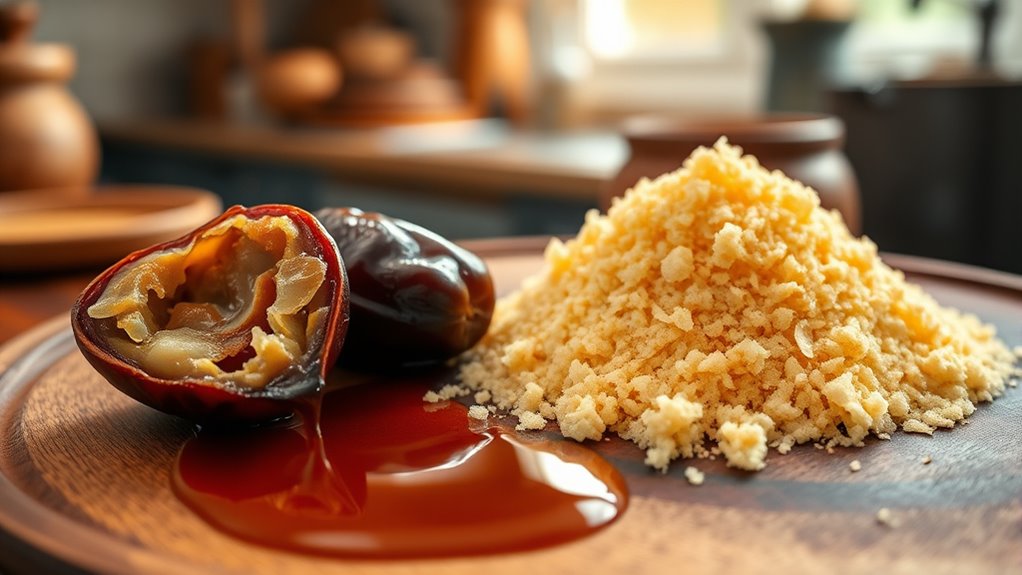

Low-glycemic sweeteners like date syrup and coconut sugar are healthier choices because they digest more slowly, helping keep your blood sugar steady. Date syrup offers nutrients and antioxidants, while coconut sugar contains inulin, a fiber that slows sugar absorption. These natural options are minimally processed, richer in flavor, and can reduce cravings. If you want to discover more about how these sweeteners support your health, keep exploring the options that fit your lifestyle.
Key Takeaways
- Date syrup and coconut sugar have lower glycemic indexes than white sugar, leading to gentler blood sugar increases.
- Both natural sweeteners retain nutrients and antioxidants, offering health benefits beyond sweetness.
- Their slower digestion helps prevent rapid blood sugar spikes and supports stable blood glucose levels.
- They contain dietary fibers like inulin, which further slow sugar absorption and curb cravings.
- Using natural, minimally processed sweeteners can improve diet quality and promote healthier eating habits.
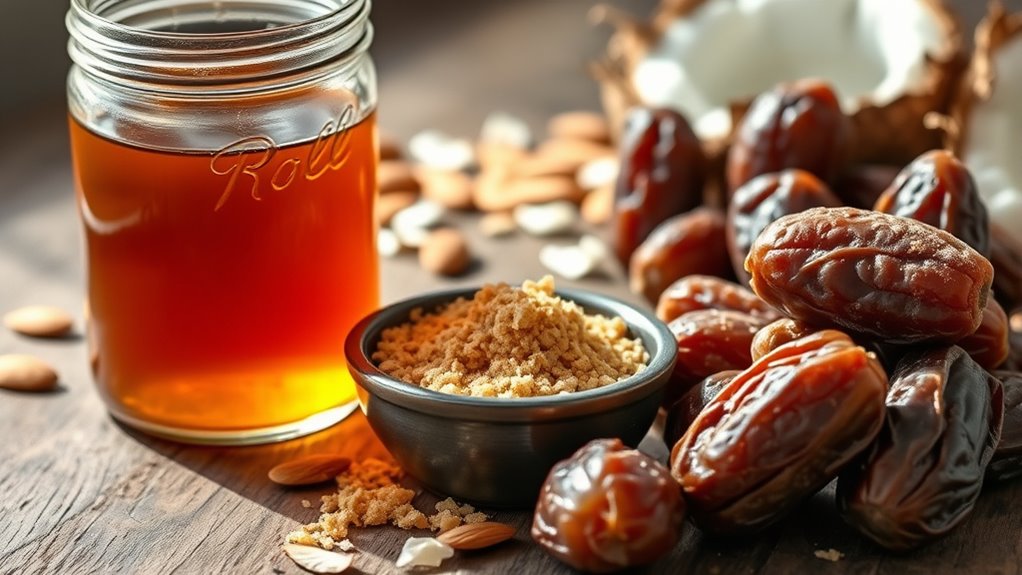
Have you ever wondered how some sweeteners impact your blood sugar differently than regular sugar? It’s a common question, especially if you’re trying to manage your blood glucose levels or cut back on refined sugars. Fortunately, there are natural alternatives that can satisfy your sweet tooth without causing drastic spikes in your blood sugar. These low-glycemic sweeteners not only taste great but also come with various health benefits, making them attractive options for healthier eating.
Many people turn to natural alternatives like date syrup, coconut sugar, and others because they tend to have a lower glycemic index than white sugar. Date syrup, for example, is derived from concentrated dates and retains much of their natural fiber and nutrients. Because of this, it’s digested more slowly, leading to a gentler increase in blood sugar. It also contains antioxidants, vitamins, and minerals, adding to its health benefits. Coconut sugar is another popular choice; it’s made from the sap of coconut palm flowers and contains inulin, a type of dietary fiber that can slow down sugar absorption. This results in a lower spike in blood glucose levels compared to regular sugar.
Natural sweeteners like date syrup and coconut sugar have lower glycemic indexes and provide added nutrients for healthier blood sugar management.
Choosing these natural alternatives isn’t just about reducing blood sugar spikes — it’s also about incorporating ingredients that offer additional health benefits. Date syrup and coconut sugar are minimally processed, meaning they retain more of their original nutrients. They also tend to be less refined, so you avoid the artificial additives often found in processed sweeteners. Their richer flavor profile means you can use less to achieve the same level of sweetness, which further helps in controlling overall sugar intake. furthermore, these options can be more satisfying and help curb cravings because their natural sugars are released more gradually, providing sustained energy.
In addition to these, many natural sweeteners like honey, maple syrup, and agave nectar are also available, but they vary in glycemic impact. It’s important to read labels and choose those that align with your health goals. Remember, moderation is key — even natural sweeteners can add up if used excessively. But replacing refined sugar with natural alternatives can substantially improve your diet, especially if you’re aiming for a lower glycemic load. Not only do they help maintain more stable blood sugar levels, but they also offer a range of nutrients that support overall health. For example, some sweeteners contain antioxidants and vitamins, which contribute to overall well-being.
Frequently Asked Questions
Are Low-Glycemic Sweeteners Suitable for Diabetics?
Yes, low-glycemic sweeteners can be suitable for diabetics because they help with diabetic blood management and cause a lower insulin response. You should still use them in moderation and monitor your blood sugar levels, as individual responses vary. Replacing high-glycemic sugars with options like date syrup or coconut sugar may support better blood control, but always consult your healthcare provider before making significant dietary changes.
How Do Low-Glycemic Sweeteners Affect Blood Sugar Over Time?
They say slow and steady wins the race, and that’s true for low-glycemic sweeteners. When you choose these, your glycemic response is more gradual, helping to stabilize blood sugar fluctuations over time. Instead of sharp spikes, you experience a gentle rise and fall, making it easier to manage your energy levels and reduce the risk of sudden lows. This steady effect benefits your overall blood sugar control.
Can Low-Glycemic Sweeteners Be Used in Baking and Cooking?
Yes, you can use low-glycemic sweeteners in baking and cooking as kitchen substitutions. They often enhance flavor by adding natural sweetness without spiking blood sugar levels. For example, date syrup can replace honey or sugar in recipes, and coconut sugar works well in baked goods. Just remember, since they have different moisture and sweetness levels, you might need to adjust your recipes slightly for the best flavor enhancement.
Do Low-Glycemic Sweeteners Have Any Allergens or Sensitivities?
You might think you’re in the clear, but always watch out for allergen potential with low-glycemic sweeteners. While most are safe, some, like coconut sugar, can trigger sensitivity reactions in certain people. Always check labels and consult with your doctor if you have food sensitivities. Better safe than sorry—being aware helps you enjoy your treats without the worry of unexpected allergic surprises.
Are Low-Glycemic Sweeteners More Expensive Than Regular Sugar?
Yes, low-glycemic sweeteners are generally more expensive than regular sugar. The cost comparison mainly stems from ingredient sourcing, as high-quality date syrup, coconut sugar, and other alternatives often come from specialized farms or regions. Plus, their production process can be more complex, increasing the price. So, if you’re considering switching, expect to pay a bit more for these healthier, lower-GI options.
Conclusion
By choosing low-glycemic sweeteners like date syrup and coconut sugar, you can enjoy your treats without spiking your blood sugar. Did you know that these sweeteners often have a lower glycemic index than regular sugar, which means they cause a slower rise in blood glucose? Making smarter swaps not only satisfies your sweet tooth but also supports better energy levels and overall health. So, go ahead—sweeten your life mindfully!