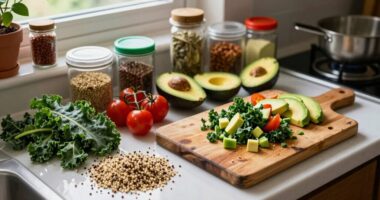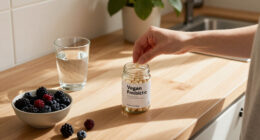


To organize your fridge for better plant-based eating, keep ingredients visible and accessible by using clear containers and designated zones for greens, fruits, and cooked dishes. Store items at the right temperature, around 37-40°F, and label containers with dates to prevent spoilage. Regularly check for expired items and keep everything in its proper place. An organized fridge simplifies meal prep and encourages healthy choices—discover more tips to boost your plant-based meals.

Get health and wellness essentials delivered free — and shop member deals
- Fast, free delivery on millions of items
- Access to Prime Big Deal Days deals on October 6–7
- Prime Video, Amazon Music and more included
Key Takeaways
- Designate specific zones for fresh greens, fruits, and cooked plant-based meals to enhance organization and accessibility.
- Use clear, labeled containers to store chopped vegetables, grains, and salads for quick meal prep.
- Maintain fridge temperature at 37-40°F to keep plant-based ingredients fresh and safe.
- Regularly check and discard spoiled or expired plant-based items to prevent waste.
- Keep everything in its designated place to encourage healthy eating habits and easy meal assembly.
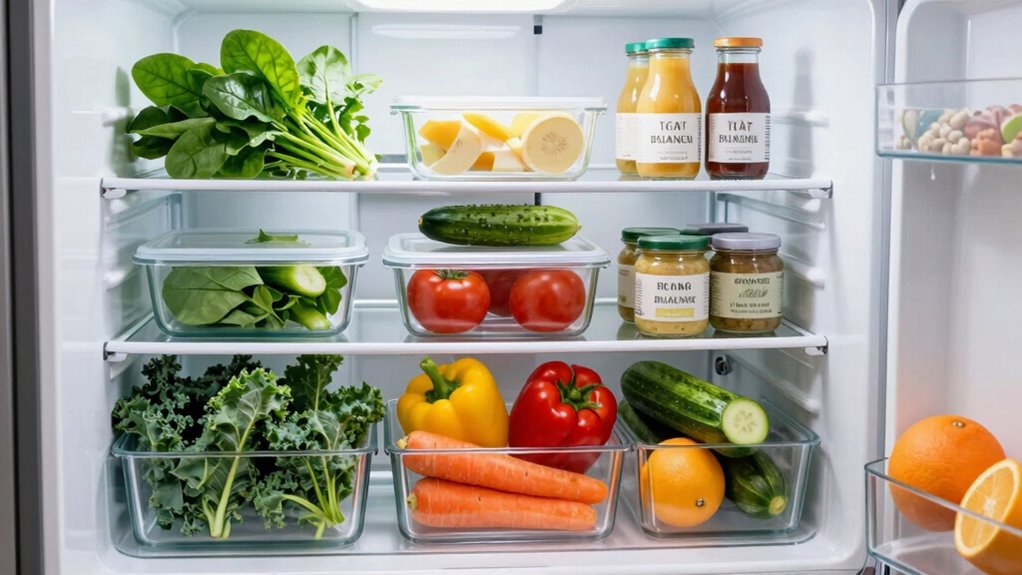
Keeping your fridge organized is essential for making plant-based eating easier and more enjoyable. When your fridge is tidy and well-arranged, you can quickly find healthy ingredients, reduce food waste, and stay motivated to stick to your goals. One effective way to maintain order is to prioritize meal prep. Preparing plant-based meals in advance means you’ll always have nutritious options ready to go, saving you time and effort during busy days. As you prep, use clear storage containers to keep everything visible and accessible. These containers help you organize ingredients like chopped vegetables, cooked grains, and bean salads, making it simple to grab what you need without digging through clutter. When you invest in good storage containers, you encourage yourself to plan meals ahead, which minimizes the temptation to rely on processed or takeout options. Additionally, proper temperature control plays a critical role in preserving your food’s freshness and safety.
You should also designate specific zones in your fridge for different types of plant-based foods. For example, keep all fresh greens in one drawer, fruits in another, and cooked dishes on a middle shelf. This way, you won’t waste time searching for ingredients or accidentally let something spoil. Label your storage containers with dates to track freshness and guarantee you consume perishable items before they go bad. This habit not only keeps your fridge tidy but also reduces waste and helps you stay on top of your nutritional intake. When it comes to meal prep, batch cooking is your best friend. Cook large portions of staples like lentils, quinoa, roasted vegetables, and tofu, then divide them into individual containers. This approach makes assembling meals quick and straightforward, whether you’re creating a grain bowl, wrap, or salad. Moreover, understanding food safety guidelines can help prevent foodborne illnesses and ensure your meals remain healthy and safe to eat.
Additionally, ensuring proper temperature control in your fridge is vital to keeping food fresh and safe. Make sure to keep your fridge temperature around 37-40°F (3-4°C) to preserve freshness and prevent spoilage. Regularly check your stored items and discard anything that’s past its prime. Maintaining a consistent organization system encourages healthy habits and keeps your fridge inviting. With everything in its place, you’ll find it easier to stick to your plant-based eating plan and enjoy your meals without stress or last-minute scrambling. By investing in good storage containers, dedicating zones for different foods, and embracing meal prep, you set yourself up for success. An organized fridge not only simplifies your routine but also motivates you to make nourishing choices every day.
clear food storage containers with lids
As an affiliate, we earn on qualifying purchases.
As an affiliate, we earn on qualifying purchases.
Frequently Asked Questions
How Often Should I Clean My Fridge for Optimal Freshness?
You should clean your fridge every 3 to 4 weeks to keep it fresh. During cleaning, use fridge deodorizing solutions to eliminate odors and keep your produce tasting great. Take the opportunity to organize with magnetic labels, so you know what’s what and avoid spoilage. Regular cleaning prevents bacteria buildup, maintains peak freshness, and makes your plant-based ingredients last longer. Stay consistent, and your fridge will stay fresh and organized.
What Are the Best Containers for Storing Fresh Produce?
Think of your produce like delicate treasures—you want to keep them fresh and vibrant. Use airtight containers for berries and cut produce to lock in moisture, preventing spoilage. For leafy greens and other vegetables, breathable storage containers allow airflow, reducing moisture buildup and mold. This combination keeps your produce fresh longer, ensuring your plant-based meals stay crisp, colorful, and delicious. Proper containers truly turn your fridge into a freshness sanctuary.
How Can I Prevent Cross-Contamination With Plant-Based Foods?
To prevent cross-contamination with plant-based foods, always store vegetables and fruits separately, ideally in designated drawers. Keep raw produce away from ready-to-eat items to avoid contamination. Use sealed containers to preserve freshness and prevent spills. Regularly clean shelves and drawers with a gentle disinfectant. By maintaining these habits, you protect your food’s freshness and reduce the risk of cross-contamination, ensuring your plant-based meals stay safe and delicious.
Are There Specific Temperature Settings for Storing Plant-Based Ingredients?
You’ll love the irony—your fridge’s temperature zones are actually your best friends when storing plant-based ingredients. Keep produce between 32-40°F, ideally in the crisper with humidity controls, to extend freshness. Leafy greens thrive at higher humidity, while fruits prefer lower. Prevent temperature fluctuations by not overcrowding. Proper temperature zones and humidity control ensure your plant-based ingredients stay fresh, vibrant, and ready to transform your meals.
How Do I Organize Leftovers to Stay Fresh Longer?
To keep leftovers fresh longer, start by labeling each container with the date using leftover labeling. Store leftovers in airtight containers and place them on the middle shelf where temperatures are most consistent. Aim to consume leftovers within 3-4 days to guarantee freshness and safety, and check for signs of spoilage before eating. Proper organization helps you track storage duration, reducing waste and keeping your plant-based meals delicious.
fridge organization bins for greens and fruits
As an affiliate, we earn on qualifying purchases.
As an affiliate, we earn on qualifying purchases.
Conclusion
Think of your fridge as a lush garden, each shelf a blooming bed of fresh produce. When you organize it thoughtfully, you’re planting the seeds for vibrant, plant-based meals that flourish effortlessly. With every item in its perfect spot, your fridge becomes a fertile ground for healthy habits to grow. So, tend to your kitchen like a gardener tending to their plants—watch your passion for plant-based eating blossom into a delicious, sustainable lifestyle.
As an affiliate, we earn on qualifying purchases.
labeling stickers for food containers
As an affiliate, we earn on qualifying purchases.
As an affiliate, we earn on qualifying purchases.
Fall Picks
fall essentials
As an affiliate, we earn on qualifying purchases.