
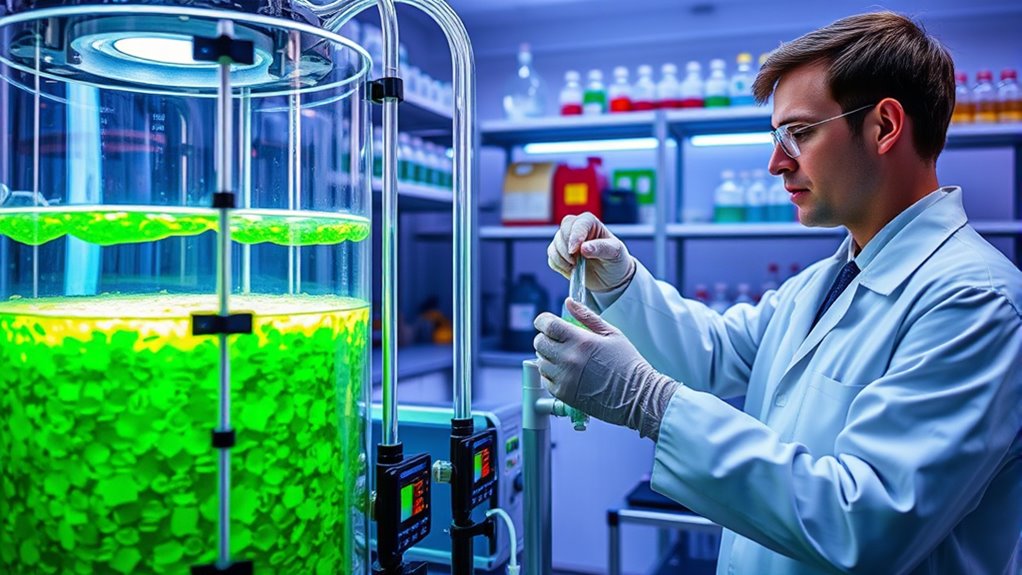

Precision fermentation uses engineered microorganisms and optimized processes to produce complex molecules sustainably. By customizing microbes through microbial engineering, you can make pharmaceuticals, food additives, and biofuels efficiently. Bioprocess optimization fine-tunes conditions like temperature and nutrients, ensuring high yield and quality. When combined, these technologies create scalable, eco-friendly production systems. As you explore further, you’ll discover how these innovations are reshaping industries and enabling new possibilities in biomanufacturing.
Key Takeaways
- Precision fermentation uses engineered microbes to produce specific, high-purity products like pharmaceuticals, food ingredients, and biofuels.
- Microbial engineering involves genetic modification and pathway optimization to enhance production efficiency and product quality.
- Bioprocess optimization fine-tunes fermentation conditions such as temperature, pH, and oxygen to maximize microbial output.
- The technology enables scalable, sustainable manufacturing with minimal environmental impact and high product consistency.
- Combining microbial engineering and bioprocess control drives innovation in industries like medicine, food, and renewable energy.
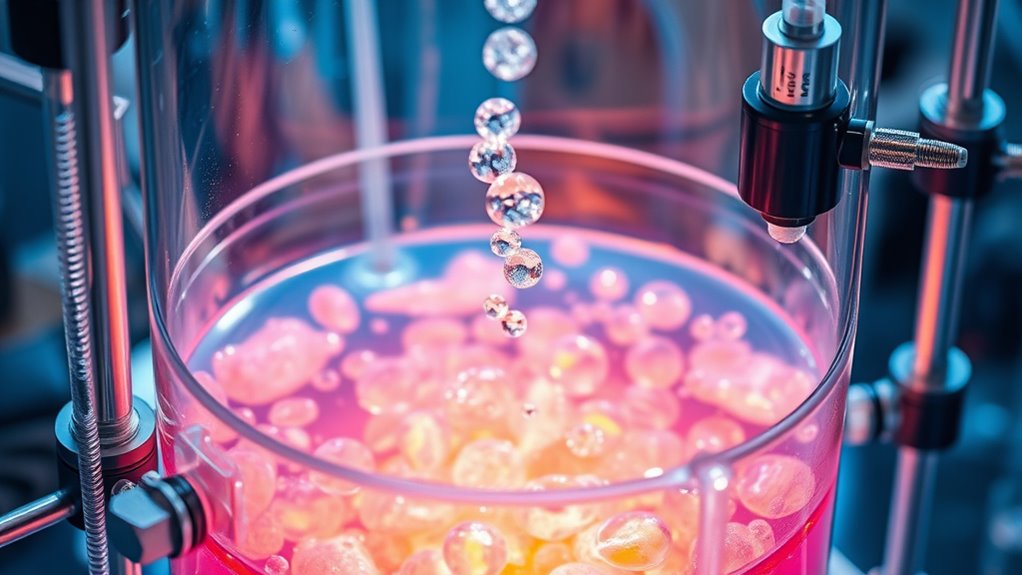
Have you ever wondered how microorganisms transform raw ingredients into valuable products? It’s a fascinating process driven by microbial engineering, where scientists manipulate microorganisms to produce specific substances. This field combines biology, chemistry, and engineering to design microbes that can efficiently convert raw materials into everything from pharmaceuticals to food additives. At the heart of this process is bioprocess optimization, which involves fine-tuning conditions like temperature, pH, and nutrient supply to maximize yield and productivity. By optimizing these variables, you can guarantee that the microorganisms work at their best, making the entire process more efficient and cost-effective.
Microbial engineering is about customizing microbes to perform specific tasks, often by editing their genetic makeup. This allows you to create strains that are more resilient, faster-growing, or capable of producing higher quantities of desired products. For example, you might engineer bacteria to produce insulin or fungi to generate enzymes used in laundry detergents. The goal is to harness natural metabolic pathways and enhance them for industrial purposes. This requires a deep understanding of microbial physiology and the ability to manipulate genes precisely. When combined with bioprocess optimization, you can scale these engineered microbes from small lab experiments to large manufacturing systems, guaranteeing consistent and reliable output.
Microbial engineering customizes microbes to enhance resilience, growth, and product output for industrial applications.
Bioprocess optimization plays a vital role because it guarantees the process runs smoothly at every stage. You’ll want to control factors like oxygen levels, agitation speed, and nutrient feed rates to keep the microbes healthy and productive. For example, in fermentation tanks, maintaining the right oxygen supply can greatly influence the growth rate and product yield. Additionally, understanding the financial aspects involved in process scale-up can help ensure your operation remains economically viable. By continuously monitoring and adjusting these parameters, you prevent issues like contamination or nutrient depletion, which can derail the process. This step is essential not just for efficiency but also for meeting quality standards, especially when producing pharmaceuticals or food ingredients.
Together, microbial engineering and bioprocess optimization form the backbone of precision fermentation. They enable you to develop processes that are sustainable, scalable, and capable of producing complex molecules with high purity. This synergy allows industries to produce everything from biofuels to specialty chemicals with minimal environmental impact. As you explore deeper into fermentation technology, you’ll see how these tools empower you to push the boundaries of what’s possible, turning microorganisms into tiny factories that work precisely as you need them to. Mastering both aspects is key to advancing modern biomanufacturing and revealing new applications for fermentation technology.
Frequently Asked Questions
How Does Precision Fermentation Differ From Traditional Fermentation Methods?
You might notice that precision fermentation differs from traditional fermentation because it uses advanced genetic engineering techniques to create specific microorganisms. Unlike traditional methods, which rely on natural fermentation processes, precision fermentation precisely manipulates these microorganisms to produce targeted products, like proteins or enzymes. This approach allows for greater control, efficiency, and customization, making it a powerful tool for food, medicine, and other industries.
What Are the Primary Safety Concerns With Precision Fermentation Products?
Imagine a high-tech bakery where safety is key. Your primary concerns with precision fermentation products areergen safety and contamination risks. You need strict controls to prevent unintended microbes or allergens from entering the process. While the technology offers precision, you must guarantee proper sterilization, quality checks, and monitoring to minimize these risks, just like safeguarding a delicate recipe, ensuring the final product is safe, pure, and reliable for consumers.
Can Precision Fermentation Produce Allergen-Free Food Ingredients?
Yes, precision fermentation can produce allergen-free food ingredients. By leveraging ingredient customization, you can tailor the fermentation process to reduce or eliminate common allergens, aiding allergen mitigation. This technology allows you to design ingredients that meet specific safety and dietary needs, making them suitable for allergen-sensitive consumers. As a result, you can develop safer, targeted food products that cater to a wider range of dietary restrictions.
What Are the Economic Challenges Facing Large-Scale Precision Fermentation?
You might think large-scale precision fermentation is a money tree, but surprisingly, the biggest hurdles are cost reduction and supply chain issues. Scaling up production drives up expenses and complicates logistics, making it tough to compete with traditional methods. You’ll need to find ways to slash costs and streamline your supply chain, or your innovative products might stay just out of reach—more dream than reality for now.
How Environmentally Sustainable Is Precision Fermentation Compared to Conventional Processes?
You’ll find that precision fermentation is generally more environmentally sustainable than conventional methods because it reduces environmental impact through lower greenhouse gas emissions and less land use. Its resource efficiency means it uses fewer raw materials and water, making it a greener alternative. By adopting this technology, you help minimize ecological footprints, promoting a more sustainable food production system that benefits both the planet and future generations.
Conclusion
Now that you understand the incredible power of precision fermentation, you’re on the brink of revolutionizing food as we know it! This isn’t just a tech trend—it’s the secret weapon to ending world hunger, saving the planet, and creating a future where everyone eats like royalty. With this game-changing technology, you’re not just a spectator—you’re a pioneer in transforming how we produce food forever. Get ready to change the world, one fermentation at a time!