

In your vegan kitchen, you can reuse glass jars by cleaning and removing labels with warm water, baking soda, or vinegar. Personalize them with chalkboard paint, tags, or colorful patterns to match your decor. Use jars to store dried beans, spices, homemade granola, or herbal infusions. You can also transform them into planters or decorative accents that add greenery. Keep exploring ways to maximize their use and embrace eco-friendly habits for a more sustainable lifestyle.

Get health and wellness essentials delivered free — and shop member deals
- Fast, free delivery on millions of items
- Access to Prime Big Deal Days deals on October 6–7
- Prime Video, Amazon Music and more included
Key Takeaways
- Store homemade vegan spreads, nut butters, or sauces in clean glass jars for eco-friendly packaging.
- Use jars to organize dried beans, grains, seeds, or spices, keeping your vegan pantry tidy.
- Repurpose jars as mini planters for herbs or succulents to add greenery to your vegan kitchen.
- Create DIY vegan skincare or herbal infusion jars for sustainable personal care routines.
- Label jars with reusable tags for bulk vegan ingredients, reducing packaging waste and enhancing organization.
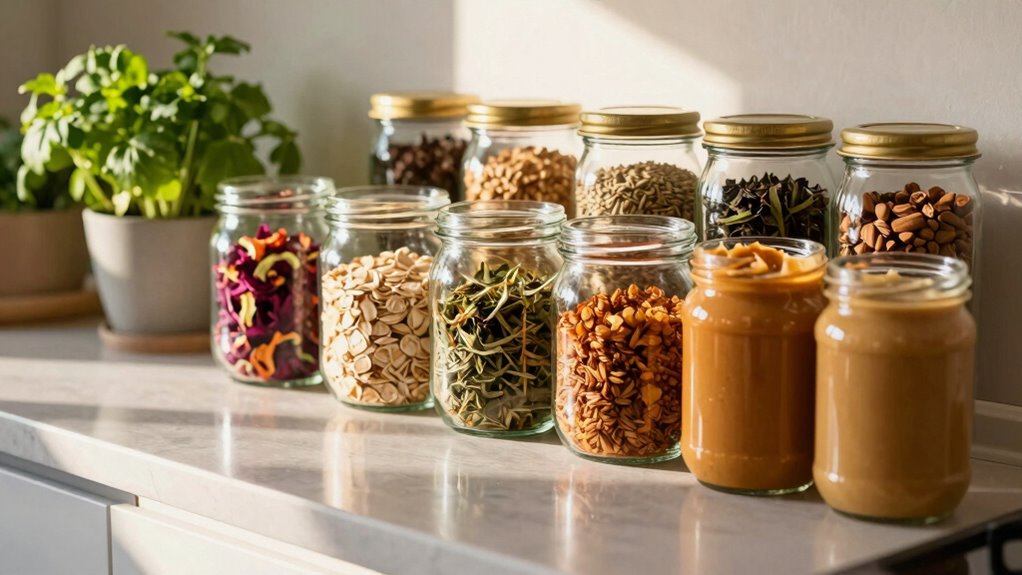
Reusing glass jars in a vegan kitchen is an easy and eco-friendly way to reduce waste while organizing your pantry. Instead of tossing those empty jars, you can give them a second life by incorporating simple zero waste tips and DIY decorating ideas. This approach not only minimizes your environmental footprint but also adds a personalized touch to your storage solutions. When you clean and prepare your jars, consider removing labels carefully with warm water and a bit of baking soda or vinegar—this makes your jars look cleaner and more appealing for reuse. Once prepared, you can use these jars to store everything from homemade granola and dried beans to spices and nuts, keeping your ingredients fresh and accessible.
To make the most of your jars, think about labeling them with reusable tags or chalkboard paint, which makes it easy to identify contents at a glance and keeps your space tidy. This simple DIY decorating technique adds a charming, rustic vibe to your kitchen and is a zero waste tip that encourages reuse over disposal. Plus, you can customize the jars with different colors or patterns to match your kitchen decor, turning functional storage into a decor element. Using jars for bulk purchases reduces packaging waste, aligning with vegan principles of sustainability and ethical consumption. You’ll find that repurposing jars creates less clutter and makes your pantry look more organized and inviting.
Additionally, glass jars work well beyond kitchen storage. You can upcycle them into stylish containers for homemade beauty products, like herbal infusions or scrubs, or even use them as mini planters for herbs or succulents. This kind of DIY decorating transforms your jars into decorative elements that bring a touch of greenery and vibrancy into your space, emphasizing a zero waste lifestyle. Incorporating sustainable practices into your routine enhances your eco-conscious efforts and supports broader environmental goals. To further support your eco-friendly habits, consider researching recycling tips that can help you dispose of jars responsibly when they finally reach the end of their reuse cycle. If you’re feeling particularly crafty, you can add fabric or twine around the lid or use paint to create artistic designs, making each jar unique. These personal touches turn simple storage into creative projects that reflect your eco-conscious values.
As an affiliate, we earn on qualifying purchases.
Frequently Asked Questions
Are Glass Jars Safe for Storing Acidic Vegan Foods?
Yes, glass jars are generally safe for storing acidic vegan foods, but you should consider acid compatibility. Acidic foods can sometimes cause jar corrosion over time, especially if the jar isn’t made of high-quality, acid-resistant glass. To avoid issues, opt for jars labeled as resistant to corrosion and regularly inspect them for any cracks or damage. Properly sealing jars also helps prevent contamination and preserves your vegan staples.
How Do I Remove Labels From Glass Jars Effectively?
Think of label removal techniques as peeling back the layers of a story, revealing the jar’s true self. To remove labels effectively, soak the jar in warm water and dish soap to loosen the adhesive. Use a scraper or your fingers to lift the edges, then apply adhesive residue removal methods like rubbing alcohol or vinegar. These steps clear the way for a clean, reusable jar with a fresh start.
Can Glass Jars Be Microwave-Safe for Reheating?
Yes, glass jars can be microwave-safe for reheating, but you should always check for a microwave-safe label or symbol on the jar. Follow reheating guidelines carefully: remove metal lids, avoid sudden temperature changes, and don’t overheat to prevent cracking or shattering. Even if labeled microwave-safe, use caution, and never microwave sealed jars. Always test with short intervals and stir contents to guarantee even heating.
What Are Eco-Friendly Methods to Recycle Glass Jars?
Think of glass jars as tiny vessels of renewal; by embracing eco-friendly disposal, you become part of a larger recycling initiative. You can rinse and recycle jars with your curbside collection or participate in community drop-offs. Repurposing is also an option—use jars for storage, plant holders, or DIY projects. These methods symbolize your commitment to sustainability, turning everyday waste into valuable resources and reducing your environmental footprint.
How to Prevent Glass Jars From Breaking During Reuse?
To prevent glass jars from breaking during reuse, you should focus on jar reinforcement and proper storage tips. Reinforce fragile jars with a layer of tape or bubble wrap when transporting or stacking. Always handle jars gently, especially when they’re wet or cold. Store them in a stable, padded area away from edges and heavy items. Proper reinforcement and thoughtful storage help guarantee your jars stay intact during reuse.
eco-friendly spice jars with chalkboard paint
As an affiliate, we earn on qualifying purchases.
As an affiliate, we earn on qualifying purchases.
Conclusion
Now that you know how to breathe new life into those glass jars, imagine the endless possibilities waiting just around the corner. From storing homemade vegan delights to creative DIY projects, your jars are more than just containers—they’re a gateway to sustainability and innovation. But wait, there’s one secret trick that could elevate your jar game even further. Curious? Stay tuned—you won’t want to miss what’s coming next!
large glass storage jars for dried beans
As an affiliate, we earn on qualifying purchases.
As an affiliate, we earn on qualifying purchases.
As an affiliate, we earn on qualifying purchases.
Halloween Picks
halloween
As an affiliate, we earn on qualifying purchases.