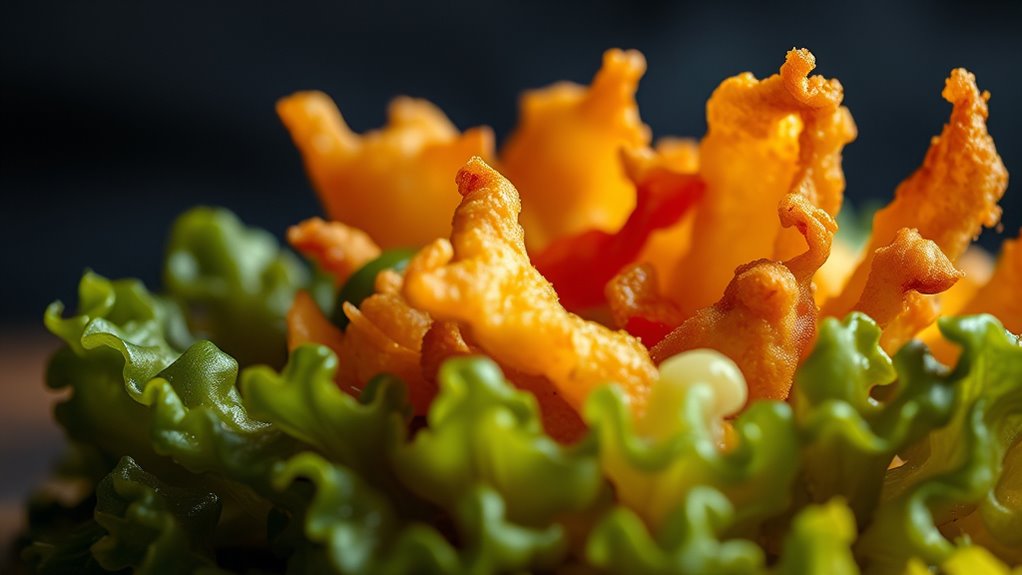

To make crispy veggie tempura with sea lettuce batter, keep your batter cold and lightly mixed to guarantee a delicate, crunchy crust. Incorporate dried seaweed flakes for rich umami flavor and added crunch. Fry in hot oil around 350°F, and avoid overcrowding to keep everything crisp. Proper technique and fresh vegetables are key for perfect texture, and pairing with a tasty dipping sauce completes the dish. If you keep exploring, you’ll discover tips for achieving restaurant-quality results.
Key Takeaways
- Incorporate dried seaweed flakes into chilled tempura batter for umami flavor and extra crunch.
- Use cold ingredients and avoid overmixing to create a light, crispy batter.
- Fry at about 350°F (175°C) in small batches to ensure even cooking and crispiness.
- Drain excess oil on a wire rack or paper towels to maintain tempura’s crisp texture.
- Serve with traditional tentsuyu or tangy ponzu sauce to complement the crispy vegetable tempura.
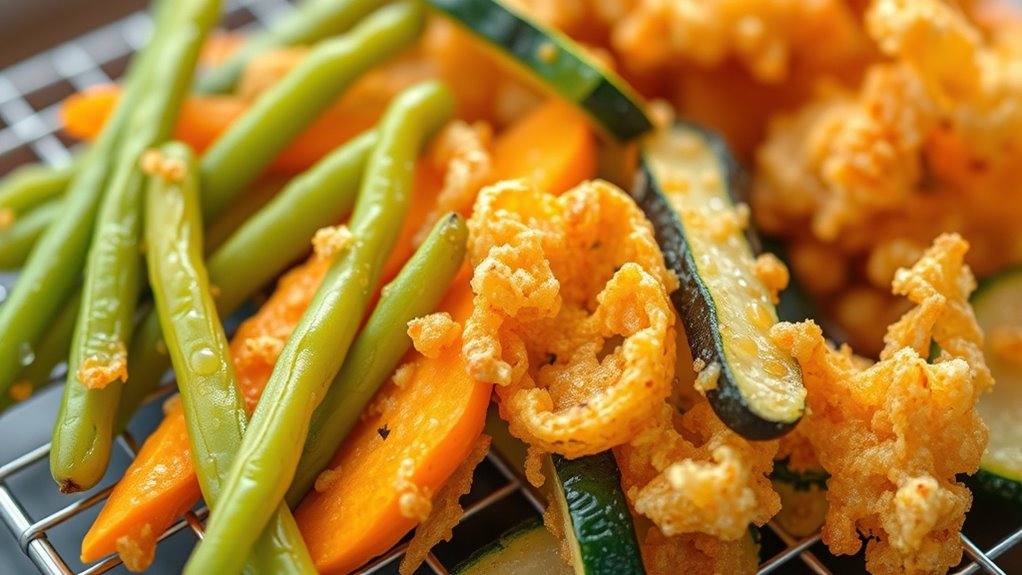
Ever wondered how to achieve perfectly crispy veggie tempura at home? The secret lies not just in selecting fresh vegetables but also in mastering the right cooking techniques and choosing the perfect dipping sauces to enhance each bite. When you’re aiming for that light, airy crunch, the way you prepare and fry your tempura makes all the difference. First, focus on your batter. For a truly crispy texture, you want a batter that’s cold and lightly mixed—avoid overworking it, as this can develop gluten and make your tempura heavy. Using a sea lettuce batter, which incorporates dried seaweed flakes, adds a subtle umami flavor and contributes to an extra crispiness, elevating your tempura to restaurant quality. Keep your batter chilled right up until frying; ice-cold ingredients help create a batter that crisps beautifully during cooking. Incorporating natural ingredients like seaweed not only enhances flavor but also contributes to the overall authenticity of the dish.
Next, pay close attention to your cooking techniques. Heat your oil to the right temperature—around 350°F (175°C)—to ensure the veggies cook quickly and evenly, forming a delicate crust without absorbing excess oil. Use a wire rack or paper towels to drain the tempura after frying, preventing sogginess and maintaining that irresistible crunch. When frying, don’t overcrowd the pan; give each piece enough room to cook evenly. This allows the batter to crisp uniformly and prevents temperature drops that can lead to greasy tempura.
As for serving, the right dipping sauces complete the experience. Classic options like tentsuyu—made from soy sauce, mirin, and dashi—offer a savory complement that balances the fried goodness. You can also experiment with a tangy ponzu or a spicy mayo to add variety. Keep your sauces at room temperature and serve them in small dishes for dipping. Remember, the key to elevating your tempura isn’t just in the batter or frying, but also in how you pair it with dipping sauces that highlight its flavors without overpowering them.

Kikkoman Tempura Batter Mix, 10 Ounce
10-ounce
As an affiliate, we earn on qualifying purchases.
As an affiliate, we earn on qualifying purchases.
Frequently Asked Questions
Can I Substitute Sea Lettuce With Other Seaweeds?
Yes, you can substitute sea lettuce with other seaweed varieties like nori, wakame, or kelp. These alternatives offer different flavor pairings, from mild to savory, so choose based on your taste preferences. Keep in mind, each seaweed variety has a unique texture and flavor, which can impact the overall dish. Experimenting with different seaweeds allows you to customize the tempura’s taste and appearance to suit your palate.
What’s the Best Oil for Frying Tempura?
You should use a neutral oil with a high smoke point, like vegetable or canola oil, for frying tempura. Keep the oil temperature around 350°F to 375°F to guarantee crispy batter and prevent sogginess. Maintaining proper oil temperature is vital; too hot burns the batter, while too cold makes it greasy. Achieve a smooth, light batter consistency to get that perfect, delicate crunch.
How Long Should I Cook the Tempura?
You should cook tempura for about 2 to 3 minutes per side at a temperature of around 350°F (175°C). Keep a close eye on the cooking times and maintain temperature control, so the batter turns golden and crispy without burning. Flip the vegetables gently to ensure even cooking. Once crispy and lightly browned, remove the tempura and drain excess oil on paper towels.
Is There a Vegan Alternative to the Batter?
Oh, you thought vegan batter options were impossible? Think again! You can easily swap out traditional ingredients with a plant-based coating like cornstarch, rice flour, or chickpea flour. Mix in sparkling water for that crispy texture, and you’ve got a delicious vegan alternative. This way, you enjoy your tempura guilt-free, knowing your plant-based coating stays just as crispy and tasty. Who knew vegan could be so satisfying?
How Do I Keep Tempura Crispy Longer?
To keep your tempura crispy longer, make certain your oil temperature stays between 350-375°F for ideal frying. Use a batter with the right thickness—not too thick or thin—so it crisps properly without becoming soggy. Avoid overcrowding the pan, which drops the oil temperature. Drain excess oil on paper towels and serve immediately. These steps help maintain that perfect crunch and prevent sogginess, keeping your tempura delightful longer.

Raw Nori Flakes, Green Nori Seaweed Flakes, 100% Pure Seaweed Flakes, Vegan, No Additives, No Gmo
1. Premium green nori seaweed flakes, 100% pure seaweed flakes, vegan, no additives, No Gmo.
As an affiliate, we earn on qualifying purchases.
As an affiliate, we earn on qualifying purchases.
Conclusion
Once you take a bite of this crispy veggie tempura, you’ll discover a symphony of textures that dance on your palate like a lively festival. The sea lettuce batter wraps each piece in a whisper of ocean’s breeze, turning simple vegetables into golden treasures. With every crunch, you’ll feel like you’ve uncovered a hidden gem—delightful, invigorating, and utterly irresistible. So, go ahead, indulge in this crunchy delight and let it brighten your day like sunshine breaking through clouds.

Deep Fry Oil Thermometer for Fryer Pot,Cooking Thermometer for Hot Oil Deep Fryer,Side of Frying Thermo Clip&3.5 inch Probe, Easy Clean up, Reading Fast,
Deep Fry Pot Accessory: this fry pot thermomometer is specially for Tempura Deep Fryer Pot Thermometer Replacement, the…
As an affiliate, we earn on qualifying purchases.
As an affiliate, we earn on qualifying purchases.

Kikkoman Tempura Dipping Sauce 10 oz + 2x Tempura Batter Mix 10 oz Bundle with Measuring Spoon – Easy Prep for Crispy Tempuras & Savory Dipping – Gift Set (4 Items)
𝗝𝗔𝗣𝗔𝗡𝗘𝗦𝗘 𝗧𝗘𝗠𝗣𝗨𝗥𝗔 𝗘𝗦𝗦𝗘𝗡𝗧𝗜𝗔𝗟𝗦 𝗦𝗘𝗧 – This gift set includes 1x Kikkoman Tempura Sauce 10 oz and 2x Tempura…
As an affiliate, we earn on qualifying purchases.
As an affiliate, we earn on qualifying purchases.