
To make a sourdough-based vegan pizza with seasonal veggies, start by fermenting your sourdough dough slowly for a tangy, flavorful crust. Top it with fresh, colorful seasonal vegetables like peppers, zucchini, and cherry tomatoes, paired with melty vegan cheese options such as cashew or nut-based cheeses. Bake at high heat until crispy and bubbly. For tips on perfecting the crust, toppings, and baking process, keep exploring these techniques.
Key Takeaways
- Prepare a sourdough crust with proper fermentation to ensure flavor, texture, and sturdy support for seasonal veggie toppings.
- Select fresh, seasonal vegetables like bell peppers, zucchini, and cherry tomatoes to enhance flavor and complement the tangy crust.
- Use vegan cheese options such as nut-based or homemade cashew cheese for even melting and rich, umami flavor.
- Bake at high heat to achieve a crispy crust and thoroughly cooked, flavorful toppings.
- Balance the acidity of sourdough with the natural sweetness of vegetables for a harmonious, delicious vegan pizza.
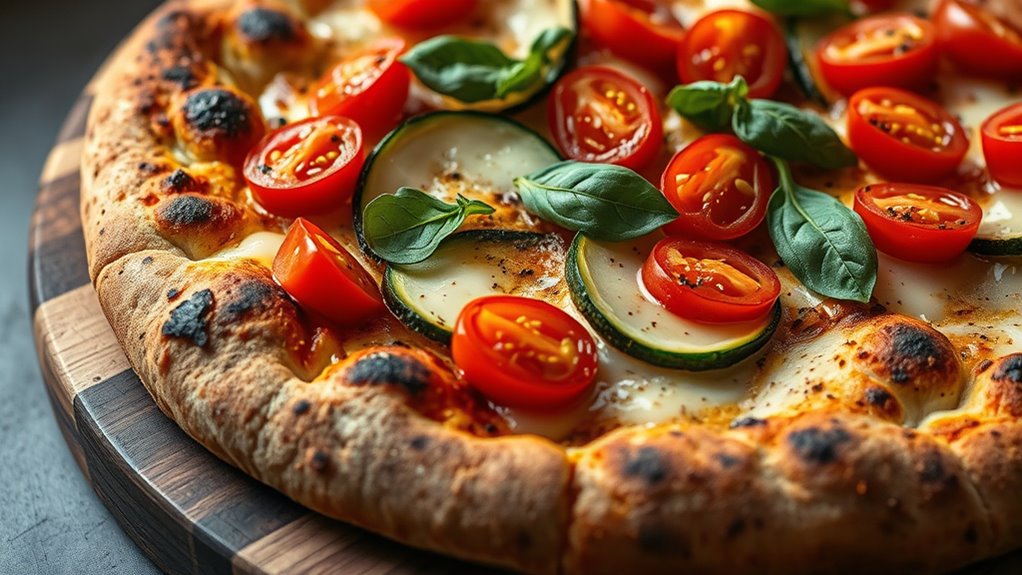
If you’re looking for a delicious, plant-based alternative to traditional pizza, vegan sourdough pizza offers a flavorful and healthy option. The secret to its unique taste and texture lies in dough fermentation, which not only enhances the flavor but also improves digestibility. When making your sourdough crust, you’ll want to allow the dough to ferment slowly, giving it time to develop complex, tangy notes that set it apart from conventional pizza bases. This process also creates a chewy, airy crust that holds up well under a variety of toppings. As you prepare your dough, consider experimenting with different hydration levels and fermentation times to find the perfect balance for your palate. Regularly monitoring your fermentation process can ensure optimal flavor development and crust quality.
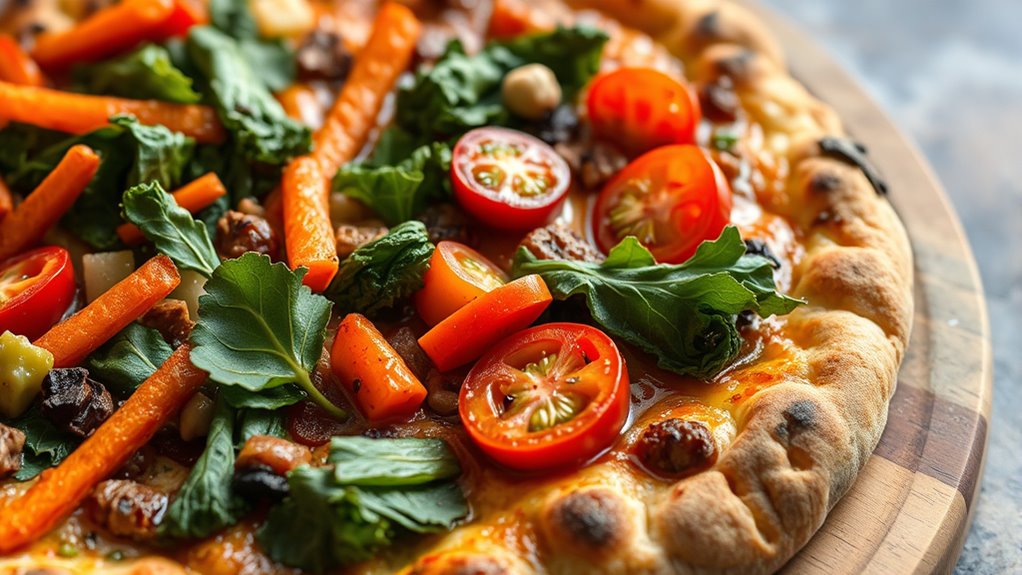
Once your crust is ready, the toppings become the star. Seasonal vegetables—think vibrant bell peppers, roasted zucchini, cherry tomatoes, and leafy greens—bring freshness and color to your pizza. Since you’re working with a sourdough base, the acidity complements the natural sweetness of seasonal produce, creating a harmonious flavor profile. When it comes to cheese, vegan cheese options have come a long way, offering creamy, meltable alternatives that mimic traditional cheese without animal products. You can choose from nut-based cheeses, soy-based varieties, or even homemade cashew cheese to top your pizza. These vegan cheeses melt nicely during baking and add richness without overpowering the freshness of the vegetables.
Topping your sourdough pizza with seasonal vegetables and melty vegan cheeses creates a fresh, flavorful harmony.
Applying the vegan cheese options evenly across your sourdough crust allows the flavors to meld during baking. Because sourdough has a slightly tangy flavor, it pairs well with the umami qualities of cheese, enhancing the overall taste. Keep in mind that some vegan cheeses melt better than others, so you might want to try a few types to discover which one best suits your preferences. Once topped, your pizza goes into a preheated oven, where the high heat crisps the crust while the toppings cook to perfection. The fermentation process in the dough ensures the crust remains sturdy yet tender, providing a satisfying bite with each piece.
As you pull your vegan sourdough pizza from the oven, you’ll notice the enticing aroma of toasted vegetables and bubbling cheese. The combination of the tangy, fermented crust and the fresh, seasonal toppings creates a balanced and flavorful experience. With its wholesome ingredients and thoughtful preparation, this pizza isn’t just a meal—it’s a celebration of plant-based, artisanal cooking that highlights the best of seasonal produce and innovative vegan cheese options. Proper bulb maintenance of your oven or kitchen equipment can help ensure consistent baking results.
Top picks for "sourdough vegan pizza"
Open Amazon search results for this keyword.
As an affiliate, we earn on qualifying purchases.
Frequently Asked Questions
Can I Substitute Gluten-Free Flour in This Sourdough Pizza?
Yes, you can substitute gluten-free flour for this sourdough pizza crust. Keep in mind, gluten-free alternatives like rice flour, almond flour, or a gluten-free flour blend work as flour substitution options, but they may alter the texture. You might need to adjust the hydration or add a binding agent like xanthan gum. Experimenting helps find the best balance for a delicious, gluten-free crust that complements your seasonal veggies.
How Long Does the Entire Vegan Sourdough Pizza Take to Prepare?
Preparing this vegan sourdough pizza takes about 3 to 4 hours total. You start with dough fermentation, which can take anywhere from 4 to 8 hours or overnight for better flavor. Once the dough is ready, you prep your seasonal veggie toppings, which takes around 15-20 minutes. Baking the pizza itself usually takes 10-15 minutes. So, plan for a few hours including fermentation, topping prep, and baking.
What Are Some Popular Seasonal Veggies to Use on This Pizza?
Imagine tasting the vibrant flavors of spring’s asparagus or summer’s ripe cherry tomatoes—these are perfect seasonal vegetable pairings for your pizza. You’ll want to use market freshness tips by choosing the freshest, in-season produce. Popular options include zucchini, bell peppers, spinach, mushrooms, and fresh herbs. These veggies bring color, flavor, and nutritional punch, transforming your vegan sourdough pizza into a celebration of seasonal bounty and farm-fresh goodness.
Is There a Vegan Cheese Alternative Compatible With Sourdough Crust?
Yes, you can use plant-based cheeses or nut-based cheeses as vegan cheese alternatives compatible with sourdough crust. Many brands offer creamy, meltable options made from almonds, cashews, or coconuts, which work well on pizza. You might also try making your own nut-based cheese at home for a fresh taste. These options melt nicely and add a rich, cheesy flavor without any animal products, perfect for your sourdough pizza.
Can I Store Leftovers and Reheat Without Losing Flavor?
Yes, you can store leftovers and reheat without losing flavor. Freeze leftovers in an airtight container or wrap them tightly to prevent freezer burn. When reheating, use an oven or skillet to restore crispiness, avoiding sogginess from microwave reheating. Reheating tips include letting the pizza thaw slightly first and reheating until hot. This way, your sourdough vegan pizza retains its delicious flavor and texture.
Conclusion
Now that you’ve crafted this sourdough-based vegan pizza with fresh seasonal veggies, you’re truly a modern-day pizza pioneer. Imagine sharing slices at a Renaissance fair, where knights and jesters marvel at your culinary wizardry. With each bite, you embrace a healthier, eco-friendly lifestyle—no need for a time machine. So, keep experimenting with flavors and enjoy the delicious journey. After all, even in the age of dragons, pizza remains the king of comfort food.