You can manage stress effectively by combining plant-based nutrition with mindfulness practices like deep breathing and herbal remedies. Nourishing your body with calming herbs such as chamomile, ashwagandha, and lavender supports relaxation naturally, while slow, deliberate breaths activate your relaxation response. Incorporating these habits into your daily routine helps reduce anxiety and build resilience. To discover more simple ways to create this balanced approach, keep exploring ways to integrate these calming strategies into your life.
Key Takeaways
- Incorporate calming herbs like chamomile, lavender, and ashwagandha into your diet or environment to naturally reduce stress.
- Practice deep, slow breathing exercises regularly to activate relaxation responses and lower cortisol levels.
- Combine herbal remedies with mindful routines, such as herbal tea and breathing pauses, for a holistic stress management approach.
- Use practical tools like herbal essential oils and home improvement devices to support a calming environment and reduce stress triggers.
- Cultivate consistent habits of plant-based nutrition and mindfulness practices to enhance resilience and promote sustainable stress relief.
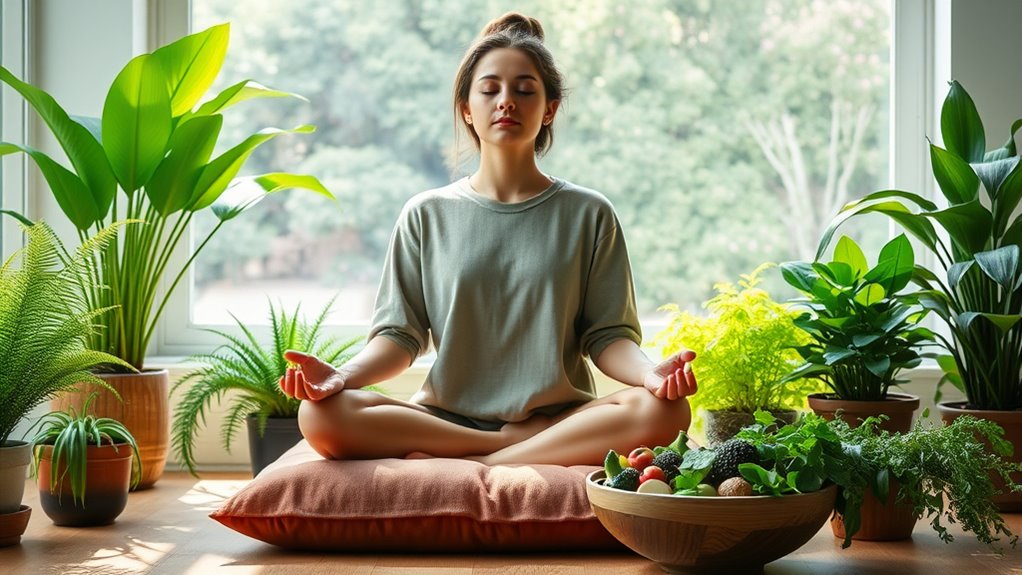
Stress can take a serious toll on your mental and physical health, but incorporating plant-based nutrition and mindfulness practices offers a powerful way to manage it. One effective approach involves using herbal remedies to support your body’s stress response. Herbs like chamomile, ashwagandha, and lavender have calming properties that can help soothe your nervous system when stress levels rise. You might prepare a chamomile tea in the evening or add a few drops of lavender essential oil to your diffuser to create a peaceful environment. These herbal remedies work naturally with your body, reducing anxiety and promoting relaxation without the side effects often associated with pharmaceuticals.
Herbal remedies like chamomile, ashwagandha, and lavender naturally soothe nerves and promote relaxation without side effects.
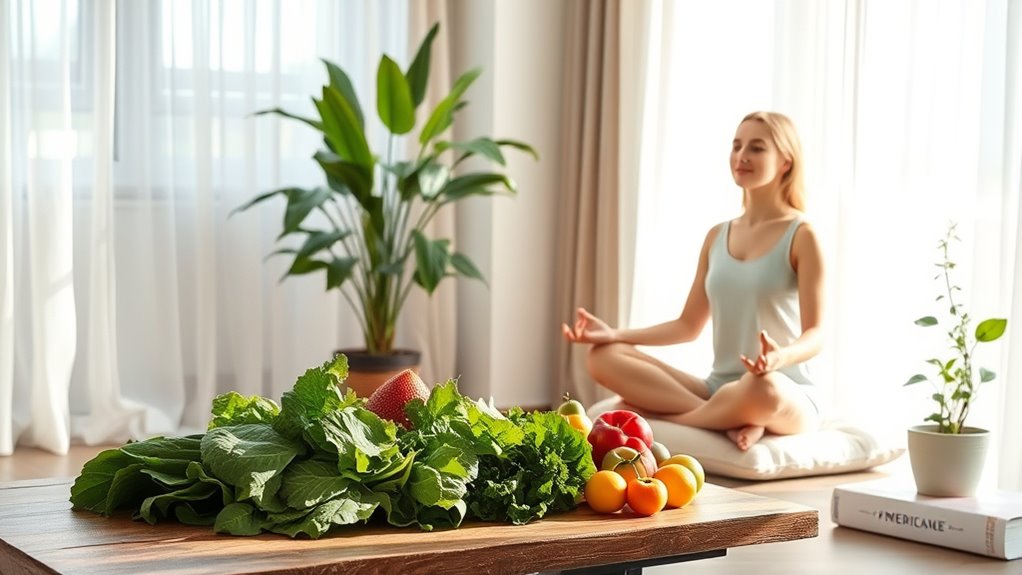
In addition to herbal remedies, breathing exercises serve as a simple yet potent tool to calm your mind and body. When you’re feeling overwhelmed, focus on slow, deliberate breaths—inhale deeply through your nose, hold for a few seconds, then exhale slowly through your mouth. This practice activates your parasympathetic nervous system, which is responsible for relaxation and recovery. Regularly engaging in breathing exercises can lower cortisol levels, decrease heart rate, and improve your overall mood. Whether you practice deep breathing for a few minutes in the morning or during stressful moments throughout the day, it helps anchor you in the present and reduces feelings of anxiety.
Incorporating airless paint sprayers into your home improvement projects can also be a great way to reduce stress by making painting tasks more efficient and less messy. Integrating herbal remedies and breathing exercises into your daily routine can be straightforward. Start by establishing a calming ritual—perhaps sipping herbal tea while practicing deep breathing or using herbal essential oils during meditation. These methods are flexible and easy to incorporate, making them accessible even during busy days. As you become more consistent, you’ll notice improvements in your resilience to stress, feeling more centered and balanced. Remember, the goal isn’t to eliminate stress entirely but to develop healthier ways to manage it. By combining the power of herbal remedies with mindful breathing, you give yourself natural tools to navigate life’s challenges more effectively.
Ultimately, managing stress with plant‑based nutrition and mindfulness isn’t about quick fixes; it’s about cultivating habits that support your well-being. Herbal remedies and breathing exercises work synergistically to create a calming effect that sustains you through daily pressures. As you embrace these practices, you’ll likely find yourself more present, less reactive, and better equipped to handle stress in a healthy, sustainable way.
Frequently Asked Questions
Can Plant-Based Diets Alone Eliminate All Stress?
Plant-based diets can’t eliminate all stress on their own, but they can substantially help. By incorporating fiber-rich foods, you boost gut health, which impacts your mood and stress levels. Protein sources like beans, lentils, and nuts support your energy and mood stability. While they’re beneficial, managing stress also requires mindfulness and lifestyle changes. So, while a plant-based diet helps, it’s part of a broader approach for stress relief.
How Quickly Can Mindfulness Techniques Reduce Anxiety?
You might notice the effects of mindfulness practices on anxiety reduction in just a few minutes, especially if you stay consistent. Coincidentally, even brief sessions like deep breathing or focused meditation can considerably lower your stress levels quickly. With regular practice, these techniques become more effective, helping you manage anxiety more efficiently over time. So, the sooner you start, the faster you’ll experience the calming benefits of mindfulness.
Are There Specific Plants That Naturally Boost Mood?
Certain plants like lavender, chamomile, and lemon balm naturally boost your mood through herbal remedies. Lavender, especially, offers calming effects, while chamomile can reduce anxiety. Aromatherapy benefits from these plants’ essential oils, helping you relax and feel more uplifted. Incorporate these plants into your daily routine, whether through teas, diffusers, or direct inhalation, to enhance your mood naturally and promote overall well-being.
Is It Safe to Combine Plant-Based Nutrition With Medication?
Yes, combining plant-based nutrition with medication can be safe, but you should always consider potential medication interactions and your dietary restrictions. It’s important to consult your healthcare provider or a registered dietitian before making changes, especially if you’re on prescription meds. They can help you understand any risks and adjust your diet accordingly, ensuring you get the benefits of plant-based foods without compromising your health or medication efficacy.
How Do Individual Differences Affect Stress Management Strategies?
Think of yourself as a unique garden, where personality traits and cultural influences are the soil and climate shaping growth. Your stress management strategies flourish differently based on these factors. For instance, some may find mindfulness blooms best in calm personalities, while others thrive with active routines rooted in cultural traditions. Embrace your individuality, tailoring techniques that resonate with your inner landscape for more effective stress relief.
Conclusion
As you embrace plant-based foods and mindfulness, picture your mind settling like calm waters after a storm. Feel the gentle glow of vibrant greens and earthy tones fueling your body, while each mindful breath clears away tension. With every nourishing bite and focused inhale, you’re painting a peaceful landscape within—where stress melts into a tranquil horizon. Keep tending this inner garden, and watch your stress fade into the serenity of a balanced, vibrant life.