
Switching from vegetarian to vegan is achievable without sacrificing nutrition by planning balanced meals that include a variety of plant-based foods. Focus on sourcing protein from legumes, tofu, and seitan, while incorporating leafy greens, nuts, and seeds for essential nutrients. Pay attention to vitamin B12, vitamin D, and omega-3s through fortified foods or supplements. By making intentional choices, you can maintain your health and enjoy a diverse, satisfying diet—more tips await to help you succeed.
Key Takeaways
- Gradually replace animal products with diverse plant-based options to ensure balanced nutrient intake.
- Incorporate fortified foods and supplements for nutrients like B12 and vitamin D.
- Pair iron-rich plant foods with vitamin C sources to enhance absorption.
- Plan meals that combine proteins, healthy fats, and greens for comprehensive nutrition.
- Regularly read labels and diversify foods to prevent deficiencies and maintain satisfaction.
Are you considering a switch from vegetarianism to veganism? If so, you’re making a commitment that can positively impact your health, the environment, and animal welfare. Moving smoothly requires careful planning, especially when it comes to meal planning and nutrient sourcing. Unlike vegetarian diets, which often include dairy and eggs, vegan diets eliminate all animal products, so you need to be intentional about meeting your nutritional needs.
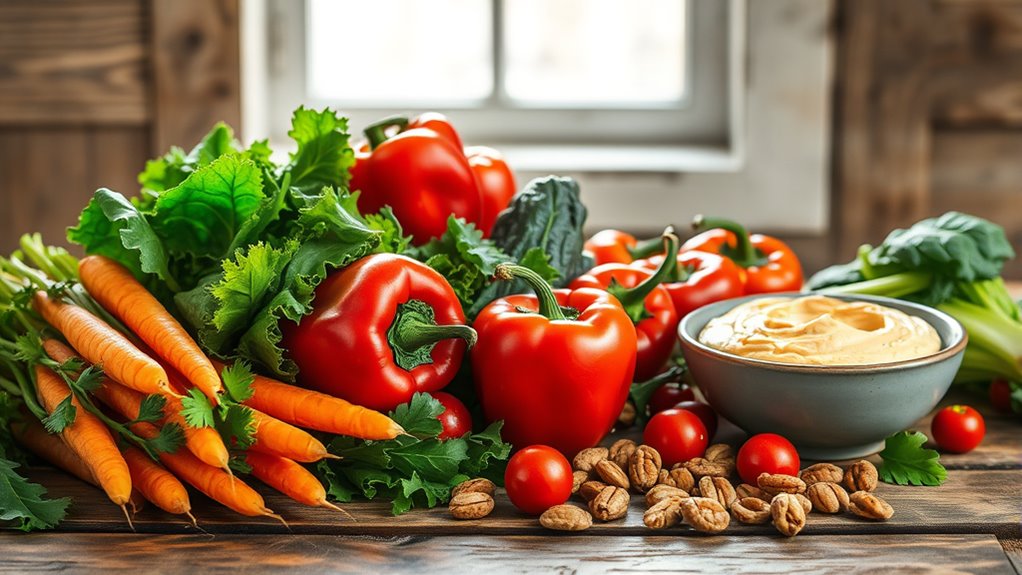
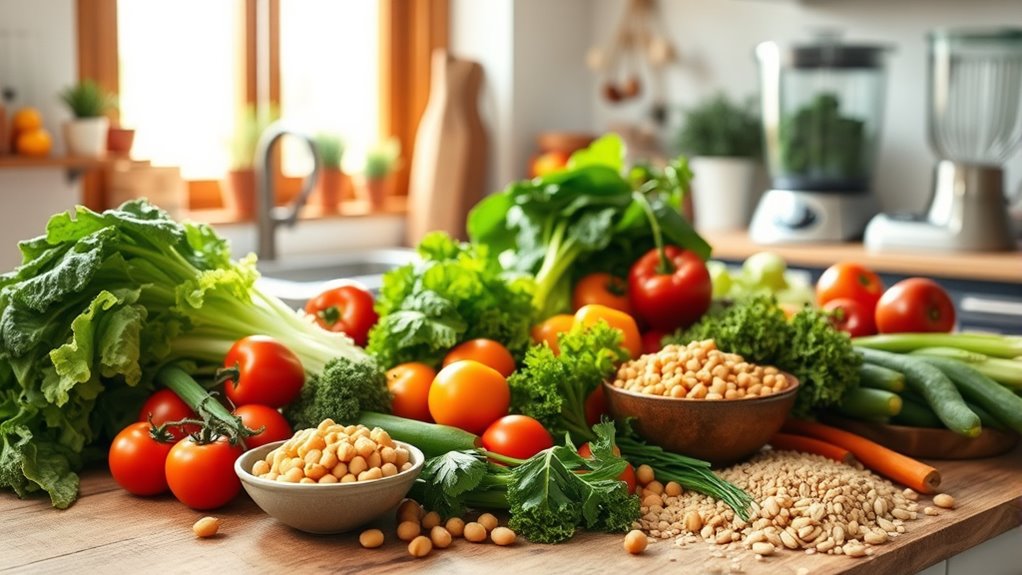
Start by understanding how to build balanced meals. Your focus should be on incorporating a variety of plant-based foods to ensure you get enough protein, vitamins, and minerals. Legumes, tofu, tempeh, and seitan are excellent sources of protein that can replace animal-based options. Leafy greens like spinach and kale provide iron and calcium, while nuts, seeds, and avocados supply healthy fats. When planning your meals, think about how each component contributes to your overall nutrient intake—this is where effective meal planning becomes vital. Planning ahead helps you avoid gaps in your diet and reduces the temptation to revert to less nutritious options.
Build balanced vegan meals with diverse plant foods to meet your nutritional needs and stay satisfied.
Nutrient sourcing is key to a successful vegan transition. Some nutrients are more challenging to obtain from plants alone, so you’ll need to be strategic. For example, vitamin B12 is primarily found in animal products, so consider fortified foods or supplements. Omega-3 fatty acids, important for brain health, can be sourced from flaxseeds, chia seeds, walnuts, and algae oils. Iron from plant sources is less easily absorbed than from meat, so pair iron-rich foods with vitamin C sources like citrus or bell peppers to enhance absorption. Vitamin D, another essential nutrient, can be obtained from fortified plant milks and supplements, especially if sun exposure is limited. Incorporating predictive analytics into your meal planning can help forecast nutritional needs based on your dietary habits and health goals.
To make nutrient sourcing easier, familiarize yourself with labels and nutrition facts. Incorporate a variety of foods to prevent deficiencies and keep your diet exciting. Meal planning helps you create weekly menus that balance your nutritional needs with your taste preferences. By doing so, you’ll ensure your transition to veganism is sustainable and nourishing. Remember, it’s not just about removing animal products but about embracing a diverse, nutrient-dense diet that supports your health and well-being. With thoughtful meal planning and strategic nutrient sourcing, you can thrive on a vegan diet without sacrificing nutrition or satisfaction.
Top picks for "vegetarian vegan transition"
Open Amazon search results for this keyword.
As an affiliate, we earn on qualifying purchases.
Frequently Asked Questions
How Do I Ensure Adequate Protein Intake on a Vegan Diet?
You can guarantee adequate protein intake on a vegan diet by including a variety of plant-based proteins like beans, lentils, tofu, and quinoa. Focus on vegan meal planning that combines different sources to meet your protein needs. Keep snacks like nuts and seeds handy, and consider fortified plant milks or protein powders if necessary. This way, you’ll maintain balanced nutrition without sacrificing protein.
What Are the Best Plant-Based Sources of Vitamin B12?
You can get vitamin B12 from fortified foods like plant-based milks, cereals, and nutritional yeast. Nutritional yeast is especially rich in B12 and easy to add to your meals, such as sprinkling it on popcorn, pasta, or salads. Fortified foods guarantee you meet your B12 needs without animal products. Make sure to check labels for B12 content and consider supplementation if necessary, especially on a vegan diet.
How Can I Avoid Common Nutritional Deficiencies During Transition?
Think of your nutrition like a garden—diversity keeps everything thriving. To avoid deficiencies during your changeover, plan meals with a variety of plant-based foods and incorporate supplement strategies for nutrients like vitamin B12, iron, and omega-3s. Regularly check your levels with healthcare guidance, and stay proactive. This way, you nurture your body and guarantee all essential nutrients flourish, even as you shift to vegan living.
Are There Any Easy Vegan Recipes for Beginners?
Yes, you can start with simple vegan recipes like overnight oats or fruit smoothies for breakfast. These are quick, easy, and require minimal effort. For snacks, try hummus with veggie sticks or trail mix. These options are nutritious, satisfying, and perfect for beginners. You’ll find that incorporating these simple meals into your routine makes shifting more seamless without sacrificing flavor or nutrition.
How Do I Handle Social Situations and Dining Out as a Vegan?
When handling social situations and dining out as a vegan, you should confidently communicate your dietary needs, practicing good social etiquette. Use restaurant tips like checking menus online beforehand and asking about vegan options or customizing dishes. Keep a positive attitude, and don’t hesitate to politely speak up if something isn’t vegan. This approach helps you enjoy dining out while staying true to your vegan lifestyle.
Conclusion
Changing from vegetarian to vegan might seem intimidating, but with mindful choices, you can maintain balanced nutrition and enjoy a variety of delicious foods. Remember, every small step counts toward a healthier you and a more sustainable planet. Are you ready to embrace this compassionate and nourishing lifestyle without sacrificing flavor or nutrients? Trust your instincts, stay informed, and enjoy the journey toward a more vibrant, ethical life. The power to transform is in your hands.