To make fermented berry kefir with a plant-based starter, blend fresh berries with plant milk like coconut or almond to provide sugars for fermentation. Add a probiotic plant-based culture or activated coconut starter, then keep the mixture at a steady warm temperature for 24-48 hours. This process develops probiotics and enhances flavor. As you explore further, you’ll discover tips to perfect your ferment and customize it to suit your taste and health goals.
Key Takeaways
- Fermented berry kefir is made by fermenting plant-based milk with beneficial microbes and fresh berries.
- Plant-based starters like coconut or nut-based cultures support probiotic growth without dairy.
- Fermentation enhances flavor, nutrient bioavailability, and probiotic content over 24-48 hours.
- Berries add natural sugars, antioxidants, and fiber, boosting flavor and health benefits.
- Proper temperature and fermentation time are crucial for optimal probiotic development and taste.
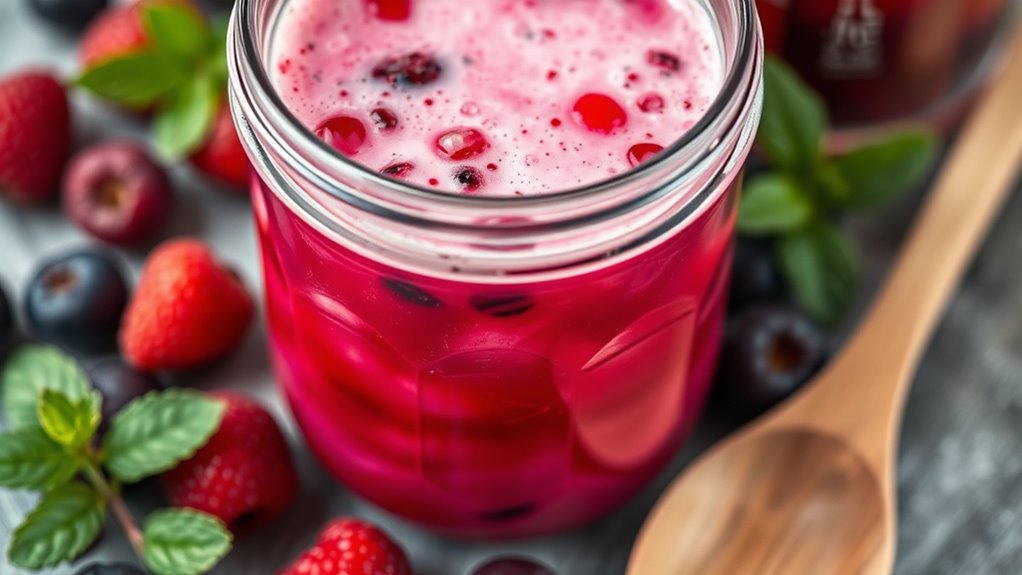
Fermented berry kefir is a delicious and nutritious probiotic beverage that combines the tangy richness of traditional kefir with the vibrant flavors of fresh berries. When you make it at home using a plant-based starter, you access a world of probiotic benefits that support your gut health and boost your immune system. The process revolves around fermentation techniques that harness natural microbes to transform simple ingredients into a powerful, healthful drink. By understanding these techniques, you can create a consistently tangy, flavorful kefir that’s tailored to your taste and dietary preferences.
Enjoy probiotic-rich fermented berry kefir made effortlessly at home with plant-based starters.
The core of fermentation techniques lies in the careful cultivation of beneficial bacteria and yeast. Using a plant-based starter, such as activated coconut or nut-based cultures, you introduce specific strains of microbes that ferment the sugars in plant milk and berries. This fermentation process not only preserves the nutrients but also enhances their bioavailability, making it easier for your body to absorb essential vitamins and minerals. As the microbes consume the sugars, they produce lactic acid, carbon dioxide, and other compounds that give kefir its characteristic tang and creamy texture. Maintaining the right temperature and fermentation duration is key; typically, 24 to 48 hours at room temperature allows the microbes to do their work effectively, developing the complex flavors you desire. Temperature and time control are crucial factors in optimizing probiotic growth and flavor development.
Incorporating fresh berries into your kefir not only elevates its flavor profile but also adds antioxidants and fiber. When you blend berries into the fermented mixture, the natural sugars provide additional fuel for the probiotics, encouraging their growth and activity. This symbiotic relationship ensures that each sip delivers a potent dose of live cultures that promote healthy digestion, reduce inflammation, and support overall gut flora balance. Using a plant-based starter makes this process accessible and suitable for vegans or those with dairy sensitivities, without sacrificing the probiotic benefits that traditional dairy kefir offers.
As you experiment with fermentation techniques, you’ll find that adjusting factors like fermentation time and temperature influences the probiotic content and flavor complexity. Longer fermentation intensifies tanginess and probiotic concentration, while shorter periods produce a milder taste. Regularly tasting your kefir during the process helps you find that perfect balance. With patience and attention to detail, you’ll craft a fermented berry kefir that’s not only delicious but also a potent source of live probiotics, supporting your digestive health naturally.
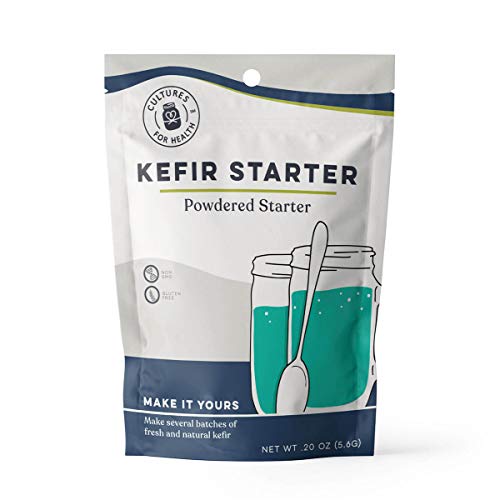
Cultures for Health Kefir Starter Culture | 4 Packets Freeze Dried Starter Powder | Make Kefir with Milk, Water, or Juice | Re-Culture Kefir Probiotic Drinks 2-7x Each | Cultures in Less Than a Day
BEGINNER FRIENDLY: This powdered starter is the easiest culture in the world, so if you want to get…
As an affiliate, we earn on qualifying purchases.
As an affiliate, we earn on qualifying purchases.
Frequently Asked Questions
Can I Substitute Different Berries in the Kefir?
Yes, you can substitute different berries in your kefir. Berry variations work well, and the plant-based starter offers great flexibility. Just keep in mind that some berries may influence the flavor or fermentation process slightly differently. Feel free to experiment with strawberries, blueberries, or raspberries to find your favorite combination. As long as you maintain proper fermentation conditions, your kefir should turn out delicious regardless of the berry choice.
How Long Can Fermented Berry Kefir Be Stored?
You can typically store fermented berry kefir for up to 5-7 days in the refrigerator. To maximize preservation, keep it in an airtight container and make certain your fridge stays at or below 40°F (4°C). For longer storage, consider freezing small portions, but note that this may alter its texture and flavor. Always check for signs of spoilage, like off smells or mold, before consuming.
Is Plant-Based Starter Suitable for All Dietary Restrictions?
If you’re vegan or have dairy allergies, a plant-based starter is suitable for your dietary restrictions. For example, Sarah, who’s lactose intolerant, successfully makes dairy-free kefir using almond milk and a plant-based starter. These starters cater to dairy alternatives and vegan preferences, ensuring you enjoy fermented beverages without compromising your diet. Just check ingredient labels to confirm they’re free from animal-derived products, and you’re good to go.
What Are the Signs of Spoilage in Fermented Kefir?
You’ll know your kefir has spoiled if it develops a strong sour smell that’s more intense than usual, or if you notice mold growth on the surface. Additionally, if it tastes overly bitter or has an off-putting flavor, it’s best to discard it. Trust your senses—if anything seems unusual, it’s safer to throw it out to avoid any health risks.
Can I Reuse the Plant-Based Starter for Future Batches?
Like a seasoned alchemist in a Victorian lab, you can definitely reuse your plant-based starter for future batches. Just guarantee it’s healthy and active before reuse, and adjust the berry substitution if needed. Keep the starter stored properly, and if it shows signs of spoilage, discard and start fresh. Reusing your starter reduces waste and enhances flavor, making each batch uniquely yours.

Kimchi Making Kit By OurHands – Fermentation Kit to Make Your Own Vegan Kimchi With Seaweed, Korean Pepper Flakes and Recipes
MAKE YOUR OWN KIMCHI: Create deliciously sour and spicy kimchi at home with our kit. Ideal for adding…
As an affiliate, we earn on qualifying purchases.
As an affiliate, we earn on qualifying purchases.
Conclusion
As you enjoy your fermented berry kefir, remember it’s both a simple pleasure and a complex craft. While it’s easy to sip, each batch embodies a delicate balance of nature’s wild fermentation and your careful hands. The vibrant berries bring freshness, yet hidden within is a tangy depth born from fermentation’s quiet transformation. Embrace this contrast—each glass a tribute to how simplicity and complexity coexist beautifully in your homemade kefir.

Indigo Daydream Brew Blend – 4 oz – Lavender & Blueberry Flavoring for Kombucha & Water Kefir – Adds Soft Floral Notes & Berry Sweetness to Your Second Ferment – Certified Organic & Kosher
INDIGO DAYDREAM – An Organic Blend of Blueberries, Lavender, and Moringa Leaf for flavoring kombucha, water kefir, tea,…
As an affiliate, we earn on qualifying purchases.
As an affiliate, we earn on qualifying purchases.

Cultures for Health Vegan Yogurt Starter Culture | 4 Direct-Set Packets | DIY Dairy-Free Yogurt from Plant Milks | Probiotic for Gut Health
LOW MAINTENANCE: This culture is direct-set, meaning it only cultures once, perfect for beginners or anyone who doesn't…
As an affiliate, we earn on qualifying purchases.
As an affiliate, we earn on qualifying purchases.