
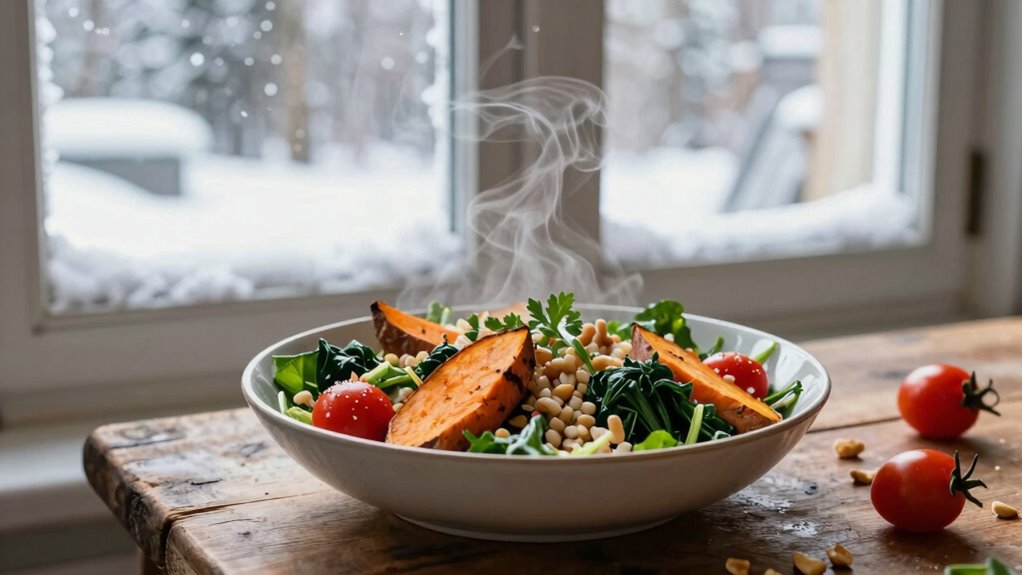

Warm salads are perfect for cold weather because they combine the comfort of a hot dish with the freshness of salad. You get to enjoy seasonal ingredients like roasted root vegetables and sautéed greens, which boost flavor and nutrition. Cooking certain ingredients makes nutrients more available and supports your immune health. By pairing warm grains and proteins, you create satisfying, balanced meals. Keep exploring to discover how you can make these cozy, nutritious salads part of your seasonal routine.

Get health and wellness essentials delivered free with Prime
- Fast, free delivery on millions of items
- Prime Video, Amazon Music and more included
- Member-only deals all year
Key Takeaways
- Warm salads blend hot comfort with fresh ingredients, perfect for satisfying meals during chilly weather.
- Cooking releases nutrients and enhances flavors of seasonal vegetables, boosting nutritional value.
- Incorporating grains and proteins makes salads more filling and balanced for cold days.
- Seasonal herbs and roasted vegetables add depth, warmth, and flavor to winter salads.
- Warm salads support immune health with nutrient-rich ingredients like leafy greens and root vegetables.

Have you ever wondered how to enjoy a fresh, satisfying meal even when the weather outside is chilly? Warm salads are the perfect answer. They combine the comfort of hot dishes with the lightness and freshness of salads, making them an ideal choice during cold weather. By focusing on seasonal flavor combinations, you can craft salads that not only taste great but also align with what’s fresh and available. Think roasted root vegetables, sautéed greens, or warm grains tossed with seasonal herbs and spices. These ingredients bring depth and warmth to your meal, transforming a simple salad into a hearty, comforting plate. Plus, using seasonal produce guarantees you’re getting peak flavor and maximum nutritional benefits. For example, roasted butternut squash provides a sweet, nutty flavor and is packed with vitamins A and C, supporting your immune health during colder months. Leafy greens like kale and spinach, when lightly sautéed, retain their nutrients while offering a tender, warm texture. Combining these with ingredients like roasted beets or sweet potatoes creates a layered, satisfying dish that satisfies both your palate and your body’s needs. Incorporating seasonal produce not only enhances flavor but also ensures you’re consuming ingredients at their nutritional peak.
Warm salads also allow you to maximize nutritional benefits. Cooking certain ingredients release their healthful properties, making nutrients more bioavailable. For instance, lightly cooking vegetables such as broccoli or Brussels sprouts enhances their antioxidant levels, giving you a nutritious boost. Incorporating protein-rich foods like grilled chicken, nuts, or cheese adds flavor and satiety without making the dish heavy. The warmth of the ingredients helps in digestion, especially when paired with fiber-rich grains like quinoa, farro, or brown rice. These grains, when warmed, release their nutty aroma and texture, making the salad more filling and satisfying. The combination of seasonal produce, healthy fats, and lean proteins results in a balanced meal that supports your immune system and provides sustained energy.
warm salad bowls with roasted vegetables
As an affiliate, we earn on qualifying purchases.
As an affiliate, we earn on qualifying purchases.
Frequently Asked Questions
Can Warm Salads Be Suitable for Meal Prep?
Yes, warm salads are great for meal prep. You can prepare flavorful combinations with ingredient variations like roasted vegetables, grains, and proteins that hold up well when reheated. Keep in mind that flavors like caramelized onions or warm spices enhance the taste, making each meal satisfying. Just store components separately if needed, and reheat gently to preserve texture and flavor, ensuring your warm salads stay delicious throughout the week.
How Do Warm Salads Compare Nutritionally to Cold Salads?
Warm salads often retain more nutrients because cooking can break down cell walls, making vitamins and minerals more accessible. Plus, heating ingredients enhances their flavor, making the dish more appealing. Compared to cold salads, warm salads may have slightly higher nutrient retention and a richer taste. You’ll enjoy a comforting, flavorful meal that’s both nutritious and satisfying, especially when you prefer a cozy, hearty option during colder weather.
Are Warm Salads More Filling Than Cold Salads?
Warm salads are like a cozy blanket—they often feel more filling than cold salads. The heat enhances flavors and creates a comforting sensation, making you feel more satisfied. The texture variation, with softened vegetables and warm proteins, adds to that fullness. So, if you’re after a hearty meal, warm salads can satisfy your hunger better while offering a delightful flavor enhancement.
What Are Some Common Mistakes When Making Warm Salads?
You often make mistakes with warm salads by neglecting proper ingredient pairing and flavor balance. For example, overloading with heavy dressings or overpowering ingredients can drown the delicate flavors. To avoid this, choose ingredients that complement each other and guarantee the flavors harmonize. Also, be mindful of cooking times to prevent ingredients from becoming mushy or losing their texture, creating a more enjoyable, balanced warm salad.
How Long Can Warm Salads Be Stored Safely?
You should store warm salads in the refrigerator for no more than two days to guarantee food safety. Follow proper refrigeration guidelines by placing the salad in an airtight container and keeping it at or below 40°F (4°C). After this period, bacteria can grow, increasing the risk of foodborne illness. Always reheat thoroughly before eating to maintain safety and quality.
seasonal greens sautéed for salads
As an affiliate, we earn on qualifying purchases.
As an affiliate, we earn on qualifying purchases.
Conclusion
So, next time you think salads are only for warm weather, give warm salads a try. They’re hearty, comforting, and perfect for chilly days. Some might worry they’re less fresh or vibrant, but warming ingredients reveal new flavors and textures you’ll love. Don’t let the cold weather fool you—warm salads bring the perfect balance of nourishment and coziness. Embrace the season and enjoy a delicious, satisfying meal that keeps you cozy inside and out.
As an affiliate, we earn on qualifying purchases.
As an affiliate, we earn on qualifying purchases.
Columbus Day / Indigenous Peoples' Day Picks
long weekend sales
As an affiliate, we earn on qualifying purchases.