
Finding a vegan protein powder that actually mixes well, tastes good, and delivers enough protein per scoop is harder than it should be — most plant powders force you to choose between protein density and drinkability. After comparing 15 leading options, Orgain Organic Vegan Protein Powder in Vanilla Bean earns the top spot for its balance of 21g of protein, a smooth texture, clean ingredients, and wide availability. If you want more protein per serving, Owyn Pro Elite High Protein Powder pushes the ceiling higher, while Garden of Life Raw Organic Protein appeals to buyers who prioritize raw, whole-food sourcing over flavor polish. The main tradeoffs in this category are taste versus protein concentration, single-source versus blended proteins, and whether extras like greens and superfoods help or just dilute the formula. Keep reading for the full breakdown of all 15 picks.
Key Takeaways
- Orgain‘s lineup dominates the middle of the rankings because its protein blend hits the sweet spot of 21g per serving with a texture that doesn’t turn gritty — but its sweetened flavors mask rather than solve the plant-protein taste problem, which is why the unsweetened version only suits strict-label buyers.
- Vega splits into two distinct tiers: the Premium Protein + Supergreens line works as a nutrition bridge for smoothie drinkers, while Protein + Recovery targets exercisers who need branch-chain aminos more than greens — buying the wrong one for your goal wastes money.
- Owyn Pro Elite is the only powder here built for serious lifters; everything else tops out near 25g per serving, so athletes should decide upfront whether protein density or ingredient extras matter more.
- Truvani‘s short ingredient list is the cleanest of the group, but you pay for it in servings per container and flavor depth — a fair trade for clean-eating buyers, a poor one for value seekers.
- Meal-replacement ambition is rare here: only Vibrant Health Maximum Vibrance and Orgain‘s Protein + 50 Superfoods genuinely try to replace food, and both sacrifice protein concentration to do it.




| vegan protein powder | Flavor | Protein per Serving |
|---|---|---|
| Vibrant Health Maximum Vibranc | Vanilla | — |
| Vega Premium Protein + Supergr | Creamy Vanilla | 20g |
| Orgain Organic Vegan Protein P | Natural Unsweetened | 21g |
| Vega Essential Protein Powder | Rich Chocolate | 25g |
| Truvani Organic Plant-Based Pr | Vanilla | — |
| Purely Inspired Plant-Based Pr | Creamy French Vanilla | 20 grams |
| Orgain Organic Vegan Protein P | Vanilla Bean | 21g |
| Vega Protein + Recovery | Vanilla | 30g |
| Truvani Organic Plant-Based Pr | Chocolate | — |
| Orgain Organic Vegan Protein P | Creamy Chocolate Fudge | 21g |
| One Sol Lean Plant Protein Pow | Horchata | — |
| Vega Premium Protein + Supergr | Chocolate | 20g |
| Owyn Pro Elite High Protein Po | Vanilla | 30g |
| Garden of Life Raw Organic Pro | Vanilla | — |
| Orgain Organic Vegan Protein + | — | 21g |
More Details on Our Top Picks
Vibrant Health Maximum Vibrance Vegan Meal Shake, Vanilla
Most vegan protein powders on this list do one job; Maximum Vibrance tries to do all of them at once. With over 120 whole food ingredients, 20g of plant protein, and 25 billion CFU from 12 probiotic strains, it sits closer to a full meal replacement than a simple shake. Compared with Vega Premium Protein + Supergreens, which adds a handful of greens to its protein, this option goes far beyond with its fruit, vegetable, and antioxidant blends. The tradeoff is convenience: the four-tablespoon serving is large, it mixes best in a proper blender, and the label asks you to drink it away from food, which doesn’t fit every routine. For anyone who wants their protein scoop to double as a nutrient insurance policy, that hassle is worth it.
Pros:- Over 120 whole food ingredients beyond just protein
- 25 billion CFU from 12 probiotic strains supports digestion
- 20g plant protein per serving
- Travel-friendly pouch uses 60% less plastic
Cons:- Four-tablespoon serving is bulky to mix and drink
- Must be taken without food, which limits when you can use it
Best for: Busy people who want one shake to cover protein, greens, probiotics, and micronutrients instead of stacking multiple supplements
Not ideal for: Post-workout or with-meal users — the brand recommends drinking it without food, and daily blending of four tablespoons gets tedious
- Servings:15
- Plant Protein:20 grams per serving
- Probiotics:25 billion CFU from 12 strains
- Whole Food Ingredients:Over 120
- Flavor:Vanilla
- Serving Instructions:Mix 4 level tablespoons in 8 oz water
- Packaging:Travel-friendly pouch with 60% less plastic
Our verdict“This is for buyers who treat their shake as a full nutritional meal, not for casual protein users who want a quick post-workout scoop.”
Vega Premium Protein + Supergreens, Creamy Vanilla
This pick makes the most sense for buyers who want greens in their diet but hate the taste of standalone supergreen powders. Vega Premium Protein + Supergreens pairs 20g of vegan protein with spinach, kale, alfalfa, and broccoli in a single scoop, with zero added sugar and a smooth, non-chalky mix. It lands in a smart middle ground: more nutritionally ambitious than Orgain Organic Vegan Protein‘s plain pea-rice-chia blend, but far simpler to use than Vibrant Health Maximum Vibrance, which demands a much larger serving and stricter timing. The real tradeoff is value — you pay a premium for the greens upgrade, and plant-based vanilla still tastes different from the dairy shakes many people are used to. If taste is your priority, the chocolate version in this roundup may go down easier.
Pros:- Combines 20g protein and supergreens in one scoop
- Dairy-free, gluten-free, and free of added sugar
- Mixes smoothly without a chalky aftertaste
- Works with water, non-dairy milk, or smoothies
Cons:- Higher price point than comparable protein powders
- Plant-based taste may not suit fans of dairy shakes
Best for: Smoothie drinkers who want to fold daily greens into their protein routine without buying a separate supergreens powder
Not ideal for: Budget-focused buyers or those loyal to dairy-style shake flavors — the price per serving runs high and the vanilla divides opinion
- Flavor:Creamy Vanilla
- Protein per Serving:20g
- Weight:26.9 oz
- Servings:25
- Dietary:Vegan, Dairy-Free, Gluten-Free, No Added Sugar
- Supergreens:Spinach, Kale, Alfalfa, Broccoli
Our verdict“A strong choice if you want greens and protein in one convenient scoop, provided you accept the premium pricing.”
Orgain Organic Vegan Protein Powder, Natural Unsweetened
The unsweetened version of Orgain’s flagship blend is the most flexible powder in this lineup. Because it carries no flavor of its own, it disappears into smoothies, oatmeal, pancake batter, and baking in a way flavored options like Vega Essential Rich Chocolate or Truvani Vanilla simply can’t. Nutritionally it holds its own: 21g of organic protein from peas, brown rice, and chia with all nine essential amino acids, plus 4g of prebiotic fiber at just 140 calories. Compared with Orgain’s Vanilla Bean sibling, this one gives you control over sweetness — a real advantage if you blend with fruit or avoid sweeteners entirely. The flip side: on its own with water, it’s bland, and the texture runs slightly grittier than whey. Treat it as an ingredient rather than a shake and the value case is hard to beat.
Pros:- Complete protein with all 9 essential amino acids
- USDA Organic, non-GMO, and free of artificial additives
- 4g prebiotic fiber supports digestion
- Unflavored format works in shakes, oats, and baking
Cons:- Bland taste when mixed with water alone
- Slightly gritty texture compared to whey-based powders
Best for: Home cooks and smoothie makers who want an unflavored, clean-label protein they can add to anything without changing the taste
Not ideal for: Anyone wanting a ready-to-shake flavor — mixed with plain water it tastes bland and slightly gritty
- Protein per serving:21g
- Prebiotic fiber per serving:4g
- Sugar:0g
- Calories per serving:140
- Weight:1.59 lb
- Flavor:Natural Unsweetened
- Protein sources:Organic peas, brown rice, chia seeds
- Certifications:USDA Organic, Certified Plant-Based, Non-GMO, Kosher
- Dietary info:Vegan, gluten-free, no soy, no dairy, no artificial ingredients
Our verdict“The smartest buy for people who mix protein into recipes rather than drink it straight, thanks to its neutral flavor and clean label.”
Vega Essential Protein Powder, Rich Chocolate
When the only question is how much protein lands in the shaker after a workout, this is the answer in this batch. Vega Essential delivers 25g of pea protein per scoop — more than the 20g in Vega Premium Protein + Supergreens and the 21g in Orgain’s blend — with zero sugar and a mix that doesn’t clump, which matters when you’re shaking at the gym rather than blending at home. The rich chocolate flavor also masks pea protein’s earthiness better than most vanilla options here. The compromise is quantity: only 20 servings per tub, so daily users will burn through it fast and the effective cost per serving creeps up. It also skips the greens, probiotics, and extras of pricier Vega variants — this is a focused protein play, and a good one.
Pros:- 25g protein per serving — the highest in this batch
- Zero sugar and easy digestion with soy-free, dairy-free formula
- Blends without clumps, even in a shaker bottle
- Versatile for shakes, smoothies, and baking
Cons:- Only 20 servings per tub runs out fast with daily use
- No greens, fiber, or probiotics compared to other picks here
Best for: Gym-goers who want maximum protein per scoop with a flavor that actually mixes well in a shaker bottle
Not ideal for: Daily users watching their budget — 20 servings per tub runs out quickly, and there are no added nutrients beyond protein
- Protein per Serving:25g
- Serving Size:1 scoop
- Servings per Container:20
- Container Size:32.5 oz
- Flavor:Rich Chocolate
- Protein Source:Pea protein
- Dietary Attributes:Vegan, gluten-free, dairy-free, soy-free, non-GMO, zero sugar
Our verdict“The go-to pick if post-workout protein content is your main metric and flavor matters more than extras.”
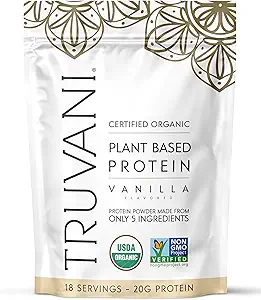
Truvani Organic Plant-Based Protein Powder – Vanilla
Truvani’s pitch is restraint: pea, pumpkin seed, and chia proteins, sweetened only with organic monk fruit, with no stevia, soy, gluten, dairy, or fillers anywhere on the label. For ingredient purists, that short list is the whole point — Orgain matches its organic credentials, but Truvani goes further by excluding even stevia, which some drinkers find bitter or metallic. At 120–140 calories per serving and smooth-mixing, it fits keto and low-carb routines that richer options like Vibrant Health don’t target. The texture avoids the chalkiness common to plant blends. What you’re paying for is purity, not volume: just 18 servings per container makes this one of the priciest paths to daily protein here. Buyers who read labels closely will consider that a fair trade; those counting cost per gram of protein won’t.
Pros:- USDA Organic, non-GMO, and vegan certified
- Free from stevia, soy, gluten, dairy, and artificial additives
- Smooth texture with no chalky finish
- Keto-friendly at 120-140 calories per serving
Cons:- Premium pricing compared to conventional vegan protein powders
- Only 18 servings per container
Best for: Ingredient-conscious buyers who want an organic, stevia-free, minimal-label protein and will pay extra for it
Not ideal for: Cost-per-gram protein shoppers — at 18 servings per container, it’s a premium buy that runs out fast
- Flavor:Vanilla
- Servings:18
- Calories per Serving:120-140
- Protein Sources:Organic pea, pumpkin seed, chia seed
- Certifications:USDA Organic, Non-GMO, Vegan
- Free From:Soy, wheat, dairy, gluten, stevia, artificial sweeteners, additives
- Sweetener:Organic monk fruit
- Suggested Mixing:8-12 oz liquid with shaker bottle or blender
Our verdict“The cleanest ingredient list in the roundup, best for purists who prioritize what’s not in the tub over servings per dollar.”
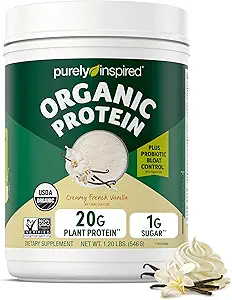
Purely Inspired Plant-Based Protein Powder, Creamy French Vanilla
Purely Inspired earns its spot as the most accessible entry point into organic vegan protein. You still get the USDA Organic and non-GMO seals that premium options like Truvani charge considerably more for, along with a respectable 20g of protein and 4g of fiber per serving. The iron content — comparable to a cup of cooked lentils — is a nice bonus for plant-based eaters who struggle to hit mineral targets.
The tradeoff is straightforward: 16 servings per container is the smallest count in this batch, so the tub empties fast if you shake daily. Compared with Orgain Vanilla Bean, which packs 21g plus 6g of prebiotic fiber into a 2.03 lb tub, Purely Inspired gives up a little nutritional depth in exchange for a lower barrier to entry.
Pros:- USDA Organic and non-GMO at an accessible price tier
- No artificial flavors, colors, or sweeteners
- Silky texture blends well into shakes, coffee, and smoothies
- Iron content comparable to a cup of cooked lentils
Cons:- Only 16 servings per container — the smallest yield in this lineup
- 4g of fiber lags behind Orgain’s 6g prebiotic blend
Best for: First-time vegan protein buyers who want organic certification without committing to a large, expensive tub
Not ideal for: Daily users — with only 16 servings, you’ll be repurchasing roughly every two weeks
- Protein per Serving:20 grams
- Fiber per Serving:4 grams
- Servings per Container:16
- Flavor:Creamy French Vanilla
- Certifications:USDA Organic, Non-GMO
- Dietary Attributes:Vegan, dairy-free, gluten-free, no artificial flavors, colors, or sweeteners
- Suggested Use:Mix 1 scoop with water or non-dairy drink
Our verdict“A smart low-commitment way to test whether organic plant protein fits your routine before upgrading to a larger tub.”
Orgain Organic Vegan Protein Powder, Vanilla Bean, 2.03 lb
This is the pick I’d point most people toward first, because Orgain Vanilla Bean balances protein density, ingredient cleanliness, and versatility better than anything else here. With 21g of protein from a pea, brown rice, and chia blend — a complete amino acid profile — plus 6g of prebiotic fiber and just 1g of sugar, it outperforms Purely Inspired on both protein and fiber while keeping the same organic certifications.
Its real edge is versatility: unlike Vega Protein + Recovery, which is positioned squarely as a post-workout drink, Orgain works in overnight oats, pancakes, and baked goods without clumping or dominating the flavor. The honest drawback is that the amino acid detail stops at ‘all 9 essentials’ — competitive athletes tracking BCAAs may want a label with more granularity, and the vanilla profile, while crowd-pleasing, isn’t bold.
Pros:- 21g complete plant protein from organic peas, brown rice, and chia
- 6g prebiotic fiber with only 1g sugar per serving
- Bakes and blends well beyond shakes — oats, smoothies, baked goods
- Free of dairy, soy, erythritol, and all artificial additives
Cons:- No disclosed BCAA content for performance-focused buyers
- Mild vanilla flavor may read as bland compared to richer chocolate options
Best for: Everyday users who want one dependable powder for shakes, smoothies, cooking, and baking
Not ideal for: Athletes who need verified BCAA totals for recovery timing — the label doesn’t break them out
- Protein per Serving:21g
- Sugar per Serving:1g
- Prebiotic + Fiber:6g
- Protein Sources:Organic peas, brown rice, chia seeds
- Flavor:Vanilla Bean
- Size:2.03 lb
- Certifications:USDA Organic, Certified Plant-Based, Kosher, Non-GMO
Our verdict“The most well-rounded powder in this roundup — buy it if you want one tub that does everything reasonably well.”
Vega Protein + Recovery, Vanilla
When recovery is the goal, Vega Protein + Recovery pulls ahead of the pack with 30g of protein per serving — a full 9g more than either Orgain option and 10g more than Truvani. The NSF Certified for Sport seal is the real differentiator here: none of the other powders in this lineup carry third-party verification for banned substances, which matters if you compete in tested sports or simply want lab-backed assurance of what’s in the tub.
The 2 billion CFUs of probiotics and added fiber give it a digestive angle that Orgain’s prebiotics only partially cover. The compromises: plant proteins at this concentration can trend gritty even when a formula claims smooth mixing, and the vanilla skews sweet — buyers who found Orgain’s vanilla mild may find this one cloying.
Pros:- Highest protein content in this batch at 30g per serving
- NSF Certified for Sport — the only third-party tested option here
- Probiotics (2 billion CFUs) plus fiber for digestive support
- Free from dairy, gluten, and soy
Cons:- Higher protein concentration raises risk of grittier texture
- Vanilla flavor runs noticeably sweet
Best for: Competitive and endurance athletes who need high protein doses and third-party banned-substance testing
Not ideal for: Casual users or those sensitive to sweetness — 30g servings are overkill for light activity
- Protein per Serving:30g
- Servings:20
- Weight:28.8 oz
- Probiotics:2 billion CFUs
- Certification:NSF Certified for Sport
- Dietary Features:Vegan, dairy-free, gluten-free, soy-free
- Flavor:Vanilla
Our verdict“The clear choice if you train hard and need verified, high-dose protein — everyone else can save money with Orgain.”
Truvani Organic Plant-Based Protein Powder – Chocolate – 18 Servings
Truvani is the ingredient-purist’s choice, and its short label is the argument. Pea, pumpkin seed, and chia proteins sweetened only with organic monk fruit — no stevia, soy, wheat, dairy, or gluten anywhere in the mix. Compared with Purely Inspired, which is similarly organic but uses a more conventional formula, Truvani goes further by eliminating even natural sweetener additives that some buyers actively avoid.
The keto-friendly positioning at 120-140 calories per serving also sets it apart from Orgain, whose formulas include more carbohydrate-based fiber blends. You pay for that purity twice over: the per-serving cost sits at the premium end, and 18 servings means the container won’t last a month of daily use. For buyers who read every ingredient line before buying, that premium buys genuine peace of mind.
Pros:- Exceptionally short, transparent ingredient list
- Sweetened only with organic monk fruit — no stevia or sugar alcohols
- Keto-friendly at 120-140 calories per serving
- Smooth, non-chalky chocolate texture
Cons:- Premium price per serving compared to Orgain and Purely Inspired
- Only 18 servings per container
Best for: Ingredient-focused buyers on keto or elimination diets who refuse stevia, gums, and additives
Not ideal for: Value seekers — you’re paying a premium for purity, not protein volume
- Protein Sources:Organic pea, pumpkin seed, chia seed
- Servings:18
- Calories per Serving:120-140
- Flavor:Chocolate
- Certification:USDA Organic, Non-GMO
- Sweetener:Organic monk fruit
- Dietary:Vegan, gluten-free, keto-friendly, dairy-free, soy-free
- Serving Instructions:Mix with 8-12 oz of liquid using shaker bottle or blender
Our verdict“Worth the premium only if a stripped-down, monk-fruit-sweetened label is a hard requirement for you.”
Orgain Organic Vegan Protein Powder, Creamy Chocolate Fudge, 2.03 lb
Sometimes the difference between sticking with a protein routine and abandoning it is simply flavor, and that’s where the Creamy Chocolate Fudge version of Orgain earns its slot. It shares the identical nutritional backbone with the Vanilla Bean pick — 21g of organic pea, brown rice, and chia protein, 6g prebiotic fiber, kosher and organic certifications — but delivers a dessert-forward chocolate that makes daily shakes feel like a treat rather than a chore.
Next to Truvani’s chocolate, which is leaner at 120-140 calories but thinner-tasting, this one reads richer and more indulgent at 150 calories with no added sugar. The honest limits: 20 servings per tub means mid-month repurchases, and if you’re comparing against whey, 21g per serving is modest — buyers chasing maximum protein per scoop should look at Vega Protein + Recovery instead.
Pros:- Rich dessert-style chocolate flavor with no added sugar
- Same complete 21g organic protein blend as the vanilla version
- Versatile in smoothies, oats, and baking
- Kosher, gluten-free, soy-free, and lactose-free
Cons:- Only 20 servings per container
- Lower protein per serving than whey-based or high-dose vegan options
Best for: Chocolate lovers who want a flavorful daily shake that still meets organic and kosher standards
Not ideal for: Buyers maximizing protein per scoop — 21g trails whey powders and Vega’s 30g serving
- Protein per Serving:21g
- Prebiotic Fiber:6g
- Calories per Serving:150
- Servings per Container:20
- Weight:2.03 lb
- Flavor:Creamy Chocolate Fudge
- Certifications:USDA Organic, Certified Plant-Based, Kosher, Non-GMO
- Dietary Info:Vegan, gluten-free, soy-free, lactose-free, no added sugar
Our verdict“Pick this over Orgain Vanilla Bean purely on taste preference — the nutrition is identical, and the chocolate is the stronger flavor.”
One Sol Lean Plant Protein Powder, Low Carb, Horchata Flavor
One Sol Lean carves out a niche most of the powders in this roundup ignore: maximum protein per calorie. At 21g of protein with only 110 calories and 2g of fat, it beats the macro profile of Orgain Organic Vegan Protein + 50 Superfoods, which delivers a similar 21g of protein but at 160 calories because of its superfood and fiber blend. That difference matters if your goal is fat loss rather than general wellness. The 24 added vitamins and minerals partially replace what you lose when cutting food intake, and sunflower-derived BCAAs support recovery. The horchata flavor is a genuine break from the vanilla-and-chocolate monotony dominating this list. The tradeoff: it skips the greens, probiotics, and fiber that Garden of Life Raw Organic packs in, so it’s narrower in scope — a protein tool, not a nutrition shake.
Pros:- 21g protein at just 110 calories — one of the leanest macro profiles in this roundup
- 24 added vitamins and minerals help cover gaps during calorie restriction
- Unique horchata flavor for anyone tired of vanilla and chocolate
- Clean formula: lactose free, gluten free, soy free, non-GMO, third-party tested
Cons:- Marketed specifically at women, which may put off other buyers
- No fiber, greens, or probiotics — narrower nutritional scope than competitors
- Plant protein texture may not appeal to whey converts
Best for: Women on a calorie-restricted cut who want high protein density without extra carbs, fat, or filler ingredients
Not ideal for: Anyone wanting an all-in-one nutrition shake — there are no greens, fiber, or probiotics like Orgain or Garden of Life offer
- Protein:21g per scoop
- Calories:110 per scoop
- Fat:2g per scoop
- Protein Sources:Organic brown rice and pea protein
- Vitamins & Minerals:24 added
- Flavor:Horchata
- Dietary Info:Lactose free, gluten free, soy free, non-GMO, vegan
- Testing:Third-party tested
Our verdict“This pick makes the most sense for calorie-conscious buyers chasing protein density, not for those wanting a full nutrition shake.”
Vega Premium Protein + Supergreens, Chocolate – 20g Vegan Protein, 22.4 oz (19 Servings)
This option stands out for solving the two-scoop problem: instead of a protein shake and a separate greens drink, you get 20g of plant protein plus spinach, kale, alfalfa, and broccoli in a single serving. Compared with the larger Vega Premium Protein + Supergreens in Creamy Vanilla (25 servings), this chocolate tub trades serving count for a flavor that masks vegetal notes better — often the deciding factor for greens powders. It also one-ups Vega Essential Protein on paper by folding greens into the same scoop, though the Essential wins on raw protein at 25g. Zero added sugar and a smooth, non-chalky mix make it easy to drink daily. The real drawback is cost per serving: with only 19 servings per container, this is one of the pricier ways to hit your protein target, and whey buyers will notice the difference immediately.
Pros:- Protein and supergreens combined in a single scoop
- Zero added sugar with a smooth, non-chalky chocolate taste
- Dairy-free and gluten-free for sensitive stomachs
- Chocolate flavor hides greens better than most vanilla greens blends
Cons:- Only 19 servings per container — poor cost per serving
- 20g of protein trails the 25–30g options in this roundup
- Generally pricier per serving than comparable whey products
Best for: Busy buyers who want to replace both a protein shake and a greens supplement with one daily scoop
Not ideal for: Budget-focused shoppers or high-protein users — 19 servings and 20g per scoop make it expensive per gram of protein
- Protein per Serving:20g
- Servings per Container:19
- Container Size:22.4 oz
- Flavor:Chocolate
- Greens:Spinach, kale, alfalfa, broccoli
- Dietary Info:Vegan, dairy-free, gluten-free, no added sugar
Our verdict“This is the pick for consolidating greens and protein into one shake, provided you accept a higher cost per serving.”
Owyn Pro Elite High Protein Powder, Vanilla, 12 Servings
When plant-based powders average 20–22g of protein, Owyn Pro Elite’s 30g per serving changes the conversation for lifters and athletes. That puts it closer to a whey isolate than to garden-variety vegan blends, and unlike One Sol Lean’s simpler rice-and-pea formula, Owyn pulls from organic pumpkin seed, chia, and pea to deliver all nine essential amino acids. The allergy story is unusually thorough — free of gluten, dairy, soy, and nuts — making it one of the safest picks here for people managing multiple sensitivities. It even adds 2B CFU of probiotics, something One Sol Lean skips entirely. The compromises are real though: 12 servings per container means frequent repurchases, and the vanilla profile runs mild, so buyers expecting a dessert-like shake (as Orgain’s Vanilla Bean tends to deliver) may find it bland on its own.
Pros:- 30g of complete plant protein with all 9 essential amino acids — highest in this batch
- Free of gluten, dairy, soy, and nuts — strong choice for multiple allergies
- Zero sugar with low net carbs, plus added probiotics, omega-3s, and greens
- Diverse protein sources reduce reliance on pea protein alone
Cons:- Only 12 servings per container — one of the smallest counts in this roundup
- Vanilla flavor is mild and may taste thin or bland on its own
- Higher effective cost per day given the small tub
Best for: Athletes and heavy lifters with allergies who need 30g of complete protein per shake
Not ideal for: Flavor-first buyers — the mild vanilla and thin profile disappoint next to sweeter blends like Orgain
- Protein per Serving:30g
- Servings:12
- Protein Source:Organic pumpkin seed, chia, pea
- Sugar:0g
- Probiotics:2B CFU
- Flavor:Vanilla
- Weight:1.32 lb
- Dietary:Vegan, gluten-free, dairy-free, soy-free, non-GMO, kosher
Our verdict“If muscle building and allergen avoidance outrank flavor and value, this is the strongest protein-per-shake choice in the lineup.”
Garden of Life Raw Organic Protein Powder, Vanilla, 20 Servings
No product in this lineup matches Garden of Life Raw Organic’s certification stack: USDA Organic, Non-GMO Project Verified, Vegan, Kosher, NSF Gluten Free, and NSF Contents Certified. For buyers who read labels closely, that third-party verification layer sets it apart from Orgain Organic Vegan Protein, which shares the organic certification but not the NSF contents testing. The formula emphasizes digestion — live probiotics and enzymes alongside 5g of fiber — making it gentler than the rice-and-pea blends that sometimes cause bloating. At 1g net carbs and 130 calories, it also undercuts Orgain’s 50 Superfoods blend on both counts. The costs of that purity are taste and price: the vanilla runs noticeably milder than sweeter competitors, and premium organic sourcing pushes the cost per serving above mainstream options. It’s the shake for people who care what’s not in it as much as what is.
Pros:- Six third-party certifications including USDA Organic and NSF Contents Certified
- Live probiotics and digestive enzymes support easier digestion
- Only 130 calories and 1g net carbs with 5g of fiber
- Mixes well and works in shakes, smoothies, and recipes
Cons:- Vanilla flavor is mild compared to sweeter powders like Orgain
- Premium organic ingredients raise the cost per serving
- 22g of protein is mid-pack next to Owyn Pro Elite’s 30g
Best for: Ingredient-focused buyers who want the most independently verified organic formula with digestive support
Not ideal for: Anyone prioritizing bold flavor or low cost — the mild vanilla and organic price premium will frustrate both
- Protein:22g per serving
- BCAAs:4g
- Fiber:5g
- Calories:130 per serving
- Net Carbs:1g
- Servings:20
- Flavor:Vanilla
- Certifications:USDA Organic, Non-GMO Project Verified, Vegan, Kosher, NSF Certified Gluten Free, NSF Contents Certified
Our verdict“This model is better suited to clean-label buyers who want verified purity and gut-friendly digestion over maximum flavor or protein.”
Orgain Organic Vegan Protein + 50 Superfoods Powder, Vanilla Bean, 2.02 lb
Orgain’s 50 Superfoods blend is the easiest daily habit in this batch — 21g of complete protein, a blend of 50 organic superfoods, and 8g of prebiotics plus fiber in a scoop that actually tastes like vanilla bean rather than stevia or plants. Compared with Vega Premium Protein + Supergreens, Orgain covers a wider nutritional footprint (50 ingredients versus a handful of greens) at a lower calorie cost of fuss, though Vega’s zero added sugar claim is cleaner on paper than Orgain’s 1g. Unlike the Orgain Natural Unsweetened version, this one is built to drink standalone, not just blend into recipes. Versatility is a real strength here — it holds up in oatmeal, smoothies, and baking where greens-forward powders like Garden of Life can turn grainy. The honest tradeoffs: 20 servings per tub goes fast at one-a-day, and the superfood marketing shouldn’t distract from the fact that the scoop sizes of those 50 ingredients are small.
Pros:- 21g complete protein with all nine essential amino acids
- 50 organic superfoods plus 8g prebiotic + fiber in one scoop
- Genuinely pleasant vanilla bean taste that works standalone or in recipes
- Clean labels: USDA Organic, non-GMO, no artificial anything
Cons:- Only 20 servings per container for a daily-use product
- Superfood doses per scoop are too small to replace actual vegetables
- Contains 1g sugar and 160 calories — leaner powders exist for cutting
Best for: Everyday users and families who want one tasty, versatile shake that quietly adds greens, fiber, and protein to their diet
Not ideal for: Macro-strict dieters — the 160 calories, 1g sugar, and modest superfood doses don’t justify it over leaner options like One Sol Lean
- Protein per Serving:21g
- Calories per Serving:160
- Sugar per Serving:1g
- Prebiotic + Fiber:8g
- Protein Sources:Organic pea, brown rice, chia seeds
- Superfoods Blend:50 organic superfoods (kale, flax, broccoli, spinach, quinoa, beet, acai, turmeric, chia)
- Servings per Container:20
- Certifications:USDA Organic, Non-GMO, Kosher
- Weight:2.02 lb
Our verdict“This is the best default choice for buyers who want a tasty, do-everything daily shake rather than a specialist tool.”
How We Picked
I ranked these 15 vegan protein powders against the criteria that actually decide a repurchase: protein per serving and per gram of powder, amino acid completeness from blended sources, mixability and texture (the number-one reason people abandon plant powders), ingredient transparency, and value per serving. Powders that pad their labels with greens, superfood blends, or fillers were scored on what a buyer actually gets per scoop, not on marketing claims. Flavor options matter too, since a powder nobody enjoys drinking gets used twice and forgotten.
The ranking rewards balance over single strengths. A powder like Owyn Pro Elite earns a high spot on raw protein numbers even with fewer servings per tub, while Orgain’s vanilla and chocolate variants rank near the top because they make daily use easy for the widest range of buyers. Products designed as meal replacements or greens hybrids sit lower for pure protein purposes but earn their place for specific buyer types — which the reviews and conclusion make explicit.
Factors to Consider When Choosing Vegan Protein Powders
Before choosing a vegan protein powder, it helps to understand what actually separates a powder you finish from one that collects dust. These are the factors I weighed most heavily, plus the mistakes buyers make with each.Protein Source and Amino Acid Completeness
Most plant proteins are incomplete on their own — pea protein is low in methionine, rice protein is low in lysine, and hemp protein contains relatively little protein per gram overall. The best vegan powders solve this by blending sources, typically pea and rice, so the amino acid profile resembles whey. A common mistake is buying a single-source powder and assuming the label’s protein number tells the whole story; 20g of incomplete protein supports muscle growth less effectively than 20g of a blended formula. Check the ingredients list for at least two protein sources unless the product explicitly states a complete amino acid profile. Blends also tend to mix more smoothly, since manufacturers balance the textures of each source.
Protein Density vs. Extra Ingredients
Every gram of greens blend, superfood powder, or fiber in a scoop is a gram not devoted to protein, and several products in this category quietly trade one for the other. Hybrid powders like greens-plus-protein formulas make sense if you drink one shake a day as a nutritional insurance policy. If you drink two or three shakes to hit a protein target, those extras work against you — you end up consuming more calories and carbs for less protein. Decide your purpose before comparing labels: a protein-first powder should deliver at least 20g of protein for under 150 calories. Buyers who skip this step often end up with a greens powder masquerading as a protein powder.
Taste and Mixability
Texture is the silent dealbreaker in vegan protein. Pea and rice proteins can be chalky or gritty, and cheap formulations settle into sludge within minutes of mixing. Powders that use smoother sources or add gums and inulin tend to blend better, but some buyers are sensitive to those additives. Unsweetened versions offer label purity at a real taste cost — they work in smoothies with fruit, but most people won’t drink them shaken with water alone. If you plan to drink shakes plain, buy a flavored version from a brand known for texture; if you blend everything into smoothies, unsweetened saves you sugar and money. Serving size affects texture too: thicker shakes need more liquid than the label suggests.
Sweeteners and Sugar Content
Vegan powders sweeten with everything from stevia and monk fruit to cane sugar and sugar alcohols, and the differences matter more than most buyers expect. Stevia and monk fruit keep sugar at zero but carry a distinctive aftertaste some people can’t tolerate. Cane sugar improves palatability but adds calories and makes a twice-daily habit meaningfully sweeter. Sugar alcohols can cause digestive issues at higher intakes. My advice: if you’re new to plant proteins, start with a moderately sweetened option to build the habit, then move toward less-sweet formulas once you’re used to the base taste. Read the sweetener before the flavor name — ‘vanilla’ tells you less than ‘sweetened with stevia’.
Cost Per Serving, Not Cost Per Container
Container sizes in this category vary wildly — from 12 servings to 30-plus — which makes shelf-price comparisons almost useless. Calculate cost per serving and cost per gram of protein before judging value, because a large tub with a small scoop can be worse value than a compact one. Premium single-ingredient brands often cost two to three times more per gram of protein than mainstream blends, and that premium buys label purity, not better muscle-building results. For daily users buying monthly, a difference of a few dollars per serving compounds into serious money over a year. Budget for how you’ll actually use it: occasional smoothie users can splurge on clean-label premium powders, while high-frequency users should prioritize blends.
Certifications and Digestive Tolerance
Certifications like USDA Organic, Non-GMO, gluten-free, and vegan verification matter differently depending on your priorities — organic matters for pesticide concerns, third-party testing matters for athletes subject to drug testing, and allergen-free claims matter for people with sensitivities. Digestive tolerance deserves equal attention: plant proteins often add fiber and prebiotics that cause bloating in sensitive users, especially in formulas packed with superfood blends. If your stomach reacts to high-fiber powders, choose a simpler formula with fewer added ingredients rather than a nutritionally ambitious one. Introduce any new powder at half servings for the first week. A powder that’s perfect on paper but causes discomfort will never survive in your routine.
Frequently Asked Questions
Is a blended vegan protein really better than a single-source one like pure pea protein?
For most buyers, yes, and the difference comes down to amino acids. Individual plant proteins are typically low in one or more essential amino acids — pea protein lacks methionine while rice protein lacks lysine — so blending them produces a more complete profile closer to whey. Single-source powders can still work if your overall diet is varied, since amino acids from other meals fill the gaps across the day. But if a shake is your primary protein source around workouts, a pea-and-rice blend supports muscle protein synthesis more effectively. Blends also tend to taste and mix better because manufacturers balance each source’s weaknesses.
Should I buy an unsweetened vegan protein or a flavored one?
It depends entirely on how you plan to drink it. Unsweetened powders, like Orgain’s natural unsweetened variant, belong in smoothies where fruit, nut butter, or cocoa provide the flavor — they cut sugar and give you control, but shaken with water alone they taste thin and vegetal. Flavored versions exist precisely because most people won’t drink plain plant protein day after day, and a powder you dislike is a worse purchase than a slightly sweeter one you finish. If you’re building a daily habit, start flavored; once you’re used to the base taste, unsweetened becomes more palatable. Also check which sweetener is used, since stevia’s aftertaste bothers some drinkers more than a small amount of cane sugar.
Are greens-and-protein combination powders worth it, or should I buy them separately?
Combination powders make sense for one specific buyer: someone who drinks a single daily shake and wants nutritional insurance in one scoop. The tradeoff is real, though — every gram of greens blend displaces protein, so hybrid formulas typically deliver 20g or less per serving at a higher calorie count than dedicated protein powders. If you’re trying to hit 100g+ of daily protein from shakes, buying a dedicated protein powder and a separate greens product gives you control over each dose. Hybrids also concentrate more ingredients per scoop, which raises the chance of digestive issues for sensitive users. Buy the combination only if convenience genuinely drives your routine; otherwise, separate products serve each goal better.
How much protein per serving do I actually need in a vegan powder?
A useful benchmark is 20–25g per serving, which matches what research suggests maximizes muscle protein synthesis in a single sitting for most adults. Most powders in this category cluster right at that range, which is why powders like Owyn Pro Elite that push 30g or more stand out — the extra protein mainly benefits bigger athletes or people using shakes to replace meals. Below 15g per serving, a powder functions more as a snack or supplement than a protein source, so read the serving size carefully, since some brands shrink scoop sizes to improve their nutrition panel. What matters even more than the number is protein per 100 calories: a 25g serving that costs 300 calories is a weaker tool for body-composition goals than a 22g serving at 130 calories.
Why do vegan protein powders cost more than whey, and where is it worth paying extra?
Plant proteins cost more to produce because extracting and deodorizing them requires more processing, and blending multiple sources adds manufacturing steps. Within vegan powders themselves, price gaps usually reflect ingredient sourcing and certifications — organic, raw, and allergen-free claims carry real costs — rather than better results. It’s worth paying extra if you specifically need those attributes: raw processing for enzyme retention, top-allergen-free formulas for sensitivities, or third-party testing for competitive sport. It’s not worth paying extra for proprietary superfood blends with token doses of trendy ingredients. A mid-priced organic blend delivers nearly identical protein quality to premium single-ingredient brands, so pay for what you’ll actually notice.
Conclusion
The right choice here depends less on which powder is ‘best’ and more on what you need it to do. For most buyers, Orgain Organic Vegan Protein Powder in Vanilla Bean is the best overall pick — it balances protein, texture, clean ingredients, and value better than anything else in this lineup, with Creamy Chocolate Fudge as the alternate flavor. Best value goes to Orgain’s larger tubs and Purely Inspired, which keep cost per serving low for daily users. On the premium end, Truvani’s organic powders offer the cleanest, shortest ingredient lists for buyers who prioritize label purity over servings per container, while Owyn Pro Elite is the clear choice for serious lifters who need maximum protein per scoop. Beginners should start with Vega Essential Protein, whose zero-sugar formula and reliable mixability make the plant-protein habit easy to build. For specific needs: Garden of Life Raw Organic Protein for raw and whole-food shoppers, Vega Protein + Recovery for post-workout muscle repair, One Sol Lean for low-carb dieters, Vibrant Health Maximum Vibrance for a full meal-replacement shake, and Orgain Protein + 50 Superfoods for anyone who wants greens and protein in a single daily scoop.