Making homemade kombucha with tropical fruits is simple and fun. Start by fermenting sweetened tea with a SCOBY, then add chopped tropical fruits like mango, pineapple, or passion fruit during the second fermentation. Let it sit for a few days to develop flavor and carbonation, adjusting infusion time for sweetness and tartness. Strain out the fruit before bottling to guarantee a fizzy, probiotic-rich beverage. Keep experimenting with flavors to find your perfect blend—there’s more to discover beyond the basics.

Get health and wellness essentials delivered free — and shop member deals
- Fast, free delivery on millions of items
- Access to Prime Big Deal Days deals on October 6–7
- Prime Video, Amazon Music and more included
Key Takeaways
- Use tropical fruits like mango, pineapple, passion fruit, or papaya during second fermentation to add flavor and sweetness.
- Infuse fruits in kombucha for 1-3 days to achieve desired aroma and taste without over-sweetening.
- Strain out fruit pieces before bottling to enhance carbonation and prevent over-fermentation.
- Experiment with fruit combinations and herbs like mint for unique flavor profiles.
- Control fermentation time and ingredients to produce a probiotic-rich, fizzy beverage tailored to your preferences.
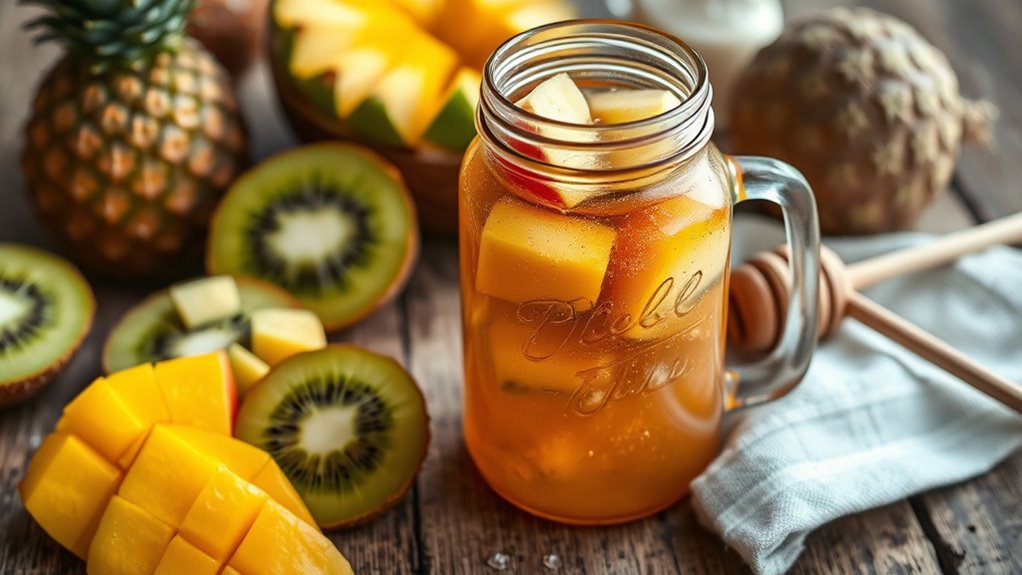
Making homemade kombucha is a simple and rewarding way to enjoy a naturally fermented, probiotic-rich beverage right in your own kitchen. When you start the fermentation process, you take control of every step, ensuring your kombucha is crisp, personalized, and free from additives. The fermentation process involves steeping sweetened tea with a symbiotic culture of bacteria and yeast (SCOBY), which transforms the sugar into beneficial acids, gases, and trace amounts of alcohol. This process not only creates the fizzy, tangy drink you love but also opens up a world of flavor variations. You can experiment with different teas, sweeteners, and, of course, tropical fruits, to craft unique blends tailored to your taste.
Homemade kombucha offers a customizable, probiotic-rich beverage crafted through fermentation with a SCOBY.
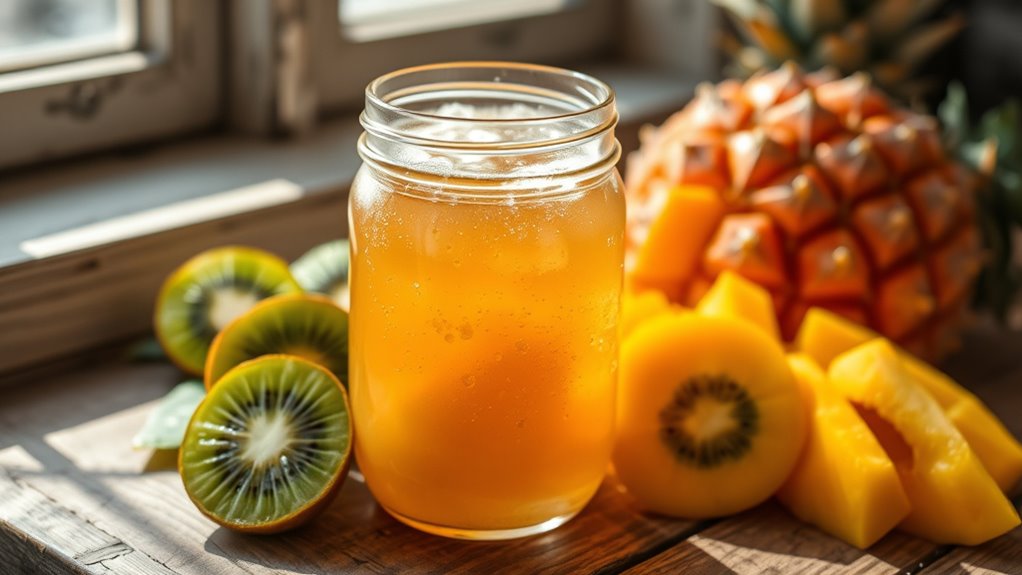
Adding tropical fruits during the second fermentation stage is an excellent way to infuse your kombucha with vibrant flavors and aroma. When you introduce fruits like mango, pineapple, passion fruit, or papaya, they release their juices and natural sugars into the kombucha, creating a delightful burst of tropical goodness. This step also allows you to customize the level of sweetness and tartness, depending on how long you let the flavors meld. You might find that a shorter infusion results in a subtler fruit essence, while a longer one produces a more intense, fruit-forward profile. The key is to experiment with different fruits and infusion times to discover your favorite flavor combinations.
To maximize flavor variations, consider blending multiple tropical fruits or adding herbs such as mint or basil for an extra layer of complexity. You can also vary the sweetness by adjusting the amount of fruit or adding a touch of honey or agave syrup. As the kombucha ferments with the added fruits, it develops a natural effervescence, so it’s important to monitor the process closely. Once the desired flavor and carbonation are achieved, you strain out the fruits and transfer the kombucha to bottles for a secondary fermentation, which enhances the fizz and intensifies the flavors.
Throughout this process, you’re in control of the ingredients and fermentation conditions, ensuring a revitalizing, healthful beverage that’s tailored to your preferences. The versatility of kombucha means you can keep exploring new tropical fruit pairings, creating endless flavor variations that keep your homemade brew exciting. With patience and a bit of experimentation, you’ll soon master the art of making tropical kombucha, turning your kitchen into a personal flavor laboratory. The end result is a bubbly, probiotic-rich drink that not only tastes fantastic but also supports your gut health, making every sip a rewarding experience. Additionally, tracking probiotics in your kombucha can help you better understand how fermentation impacts your health.
As an affiliate, we earn on qualifying purchases.
Frequently Asked Questions
Can I Use Dried Tropical Fruits for Flavoring?
Yes, you can use dried tropical fruits for flavor infusion in your kombucha. Just add small pieces of dried fruit to your brew during the second fermentation. Keep in mind, dried fruits contain concentrated sugars, so they can accelerate fermentation or create excess fizz if used in large amounts. Use sparingly, and monitor your kombucha closely to achieve the flavor you desire without over-carbonation.
How Long Does Homemade Kombucha Last?
You can expect homemade kombucha to last about 1 to 3 months when stored properly in the fridge. The fermentation timeline influences flavor stability; as it ages, flavors may become more pronounced or change. Always check for signs of spoilage, like mold or off smells, before drinking. Proper storage in airtight bottles helps maintain its quality, but for best flavor, consume within the recommended timeframe.
Are There Any Health Risks With Tropical Fruit Kombucha?
An ounce of prevention is worth a pound of cure. Tropical fruit kombucha can carry health risks if not prepared properly, such as contamination during the fermentation process. While it offers nutritional content like probiotics and vitamins, improper handling might introduce harmful bacteria or mold. Always verify your fermentation process is clean, and use fresh fruits to minimize risks, so you enjoy the benefits safely.
Can I Ferment Kombucha Without a SCOBY?
You can’t ferment kombucha without a SCOBY, as it’s essential for fermentation. Instead, focus on choosing the right fermentation vessel, like glass jars, to avoid contamination. If you want to experiment with sugar, consider substitution options like honey or maple syrup, but remember they may alter the fermentation process. Always maintain a warm environment and patience, as the SCOBY is what transforms sweet tea into delicious kombucha.
What’s the Best Way to Store Homemade Kombucha?
Think of your homemade kombucha as a precious gem that needs careful storage. Store it in fermentation vessels with airtight lids to keep the fizz and prevent contamination. For flavor enhancement, transfer it to glass bottles, leaving some space at the top for carbonation. Keep it in the fridge to slow fermentation, preserving the taste and bubbles. This way, your kombucha stays fresh, flavorful, and ready to enjoy whenever you desire.
As an affiliate, we earn on qualifying purchases.
Conclusion
Now that you’ve crafted your own tropical fruit kombucha, you’re not just enjoying a invigorating beverage—you’re also boosting your health. Did you know that kombucha can contain up to 30 different beneficial acids and antioxidants? By making it at home, you save money and customize flavors to your liking. So, keep experimenting with those tropical fruits and enjoy the delicious, probiotic-rich drink that’s both fun to make and great for your well-being!
fermentation bottles for kombucha
As an affiliate, we earn on qualifying purchases.
As an affiliate, we earn on qualifying purchases.
As an affiliate, we earn on qualifying purchases.
Cold & flu season Picks
humidifiers
As an affiliate, we earn on qualifying purchases.