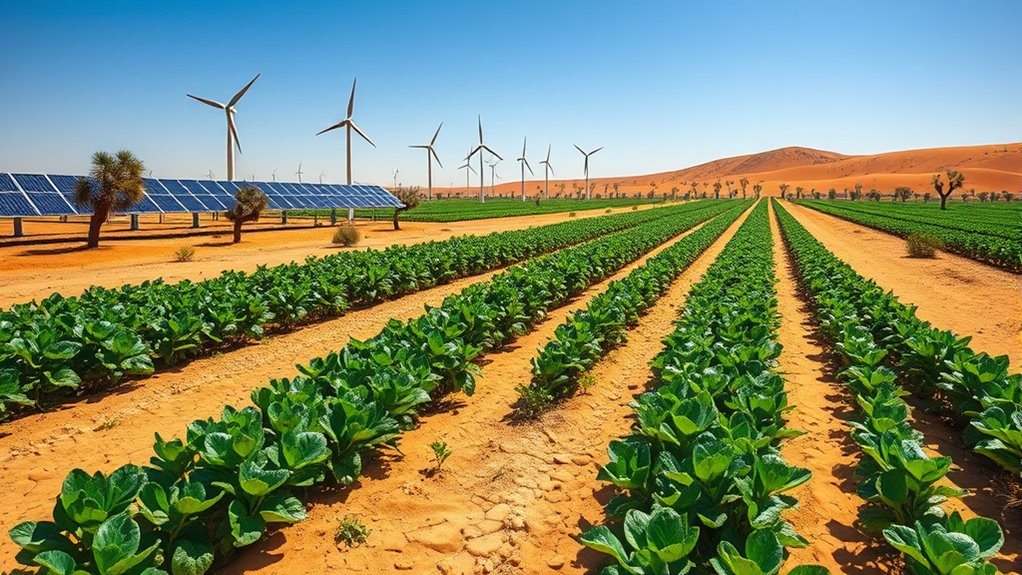

Switching to plant-based foods helps combat desertification by protecting soil health and conserving water. It reduces the need for intensive livestock farming, which depletes nutrients and demands large amounts of water. Growing plants using sustainable practices improves land resilience and prevents erosion. This dietary choice supports eco-friendly farming methods that enhance soil quality and water retention. To discover how your choices can make a difference, keep exploring ways to support environmental sustainability.
Key Takeaways
- Shifting to plant-based diets reduces pressure on land, preventing overuse and degradation that lead to desertification.
- Plant agriculture promotes soil health through sustainable practices like crop rotation and organic farming.
- Lower water demands of plant-based foods conserve water resources, especially in arid regions vulnerable to desertification.
- Supporting sustainable farming methods enhances land resilience against droughts and erosion.
- Reduced livestock farming decreases land degradation caused by grazing and manure, helping combat desertification.
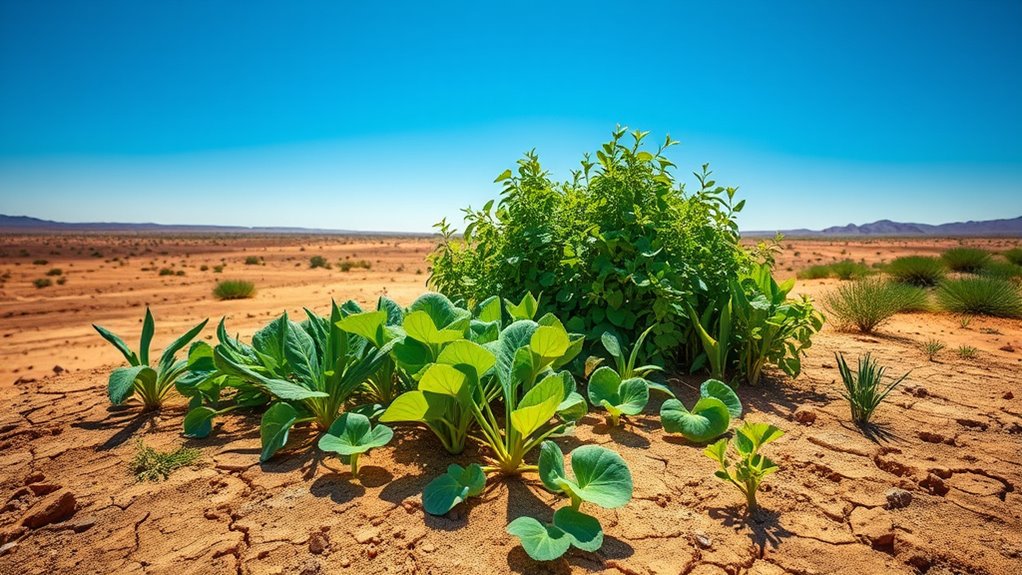
Have you ever considered how choosing plant-based foods can impact your health and the environment? When you make mindful food choices, especially opting for plant-based options, you’re not only nourishing your body but also playing a role in combating desertification. One significant way this happens is through the positive effects on soil health. Traditional farming methods for animal products often degrade soil by depleting nutrients and disrupting its natural structure. In contrast, plant-based agriculture tends to be gentler on soil, especially when you support practices like crop rotation and organic farming. These methods help maintain healthy soil ecosystems, prevent erosion, and preserve crucial nutrients. As a result, the land remains fertile and resilient, making it less vulnerable to becoming desertified.
Water conservation is another critical aspect of how your food choices influence desertification. Producing plant-based foods generally requires less water than raising animals for meat or dairy. Livestock farming demands enormous quantities of water for animals, feed crops, and processing, which strains water resources—especially in arid and semi-arid regions where desertification is most likely to occur. When you choose plant-based options, you reduce the overall water footprint of your diet. This helps conserve water supplies that are already under pressure due to climate change and overuse. By making these choices, you contribute to maintaining the delicate balance of water availability in vulnerable areas, helping to prevent land from turning into desert.
Moreover, supporting plant-based foods encourages sustainable farming practices that prioritize soil health and water efficiency. Many plant-based foods are grown using methods that improve soil structure, such as conservation tillage and cover cropping, which protect against erosion and improve water retention. These practices create a more resilient landscape, capable of withstanding droughts and reducing the risk of desertification. Additionally, the role of fuel injection cleaning in maintaining efficient machinery can indirectly support sustainable farming by reducing energy consumption and emissions associated with agricultural equipment. Your dietary choices can influence farmers and policymakers to adopt such sustainable practices, aligning your health benefits with environmental preservation.
In essence, simply shifting your diet toward more plant-based foods can make a tangible difference in fighting desertification. It helps preserve soil quality by promoting better land management and reduces water consumption, alleviating pressure on already scarce resources. Every meal you choose has the potential to support healthier ecosystems and prevent land degradation, making your daily decisions powerful tools in protecting our planet from becoming barren and inhospitable. By being intentional about your food choices, you’re actively contributing to a more sustainable and resilient environment for future generations.
As an affiliate, we earn on qualifying purchases.
Frequently Asked Questions
How Does Desertification Impact Global Food Security?
Desertification worsens global food security by causing soil erosion and water scarcity, which reduce the land’s productivity. You might find it harder to grow crops, leading to food shortages and higher prices. As soil loses nutrients and water becomes scarce, farming becomes less reliable, threatening your access to sufficient, nutritious food. Addressing these issues through sustainable practices can help protect the world’s food supply amidst desertification challenges.
What Role Do Governments Play in Combating Desertification?
Imagine telling your government to step up now—like a superhero from a sci-fi film. You play an essential role in supporting policy initiatives and land restoration efforts that combat desertification. Governments set regulations, fund projects, and promote sustainable practices to restore degraded land. By advocating for these actions, you help guarantee healthier ecosystems, secure food supplies, and a sustainable future for all. Your voice can make a real difference.
Are Plant-Based Diets Sustainable in Arid Regions?
Yes, plant-based diets are sustainable in arid regions because they help reduce soil erosion and conserve water. By choosing plant-based foods, you lower the strain on scarce water resources and minimize soil degradation caused by intensive farming. This approach supports desertification prevention efforts, promoting healthier ecosystems. Your dietary choices can directly impact the land’s resilience, making plant-based eating a practical solution for environmental sustainability in dry areas.
How Can Consumers Support Desertification Prevention Through Food Choices?
Think of your food choices as seeds you plant for a healthier Earth. By choosing plant-based options, you support soil restoration and water conservation, helping to slow desertification’s advance. Opt for foods that require less water and nurture the soil, making your plate a battleground against land degradation. Every meal becomes a step toward restoring balance, turning your diet into a powerful tool to protect fragile landscapes from turning to dust.
What Are the Economic Benefits of Adopting Plant-Based Diets Worldwide?
Adopting plant-based diets boosts economic growth by creating new markets and reducing healthcare costs linked to meat consumption. It also promotes resource conservation by lowering water usage, land demands, and greenhouse gas emissions. When you choose plant-based foods, you help shift industries toward sustainable practices, supporting global economic stability while protecting natural resources. This change benefits communities by encouraging innovation and resilience in food systems worldwide.
water-saving irrigation systems for gardens
As an affiliate, we earn on qualifying purchases.
As an affiliate, we earn on qualifying purchases.
Conclusion
By choosing plant-based foods, you can play a crucial role in fighting desertification. Did you know that producing plant foods uses 90% less water than animal products? Every meal you select impacts the environment positively, helping preserve soil and water resources. So, next time you eat, remember your choices can make a difference. Embrace plant-based options and become part of the solution to restore our planet’s fragile landscapes.
As an affiliate, we earn on qualifying purchases.

100 Piece (50 Pack) Meal Prep Containers with Lids, 28 oz Cornstarch Food Storage Containers Plant-based Lunch Box for Salad,BPA Free Plastic Take Out Containers Microwave and Freezer Safe
- Eco-friendly Material: Plant-based cornstarch and BPA-free plastic
- Includes 50 Containers and Lids: 50 sets of 28 oz containers with matching lids
- Versatile Meal Prep Use: Ideal for leftovers, salads, sandwiches, snacks
As an affiliate, we earn on qualifying purchases.
As an affiliate, we earn on qualifying purchases.