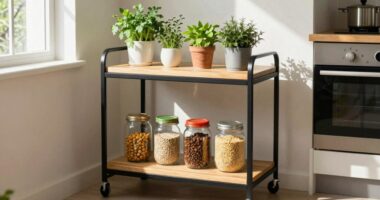
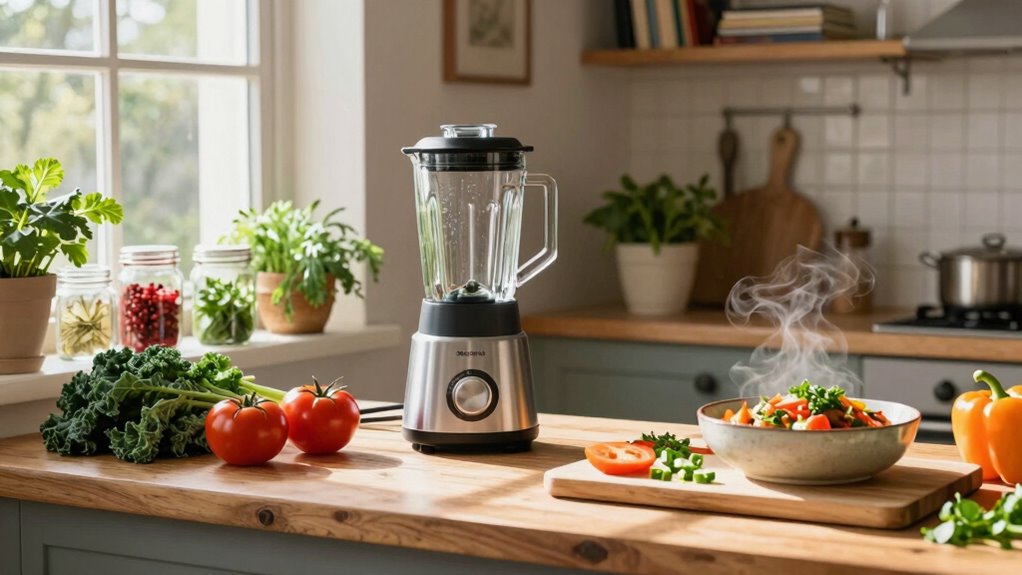

To succeed in your small kitchen with plant-based meals, organize smartly by dedicating a corner or wall-mounted rack for your essentials. Use stackable containers and vertical gardening to save space, and keep versatile ingredients on hand for quick prep. Incorporate multi-purpose appliances and compact tools to streamline cooking. Focus on flavor with herbs and spices to keep meals exciting. Want more tips on making your tiny kitchen a plant-based haven? Keep exploring for all the creative ideas.

Get health and wellness essentials delivered free with Prime
- Fast, free delivery on millions of items
- Prime Video, Amazon Music and more included
- Member-only deals all year
Key Takeaways
- Utilize vertical gardening and wall-mounted racks to grow fresh herbs and greens in limited space.
- Prepare versatile plant-based ingredients in advance to streamline meal prep and reduce clutter.
- Use compact, multi-purpose appliances for blending, chopping, and creating plant-based sauces or dips.
- Store dried and less-used ingredients out of sight to maximize counter and storage space.
- Focus on flavor-building staples like herbs, spices, garlic, and ginger to enhance plant-based dishes.
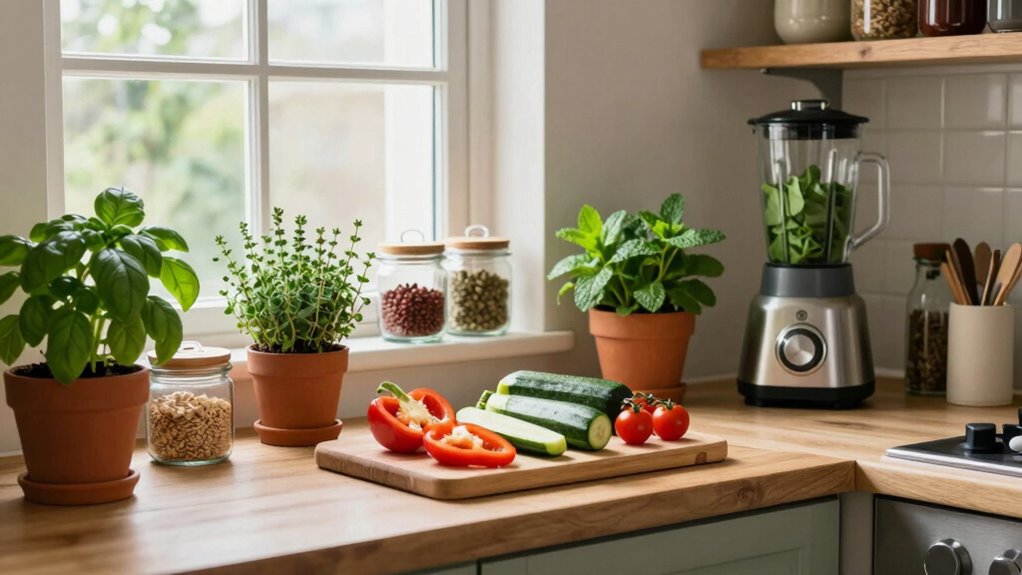
Creating a thriving plant-based kitchen in a small space is entirely possible, even if you think your area is limited. The key is to maximize every inch and focus on smart organization. One effective approach is to streamline your meal prep. By dedicating a specific corner or shelf to prepping ingredients, you save time and reduce clutter. Use stackable containers to store chopped vegetables, grains, and sauces, so everything is ready to grab when you need it. This not only keeps your small kitchen tidy but also encourages you to cook more often, making plant-based eating sustainable and enjoyable. When planning your meal prep, think about versatile ingredients that can be combined in multiple ways, allowing you to create variety without needing a vast pantry.
Maximize small kitchens with organized prep stations and versatile ingredients for sustainable, enjoyable plant-based meals.
Flavor combinations are your secret weapon in a small kitchen. Since space limits your ability to store many specialty ingredients, focus on building a core set of flavor-enhancing staples—like garlic, ginger, herbs, and spices—that can transform simple ingredients into exciting dishes. Experiment with different combinations to keep your meals interesting. For example, pairing smoked paprika with lemon juice can add a smoky brightness to roasted vegetables, while cumin and coriander can give a Middle Eastern flair to salads and grains. These small tweaks can make repetitive ingredients feel new and vibrant, eliminating the need for a large spice rack. When you’re tight on space, consider investing in multi-purpose appliances like a blender or a small food processor, which can help you whip up dressings, dips, and smoothies swiftly, further expanding your flavor options. Incorporating innovative planter designs can also inspire fresh herbs and greens to elevate your meals and add a touch of greenery to your small kitchen. Additionally, understanding space-saving techniques from small kitchen setups can help you optimize every corner and surface for maximum efficiency. Furthermore, utilizing compact storage solutions can greatly enhance your ability to organize efficiently. To make the most of limited counter space, you might also explore vertical gardening, which can provide fresh herbs right at your fingertips and add a lively aesthetic to your small kitchen.
In a small kitchen, every surface counts, so think vertically. Wall-mounted racks or magnetic spice jars save counter space while keeping your flavor combinations within easy reach. Also, choose compact tools that serve multiple functions—like a cutting board that doubles as a serving platter or a pot that can go from stove to fridge. Keep your countertops clear by storing less frequently used items in cabinets or under the sink, but make sure your everyday essentials are accessible. This setup encourages you to experiment with different flavor profiles and meal prep routines without feeling overwhelmed by clutter.
Ultimately, small space or not, your plant-based kitchen can be both functional and inspiring. By organizing smartly, focusing on versatile ingredients, and exploring creative flavor combinations, you’ll find that cultivating delicious, nutritious meals becomes second nature. The key lies in making the most of what you have, turning limited space into a hub of culinary creativity.
As an affiliate, we earn on qualifying purchases.
Frequently Asked Questions
How Can I Maximize Storage in a Small Plant-Based Kitchen?
To maximize storage in your small plant-based kitchen, focus on vertical storage solutions like wall-mounted shelves or hanging baskets to free up counter space. Use multi-purpose containers that can store various ingredients and keep them organized. Stackable jars and foldable storage options are also great. By utilizing vertical space and versatile containers, you can efficiently optimize your limited area, making your kitchen more functional and less cluttered.
What Are Quick Plant-Based Meals for Busy Mornings?
Imagine your busy mornings as a race where quick breakfast ideas are your turbo boost. You can start with morning smoothie recipes packed with fruits, veggies, and plant-based proteins, blending in minutes. Prepare overnight oats or energy bars ahead of time for instant fuel. These options keep you energized and ready to conquer your day without wasting precious moments, turning your hectic mornings into smooth, efficient routines.
How Do I Ensure Balanced Nutrition in a Tiny Kitchen?
To guarantee balanced nutrition in a tiny kitchen, focus on efficient meal prep and smart ingredient sourcing. Plan meals ahead, prioritizing versatile, nutrient-dense ingredients like legumes, grains, and fresh vegetables. Use compact storage solutions to keep your essentials organized. Incorporate frozen or canned options for convenience, and choose high-quality, minimally processed ingredients. This approach helps you maintain a balanced, plant-based diet without sacrificing space or time.
What Are Eco-Friendly Cleaning Tips for Small Plant-Based Kitchens?
Get your cleaning routine in check by embracing eco-friendly practices. Opt for natural cleaners like vinegar, baking soda, and lemon to cut down on chemicals. Use reusable cloths instead of disposables, and always recycle packaging. Keep your kitchen tidy without harming the planet—think of it as killing two birds with one stone. These sustainable practices not only make your small plant-based kitchen greener but also healthier for you.
How Can I Reduce Waste in a Compact Kitchen?
You can reduce waste in your compact kitchen by adopting simple composting practices for food scraps, which keeps waste out of landfills and nourishes your plants. Use reusable wrappers instead of single-use plastics for storing produce and leftovers, minimizing packaging waste. Opt for bulk buying to cut down on packaging, and choose multi-purpose tools to reduce clutter. These actions help you maintain an eco-friendly, efficient, and sustainable small kitchen space.
As an affiliate, we earn on qualifying purchases.
Conclusion
So, there you have it—your tiny kitchen’s secret weapon for plant-based triumph. With these tips, you’re now practically a culinary wizard, effortlessly whipping up veggie masterpieces in cramped quarters. Who knew that limited space could breed such greatness? Just remember, success isn’t measured by size, but by the amount of leafy greens you can cram into a single dish. Go forth, conquer that small kitchen, and make those plant-based dreams come true—one tiny step at a time.
stackable food storage containers
As an affiliate, we earn on qualifying purchases.
As an affiliate, we earn on qualifying purchases.
As an affiliate, we earn on qualifying purchases.
Fall Picks
fall essentials
As an affiliate, we earn on qualifying purchases.