
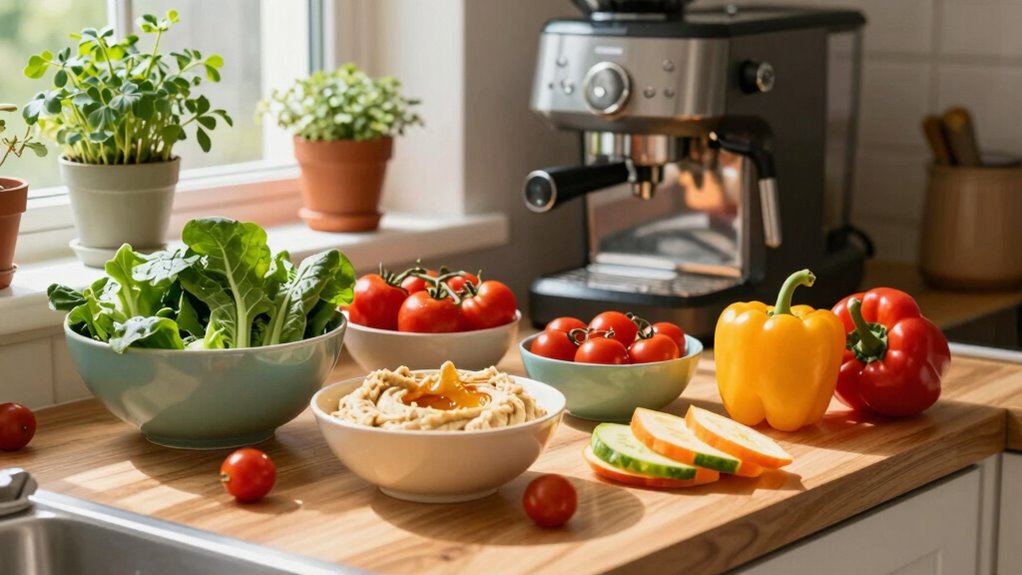
You can make eating more plants automatic by changing your environment and routines. Keep pre-cut vegetables visible and within easy reach, fill your shopping cart with colorful produce, and plan weekly menus around plant-based ingredients. Use flavorful herbs, spices, and roasting to enhance taste, making vegetables more enjoyable. Small adjustments like these create defaults that support healthier choices effortlessly. If you want practical tips to make this easier, the details ahead can guide you further.
Key Takeaways
- Rearrange your environment by stocking visible, appealing plant-based foods and ingredients for effortless selection.
- Plan routines that prioritize plant-based options, making them the default choice in meals and shopping.
- Enhance flavors with herbs, spices, and roasting to make vegetables tastier and more satisfying.
- Keep pre-cut, ready-to-eat vegetables accessible to reduce barriers and encourage consistent consumption.
- Experiment with diverse recipes and cuisines to create enjoyable, flavorful plant-based meals that reinforce habits.
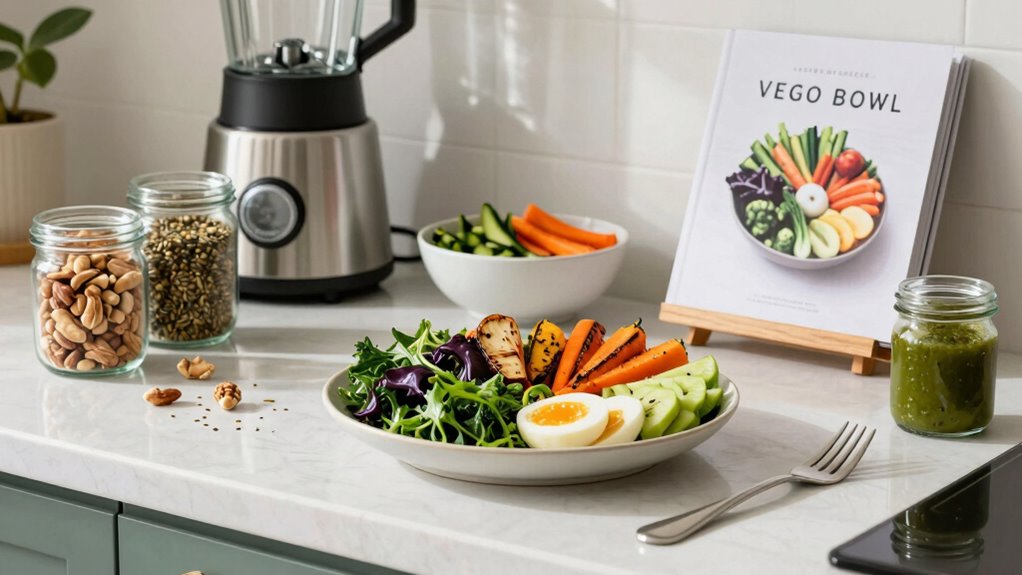
If you want to eat more plants without constantly thinking about it, changing your defaults can make a big difference. Small shifts in your routines and environment can lead to more consistent, automatic choices that favor plant-based foods. One effective way to do this is through intentional meal planning. Instead of leaving your meals to chance or relying on last-minute decisions, plan your weekly menus around vegetables, legumes, and grains. When shopping, fill your cart with colorful produce and plant-based staples, making these options readily accessible at home. When your kitchen is stocked with appealing, healthy ingredients, you’re more likely to reach for them without hesitation.
Plan your meals around colorful vegetables and grains for effortless, healthy plant-based choices.
Taste enhancement plays an essential role in making these choices stick. If you find certain vegetables bland or unappetizing, learn simple tricks to boost their flavor—roasting, adding herbs, spices, or a splash of citrus can turn a boring side into a delicious addition. When your meals taste good, you’re more motivated to incorporate more plants naturally, without feeling like you’re sacrificing flavor for health. Over time, this positive association helps make plant-based eating feel effortless rather than like a chore.
Another way to set better defaults is to adjust your environment to support your goals. For instance, keep cut-up vegetables in clear containers in your fridge, so they’re visible and easy to grab. When snacks are mainly fruit, nuts, or veggie sticks, you’re less tempted to reach for less healthy options. Making plant-based choices the default option in your daily routine reduces decision fatigue. It’s about creating a setting where the easiest choice is also the healthiest one, so you don’t have to rely on willpower alone. Incorporating digital content and research into your approach can also help you stay motivated and informed about the benefits of plant-based eating.
Incorporate taste enhancement strategies into your meal planning by experimenting with new recipes that highlight vegetables or legumes. When you find dishes you genuinely enjoy, it becomes natural to include them more often. Think about adding a flavorful sauce or seasoning to your greens or trying new plant-rich cuisines that excite your palate. These flavorful, satisfying meals reinforce your new defaults, making eating more plants feel like a win rather than a compromise. Over time, these small adjustments can rewire your habits, turning plant-based eating into a seamless part of your lifestyle. Ultimately, by setting smarter defaults through mindful meal planning and taste enhancement, you make the switch to more plants effortless and sustainable, without constant effort or decision-making.
pre-cut vegetable storage containers
As an affiliate, we earn on qualifying purchases.
As an affiliate, we earn on qualifying purchases.
Frequently Asked Questions
How Long Does It Take to See Results From Changing Defaults?
You can start noticing results from changing defaults in about 2 to 4 weeks, but it varies based on your habit formation and consistency. When you make behavioral change a priority, your brain begins to adapt, making new choices easier over time. Keep practicing, stay patient, and you’ll find that eating more plants becomes second nature faster than you think. Consistency truly accelerates your progress.
Can Better Defaults Work for People With Specific Dietary Restrictions?
Yes, better defaults can work for people with dietary restrictions, but you’ll need to customize them considering your dietary limitations and cultural considerations. Studies show that personalized defaults increase adherence markedly. By adjusting plant-based options to suit your restrictions and cultural preferences, you’re more likely to stick with healthier habits. This tailored approach makes it easier to incorporate more plants naturally, ensuring your unique needs are met while promoting better eating habits.
Are There Any Risks Associated With Automatically Increasing Plant-Based Foods?
Yes, there are some health concerns if you automatically increase plant-based foods without maintaining nutritional balance. You might miss essential nutrients like vitamin B12, iron, or omega-3s, which are less abundant in plants. To avoid risks, you should diversify your plant foods and consider supplements if needed. This way, you can enjoy the benefits of eating more plants while protecting your overall health.
How Do I Prevent Cravings for Non-Plant Foods?
You might notice cravings for non-plant foods, but practicing mindful snacking helps. When those urges hit, pause and evaluate if you’re truly hungry or just bored. Enhance flavors in your plant-based options with herbs and spices to satisfy your taste buds. This coincidence of mindful awareness and flavor enhancement can shift your focus, reducing cravings naturally. Over time, your palate adapts, making plant foods feel more satisfying and lessening the desire for less healthy options.
What Are the Best Ways to Customize Defaults for My Preferences?
To customize defaults for your preferences, focus on personalization strategies that reinforce your habits. Start by setting specific, achievable goals aligned with your tastes, like adding more plant-based options to your meals. Use visual cues or reminders that resonate with you. Consistently practicing these habit formation techniques will make plant-based choices feel natural. Over time, this tailored approach helps solidify your new defaults, making healthier, plant-rich eating automatic and enjoyable.
As an affiliate, we earn on qualifying purchases.
Conclusion
So, next time you set your defaults—whether it’s a plant-filled fridge or a veggie-packed snack drawer—remember, the easiest way to eat more plants is to make it effortless. Ironically, by simplifying your choices, you might just find yourself craving greens without even trying. Sometimes, the best way to eat healthier is to stop fighting your habits and let smarter defaults do the work. Who knew that simplicity could lead to such a big change?
As an affiliate, we earn on qualifying purchases.
roasting vegetable seasoning set
As an affiliate, we earn on qualifying purchases.
As an affiliate, we earn on qualifying purchases.