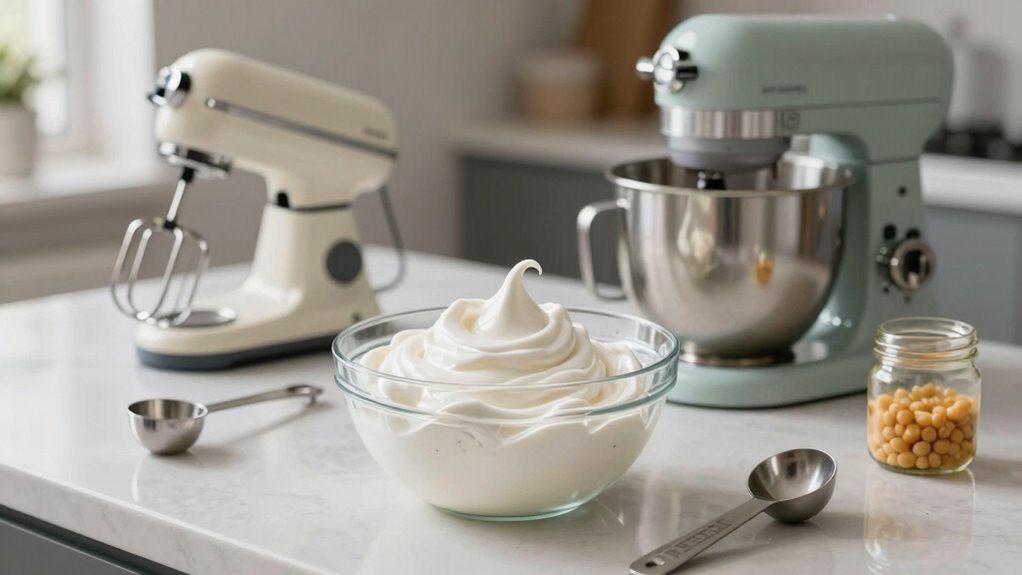
As an aquafaba baker, you need to prioritize gentle, precise mixing over raw power. Opt for a high-torque stand mixer with variable speeds and stable controls to carefully whip your foam without collapsing it. Focus on steady, slow increases in speed and use the right attachments to achieve glossy, stiff peaks. Equipment stability and finesse are key, not just muscle. Keep these priorities in mind, and you’ll discover the full potential of your aquafaba creations.

Get health and wellness essentials delivered free — and shop member deals
- Fast, free delivery on millions of items
- Access to Prime Big Deal Days deals on October 6–7
- Prime Video, Amazon Music and more included
Key Takeaways
- Precision and gentle control are more critical than raw power for achieving stable, glossy aquafaba foam.
- High-torque, variable-speed mixers allow delicate adjustments needed for optimal foam consistency.
- Stability and non-slip setups prevent accidents and ensure consistent whipping results.
- Attachments designed for meringue or foam help improve the quality and volume of aquafaba.
- Overly heavy-duty mixers can be too aggressive, risking collapse or deflation of the delicate foam.

If you’re accustomed to traditional baking, you might assume that any mixer will do when working with aquafaba, but in reality, this ingredient requires a different approach. Unlike eggs, aquafaba doesn’t have the same structure or stability, so the way you whip it up makes all the difference. You’re not just trying to blend; you’re aiming for a light, airy foam that mimics the properties of egg whites. That means your mixer needs to be suited for delicate, high-volume whisking rather than heavy-duty mixing. A powerful, high-torque stand mixer with variable speed settings can help you control the whisking process, ensuring you don’t overmix or underwhip your aquafaba.
Use a high-torque stand mixer with variable speeds for delicate, airy aquafaba foam.
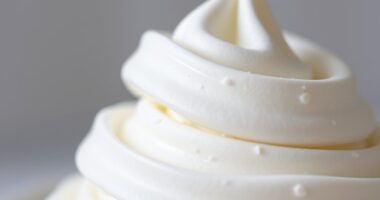
When considering egg substitution, aquafaba can be a game-changer, but only if you understand the correct whisking techniques. Unlike eggs, which can be quickly beaten into a froth, aquafaba requires patience and precision. Start with a chilled bowl and whisk, as this helps achieve better volume. You’ll want to gradually increase the speed, moving from low to high, to incorporate air slowly and evenly. The goal is to reach stiff peaks, where the foam holds its shape but remains glossy and moist. This process can take several minutes—rushing it might deflate your foam or produce an inconsistent texture. Your mixer’s ability to maintain stable speeds and avoid sudden jolts is crucial here. Proper equipment can make a significant difference in achieving consistent results.
The priority shifts from just having a mixer that’s powerful to one that provides fine control over whisking techniques. Over-whisking aquafaba can cause it to collapse, while under-whisking leaves it too runny and useless as an egg substitute. You need a mixer that can sustain steady, gentle whipping without overheating the mixture. Some mixers come with specific attachments designed for meringues and foam, which can further improve your results. As you experiment, take notes on the speed and duration needed to achieve perfect stiff peaks—these details will help you replicate successful batches consistently. Additionally, equipment stability is vital to prevent accidents and ensure consistent results during delicate whisking processes. A stable base and a non-slip mat under your mixer can help maintain control during the process. Furthermore, precise control over speed settings allows for a more delicate and controlled whisking process, which is essential for achieving optimal aquafaba foam. It’s also helpful to understand the science of foaming, so you can better anticipate how your aquafaba will respond to different techniques and equipment adjustments.
Using the right whisking techniques can also prevent your foam from becoming too dense or flat, emphasizing the importance of gentle, consistent motions. Ultimately, your focus should be on precision and gentle handling, not just raw power. Aquafaba’s success as an egg substitute hinges on your ability to whip it correctly, using a mixer that offers control, stability, and the right whisking techniques. By choosing the right equipment and mastering these methods, you’ll unlock the full potential of aquafaba in your baking, creating light, fluffy, egg-free desserts that impress every time.
high torque stand mixer for aquafaba
As an affiliate, we earn on qualifying purchases.
As an affiliate, we earn on qualifying purchases.
Frequently Asked Questions
Can Aquafaba Be Substituted With Egg Whites in Recipes?
Yes, you can substitute egg whites with aquafaba in recipes, especially if you’re aiming for vegan options. Aquafaba mimics egg whites well because of its foaming properties. However, for nutritional comparisons, egg whites offer more protein and fewer carbs. Vegan substitutions like aquafaba are great, but remember they might alter texture and taste slightly. Adjust your recipes accordingly for the best results.
What Type of Mixer Is Best for Aquafaba?
You should choose a stand mixer with a whisk attachment for aquafaba, as it creates the best volume and stability. While investigating, you’ll find that storage of aquafaba influences how long it stays usable, but for mixing, quiet models help reduce noise levels, making the process more pleasant. A powerful, gentle mixer guarantees you achieve fluffy peaks without overworking the aquafaba, giving you perfect results every time.
How Does Humidity Affect Aquafaba Whipping?
Humidity impacts aquafaba whipping because high moisture levels make it harder for the liquid to reach stiff peaks. In humid climates, the aquafaba may not hold air as effectively, resulting in less stable foam. To counter this, you might need to whip longer or use a cleaner, drier bowl. Climate considerations are essential, so adjust your technique based on the humidity to achieve perfect aquafaba meringue.
Can Aquafaba Be Over-Whipped?
Yes, aquafaba can be over-whipped. When you whip it too long, its stability decreases, causing it to turn grainy or break down. To maintain aquafaba stability, focus on gentle, even whipping techniques and watch for soft peaks. Over-whipping introduces air bubbles too aggressively, ruining the texture. Keep a close eye on consistency, and stop as soon as you achieve glossy, firm peaks to prevent over-whipping.
Is a Stand Mixer Necessary for Aquafaba Recipes?
A stand mixer isn’t necessary for aquafaba recipes, but it can make whipping easier and faster. If you prefer, you can whip aquafaba manually or with a hand mixer, just be patient. Proper aquafaba storage helps retain its whipping ability, and adding aquafaba flavoring can enhance taste. Using a stand mixer guarantees consistent peaks, especially for larger batches, but your choice depends on your comfort and the recipe size.
variable speed stand mixer for meringue
As an affiliate, we earn on qualifying purchases.
As an affiliate, we earn on qualifying purchases.
Conclusion
So, next time you’re whipping up aquafaba, remember that your mixer’s speed and power matter more than you think. It’s funny how a simple turn of the dial can unleash perfect fluff or the right stability. Coincidences happen in the kitchen all the time—just like how the right mixer setting can make your vegan recipes turn out flawlessly. Embrace these small changes, and watch your baking rise to new heights effortlessly.
As an affiliate, we earn on qualifying purchases.
mixer attachments for foam and meringue
As an affiliate, we earn on qualifying purchases.
As an affiliate, we earn on qualifying purchases.
Fall Picks
fall essentials
As an affiliate, we earn on qualifying purchases.