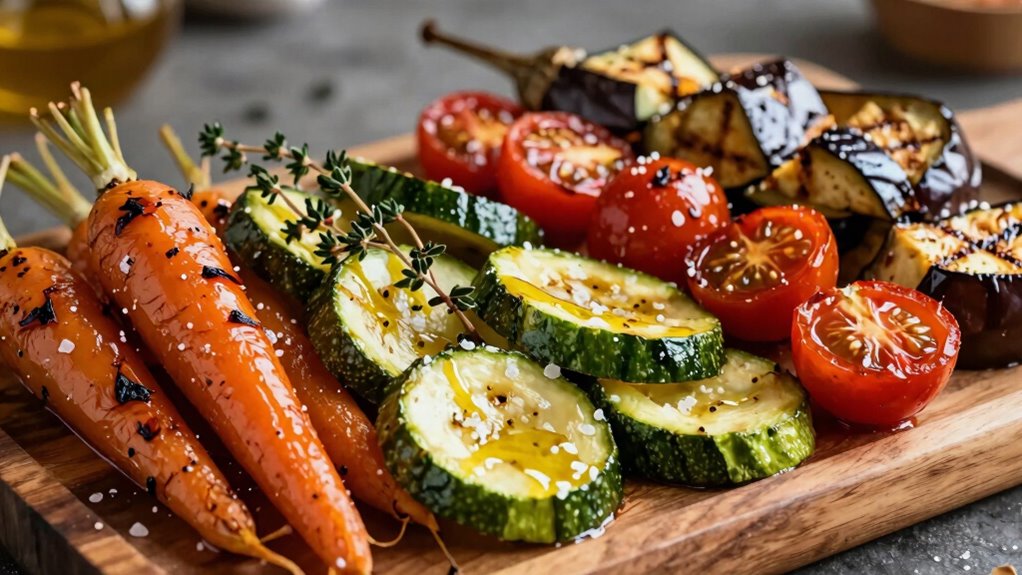

Roasted vegetables never go out of style in vegan cooking because they’re versatile, flavorful, and easy to customize with seasonal ingredients. You can create everything from quick snacks to hearty sides, adding spices, herbs, or a drizzle of balsamic for extra flavor. Perfect roasting techniques help you achieve ideal caramelization and texture, while post-roast enhancements boost moisture and taste. Keep exploring new combinations and techniques, and you’ll discover endless ways to elevate your plant-based dishes.

Get health and wellness essentials delivered free with Prime
- Fast, free delivery on millions of items
- Prime Video, Amazon Music and more included
- Member-only deals all year
Key Takeaways
- Roasted vegetables are highly versatile, customizable, and pair well with various flavors, making them a staple in vegan cuisine.
- Proper roasting techniques enhance natural sweetness, texture, and caramelization, ensuring appealing taste and presentation.
- They can be prepared as quick snacks or hearty sides, fitting diverse meal needs and preferences.
- Adding herbs, spices, and liquids post-roasting elevates flavor and moisture, maintaining their popularity.
- Experimentation with roasting times and ingredients allows for unique, innovative vegan dishes that never go out of style.
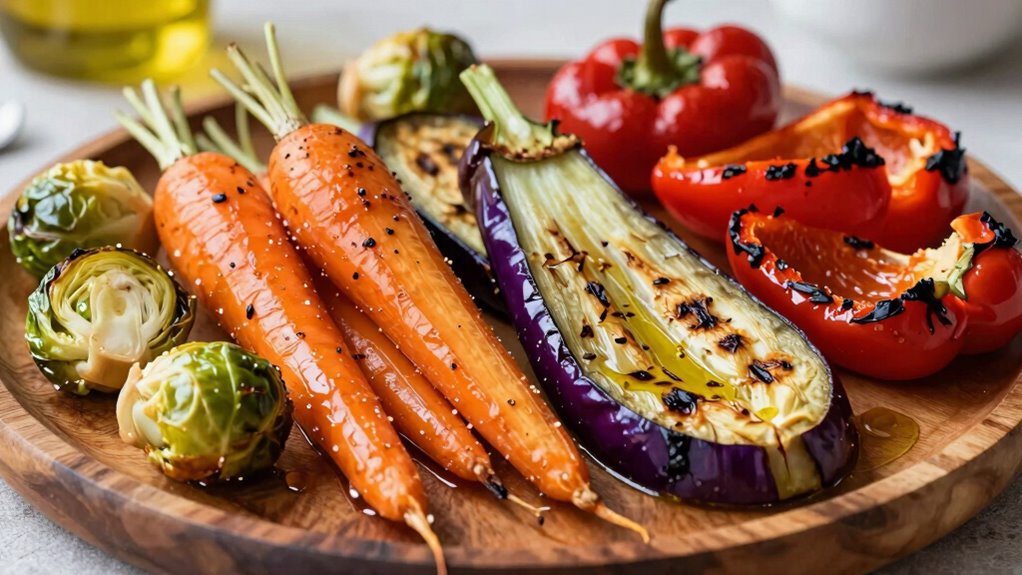
Roasted vegetables are a simple and delicious way to enjoy a healthy vegan meal. They’ve been a staple in plant-based cooking for generations, and their popularity never seems to wane. One reason is their versatility—you can customize them endlessly based on your taste and what’s in season. When you think about flavor combinations, roasted vegetables offer a blank canvas that can be elevated with just a few ingredients. For example, a drizzle of balsamic vinegar adds a sweet tang, while fresh herbs like thyme or rosemary introduce aromatic depth. Spices such as paprika or cumin can give your roasted veggies a smoky or earthy kick. This variety of flavor pairings keeps the dish exciting and adaptable, whether you’re making a quick snack or a hearty side.
The secret to perfect roasted vegetables lies in mastering the right cooking techniques. You want to guarantee they’re cooked evenly, with a tender interior and a nicely caramelized exterior. That means preheating your oven to the right temperature—usually around 400°F (200°C)—and spreading your chopped vegetables in a single layer on a baking sheet. Proper spacing allows heat to circulate, which helps achieve that desirable crispness on the outside. Tossing your vegetables in a little oil before roasting enhances browning and adds richness to the dish. You don’t need much—just enough to coat the pieces evenly. During roasting, flipping or stirring the vegetables halfway through ensures they cook uniformly and develop those beautiful, golden-brown edges. Using high heat is key to caramelization, which intensifies the natural sweetness of vegetables like carrots, sweet potatoes, and bell peppers. Exploring roasting techniques can help you explore new textures and flavor profiles. Additionally, understanding the science of caramelization can assist in optimizing your roasting process for better flavor development. Incorporating proper oven temperature knowledge can make a significant difference in achieving perfect results. Moreover, incorporating hydrating ingredients such as a splash of broth or citrus juice after roasting can enhance flavor and moisture, especially for vegetables that tend to dry out.
But the real magic happens when you experiment with different techniques to bring out unique textures and flavors. For instance, roasting at a slightly lower temperature for a longer time can give you softer, more melting vegetables, perfect for blending into dips or purees. Conversely, roasting at higher temperatures for a shorter period creates a crispy exterior that adds texture to salads or grain bowls. You can also try adding a splash of citrus juice or a sprinkle of nutritional yeast after roasting to boost flavor and nutritional value. The combination of thoughtful flavor pairings and precise cooking techniques is what keeps roasted vegetables a timeless favorite in vegan kitchens. They’re not just healthy and easy to prepare—they’re endlessly customizable, making every meal feel fresh and satisfying.
oven roasting vegetables baking sheet
As an affiliate, we earn on qualifying purchases.
As an affiliate, we earn on qualifying purchases.
Frequently Asked Questions
Can Roasted Vegetables Be Frozen for Later Use?
Yes, you can freeze roasted vegetables for later use. Use proper freezing techniques by letting them cool completely, then place them in airtight containers or freezer bags, removing excess air. For ideal storage, label the packages with dates and consume within 3-4 months. This method helps preserve flavor and texture, making it easy to enjoy roasted vegetables anytime without losing quality or taste.
What Are the Best Spices to Enhance Roasted Vegetable Flavor?
Imagine your roasted vegetables as a blank canvas, waiting for vibrant colors. Use spice combinations like paprika, cumin, and garlic powder to boost their warmth. Add flavor enhancers like fresh rosemary or thyme for aromatic depth. A sprinkle of chili flakes can bring a gentle heat, while a dash of lemon juice brightens the dish. These spices transform simple vegetables into a flavorful, irresistible vegan delight that’s always in style.
How Do You Prevent Vegetables From Burning During Roasting?
To prevent vegetables from burning during roasting, keep an eye on the oven temperature and aim for around 400°F. This helps achieve perfect vegetable caramelization without overcooking. Toss your vegetables evenly and consider turning them halfway through cooking. Using a moderate oven temperature guarantees even heat distribution, giving you beautifully roasted veggies with rich flavor and preventing burnt edges. Adjust cooking time as needed for different vegetables.
Are There Specific Vegetables That Roast Better Than Others?
Certain vegetables, like carrots, potatoes, and Brussels sprouts, roast better because their firm texture withstands high heat well. Using proper roasting techniques, such as tossing vegetables in oil and spreading them evenly, helps achieve crispy outsides and tender insides. Vegetables with high moisture content, like zucchini, may need shorter roasting times. Pay attention to vegetable texture and adjust roasting times accordingly for the best results.
How Long Can Roasted Vegetables Be Stored in the Fridge?
Think of roasted vegetables like a good book—you want to enjoy them at their best, but they can be stored too long. Typically, you should keep roasted vegetables in the fridge for up to 3-4 days. Use proper vegetable storage techniques, like airtight containers, to maintain freshness. For best results, reheat gently, following roasting tips to preserve flavor and texture, ensuring your leftovers stay tasty and safe.
vegetable roasting seasoning set
As an affiliate, we earn on qualifying purchases.
As an affiliate, we earn on qualifying purchases.
Conclusion
So, next time you think roasted vegetables are passé, remember they’ve been quietly reigning supreme in vegan kitchens for ages. Ironically, their simple charm and timeless appeal make them an everlasting favorite—proof that sometimes, the classics never really go out of style. No need for fancy tricks; just toss, roast, and enjoy. Who knew that such humble veggies could be the true heroes of your plant-based meals?
balsamic vinegar for roasting vegetables
As an affiliate, we earn on qualifying purchases.
As an affiliate, we earn on qualifying purchases.
vegan roasted vegetable cookbook
As an affiliate, we earn on qualifying purchases.
As an affiliate, we earn on qualifying purchases.
Halloween Picks
halloween
As an affiliate, we earn on qualifying purchases.