Finding plant-based protein powders for students means balancing three things that rarely line up: price per serving, protein quality, and taste you won’t abandon mid-semester. My top pick is Orgain Organic Vegan 21g in Vanilla Bean (2.03 lb), which hits the sweet spot of a blended pea-and-brown-rice protein, decent fiber, and one of the lowest costs per serving in this lineup. For students who prioritize flavor above all, GHOST Vegan in Chocolate Cereal Milk delivers the best-tasting shake here, while Ka’Chava works as a full meal replacement when the dining hall is closed and the budget is thin. The main tradeoff to know: the cheapest tubs often rely on grainier single-source proteins and thinner shakes, while premium options like Momentous and Truvani cost roughly double per serving for cleaner labels and smoother texture. Keep reading for the full ranking, including which budget tubs are actually worth it and which premium picks fall short for the money.
Key Takeaways
- Orgain‘s larger 2.03 lb tubs beat the 1.02 lb version on value by a wide margin — smaller tubs in this roundup consistently cost 30-50% more per serving, a trap for first-time buyers.
- Pea-and-rice blends (Orgain, GHOST, PlantFusion, Momentous) noticeably outperformed single-source powders on texture; graininess was the most common complaint pattern among budget picks like Purely Inspired and ProMix.
- Ka’Chava is the only true meal replacement here, but at roughly triple the cost per serving of Orgain, it only makes sense for students skipping meals, not supplementing them.
- TumLove‘s Low FODMAP certification fills a genuine gap — students with sensitive digestion have almost no other option in this price tier, which justified its high ranking despite a higher cost per gram of protein.
- Ready-to-drink Evolve shakes solve the ‘no blender, no fridge, no time’ dorm problem but cost 3-4x more per gram of protein than powder — worth it only for convenience-critical schedules.






| plant-based protein powders for student | Protein per serving | Dietary | Servings | Certifications |
|---|---|---|---|---|
| Orgain Organic Vegan 21g Prote | 21g | — | 10 | USDA Organic, Non-GMO, gluten-free |
| Orgain Organic Vegan Protein P | 21g | Vegan, gluten-free, kosher, soy-free | — | USDA Organic, Non-GMO |
| GHOST Vegan Protein Powder | 26g | — | 28 | — |
| Truvani Organic Plant-Based Pr | — | — | 18 | USDA Organic, Non-GMO |
| ProMix Nutrition Vegan Protein | 25g | — | 37 | — |
| Evolve Plant Based Protein Sha | — | Vegan, dairy-free, soy-free, gluten-free | — | — |
| Orgain Organic Vegan 21g Prote | 21g | Vegan, gluten-free, soy-free | — | USDA Organic, Kosher, Non-GMO |
| Orgain Organic Vegan Protein P | 21g | Vegan, gluten-free, soy-free | 20 | USDA Organic, Non-GMO |
| Momentous Vegan Protein Powder | — | Vegan, gluten-free | — | NSF Certified for Sport |
| Purely Inspired Plant-Based Pr | — | Vegan, dairy-free, gluten-free, soy-free | — | USDA Organic, Non-GMO Project Verified |
| Ambrosia Plant Based Protein P | 20g | Vegan, Gluten-Free, Dairy-Free, Keto Friendly | 25 | — |
| TumLove Vegan Protein Powder | 20g | Vegan, Gluten-Free, Dairy-Free, Soy-Free | 25 | Low FODMAP Certified |
| Ka’Chava Whole Body Meal Shake | 25g | Vegan, Gluten-Free, Dairy-Free, Non-GMO | 15 (6-flavor pack) | — |
| PlantFusion Complete Vegan Pro | 21g | — | — | — |
| Truvani Organic Plant-Based Pr | — | Vegan, Gluten-Free, Keto-Friendly | 18 | USDA Organic, Non-GMO |
More Details on Our Top Picks
Orgain Organic Vegan 21g Protein Powder, Vanilla Bean, 1.02 lb
Orgain’s Vanilla Bean tub is the friendliest entry point into plant protein, and that’s exactly why it earns the beginner slot. The vanilla flavor masks the earthiness that puts many first-timers off pea-based blends, and the 21g of protein from pea, brown rice, mung bean, and chia covers all nine essential amino acids without any guesswork. Compared with GHOST Vegan, the flavor is milder and more shake-friendly, though the protein count is 5g lower per scoop. The real drawback for a student budget is value: at only 10 servings per container, this small tub runs out mid-semester. The unsweetened Orgain version is cheaper per serving, but beginners who want a drinkable, no-fuss shake will find this one easier to stick with.
Pros:- Balanced 21g protein blend covering all nine essential amino acids
- USDA Organic, non-GMO, and free from soy, gluten, and artificial additives
- Mild vanilla flavor that works in smoothies, oats, and baking
- Includes 4g of prebiotic fiber for digestive support
Cons:- Only 10 servings per container — poor cost per serving
- Contains 1g of sugar per serving, more than the unsweetened version
Best for: Students trying plant protein for the first time who want a tasty, ready-to-shake vanilla flavor without committing to a large tub
Not ideal for: Budget-conscious students buying on a per-serving basis — 10 servings per container makes this one of the priciest options per scoop
- Weight:1.02 lb
- Servings:10
- Protein per serving:21g
- Calories per serving:150
- Sugar:1g
- Prebiotic + fiber:4g
- Protein sources:Pea, brown rice, mung bean, chia
- Certifications:USDA Organic, Non-GMO, gluten-free
Our verdict“A low-risk, great-tasting starter tub for students new to plant protein, as long as they don’t mind paying more per serving.”
Orgain Organic Vegan Protein Powder, Unsweetened, 21g Plant Protein, 4g Prebiotic Fiber, 1.59 lb
Zero added sugar is rare in this category, and it’s what makes this Orgain unsweetened tub stand out. Because it’s unflavored, it disappears into oatmeal, pancake batter, and savory recipes in a way flavored powders like GHOST Chocolate Cereal Milk or Truvani Chocolate simply cannot — a genuine advantage for students who cook in dorm kitchens rather than blend shakes. The tradeoff is obvious: mixed with water alone, it tastes like nothing much, and there’s no flavor variety to fall back on. Compared with the vanilla Orgain tub, you get more servings per container and no sugar, but you sacrifice drinkability. This pick makes the most sense for someone who treats protein powder as an ingredient, not a beverage.
Pros:- No added sugar and low net carbs
- Unflavored formula blends invisibly into recipes
- Larger container gives better cost per serving than the 1.02 lb vanilla tub
- 4g of prebiotic fiber supports digestion
Cons:- Bland on its own — needs fruit, cocoa, or other flavoring
- No flavor options to switch things up
Best for: Students who stir protein into oatmeal, baked goods, or coffee and want no sugar or flavor interference
Not ideal for: Anyone who wants a ready-to-drink shake straight from a shaker bottle — unflavored means bland on its own
- Weight:1.59 lb
- Protein per serving:21g
- Prebiotic fiber:4g
- Sugar:0g
- Ingredients:Organic peas, brown rice, chia seeds
- Certifications:USDA Organic, Non-GMO
- Dietary:Vegan, gluten-free, kosher, soy-free
Our verdict“The most versatile protein base in the lineup for cooking students, as long as they’re willing to flavor it themselves.”
GHOST Vegan Protein Powder, Chocolate Cereal Milk – 26G Protein
GHOST wins the taste contest, and taste is the number one reason students abandon protein powders halfway through a tub. The Chocolate Cereal Milk flavor is genuinely dessert-like, and at 26g of protein per scoop it out-muscles Orgain’s 21g and Truvani’s lower-calorie formula. The 28-serving tub also beats the small Orgain container on value by a wide margin. The catch is intensity: the flavor is bold and sweet, which some drinkers find fatiguing daily, and unlike Orgain’s wide range, flavor options here are limited. This option stands out for students who prioritize actually enjoying their post-gym shake over the cleanest possible ingredient list — GHOST’s label is transparent, but it’s not USDA Organic like Orgain or Truvani.
Pros:- Highest protein per serving in this batch at 26g
- 28 servings per container offers strong value
- Fully disclosed ingredient label
- Soy-free and gluten-free
Cons:- Strong, sweet flavor that can polarize daily drinkers
- No USDA Organic certification unlike Orgain and Truvani
Best for: Students who quit bland protein powders and need a flavor they’ll consistently look forward to after workouts
Not ideal for: Clean-label purists or anyone sensitive to sweet flavors — the bold taste and non-organic certification won’t suit them
- Servings:28
- Protein per serving:26g
- Flavor:Chocolate Cereal Milk
- Vegan:Yes
- Soy free:Yes
- Gluten free:Yes
- Added nutrients:Natural fiber and calcium
Our verdict“The pick that makes daily protein habit stick, built for students who choose taste over organic certifications.”
Truvani Organic Plant-Based Protein Powder | Chocolate | 18 Servings
Truvani is the shortest ingredient list in this batch — organic pea, pumpkin seed, and chia, sweetened only with monk fruit — and that simplicity is the entire point. Compared with ProMix, which adds a vitamin and antioxidant blend, Truvani keeps things minimal for buyers wary of extra supplements, and its keto-friendly profile suits low-carb eaters that GHOST’s sweeter formula doesn’t target. The pumpkin seed protein also rounds out the amino acid profile beyond typical pea-and-rice blends. The premium positioning carries real costs, though: 18 servings per tub makes it more expensive per serving than GHOST or ProMix, and chocolate is the lone flavor here. This model is better suited to students who read labels closely and pay for what’s not in the scoop.
Pros:- Minimal ingredient list with no fillers or artificial additives
- Monk fruit sweetness instead of sugar or artificial sweeteners
- Pumpkin seed protein diversifies the amino acid profile
- Keto-friendly in addition to vegan and gluten-free
Cons:- Premium price with only 18 servings per container
- Single flavor option limits variety
Best for: Ingredient-conscious students following keto or clean-eating plans who want minimal, organic ingredients with no fillers
Not ideal for: Cost-per-gram-of-protein shoppers — premium pricing and only 18 servings undercut the value GHOST and ProMix deliver
- Servings:18
- Calories per serving:120-140
- Ingredients:Organic pea, pumpkin seed, chia seed
- Sweetener:Organic monk fruit
- Certifications:USDA Organic, Non-GMO
- Dietary features:Vegan, gluten-free, keto friendly
- Flavor:Chocolate
Our verdict“The cleanest formula here for label readers and keto students, provided the higher per-serving cost doesn’t matter.”
ProMix Nutrition Vegan Protein Powder, Vanilla – 2.5 Pound
At 37 servings in a 2.5-pound tub, ProMix delivers the best cost per serving in this batch — roughly three and a half Orgain small-tubs’ worth of shakes — which matters enormously when a semester’s worth of gym sessions is the goal. The 25g of pea protein with 5.2g of BCAAs sits between GHOST’s 26g and Orgain’s 21g, making it well suited to muscle recovery after training. Two things give buyers pause. The monk fruit and vanilla flavor is pleasant but thinner-tasting than GHOST’s dessert profile. And unlike Truvani’s minimal formula, ProMix adds 200% of daily Vitamin B12 plus antioxidants — great for some, redundant for students already taking a multivitamin. This pick makes the most sense for the protein-throughput buyer who counts grams per dollar.
Pros:- 37 servings per tub — best value in this batch
- 25g protein with 5.2g BCAAs for muscle recovery
- Organic pea protein with no gluten, soy, or GMOs
- Light monk fruit sweetness avoids sugar spikes
Cons:- Added vitamin blend duplicates what many students already supplement
- Vanilla flavor is lighter and less satisfying than GHOST’s
Best for: Gym-going students who drink shakes daily and want the lowest cost per serving without dropping below 25g of protein
Not ideal for: Students already taking vitamins or B12 supplements — the added 200% DV of B12 becomes redundant
- Weight:2.5 pounds
- Servings:37
- Protein per serving:25g
- BCAAs per serving:5.2g
- Flavor:French Vanilla
- Main ingredients:Organic yellow peas
- Added vitamins:200% Daily Value of Vitamin B12
- Sweetener:Monk fruit
Our verdict“The bulk-buy workhorse for high-frequency protein users, as long as extra vitamins and a modest flavor don’t bother you.”
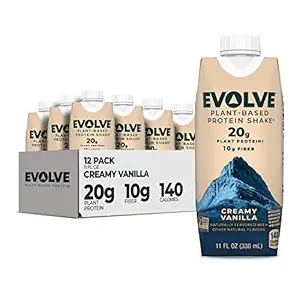
Evolve Plant Based Protein Shake, Vanilla Bean, 20g Vegan Protein (Pack of 12)
Most options in this roundup demand a shaker bottle, a fridge, and a minute you don’t have between lectures. Evolve skips all of that — these are ready-to-drink 11 oz cartons you can toss in a backpack. Compared with Orgain’s Vanilla Bean powder, you trade 1g of protein for total convenience, and you gain a standout 10g of fiber per shake, the highest in this lineup, which keeps you full through back-to-back classes. The tradeoff is real, though: per-gram protein costs more than any powder here, and the 12-pack creates storage problems in a shared mini-fridge. The vanilla flavor also leans earthy from the pea protein base.
Pros:- Ready to drink with zero mixing or prep required
- 10g of fiber per serving — the most in this lineup
- Dairy-free, soy-free, and gluten-free with no artificial sweeteners
- Non-GMO pea protein and environmentally conscious packaging
Cons:- Noticeably more expensive per gram of protein than powder options
- Earthy pea-protein taste that some drinkers find off-putting
Best for: Students with no blender, no time, and no fridge space who need grab-and-go nutrition between classes
Not ideal for: Budget-conscious buyers or anyone doing daily post-gym shakes — the cost per serving runs well above powders like Orgain
- Size:11 Fl Oz per carton
- Pack Size:12 cartons
- Protein Content:20g per serving
- Fiber:10g per serving
- Dietary:Vegan, dairy-free, soy-free, gluten-free
- Artificial Sweeteners:None
- Prep Required:None — ready to drink
Our verdict“Buy this if your schedule makes mixing a powder unrealistic; skip it if you’re counting cost per serving.”
Orgain Organic Vegan 21g Protein Powder, Vanilla Bean, 2.03 lb
This is the workhorse pick of the roundup: USDA Organic certification, a pea-brown rice-chia blend, and a 2 lb tub that drives the cost per serving below nearly everything here. Against Purely Inspired French Vanilla, Orgain edges ahead on protein (21g vs 20g) and multi-protein sourcing, though Purely Inspired counters with added probiotics. The honest catch is taste and texture — this is a mild, faintly sweet vanilla that reviewers frequently call bland, and it genuinely needs a blender rather than a shaker cup to avoid grit. For students making a morning smoothie in a shared kitchen, that’s fine. For anyone shaking it up in a library water bottle, the Creamy Chocolate Fudge version or a ready-to-drink like Evolve will serve you better.
Pros:- USDA Organic blend of pea, brown rice, and chia proteins
- 21g protein per serving at a strong price per gram
- Free of artificial flavors, colors, and preservatives
- Covers vegan, gluten-free, kosher, and soy-free diets
Cons:- Frequently described as bland-tasting on its own
- Gritty texture unless blended, not just shaken
Best for: Students with blender access who want organic protein at the lowest reliable cost per serving
Not ideal for: Anyone relying only on a shaker bottle — the texture turns gritty without proper blending
- Weight:2.03 lbs
- Protein per serving:21g
- Fiber per serving:5g
- Protein sources:Organic pea, brown rice, chia
- Certifications:USDA Organic, Kosher, Non-GMO
- Dietary:Vegan, gluten-free, soy-free
- Artificial additives:None
Our verdict“The default choice for budget-minded students with a blender who prioritize clean ingredients over flavor punch.”
Orgain Organic Vegan Protein Powder, Creamy Chocolate Fudge, 2.03 lb
Same trusted Orgain formula as the Vanilla Bean tub, but the chocolate fudge flavoring does the heavy lifting that vanilla can’t: it genuinely masks the earthy notes plant proteins are known for. That makes it the smarter pick for students who plan to drink these shakes straight with water or plant milk rather than building elaborate smoothies. You also get 6g of prebiotic fiber, slightly more than the vanilla version’s 5g. The tradeoffs: at 150 calories and 20 servings per 2 lb tub, it costs a touch more per serving than strictly necessary, and the sweetness level splits opinions — some find it dessert-like, others cloying. If you want chocolate without the sweetness, GHOST’s Chocolate Cereal Milk is the alternative, though it sacrifices the organic certification.
Pros:- Chocolate flavor effectively masks earthy plant-protein taste
- 6g of prebiotic fiber supports digestion
- USDA Organic with no artificial flavors or preservatives
- Versatile in shakes, smoothies, and baking
Cons:- Too sweet for some palates
- Only 20 servings per tub, raising cost per serving
Best for: Students who drink protein shakes plain and need flavor that covers the pea-protein taste
Not ideal for: Those sensitive to sweetness or watching sugar intake — the fudge flavoring leans dessert-sweet
- Weight:2.03 lb
- Servings:20
- Protein per serving:21g
- Prebiotic fiber:6g per serving
- Calories per serving:150
- Certifications:USDA Organic, Non-GMO
- Dietary:Vegan, gluten-free, soy-free
Our verdict“The pick for students who want their shake to taste like a treat rather than a chore, as long as sweetness doesn’t bother them.”
Momentous Vegan Protein Powder, Vanilla Spice, 20g Pea & Rice Blend
Momentous sits at the top of this roundup’s price range, and the reason is the NSF Certified for Sport designation — third-party testing that what’s on the label is in the tub, which matters for varsity athletes and anyone subject to drug testing. No other pick here carries that certification, not even the well-regarded Orgain line. The pea and rice blend also delivers a complete amino acid profile for muscle recovery, and its mixability is a genuine step above — it dissolves cleanly where Orgain and Purely Inspired turn gritty in a shaker cup. The honest downside for a student budget: 20g of protein per serving is the low end here (GHOST offers 26g), and you’re paying a premium for the certification and clean spice-forward flavor rather than raw protein quantity.
Pros:- NSF Certified for Sport third-party testing
- Complete amino acid profile from pea and rice blend
- Mixes smoothly in a shaker cup without a blender
- Warm vanilla spice flavor avoids artificial sweetness
Cons:- Premium price well above other options in this lineup
- 20g per serving is modest compared to GHOST’s 26g
Best for: Student-athletes, especially those in tested sports, who want verified purity and clean mixing
Not ideal for: Budget-limited students maximizing protein per dollar — cheaper tubs here deliver more grams for less
- Protein Content:20g per serving
- Protein Type:Pea and rice blend
- Amino Acid Profile:Complete
- Flavor:Vanilla Spice
- Certifications:NSF Certified for Sport
- Dietary:Vegan, gluten-free
- Mixability:Excellent — no blender needed
Our verdict“Worth the premium only if verified purity for athletics matters to you; otherwise the cheaper options deliver similar protein.”
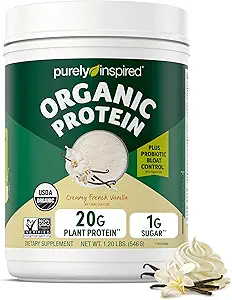
Purely Inspired Plant-Based Protein Powder, Creamy French Vanilla
For a first foray into plant protein without a big financial commitment, Purely Inspired is the easiest entry point in this roundup. The French vanilla mixes easily into smoothies, coffee, and oatmeal, and the formula goes beyond basic protein with added probiotics and 4g of fiber — something the Orgain vanilla tub doesn’t offer — while keeping sugar to just 1g per serving. Certifications are solid too: USDA Organic and Non-GMO Project Verified. The compromises show up in the details: with only 16 servings per container, the tub empties fast for daily users, and the vanilla is assertive enough that some drinkers tire of it. Compared with Momentous, it lacks the sport certification and the mixability is fussier, but at a fraction of the price, that’s a fair trade for casual users.
Pros:- Added probiotics and 4g fiber beyond basic protein
- Only 1g sugar per serving
- USDA Organic and Non-GMO Project Verified
- Versatile in smoothies, coffee, and recipes
Cons:- Just 16 servings per container — poor value for daily use
- Strong vanilla flavor that some find overwhelming
- Needs thorough mixing to avoid clumping
Best for: Protein-powder newcomers and casual users who want an inexpensive, low-sugar option with digestive benefits
Not ideal for: Daily heavy users — at 16 servings per container, it runs out quickly and costs more over time
- Servings per container:16
- Protein:20g per serving
- Fiber:4g per serving
- Sugar:1g per serving
- Flavor:Creamy French Vanilla
- Certifications:USDA Organic, Non-GMO Project Verified
- Dietary:Vegan, dairy-free, gluten-free, soy-free
- Extras:Added probiotics
Our verdict“A low-risk way to test whether plant protein fits your routine, as long as you’re not burning through a tub every two weeks.”
Ambrosia Plant Based Protein Powder 20g – Peanut Butter Cup
Most plant proteins in this roundup ask you to tolerate the taste; Ambrosia’s Peanut Butter Cup is built to be craved. At 100-110 calories per serving with no added sugar and a keto-friendly profile, it competes directly with GHOST Vegan’s Chocolate Cereal Milk — and where GHOST leans candy-sweet and bold, Ambrosia goes for a smoother, dessert-like experience with a fermented pea, sunflower, and brown rice blend that’s easier on digestion than straight pea isolates. Compared with the Vanilla Bean PlantFusion, the flavor variety is thinner, and anyone with pea or sunflower allergies needs to check the label carefully — a real limitation shared by most blends in this category.
Pros:- Complete amino acid profile from a fermented protein blend
- Genuinely dessert-like flavor with no added sugar
- Keto-friendly at just 100-110 calories per serving
- No artificial flavors or colors, and free of gluten and dairy
Cons:- Contains pea and sunflower proteins, excluding a meaningful group of allergy sufferers
- Only one or two flavors listed, far less variety than Ka’Chava or Orgain
Best for: Students who quit protein powder before because it tasted like chalk and want something they’ll actually mix every morning
Not ideal for: Anyone with pea or sunflower allergies, or flavor-hoppers who want a full range of options to rotate through
- Protein per serving:20g
- Servings:25
- Flavor:Peanut Butter Cup
- Calories per serving:100-110
- Added sugar:None
- Dietary:Vegan, Gluten-Free, Dairy-Free, Keto Friendly
Our verdict“This pick makes the most sense for taste-driven buyers who want a clean-label powder that feels like a treat rather than a chore.”
TumLove Vegan Protein Powder – Low FODMAP Certified, Vanilla, 25 Servings
Plenty of powders here claim to be “clean,” but TumLove is the only one in this lineup with actual Low FODMAP certification — a distinction that matters enormously if protein shakes routinely leave you bloated. Its 20g of protein from a soy-, dairy-, and gluten-free formula stacks up against the Vanilla Bean PlantFusion, which adds enzymes but carries no certification for IBS-friendly digestion. The vanilla base is deliberately mild, which makes it far more versatile in oatmeal, coffee, and baking than strongly flavored options like Ambrosia’s Peanut Butter Cup. The tradeoff: that same gentleness makes it bland on its own, and at 25 servings per container it runs out quickly for daily users.
Pros:- Low FODMAP certified — rare and genuinely useful for IBS sufferers
- Free from gluten, dairy, and soy, the three most common triggers
- Neutral vanilla works in shakes, oatmeal, baking, and coffee
- Solid 20g protein dose per serving
Cons:- Mild flavor won’t satisfy anyone drinking it with water alone
- Only 25 servings per container makes it pricey for daily use
Best for: Students with IBS or sensitive digestion who’ve abandoned other protein powders after bloating or stomach upset
Not ideal for: Anyone prioritizing bold flavor or a low cost per serving — it’s gentle, not exciting, and the tub empties fast
- Protein per serving:20g
- Servings:25
- Flavor:Vanilla
- Certifications:Low FODMAP Certified
- Dietary:Vegan, Gluten-Free, Dairy-Free, Soy-Free
Our verdict“If your stomach has vetoed every other powder on this list, TumLove is the one worth trying first.”
Ka’Chava Whole Body Meal Shake 6 Flavor Pack (15 Servings)
Every other product here is a protein supplement; Ka’Chava is trying to replace an entire meal. With 25g of protein, 6g of fiber, 26 vitamins and minerals, and 85+ superfoods, it fills the gap when a student skips lunch between lectures — something Orgain’s Vanilla Bean powder, excellent as a straight protein source, doesn’t attempt. The six-flavor variety pack also solves a problem no other pick addresses: you can sample before committing to a full tub of one flavor, unlike Truvani’s vanilla-only listing. The costs are real, though. It’s the most expensive per serving in this roundup, the taste can skew earthy or gritty for uninitiated palates, and 85+ ingredients means far more chances of hitting a personal sensitivity than a simple pea-and-rice blend like Momentous Vegan Protein.
Pros:- Genuine meal replacement with 25g protein, fiber, and 26 vitamins and minerals
- Six-flavor sampler lets you find a favorite before buying a full tub
- 85+ superfoods and greens replace separate supplement purchases
- No artificial additives, gluten, or dairy
Cons:- Highest cost per serving in this roundup by a wide margin
- Earthy, sometimes gritty flavor compared with smoother blends like Ambrosia
- 85+ ingredients create more exposure to potential sensitivities than simpler formulas
Best for: Chronically busy students who routinely skip meals and want one shake that covers protein, greens, and micronutrients at once
Not ideal for: Budget buyers or anyone with multiple food sensitivities — the long ingredient list and high per-serving cost work against both
- Protein per serving:25g
- Fiber per serving:6g
- Servings:15 (6-flavor pack)
- Superfoods included:85+
- Vitamins & minerals:26
- Fruits & vegetables:24
- Dietary:Vegan, Gluten-Free, Dairy-Free, Non-GMO
Our verdict“Buy it if you need meals replaced, not just protein supplemented — otherwise a simpler, cheaper powder serves you better.”
PlantFusion Complete Vegan Protein Powder – Vanilla Bean, 2 lb
PlantFusion earns the workhorse slot because it quietly does everything well: 21g of protein per serving, added BCAAs and glutamine for recovery, and digestive enzymes built in — a formula that out-muscles the simpler Truvani vanilla on paper while staying easier on the gut than uncertified blends. The 2 lb tub also delivers better long-term value than the 18-25 serving containers of Truvani, TumLove, or Ka’Chava, which matters when you’re shaking one up daily through a semester. The vanilla bean flavor is versatile enough for smoothies and baking without hijacking the recipe, unlike Ambrosia’s Peanut Butter Cup. Against Orgain’s Vanilla Bean, PlantFusion trades a slightly higher price for a more recovery-focused amino profile — a fair deal if you’re training, less so if you just want a cheap breakfast boost.
Pros:- 21g protein plus BCAAs and glutamine for genuine recovery support
- Built-in digestive enzymes reduce the bloating common to plant proteins
- Neutral vanilla works in smoothies, oats, and baking
- Large 2 lb tub offers better cost per serving than smaller competitors
Cons:- Priced above comparable options like Orgain’s 21g vanilla
- Natural sweeteners leave a detectable aftertaste for some users
Best for: Gym-going students who want one dependable tub for daily training recovery that also blends into recipes
Not ideal for: Strict budget shoppers — Orgain delivers similar protein numbers for less, and the natural sweeteners (stevia-adjacent) put off some palates
- Weight:2 lb
- Protein per serving:21g
- Flavor:Vanilla Bean
- Additives:BCAAs, glutamine, digestive enzymes
- Vegan:Yes
- Allergen-free:Gluten Free, Soy Free, Dairy Free
- Non-GMO:Yes
Our verdict“This pick makes the most sense for students who train regularly and want recovery nutrition plus everyday versatility from one tub.”
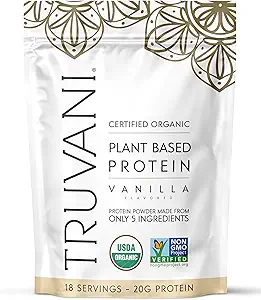
Truvani Organic Plant-Based Protein Powder | Vanilla | 18 Servings
If your priority is an ingredient list you can read aloud without pausing, Truvani is the standout: organic pea, pumpkin seed, and chia seed, sweetened only with monk fruit, and USDA Organic certified — a label claim PlantFusion and Ambrosia don’t carry. That shortlist formula makes it one of the easiest picks here to vet against allergies or dietary rules, and its keto-friendly 120-140 calorie profile suits low-carb eaters. The compromises are familiar ones. Texture is the recurring complaint — chalkier than the smooth PlantFusion blend — and at 18 servings, the per-serving cost sits awkwardly between cheap bulk powders like ProMix 2.5 lb and premium meal shakes like Ka’Chava, without offering either’s scale or nutrition breadth. Vanilla is the only flavor option, so variety seekers should look elsewhere in the roundup.
Pros:- USDA Organic with a minimal, readable ingredient list of three protein sources
- Sweetened only with organic monk fruit — no artificial additives or sugar alcohols
- Accommodates keto, vegan, gluten-free, and dairy-free diets simultaneously
- Pea, pumpkin seed, and chia provide a broader amino spread than single-source powders
Cons:- Frequently reported chalky or grainy texture compared with smoother blends
- Only 18 servings with just one flavor listed — poor value and variety for the price
Best for: Ingredient purists — students who read labels closely and want organic, short-list, monk-fruit-sweetened protein only
Not ideal for: Texture-sensitive drinkers or anyone buying on cost per serving — it’s chalkier and empties faster than the 2 lb tubs nearby
- Servings:18
- Flavor:Vanilla
- Protein sources:Organic pea, pumpkin seed, chia seed
- Calories per serving:120-140
- Sweetener:Organic monk fruit
- Certifications:USDA Organic, Non-GMO
- Dietary:Vegan, Gluten-Free, Keto-Friendly
Our verdict“Choose Truvani when ingredient quality outranks taste and price for you; choose almost anything else here when it doesn’t.”
How We Picked
Students buy protein powder differently than fitness enthusiasts, so I evaluated every option through a student-specific lens. The four criteria that drove the ranking were cost per serving and per gram of protein (calculated against typical campus-budget spending), protein completeness and dose (blended pea-and-rice sources scored higher than single-source formulas, and 20g+ per scoop beat lighter servings), prep practicality (how well each mixes with a shaker bottle or stirring spoon, since blenders are rare in dorms), and digestive tolerance, because a powder that causes bloating gets abandoned within a week no matter how cheap it is.
Taste and texture acted as a tiebreaker rather than a primary criterion — I weighted value and mixability higher because students drink these daily for months. I also factored in serving count per container, since a tub that runs out in two weeks creates hidden costs. Products ranked lower despite strong nutrition when their price per serving didn’t justify the formula, and budget picks rose when their real-world tradeoffs (slightly grainier texture, simpler flavors) felt fair for the savings. Where two products were nearly identical — like the two Orgain vanilla tubs — size and cost per serving broke the tie.
| plant-based protein powders for student | Certifications |
|---|---|
| Orgain Organic Vegan 21g Prote | USDA Organic, Non-GMO, gluten-free |
| Orgain Organic Vegan Protein P | USDA Organic, Non-GMO |
| GHOST Vegan Protein Powder | — |
| Truvani Organic Plant-Based Pr | USDA Organic, Non-GMO |
| ProMix Nutrition Vegan Protein | — |
| Evolve Plant Based Protein Sha | — |
| Orgain Organic Vegan 21g Prote | USDA Organic, Kosher, Non-GMO |
| Orgain Organic Vegan Protein P | USDA Organic, Non-GMO |
| Momentous Vegan Protein Powder | NSF Certified for Sport |
| Purely Inspired Plant-Based Pr | USDA Organic, Non-GMO Project Verified |
| Ambrosia Plant Based Protein P | — |
| TumLove Vegan Protein Powder | Low FODMAP Certified |
| Ka’Chava Whole Body Meal Shake | — |
| PlantFusion Complete Vegan Pro | — |
| Truvani Organic Plant-Based Pr | USDA Organic, Non-GMO |
Factors to Consider When Choosing Plant-based Protein Powders For Students
Before picking a tub, it helps to understand what actually drives price and quality differences in this category — and where students most often overspend or get burned.Cost Per Serving, Not Sticker Price
The biggest mistake students make is comparing tub prices instead of cost per serving. A $25 tub with 16 servings costs more over a semester than a $40 tub with 30. Small containers are marketed as ‘starter’ sizes, but they routinely run 30-50% higher per serving than the same product in a larger tub — a pattern that showed up repeatedly in this roundup with Orgain’s two sizes. Do the math before checkout: divide price by serving count, then compare that number across brands. Also check servings per scoop size, because some brands list smaller ‘servings’ to make the protein number look cheaper than it is. If you’ll use powder daily through a semester, the larger container almost always wins, even if the upfront cost stings a student budget.
Protein Source and Completeness
Plant proteins vary more than whey in quality. Pea protein alone is low in methionine, while rice protein alone is low in lysine — but blended together they form a complete amino acid profile comparable to animal protein. That’s why pea-and-rice blends dominated the top of my ranking. Single-source soy or hemp powders can work, but blends generally mix smoother and digest easier. Watch the actual protein per serving too: anything under 20g means you’re paying more for fillers, sweeteners, and flavoring than for protein. Finally, be skeptical of ‘proprietary blends’ that don’t disclose how much of each protein source you’re getting — transparency usually correlates with quality in this category.
Dorm-Friendly Mixing and Storage
Most students don’t have a blender, and this changes which powders are practical. Finely milled blends like Orgain and GHOST shake up reasonably well in a bottle with a wire ball; coarser budget powders clump badly without a blender and end up half-drunk. Read reviews specifically for ‘mixes well with just water and a shaker’ — not blender smoothie recipes. Storage matters too: a 2 lb tub eats real shelf space in a shared room, so consider whether a slimmer container fits your setup. If you genuinely have no shaker bottle, no fridge access during the day, and no time between classes, a ready-to-drink option like Evolve may justify its higher cost despite being the worst value per gram of protein in this lineup. Convenience has a price; decide consciously whether you’re paying it.
Digestive Tolerance
Plant powders can cause bloating, especially those heavy in pea protein isolates or loaded with fiber and sugar alcohols. If you’re new to plant protein, start with a smaller container even though it’s worse value — abandoning a giant tub after a week is the most expensive mistake of all. Students with IBS or sensitive stomachs should look for Low FODMAP certification (TumLove is the clear option here) and avoid formulas with inulin-heavy fiber blends, which caused the most digestive complaints in this category. Enzyme-added formulas like Ka’Chava can help, but they cost more. Give any new powder five to seven days before judging it, since your gut often adjusts to pea protein after the first few servings.
Flavor Fatigue and Versatility
You’ll drink this flavor 30-60 times, so pick something you won’t tire of — or pick a versatile base. Vanilla blends into oats, coffee, and smoothies, which stretches one tub across meals and reduces flavor fatigue. Chocolate is the most forgiving for straight shakes but limits recipe use. Dessert-style flavors like GHOST’s Cereal Milk or Ambrosia’s Peanut Butter Cup are genuinely enjoyable but can wear thin faster than you’d expect with daily use. Unsweetened options like Orgain’s Unsweetened tub offer the most flexibility for savory or custom-sweetened uses, but they taste thin alone and require you to supply the flavor. If you rotate between two uses — shake plus overnight oats — vanilla is the safest single purchase.
Meal Replacement vs. Protein Supplement
Students often confuse these two categories and buy the wrong one. A protein supplement (most of this list) adds 20-26g of protein to a diet that already has calories — it won’t replace lunch. A meal replacement like Ka’Chava packs 85+ superfoods, greens, fats, and enough calories to actually stand in for a meal, which is why it costs so much more per serving. If you regularly skip meals because of class schedules or dining hall hours, a meal replacement may be worth the premium despite the poor cost-per-protein-gram math. But if you eat normally and just need protein to hit gym or satiety goals, buying Ka’Chava is paying for nutrients you’re already getting elsewhere. Match the product type to your actual gap, not the marketing.
Frequently Asked Questions
Is a cheap plant-based protein powder good enough, or should I spend more as a student?
For most students, mid-tier options around $1.25-$1.75 per serving hit the right balance — Orgain and Purely Inspired sit here and deliver complete pea-and-rice protein without premium pricing. The genuinely cheap tubs (under $1 per serving) usually cut corners with grainier texture, thinner shakes, or lower protein density, which matters because a powder you dread drinking is not actually cheap. Spending up to $2.50+ per serving, as with Momentous or Truvani, mostly buys cleaner sourcing and smoother texture rather than dramatically better nutrition — a reasonable choice if you have dietary sensitivities or strict organic standards, but hard to justify on a ramen budget. My advice: start mid-tier, and only upgrade if you notice real problems with mixability or digestion. Where you should never economize is serving size — under 20g of protein per scoop means you’re buying flavoring, not fuel.
Which option is best if I live in a dorm with no blender?
You have two realistic paths. First, a finely milled blend that shakes well: Orgain’s Vanilla Bean and GHOST Vegan both mix acceptably with just a shaker bottle and a wire ball, avoiding the clumping that plagues coarser budget powders like ProMix. Get a cheap shaker bottle with a mixer ball — it’s the single highest-impact dorm purchase for protein powder. Second, if you don’t even want the bottle, Evolve’s ready-to-drink shakes eliminate all prep and storage concerns, though you’ll pay 3-4x more per gram of protein for that convenience. A middle option is mixing powder into oatmeal or yogurt, where clumping doesn’t matter and even budget powders perform fine. What doesn’t work in a dorm is any powder that genuinely needs a blender — check reviews for ‘shaker bottle’ mentions specifically before buying.
Can a protein powder replace meals when I can’t get to the dining hall?
Most protein powders cannot — a 120-calorie shake is a snack, not a meal, and treating it as one will leave you hungry and underfueled during long class days. The exception in this roundup is Ka’Chava, which is formulated as a true meal replacement with adequate calories, fats, fiber, greens, and digestive enzymes, not just protein. It costs roughly triple what Orgain does per serving, but that’s still often cheaper than a campus food court meal, so the math can work for students who frequently miss dining hall hours. A practical middle path is fortifying a standard powder: blend it (or stir it) into oatmeal with peanut butter and a banana to build a real meal around it. That approach gives you meal-replacement functionality at supplement pricing, which suits most student budgets better than buying a premium meal shake for daily use.
Plant protein gives me a bloated stomach — which of these is least likely to do that?
Bloating from plant protein usually comes from three sources: high-FODMAP ingredients, concentrated pea protein isolate, or added fiber blends like inulin. TumLove is the standout answer here because it’s Low FODMAP certified, a certification almost no competitor in this price range carries, and it’s also gluten-, dairy-, and soy-free. If TumLove’s cost per serving feels high, Momentous is a gentler second choice with a simpler pea-and-rice formula and strong third-party testing. Avoid powders advertising 6g+ of prebiotic fiber if you’re sensitive — that fiber is great for most people but is a common bloating trigger. Also give your gut a week to adjust before switching brands; pea protein digestion often improves after the first several servings, so a single rough day shouldn’t disqualify an otherwise good value pick.
Should I buy unsweetened or flavored protein powder as a student?
It depends on how you’ll use it, and most students use powder in more ways than they expect. Flavored vanilla is the safest default because it works straight with water or plant milk and also blends into oatmeal, coffee, and smoothies without clashing. Unsweetened, like Orgain’s Unsweetened tub, gives you full control over sugar and flavor — better if you’re mixing into savory foods, watching sweeteners, or flavoring it yourself — but on its own it tastes thin and starchy, which leads many students to abandon it. Dessert flavors like chocolate or peanut butter cup are the most enjoyable for straight shakes but the least versatile. If you genuinely don’t know yet, buy a mid-sized flavored vanilla tub first; once you learn your habits, you can switch to unsweetened for flexibility or a dessert flavor for enjoyment.
Conclusion
The right choice here depends less on which powder is ‘best’ and more on how you’ll actually live with it. For best overall, I’d point most students to Orgain Organic Vegan 21g in the 2.03 lb Vanilla Bean tub — it combines a complete pea-and-rice blend, solid fiber, good shaker-bottle mixability, and one of the lowest costs per serving in the entire lineup. For best value, Purely Inspired Plant-Based French Vanilla undercuts nearly everything on price while staying drinkable, accepting some graininess as the tradeoff; ProMix is a close runner-up if you want a bigger 2.5 lb commitment.
For best premium, Momentous Vegan Vanilla Spice earns its price with third-party testing and a clean formula suited to sensitive stomachs, while Ka’Chava is the premium pick specifically for students who need a true meal replacement during long days away from the dining hall. For beginners, the Orgain 1.02 lb starter tub lets you test the category cheaply before committing to the larger size. For specific needs: TumLove for Low FODMAP digestion, Evolve ready-to-drink for zero-prep convenience, GHOST Cereal Milk or Ambrosia Peanut Butter Cup if flavor is non-negotiable, and Truvani for an organic, minimal-ingredient short-term option. Whatever you pick, buy for your real routine — a mid-tier powder you drink daily beats a premium one that sits on the shelf.