
TL;DR

Get health and wellness essentials delivered free — and shop member deals
- Fast, free delivery on millions of items
- Access to Prime Big Deal Days deals on October 6–7
- Prime Video, Amazon Music and more included
A Sixty and Me report describes five low-equipment functional exercises intended to help women over 60 practise movements used in daily life. It cites research on functional training and older adults, but the exercises and repetition ranges are general guidance, not a personalized program.
Sixty and Me has published a beginner’s guide to functional fitness for women over 60, outlining five exercises that can be done at home with little or no equipment. The guide focuses on practising movements used in everyday tasks, such as standing from a chair, reaching and keeping balance, and cites research suggesting functional task training may improve mobility and walking ability among adults 60 and older.
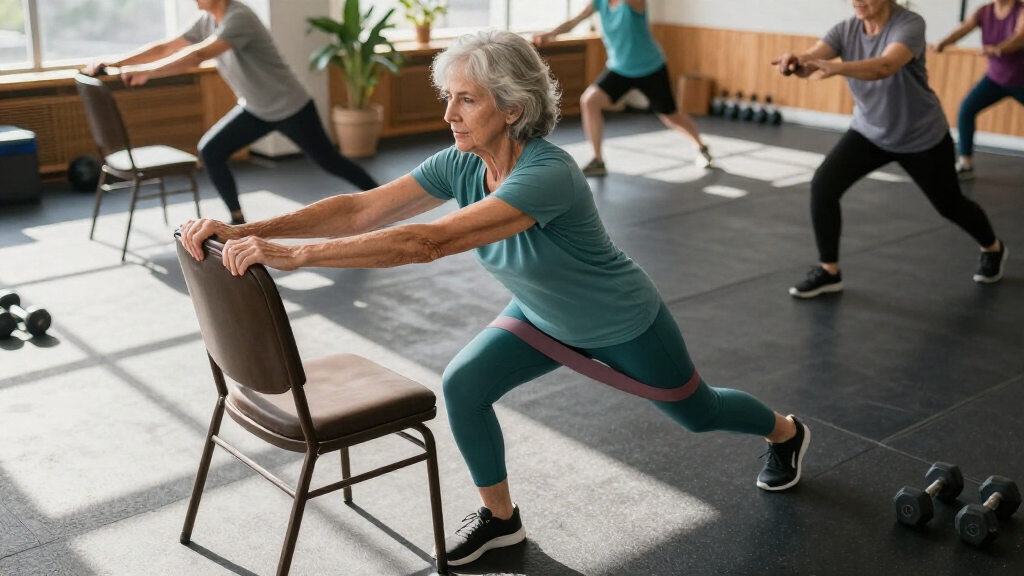
The exercises in the report are sit-to-stands, wall push-ups, supported heel raises, supported side steps and supported balance practice. The guide suggests doing five to 12 repetitions for the first three exercises. For side steps, it advises taking several steps in each direction; for balance practice, it recommends standing beside a counter or chair and shifting weight between legs, with support within reach.
The report frames the movements as practice for common activities: rising from a chair, pushing, carrying items and moving sideways. It recommends starting with 10 to 15 minutes on two or three days in a week, then adding time or repetitions as the exercises become easier. A resistance band is offered as a possible progression, not a requirement.
The article cites a 2025 meta-analysis that it says found functional task training helped improve balance, mobility and walking ability in adults aged 60 and older. The supplied material does not provide the study’s authors, journal, participant numbers or effect sizes, so the results cannot be assessed in detail from the guide alone.
Practising Movements Used Every Day
The approach links exercise to tasks many people want to keep doing independently, rather than focusing only on general strength. Practising sit-to-stands, for example, resembles getting up from a chair, while supported balance work gives people a chance to practise shifting weight with a stable surface nearby. The guide presents these as ways to work on strength, mobility and balance, not as a guarantee of maintaining independence or preventing injury.
This matters because difficulties with routine tasks can affect daily choices and participation. The report argues that at-home movements with little equipment may be a convenient entry point for people who are not already following a structured exercise routine. Its suggestions remain general: individual ability, health conditions and exercise needs vary, and the source does not report outcomes from a trial of this particular five-exercise plan.
at-home resistance bands for seniors
As an affiliate, we earn on qualifying purchases.
As an affiliate, we earn on qualifying purchases.
Public Activity Guidance for Older Adults
The report references recommendations from the U.S. Centers for Disease Control and Prevention for adults aged 65 and older, including muscle-strengthening activity at least twice a week, along with activity that supports cardiovascular and respiratory fitness and balance. It also cites the World Health Organization, which it says recommends muscle-strengthening activities on two days a week for adults 65 and older and balance-related activity on three or more days for those with mobility difficulties.
These population-level recommendations are not a prescription for every individual. The supplied article says activity should be increased gradually when needed and that people with health-related limitations, pain, dizziness or concerns should speak with a health care professional. It advises stopping an exercise if something does not feel right.
“The goal of functional fitness is to help you maintain your quality of life and your independence.”
— Sixty and Me guide
elderly balance training equipment
As an affiliate, we earn on qualifying purchases.
As an affiliate, we earn on qualifying purchases.
Limits of the Exercise Evidence
The supplied source does not include a full citation for the 2025 meta-analysis or details about its methods, participants or the size of reported improvements. It is also unclear whether the five exercises in the guide were studied together as a program. The report offers no measured results for readers who follow its suggested schedule.
The guide does not specify modifications for particular conditions or provide individualized screening. Readers’ balance, strength, pain and mobility needs may differ, so its repetition ranges should not be read as a target that is appropriate for everyone. The article recommends professional advice when health concerns or limitations are present.
As an affiliate, we earn on qualifying purchases.
Starting With a Manageable Routine
The guide suggests choosing a realistic plan and trying a short session on two or three days in the coming week. Readers can use a sturdy chair or counter for support, begin with the movements they can do comfortably and increase activity gradually. It also suggests weaving relevant movement into daily routines, while treating balance practice as an activity that should be done near a support surface.
No follow-up study or additional development is specified in the supplied material. The next step for anyone considering the exercises is to match activity to their abilities and discuss health-related limitations with a qualified professional.
low-impact fitness equipment for seniors
As an affiliate, we earn on qualifying purchases.
As an affiliate, we earn on qualifying purchases.
Key Questions
What does functional fitness mean in this guide?
It means practising strength, balance and movement patterns related to everyday tasks, such as standing up, pushing and stepping sideways.
Which exercises does the report suggest?
The five examples are sit-to-stands, wall push-ups, supported heel raises, supported side steps and supported balance practice. The guide describes them as home exercises requiring little or no equipment.
How often does the guide suggest starting?
It proposes adding 10 to 15 minutes of functional exercises on two or three days in a week, then gradually increasing time or repetitions as the exercises feel easier.
Should everyone follow the same exercises and repetitions?
No. The suggestions are general, and the supplied report does not tailor them to individual health or mobility needs. It advises speaking with a health care professional if a person has a condition-related limitation, pain, dizziness or other concerns.
Source: rss
Cold & flu season Picks
humidifiers
As an affiliate, we earn on qualifying purchases.