
Vegan chef knives are knives suited to preparing plant-based meals; the blade itself is generally made from metal or ceramic, not animal products. My best overall pick is the Victorinox Fibrox Pro 8-Inch Chef’s Knife for its practical, versatile design, while the Mercer Culinary Millennia is a straightforward value-minded alternative and the Kyocera Revolution ceramic set suits cooks who want lightweight blades for precise slicing. The main tradeoffs are steel’s broader usefulness and easier sharpening versus ceramic’s light feel and greater care needs, plus the choice between one multipurpose knife and a set. Handle materials and construction also matter to shoppers seeking to avoid animal-derived materials, so check the maker’s materials if that is part of your definition of vegan. Read on for the full comparison, ranking logic, and advice for choosing the right knife for your kitchen.

Get health and wellness essentials delivered free with Prime
- Fast, free delivery on millions of items
- Prime Video, Amazon Music and more included
- Member-only deals all year
Key Takeaways
- Versatility separated the leading picks: the Victorinox Fibrox Pro and Mercer Millennia are single chef’s knives suited to varied prep, while the Kyocera set splits lighter slicing and utility tasks between two ceramic blades.
- A higher-end steel label does not settle the choice: VG-10 and Damascus-style options such as Atumuryou and SHAN ZU may appeal to buyers focused on blade materials, but handle preference, maintenance, and intended use still matter.
- Sets trade focus for breadth: Astercook and Brewin offer multiple knives, while a single 8-inch chef’s knife is simpler to select, store, and make the main tool for daily vegetable prep.
- Ceramic knives call for a different work style: VegItPro and Kyocera options are aimed at cooks who value a light blade, but they are less suited to rough handling or jobs that call for a tougher, easily resharpened all-purpose knife.
- Vegetable specialists fill a real gap: the Mercer Renaissance Nakiri is built around vegetable prep, but its focused shape makes it a complement rather than a full replacement for a general-purpose chef’s knife.
| HOSHANHO 8-Inch Japanese High-Carbon Steel Chef Knife |  | Best Overall | Knife type: Chef knife | Blade length: 8 inches | Blade material: 10Cr15CoMoV high-carbon stainless steel | VIEW LATEST PRICE | See Our Full Breakdown |
| Amazon Basics 8-Inch Full Tang Stainless Steel Chef’s Knife |  | Best for Straightforward Everyday Prep | Blade length: 8 inches | Blade material: High-carbon stainless steel | Blade finish: Satin | VIEW LATEST PRICE | See Our Full Breakdown |
| VegItPro 8-Inch Ceramic Chef Knife |  | Best for Low-Maintenance Vegetable Slicing | Blade length: 8 inches | Blade material: Ceramic | Handle material: Wheat straw | VIEW LATEST PRICE | See Our Full Breakdown |
| Atumuryou 8-Inch Japanese Chef Knife with VG-10 Damascus Steel |  | Best Premium Steel Specification | Model: AT8101-US02 | Blade length: 8 inches | Overall length: 13 inches | VIEW LATEST PRICE | See Our Full Breakdown |
| Bloomhouse 8-Inch German Steel Chef Knife with Italian Olive Wood Handle |  | Best for a Traditional Full-Tang Handle | Blade length: 8 inches | Blade material: High-carbon German steel | Handle material: Italian olive wood | VIEW LATEST PRICE | See Our Full Breakdown |
| Kyocera Revolution 2-Piece Ceramic Knife Set, 5.5-Inch Santoku and 4.5-Inch Utility |  | Best Ceramic Set for Produce Prep | Number of pieces: 2 | Included knives: 5.5-inch Santoku and 4.5-inch utility | Blade material: Zirconia ceramic | VIEW LATEST PRICE | See Our Full Breakdown |
| Cooluxry 8-Inch Chef Knife with Pakkawood Handle |  | Best Full-Size Pakkawood Pick | Blade length: 8 inches | Blade material: High-carbon stainless steel | Handle material: Pakkawood | VIEW LATEST PRICE | See Our Full Breakdown |
| Emojoy 8-Inch Damascus Steel Chef Knife with Olive Wood Handle |  | Best Premium-Style Steel Pick | Blade length: 8 inches | Blade construction: Forged, 67-layer Damascus steel | Blade edge angle: 15° | VIEW LATEST PRICE | See Our Full Breakdown |
| Astercook 13-Piece Kitchen Knife Set with Ceramic-Coated Stainless Steel Blades |  | Best for a Broad Starter Set | Set size: 13 pieces | Included items: Six knives, kitchen shears, and six blade guards | Knives included: 8-inch chef’s, 8-inch slicing, 7-inch Santoku, 8-inch serrated bread, 5-inch utility, and 3.5-inch paring | VIEW LATEST PRICE | See Our Full Breakdown |
| Victorinox Fibrox Pro 8-Inch Chef’s Knife, Black | 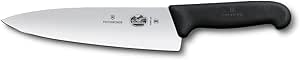 | Best Practical Everyday Chef’s Knife | Blade length: 8 inches | Blade material: Stainless steel | Handle material: Fibrox or Pro | VIEW LATEST PRICE | See Our Full Breakdown |
| SHAN ZU 8-Inch Damascus Steel Chef Knife |  | Best Premium-Looking All-Purpose Pick | Blade length: 8 in | Blade steel: 10Cr15MoV Japanese steel | Steel layers: 67 | VIEW LATEST PRICE | See Our Full Breakdown |
| Mercer Culinary Millennia 8-Inch Chef’s Knife |  | Best for Practical Everyday Prep | Series and model: Millennia, M22608 | Blade length: 8 inches | Blade material: High-carbon Japanese steel | VIEW LATEST PRICE | See Our Full Breakdown |
| Brewin Chefilosophi 5-Piece Chef Knife Set with Red Pakkawood Handles |  | Best Multi-Knife Set for Vegetable Variety | Set contents: Two 8-inch knives, one santoku, one 5-inch utility knife, and one paring knife | Blade material: 1.4116 German stainless steel | Blade construction: Forged from a unified piece of metal | VIEW LATEST PRICE | See Our Full Breakdown |
| PAUDIN 8-Inch High-Carbon Stainless Steel Chef Knife |  | Best Straightforward All-Rounder | Blade length: 8 inches | Blade material: 5Cr15MoV stainless steel | Blade thickness: 2 mm | VIEW LATEST PRICE | See Our Full Breakdown |
| Mercer Culinary Renaissance 7-Inch Nakiri Vegetable Knife |  | Best Dedicated Vegetable Knife | Series and model: Renaissance, M23660 | Knife type: Nakiri vegetable knife | Blade length: 7 inches | VIEW LATEST PRICE | See Our Full Breakdown |
| vegan chef knife | Handle material | Blade length | Blade material |
|---|---|---|---|
| HOSHANHO 8-Inch Japanese High- | Pakkawood | 8 inches | 10Cr15CoMoV high-carbon stainless steel |
| Amazon Basics 8-Inch Full Tang | Metal, stainless steel | 8 inches | High-carbon stainless steel |
| VegItPro 8-Inch Ceramic Chef K | Wheat straw | 8 inches | Ceramic |
| Atumuryou 8-Inch Japanese Chef | Stabilized wood and resin | 8 inches | — |
| Bloomhouse 8-Inch German Steel | Italian olive wood | 8 inches | High-carbon German steel |
| Kyocera Revolution 2-Piece Cer | Plastic | — | Zirconia ceramic |
| Cooluxry 8-Inch Chef Knife wit | Pakkawood | 8 inches | High-carbon stainless steel |
| Emojoy 8-Inch Damascus Steel C | Olive wood | 8 inches | — |
| Astercook 13-Piece Kitchen Kni | Polypropylene | — | High-carbon stainless steel |
| Victorinox Fibrox Pro 8-Inch C | Fibrox or Pro | 8 inches | Stainless steel |
| SHAN ZU 8-Inch Damascus Steel | G10 | 8 in | — |
| Mercer Culinary Millennia 8-In | Santoprene | 8 inches | High-carbon Japanese steel |
| Brewin Chefilosophi 5-Piece Ch | Pakkawood | — | 1.4116 German stainless steel |
| PAUDIN 8-Inch High-Carbon Stai | Wood | 8 inches | 5Cr15MoV stainless steel |
| Mercer Culinary Renaissance 7- | Delrin and Santoprene | 7 inches | High-carbon German cutlery steel |
More Details on Our Top Picks
HOSHANHO 8-Inch Japanese High-Carbon Steel Chef Knife
The HOSHANHO is my strongest all-round pick for cooks who want a conventional steel chef knife with a sharper, more acute edge. Its 13-degree-per-side edge and 60 HRC heat-treated blade are geared toward precise slicing and everyday chopping, while the sloped bolster accommodates a pinch grip. Compared with the Amazon Basics 8-Inch Full Tang Stainless Steel Chef’s Knife, this model gives more detail about its steel, hardness, and sharpening angle; the Amazon Basics instead specifies a stainless handle and hand-wash care. The Pakkawood handle adds a different feel from the Bloomhouse’s olive wood, but the HOSHANHO’s 8-inch blade may feel unwieldy to cooks who prefer a compact knife. Its care instructions are also not provided, so buyers should not assume it is dishwasher-safe.
Pros:- Forged, heat-treated 10Cr15CoMoV high-carbon stainless steel blade
- Hand-sharpened to 13 degrees per side for precise cutting
- Sloped bolster supports a pinch grip
- Pakkawood handle offers an alternative to metal or natural olive wood
Cons:- The 8-inch blade may be too large for smaller prep tasks or users
- Product details do not specify care instructions
Best for: Home cooks who want one full-size knife for regular chopping and slicing and prefer a Japanese-style acute edge with a pinch-grip handle.
Not ideal for: Cooks with small hands, limited counter space, or a preference for a shorter blade; its 8-inch length may be cumbersome, and care guidance is unspecified.
- Knife type:Chef knife
- Blade length:8 inches
- Blade material:10Cr15CoMoV high-carbon stainless steel
- Construction:Forged
- Hardness:60 HRC
- Edge angle:13 degrees per side
- Handle material:Pakkawood
- Weight:350 g
Our verdict“Choose the HOSHANHO for a versatile full-size steel knife with a fine edge and pinch-grip design, but look elsewhere if you need clear care guidance or a shorter blade.”
Amazon Basics 8-Inch Full Tang Stainless Steel Chef’s Knife
The Amazon Basics makes a practical case for cooks who want a familiar, full-size steel knife without the more specialized edge details of the HOSHANHO or Atumuryou. Its forged full-tang construction, three-rivet handle, and semi-bolster are intended to balance the knife while leaving more of the blade accessible for cutting. The blade is described as stain-, rust-, and pit-resistant, which suits routine kitchen prep, though it still requires hand washing. Compared with the VegItPro ceramic knife, this is the more conventional choice for varied cutting tasks; the VegItPro is lighter and resists corrosion, but its ceramic blade can chip if mishandled. The tradeoff here is a less specialized feature set: the listing provides no hardness or edge-angle details, so buyers seeking a particularly acute edge have more information in the HOSHANHO’s specifications.
Pros:- Forged full-tang construction with three handle rivets
- Semi-bolster design allows access along the blade
- Blade is described as stain-, rust-, and pit-resistant
- Suitable for cutting, chopping, dicing, and mincing
Cons:- Hand wash only
- No blade hardness or sharpening-angle information is provided
Best for: Home cooks who want a conventional 8-inch knife for chopping, dicing, mincing, and slicing, and value a full tang and accessible blade design.
Not ideal for: Anyone seeking a ceramic blade, a specified fine sharpening angle, or dishwasher-safe cleanup; hand washing is required and edge details are not provided.
- Blade length:8 inches
- Blade material:High-carbon stainless steel
- Blade finish:Satin
- Construction:Forged, full tang
- Handle material:Metal, stainless steel
- Design:Semi bolster with three rivets
- Dimensions:13.28 × 1.85 × 0.87 inches
- Weight:0.23 kg
- Care:Hand wash only
Our verdict“Pick this for straightforward all-purpose prep and a full-tang build, but choose the HOSHANHO if a documented, acute edge matters more to you.”
VegItPro 8-Inch Ceramic Chef Knife
For cooks whose prep centers on produce, the VegItPro offers a distinct alternative to the steel knives in this roundup. Its ceramic blade resists rust, stains, and corrosion, and the product description says it retains its edge with minimal sharpening. That makes it appealing for slicing large fruits and vegetables, where the maker also points to reduced browning and metallic tastes or odors. Compared with the HOSHANHO, it is positioned as a lighter, produce-focused tool rather than a general-purpose steel workhorse; compared with the Kyocera Revolution ceramic set, this is a single 8-inch chef-knife format rather than a santoku-and-utility pairing. The main compromise is ceramic’s chipping risk if mishandled, which calls for more care around hard foods and impacts. Its stamped construction and limited blade size also make it less suited to buyers seeking a broader steel-knife role.
Pros:- Lightweight design intended to reduce hand fatigue
- Ceramic blade resists rust, stains, and corrosion
- Designed for clean cuts on larger fruits and vegetables
- Edge is described as retaining sharpness with less frequent sharpening
Cons:- Ceramic blade may chip if mishandled
- Less suited to rough or impact-prone tasks than the steel options
- Only an 8-inch blade size is specified
Best for: Vegetable-focused cooks who want a lightweight knife for slicing melons, cabbage, and other large produce with infrequent sharpening.
Not ideal for: Cooks who need a forgiving knife for hard ingredients, rough handling, or varied heavy-duty prep; ceramic can chip, and the listed format is limited to an 8-inch blade.
- Blade length:8 inches
- Blade material:Ceramic
- Handle material:Wheat straw
- Blade edge:Plain
- Construction:Stamped
- Color:Green handle, white blade
- Warranty:120 days
Our verdict“Choose the VegItPro for light, produce-centered slicing and reduced sharpening needs, but favor a steel knife such as the HOSHANHO for more forgiving all-purpose use.”
Atumuryou 8-Inch Japanese Chef Knife with VG-10 Damascus Steel
The Atumuryou stands apart from the more workaday HOSHANHO and Amazon Basics options through its VG-10 core, 67-layer Damascus cladding, and 62 HRC hardness. Its hand-sharpened 12-degree edge is the most acute specified here, which points toward controlled, precise slicing rather than carefree treatment. The stabilized wood-and-resin handle is designed for a secure grip, while the balanced build is intended to ease wrist fatigue during prep. Compared with the HOSHANHO’s 13-degree edge and 60 HRC rating, this knife has more specialized edge and steel specifications; the HOSHANHO may be a simpler everyday choice for buyers who do not need that sharper geometry. The tradeoff is handling responsibility: the very sharp edge calls for care, and the listing gives no maintenance instructions. This is a steel-focused pick, not the low-sharpening ceramic alternative offered by VegItPro.
Pros:- VG-10 steel core with 67-layer Damascus cladding
- 62 HRC hardness and hand-sharpened 12-degree edge
- Stabilized wood-and-resin handle is designed for a secure grip
- Balanced design is intended to reduce wrist fatigue
Cons:- Very sharp edge requires careful handling
- No specific care or maintenance instructions are provided
Best for: Confident home cooks who value a finely sharpened Japanese-style edge, detailed steel specifications, and a stabilized wood-and-resin handle.
Not ideal for: Beginners who want a forgiving knife or buyers who need explicit care instructions; its 12-degree edge calls for careful handling and maintenance.
- Model:AT8101-US02
- Blade length:8 inches
- Overall length:13 inches
- Blade steel:VG-10 Japanese steel
- Hardness:62 HRC
- Blade construction:67-layer Damascus cladding
- Edge angle:12 degrees
- Handle material:Stabilized wood and resin
Our verdict“Choose the Atumuryou for a finely specified, acute-edge steel knife, but pick the HOSHANHO if you want a less specialized everyday option.”
Bloomhouse 8-Inch German Steel Chef Knife with Italian Olive Wood Handle
The Bloomhouse suits buyers who want a traditional-looking full-tang knife with a natural wood handle rather than a highly specified Japanese-style edge. Its high-carbon German steel blade is described as rust-resistant and easy to sharpen and maintain, while the Italian olive wood scales are secured with stainless steel rivets. That makes it a different proposition from the HOSHANHO’s Pakkawood handle and documented 13-degree edge: Bloomhouse emphasizes material character and familiar construction, not a stated sharpening angle or hardness. Compared with the Amazon Basics knife, it shares a full-tang format but adds olive wood and a protective canvas sheath. Those details come with routine-care duties: it must be hand-washed and stored in the sheath. Buyers seeking a ceramic blade’s reduced sharpening needs should look to the VegItPro instead, though that model brings its own chipping concern.
Pros:- Full-tang construction is intended to provide balance and even weight distribution
- High-carbon German steel is described as rust-resistant and easy to sharpen
- Italian olive wood handle has a natural grain pattern
- Stainless steel rivets secure the handle, and a canvas sheath is included for storage
Cons:- Hand wash only
- Protective sheath is specified for safe storage
- No hardness or sharpening-angle specifications are provided
Best for: Home cooks who prefer a natural olive wood handle, full-tang construction, and a traditional steel knife for everyday prep.
Not ideal for: Buyers who want dishwasher-safe cleanup, detailed hardness or edge-angle specifications, or a knife that can be stored without a protective sheath.
- Blade length:8 inches
- Blade material:High-carbon German steel
- Handle material:Italian olive wood
- Construction:Full tang
- Handle fasteners:Stainless steel rivets
- Care:Hand wash only
- Storage:Protective canvas sheath
- Included components:Chef’s knife
Our verdict“Pick the Bloomhouse for full-tang construction and an olive wood handle, but choose the HOSHANHO if documented edge geometry matters more than handle character.”
Kyocera Revolution 2-Piece Ceramic Knife Set, 5.5-Inch Santoku and 4.5-Inch Utility
For cooks who want lightweight, non-reactive blades, this Kyocera set takes a different route from the full-size steel options here. The 5.5-inch Santoku and 4.5-inch utility knife cover smaller, precise jobs such as slicing vegetables and fruit, while the Victorinox Fibrox Pro provides a longer 8-inch blade for broad, everyday chopping. Kyocera’s zirconia ceramic is designed to resist food oxidation and stay sharp longer than traditional knives, which may appeal to cooks who often cut produce and want to avoid metallic flavor transfer. The tradeoff is a narrower use case: these blades are not intended for hard or frozen foods, so they are less suitable as an all-purpose kitchen pair. Choose them for gentle prep, not heavy-duty chopping.
Pros:- Includes a 5.5-inch Santoku and 4.5-inch utility knife for different small-prep tasks.
- Lightweight construction can reduce hand fatigue during extended slicing.
- Non-reactive zirconia ceramic blades resist food oxidation.
- Blades are designed to stay sharp longer than traditional knives.
Cons:- Not intended for hard or frozen foods, limiting heavy-duty use.
- Shorter blades offer less reach than the 8-inch Victorinox Fibrox Pro.
- The set focuses on produce and boneless foods rather than covering every kitchen task.
Best for: Home cooks who mainly slice fruit and vegetables and prefer very lightweight knives in two useful sizes.
Not ideal for: Cooks who need an all-purpose knife for hard vegetables, frozen ingredients, or forceful chopping.
- Number of pieces:2
- Included knives:5.5-inch Santoku and 4.5-inch utility
- Blade material:Zirconia ceramic
- Handle material:Plastic
- Blade edge:Plain
- Item weight:17.87 g
- Country of manufacture:Japan
Our verdict“Choose the Kyocera pair if lightweight ceramic knives suit your produce prep, but pick a full-size steel chef’s knife for broader everyday work.”
Cooluxry 8-Inch Chef Knife with Pakkawood Handle
The Cooluxry is the straightforward choice here for buyers who want a single 8-inch steel chef’s knife with a wood-look grip. Its high-carbon stainless steel blade is described as resisting rust, stains, and corrosion, while the forged full tang is intended to add strength and balance. That makes it a more conventional all-purpose option than the Kyocera ceramic set, whose shorter blades are not meant for hard or frozen foods. The Pakkawood handle is designed for a comfortable, non-slip hold, but the listing does not specify dishwasher safety or a warranty, unlike the dishwasher-safe Victorinox Fibrox Pro. Only one knife is included, so buyers building a full knife collection will need to add other tools separately. This pick prioritizes a full-size format and handle material over set breadth.
Pros:- 8-inch blade suits a broad range of everyday slicing and chopping tasks.
- High-carbon stainless steel is described as resisting rust, stains, and corrosion.
- Forged full-tang construction is designed to provide strength and balance.
- Ergonomic Pakkawood handle is designed for a comfortable, non-slip grip.
Cons:- Includes only one knife, unlike the multi-piece Kyocera and Astercook sets.
- Care instructions and dishwasher safety are not specified in the supplied product data.
- No warranty information is provided in the supplied product data.
Best for: Cooks who want one full-size chef’s knife with a Pakkawood handle for routine slicing and chopping.
Not ideal for: Buyers seeking a multi-knife set, stated dishwasher-safe care, or a listed warranty.
- Blade length:8 inches
- Blade material:High-carbon stainless steel
- Handle material:Pakkawood
- Construction:Forged, full tang
- Blade edge:Plain
- Quantity:1
- Model:KF-WD-C
Our verdict“Pick the Cooluxry if you want a single full-size chef’s knife with a Pakkawood grip and do not need a bundled set or specified care terms.”
Emojoy 8-Inch Damascus Steel Chef Knife with Olive Wood Handle
Emojoy brings the most specified blade construction in this group: a forged, 67-layer Damascus steel blade with a stated 15-degree edge, 58 HRC hardness, and olive wood handle. Those details give buyers a clearer picture of the intended cutting profile than the Cooluxry listing, which does not state an edge angle or hardness. Its 8-inch length also makes it a more versatile single-knife choice than Kyocera’s shorter ceramic pair, though it lacks that set’s non-reactive blade material. The narrow stated edge angle points toward precise cutting, but the product information gives no care or maintenance instructions; an olive wood handle and layered steel may require more attention than a dishwasher-safe option such as the Victorinox Fibrox Pro. It also comes with a wooden gift box and lifetime warranty, but the refined details come with a more particular care profile.
Pros:- Forged 67-layer Damascus steel construction.
- Stated 15-degree edge angle supports a precise cutting profile.
- Olive wood handle has an organic shape and half bolster.
- Includes a wooden gift box and lifetime warranty.
Cons:- Product information does not specify care or maintenance instructions.
- Unlike the Victorinox Fibrox Pro, dishwasher-safe care is not stated.
- Sold as one chef’s knife rather than a multi-knife set.
Best for: Buyers who want a detailed, forged Damascus-steel specification, an olive wood handle, and a gift-ready presentation.
Not ideal for: Cooks who prioritize clear care guidance or dishwasher-safe convenience over blade and handle materials.
- Blade length:8 inches
- Blade construction:Forged, 67-layer Damascus steel
- Blade edge angle:15°
- Carbon content:0.98%
- Chromium content:18%
- Hardness:58 HRC
- Handle material:Olive wood
- Warranty:Lifetime
Our verdict“Choose Emojoy for its detailed Damascus-steel build and olive wood presentation if you are comfortable with unspecified care requirements.”
Astercook 13-Piece Kitchen Knife Set with Ceramic-Coated Stainless Steel Blades
Astercook is the widest-ranging bundle in this batch, pairing six knives, kitchen shears, and six blade guards rather than focusing on one premium-style chef’s knife. The lineup includes an 8-inch chef’s knife alongside a Santoku, bread, slicing, utility, and paring knife, so it gives a new kitchen more task-specific shapes than the single-blade Cooluxry or Emojoy. The high-carbon stainless steel blades have a ceramic coating, and the set is described as dishwasher safe—a practical contrast with Emojoy’s unspecified care guidance. The guards help with drawer storage or travel, though no separate guard is listed for the shears. Buyers drawn to natural handle materials should also note that these handles are polypropylene with a wood-grain pattern, not actual wood. Its strength is coverage and convenience, not a premium handle feel.
Pros:- Includes six knives covering chef’s, slicing, Santoku, bread, utility, and paring tasks.
- Kitchen shears and six blade guards add utility and support safer storage.
- Described as dishwasher safe for convenient cleanup.
- Includes a 99-year warranty.
Cons:- Handles are polypropylene rather than genuine wood.
- No separate blade guard is listed for the kitchen shears.
- The ceramic coating is distinct from a solid ceramic blade such as those in the Kyocera set.
Best for: New cooks or households that want a varied knife assortment, shears, and guarded storage in one package.
Not ideal for: Buyers who want genuine wood handles, a single high-spec chef’s knife, or a dedicated guard for every included tool.
- Set size:13 pieces
- Included items:Six knives, kitchen shears, and six blade guards
- Knives included:8-inch chef’s, 8-inch slicing, 7-inch Santoku, 8-inch serrated bread, 5-inch utility, and 3.5-inch paring
- Blade material:High-carbon stainless steel
- Blade coating:Ceramic
- Handle material:Polypropylene
- Dishwasher safe:Yes
- Warranty:99 years
Our verdict“Pick Astercook if you need broad kitchen coverage and guarded storage more than natural handles or a specialized standalone chef’s knife.”
Victorinox Fibrox Pro 8-Inch Chef’s Knife, Black
The Victorinox Fibrox Pro earns its place as the practical everyday pick: it combines an 8-inch stainless steel blade with a non-slip TPE handle and stated dishwasher-safe care. That makes it easier to slot into routine kitchen work than the Emojoy, whose care instructions are not supplied, and more versatile for larger chopping tasks than Kyocera’s compact ceramic knives. The handle is designed to stay secure when wet, while the blade is intended for chopping, mincing, slicing, and dicing. This is a single stamped knife, not a bundle or forged Damascus-style statement piece, and sharpening tools are sold separately. Buyers who want natural wood or a multi-knife starter set may prefer the Cooluxry or Astercook instead. For cooks who value straightforward handling and easy cleanup, its functional choices are the point.
Pros:- 8-inch stainless steel blade is suited to chopping, mincing, slicing, and dicing.
- Ergonomic TPE handle is designed to provide a non-slip grip, including when wet.
- Dishwasher-safe care simplifies cleanup compared with options without stated care guidance.
- Made in Switzerland and backed by a lifetime warranty against material and workmanship defects.
Cons:- Stamped construction may not appeal to buyers seeking a forged knife such as the Emojoy.
- Knife sharpeners are sold separately.
- Includes one knife rather than the broader selection in the Astercook set.
Best for: Home cooks who want a full-size, easy-care chef’s knife with a secure grip for frequent everyday prep.
Not ideal for: Buyers seeking a knife set, a natural wood handle, or sharpening equipment included with the knife.
- Blade length:8 inches
- Blade material:Stainless steel
- Handle material:Fibrox or Pro
- Construction type:Stamped
- Item length:13.4 inches
- Item weight:22.68 g
- Made in:Switzerland
- Care and warranty:Dishwasher safe; lifetime warranty against defects in material and workmanship
Our verdict“Choose the Victorinox if you want a dependable, dishwasher-safe full-size chef’s knife with a wet-grip handle rather than a set or decorative build.”
SHAN ZU 8-Inch Damascus Steel Chef Knife
The SHAN ZU is the choice here for cooks who want a refined-looking 8-inch all-purpose blade with a harder steel core. Its 10Cr15MoV core, 67-layer construction, and 15° cutting angle point to a fine edge suited to precise vegetable slicing as well as everyday prep. Compared with the PAUDIN 8-Inch Chef Knife, it specifies a higher hardness rating and a narrower cutting angle, while the PAUDIN offers a simpler 5Cr15MoV blade and wood handle. The tradeoff is upkeep: at 62 HRC, this knife calls for careful handling and regular attention to its edge, rather than rough treatment or casual storage. Its G10 handle gives it a practical grip, but cooks who want a dedicated vegetable shape may prefer the Mercer Renaissance Nakiri.
Pros:- 10Cr15MoV core and 67-layer construction offer a distinctive, layered blade build.
- 15° cutting angle is suited to fine, controlled slicing.
- G10 handle is designed for a secure, balanced grip.
- 8-inch blade handles a broad range of kitchen prep.
Cons:- The 62 HRC blade needs careful handling and maintenance to preserve its edge.
- At 270 g, it may feel substantial to cooks who prefer a lighter knife.
Best for: Home cooks who want a finely angled, hard-core 8-inch knife for precise vegetable prep and general kitchen tasks.
Not ideal for: Busy cooks who want a blade they can treat roughly or leave without careful edge maintenance; also skip it if a dedicated nakiri is your priority.
- Blade length:8 in
- Blade steel:10Cr15MoV Japanese steel
- Steel layers:67
- Hardness:62 HRC
- Cutting angle:15°
- Blade thickness:2.2 mm
- Handle material:G10
- Weight:270 g
Our verdict“Choose the SHAN ZU if you want a hard, finely angled all-purpose knife and are willing to maintain its edge carefully.”
Mercer Culinary Millennia 8-Inch Chef’s Knife
For a cook who values a dependable grip over decorative details, the Millennia is a straightforward everyday vegetable-prep knife. Its stamped high-carbon Japanese steel blade is designed for easy edge maintenance, and the textured Santoprene handle offers a non-slip hold while chopping or mincing. That makes it a more practical, lower-fuss direction than the harder SHAN ZU Damascus Chef Knife, whose 62 HRC rating calls for more attentive care. The Millennia still needs hand washing and thorough drying, so it is not a dishwasher-friendly shortcut. It is also a general chef’s knife rather than a vegetable-specific blade; cooks who spend most of their time on produce may prefer the Mercer Renaissance Nakiri, while those seeking forged construction should look elsewhere.
Pros:- Textured Santoprene handle supports a secure, non-slip grip.
- High-carbon Japanese steel is designed for straightforward edge maintenance.
- 8-inch blade suits chopping, mincing, and cutting across common prep tasks.
- Light 6.7-ounce weight can feel manageable during routine kitchen work.
Cons:- Hand washing and thorough drying are required; dishwasher use is not recommended.
- Stamped construction may disappoint buyers specifically seeking a forged knife.
Best for: Home cooks who want a grippy, general-purpose 8-inch knife for regular chopping and mincing, and are comfortable hand washing it.
Not ideal for: Cooks who require dishwasher cleanup, a forged blade, or a dedicated vegetable knife shape.
- Series and model:Millennia, M22608
- Blade length:8 inches
- Blade material:High-carbon Japanese steel
- Construction:Stamped
- Handle material:Santoprene
- Blade edge:Plain
- Item weight:6.7 ounces
- Care:Hand wash; do not place in dishwasher
Our verdict“Pick the Millennia for practical daily chopping and a grippy handle, provided hand washing fits your routine.”
Brewin Chefilosophi 5-Piece Chef Knife Set with Red Pakkawood Handles
This set earns its place by giving cooks five distinct knives for produce prep, from two 8-inch knives to a santoku, utility knife, and paring knife. That range is more useful for varied cutting tasks than buying one general-purpose blade such as the Mercer Culinary Millennia, though the Mercer is the simpler pick if you only need a single chef’s knife. The Brewin’s forged 1.4116 German stainless steel and pakkawood handles with three reinforced anchor points offer a coordinated set with a stated hardness of 56+ HRC. Its main limitation is that the provided specs do not give lengths for every knife, making fit and storage harder to judge. Also, it is a set rather than a focused vegetable knife; the Mercer Renaissance Nakiri is more specific for repetitive vegetable chopping.
Pros:- Five-piece mix covers chef-knife, santoku, utility, and paring tasks.
- Forged 1.4116 German stainless steel blades are described as rustproof.
- Pakkawood handles have three reinforced anchor points.
- Gift packaging makes the set suitable for giving.
Cons:- The listed specifications do not provide lengths for every knife.
- A five-knife set takes more storage space than a single chef’s knife.
- Only one utility knife and one paring knife are included.
Best for: Home cooks building a varied prep collection who regularly switch between large chopping, smaller utility cuts, and peeling.
Not ideal for: Buyers who want one clearly specified vegetable knife, minimal storage needs, or exact dimensions for every blade before choosing.
- Set contents:Two 8-inch knives, one santoku, one 5-inch utility knife, and one paring knife
- Blade material:1.4116 German stainless steel
- Blade construction:Forged from a unified piece of metal
- Blade hardness:56+ HRC
- Handle material:Pakkawood
- Handle color:Red
- Item weight:2.6 pounds
- Packaging:Gift packaging
Our verdict“Choose Brewin if you want several blade shapes for varied vegetable prep, rather than one dedicated chef knife.”
PAUDIN 8-Inch High-Carbon Stainless Steel Chef Knife
The PAUDIN is a flexible pick for cooks who want one 8-inch knife for mixed kitchen prep, including vegetables, fruit, bread, fish, and meat. Its 5Cr15MoV stainless steel blade is hand-polished and 2 mm thick, while the wood handle gives it a familiar feel. Compared with the SHAN ZU Damascus Chef Knife, PAUDIN has a less elaborate steel specification and does not state a hardness rating or cutting angle; SHAN ZU is the more specification-led option for buyers focused on a fine edge. The PAUDIN’s waved pattern is explicitly not real Damascus, so its appearance should not be mistaken for layered construction. It is also a broad-use chef knife, not as purpose-built for vegetable work as the Mercer Renaissance Nakiri.
Pros:- 8-inch blade is intended for a wide range of chopping, slicing, mincing, and dicing.
- 5Cr15MoV stainless steel offers a practical all-purpose blade material.
- Hand-polished blade is designed to retain sharpness.
- Ergonomic wood handle and balanced design support controlled movement.
Cons:- The waved pattern is not real Damascus construction.
- The provided specs do not state hardness or cutting angle.
- Careful handling and maintenance are needed to preserve sharpness.
Best for: Cooks who want a single stainless-steel chef knife for varied chopping, slicing, and dicing, including both plant and non-plant foods.
Not ideal for: Buyers seeking a documented Damascus blade, detailed hardness and edge-angle specifications, or a dedicated vegetable knife.
- Blade length:8 inches
- Blade material:5Cr15MoV stainless steel
- Blade thickness:2 mm
- Handle material:Wood
- Blade pattern:Waved pattern; not real Damascus
- Intended use:Chopping, slicing, mincing, and dicing
Our verdict“Choose PAUDIN for a versatile, conventional chef knife, but not if layered Damascus steel or vegetable-specific geometry is your goal.”
Mercer Culinary Renaissance 7-Inch Nakiri Vegetable Knife
For a roundup centered on vegetable prep, the Renaissance Nakiri has the clearest purpose: its 7-inch straight-edged blade is designed for chopping, mincing, and slicing produce. The shorter nakiri shape gives it a more focused role than the Mercer Millennia 8-Inch Chef’s Knife, which is better suited to cooks who want one general-purpose blade for varied tasks. Forged high-carbon German cutlery steel, a triple-riveted handle, and a rounded spine support controlled, comfortable prep. The tradeoff is versatility: this vegetable knife is less suited to the broad range of tasks associated with an 8-inch chef’s knife. It also needs hand washing and complete drying, so cooks who rely on dishwasher cleanup should choose another option.
Pros:- Nakiri shape is purpose-built for chopping, mincing, and slicing vegetables.
- Forged high-carbon German cutlery steel forms the blade.
- Triple-riveted ergonomic handle is designed for a secure hold.
- Rounded spine is intended to improve hand comfort during use.
Cons:- Its vegetable-specific shape is less versatile than an 8-inch chef’s knife.
- Hand washing and thorough drying are required.
- It should not be placed in a dishwasher or submerged for long periods.
Best for: Vegetable-focused home cooks who want a dedicated blade for repeated chopping, mincing, and slicing, with a comfortable handle.
Not ideal for: Cooks seeking one knife for all kitchen tasks or anyone who needs dishwasher-safe cleanup.
- Series and model:Renaissance, M23660
- Knife type:Nakiri vegetable knife
- Blade length:7 inches
- Blade material:High-carbon German cutlery steel
- Construction:Forged
- Handle material:Delrin and Santoprene
- Item weight:0.24 kg
- Care:Hand wash, rinse, and dry completely; do not use the dishwasher
Our verdict“Choose the Renaissance Nakiri if vegetables dominate your prep and you prefer a dedicated blade over an all-purpose chef’s knife.”
How We Picked
I ranked these options around the needs behind the search for vegan chef knives: reliable plant-food prep, sensible materials, comfortable handling, and a knife type that fits the buyer’s routine. I compared blade material and shape, length, construction, handle material, maintenance demands, and whether each listing offers one focused knife or a broader set. A chef’s knife that can handle frequent chopping and varied ingredients ranked ahead of a specialized or delicate option for most kitchens.
The ranking favors everyday versatility and usability over decorative materials or a long accessory list. That puts the Victorinox Fibrox Pro and Mercer Millennia ahead for buyers seeking a practical main knife, while ceramic knives and nakiri models rank as more specialized choices. Sets earn a place for buyers who need multiple blade shapes, but they do not automatically outrank a strong single knife. Since “vegan” can refer to material choices beyond the blade, I also flag that shoppers should verify handle and construction details with the maker when animal-derived materials are a concern.
Factors to Consider When Choosing Vegan Chef Knives
Choosing a knife for plant-based cooking is less about a special “vegan” blade and more about matching materials, shape, and upkeep to the way you prepare food. These broader checks can prevent a common mistake: buying a decorative set or specialized blade when one comfortable, adaptable knife would do more work.
Check What “Vegan” Means to You
Most kitchen knife blades in this roundup are steel or ceramic, but the word “vegan” is not a standard knife-material certification. If your concern extends beyond the blade, check the handle, adhesives, coatings, and any included accessories with the manufacturer. Wood, pakkawood, and synthetic handles differ in composition and upkeep, so do not assume a material name answers every sourcing question. A product listing may describe a handle without explaining its binders or finish. Ask for material details when that distinction affects your purchase. This step is more useful than choosing a knife based on a vegan label that the maker may not define.
Choose Blade Shape for Your Actual Prep
A standard chef’s knife is the broadest starting point for chopping, mincing, and slicing many ingredients. A nakiri has a straighter edge and a vegetable-focused profile, which can feel natural for repeated up-and-down chopping but is less adaptable to tasks such as trimming or rocking cuts. Santoku shapes offer another compact, multipurpose approach, while utility knives handle smaller jobs. Think about the cuts you make most often rather than buying a blade for a rare task. A specialty knife can speed up familiar work, but it may leave you reaching for another knife when the meal involves varied prep. For a first purchase, prioritize one shape that covers most of your weekly cooking.
Match Material to Your Handling Habits
Steel and ceramic ask for different care, not just different cutting sensations. Steel is the more adaptable choice for a main knife because it can be sharpened when its edge dulls and generally suits a wider range of kitchen jobs. Ceramic appeals to cooks who want a light blade for controlled slicing, but it needs gentler handling and is a poor match for twisting, prying, or cutting through hard materials. Neither material makes careless use safe or effective. If multiple people share your kitchen, a more forgiving steel knife may be easier to live with than a delicate specialist. Choose the material your household can maintain, not just the one that sounds most advanced.
Treat Length and Weight as Daily-Use Decisions
An 8-inch chef’s knife offers reach for larger vegetables and broad chopping motions, but it can feel cumbersome in a small workspace or in a smaller hand. Shorter blades and compact sets may be easier to control for close, precise work, though they cover less cutting surface. Weight affects more than comfort: a heavier knife can feel stable through dense ingredients, while a lighter one may reduce fatigue during repetitive slicing. Handle shape and balance matter alongside blade length, so a specification alone cannot predict how a knife will feel. When possible, check the maker’s dimensions and return policy before choosing. Avoid selecting a knife solely because its length is the most common.
Plan for Sharpening and Storage Before You Buy
A knife’s upkeep can shape long-term satisfaction more than a premium-looking finish. Steel blades need periodic sharpening, and the right method depends on the blade and the maker’s guidance; ceramic blades require appropriate care and are not a routine match for a standard steel sharpener. Store knives so their edges do not knock against other tools, and hand-wash when the manufacturer recommends it. A large set may add storage demands and leave several blades unused. Buyers who do not already have a sharpening plan should favor a knife they can maintain locally or through a clear service option. Include care time and storage space in the decision, not just the purchase itself.
Pay for Usefulness, Not a Set’s Piece Count
A multi-piece set makes sense if you need distinct blade types and have a safe place to store them. It can be poor value for a cook who will use only the chef’s knife, since extra pieces add clutter without improving daily prep. Premium steel, patterned finishes, and wood-style handles may appeal for their materials or appearance, but they do not replace a comfortable grip or a blade shape that fits your work. Decide which jobs you want the knife to handle before paying for extra features. For many plant-based kitchens, one dependable chef’s knife plus a paring knife is a more useful starting point than a large block. Add specialists only when repeated tasks show a clear need.
Frequently Asked Questions
Are chef knives automatically vegan?
Most chef knives use steel or ceramic blades, but “vegan” is not a universal product certification for kitchen tools. Handle materials, coatings, adhesives, and accessories may require a closer look if you avoid all animal-derived materials. Ask the manufacturer for a materials breakdown when the listing is unclear. Do not rely on the blade material alone to settle the question. The safest choice is the option whose full material details match your own definition.
Should I buy a ceramic chef knife or a steel one for vegetables?
Choose steel if you want one knife for frequent, varied prep and value the ability to sharpen the blade as it dulls. Ceramic can suit careful slicing when a lightweight feel is a priority, but it is less forgiving if the blade is twisted, dropped, or used on hard foods. Plant-based cooking includes crisp produce, dense roots, and many different textures, so a ceramic knife may not cover every task as comfortably. Think about who else will use the knife and how carefully it will be handled. For a single main knife, steel is usually the more flexible choice.
Is an 8-inch chef’s knife too large for a small kitchen?
Kitchen size alone does not determine whether an 8-inch blade will work; counter space, cutting-board size, and your preferred grip matter too. The extra blade length can make quick work of large vegetables, but it can feel awkward if you use a compact board or prefer short, controlled cuts. A shorter santoku or utility knife can feel more manageable, though it may not replace a full-size chef’s knife for every job. Check the knife’s overall length and handle dimensions, not only the blade measurement. If possible, try a similar-sized knife in a shop before deciding.
Is a knife set a better first purchase than one chef’s knife?
A set is useful when you already know you need several blade shapes and can store them safely. For a new kitchen, one versatile chef’s knife often covers more everyday prep than a group of specialist blades. Sets can include pieces that rarely leave the block, so count the tools you will actually use rather than the total number included. A focused two-piece set can make more sense than a large collection if its blades fit your common tasks. Start with your routine, then add a specialized knife only when a repeated job calls for one.
What should I choose if I want one knife for daily vegetable prep?
Start with a full-size chef’s knife if your meals involve a mix of chopping, mincing, and slicing. The Victorinox Fibrox Pro and Mercer Millennia are the practical all-purpose picks in this roundup, while the Mercer Renaissance nakiri is better suited to buyers who mainly want a vegetable-focused blade. A nakiri’s shape can make repeated chopping feel direct, but it is less of an all-rounder. Consider how often you cut large produce and whether you prefer a rocking or straight chopping motion. If you are uncertain, pick the versatile chef’s knife first and add a specialist later if your routine calls for it.
Conclusion
For most plant-based kitchens, I would start with the Victorinox Fibrox Pro as the best overall choice because it prioritizes everyday versatility over specialty materials. The Mercer Culinary Millennia is my best value-minded pick and a practical option for beginners who want a straightforward main knife. For a more premium materials-focused choice, compare the Atumuryou VG-10 Damascus and SHAN ZU Damascus models, checking care guidance and handle details before choosing. The Kyocera Revolution set fits careful cooks who want lightweight ceramic blades, while the Mercer Renaissance nakiri is the specific pick for vegetable-heavy prep. If you need several knife shapes, consider a set; otherwise, choose one dependable blade and keep the decision focused on materials, maintenance, and the cuts you make most.