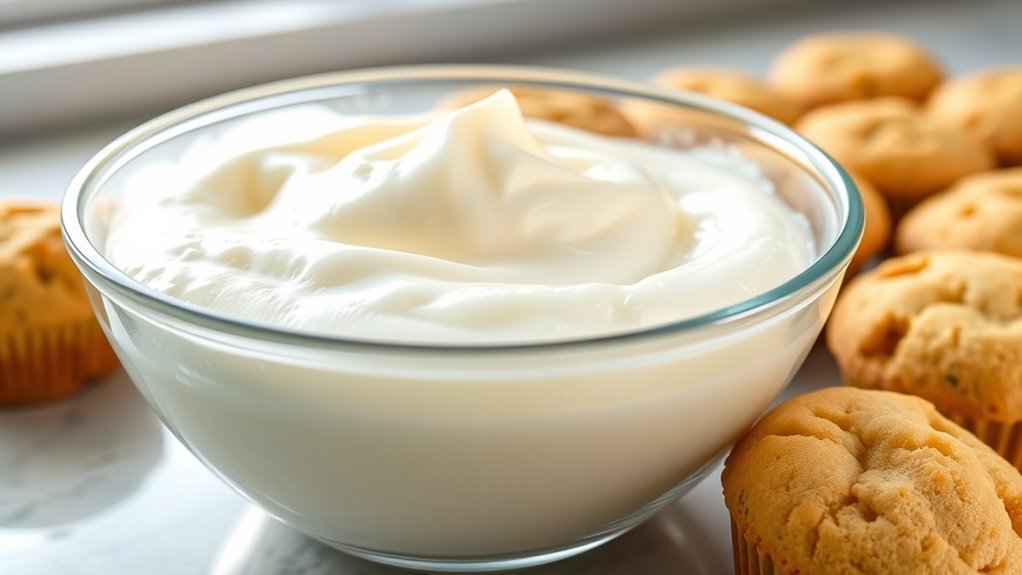

Aquafaba works magically in gluten-free baking because its proteins and starches form a stable network when whipped, trapping air like egg whites do. This creates light, airy textures essential for meringues, cakes, and cookies. By whipping aquafaba to stiff peaks and adding gentle sweeteners, you can achieve the perfect volume and structure without eggs. If you keep exploring, you’ll discover how this plant-based ingredient can transform your gluten-free creations in surprising ways.

Get health and wellness essentials delivered free with Prime
- Fast, free delivery on millions of items
- Prime Video, Amazon Music and more included
- Member-only deals all year
Key Takeaways
- Aquafaba’s proteins and starches form a stable foam by trapping air, mimicking egg whites’ structure and leavening ability.
- Whipping aquafaba unfolds proteins, creating a network that stabilizes air bubbles essential for light, airy baked goods.
- Sugar or sweetener stabilizes the aquafaba foam, preventing collapse and contributing to a glossy, firm peak for meringue-like textures.
- Its unique chemistry enables egg-free, gluten-free baked goods to achieve desirable volume, tenderness, and structure in desserts like meringues and cakes.
- Proper techniques, such as chilling and gradual sweetener addition, optimize foam stability and final texture in gluten-free aquafaba-based recipes.
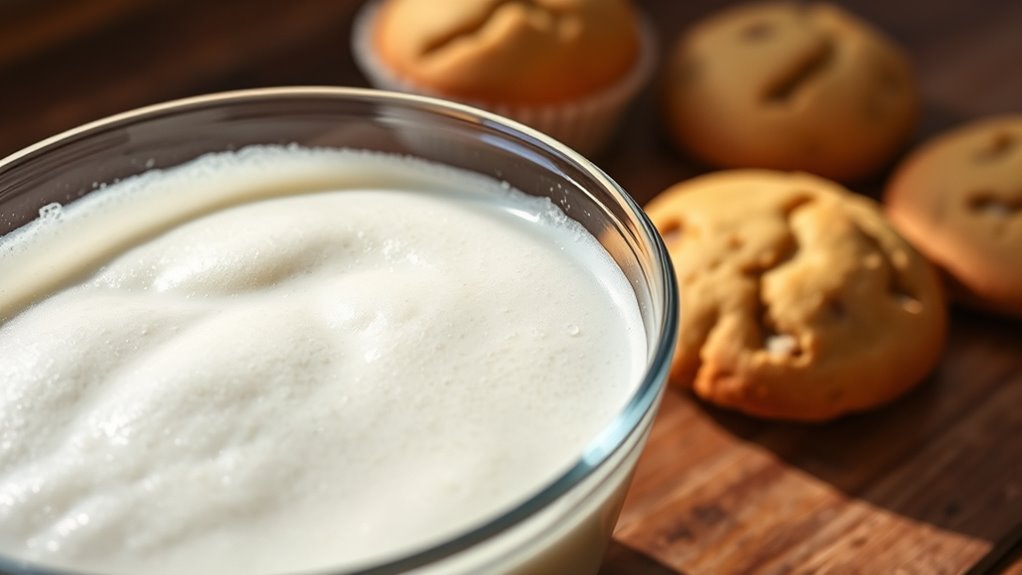
If you’re looking for a versatile, plant-based egg substitute in gluten-free baking, aquafaba is an excellent option. Derived from the liquid in canned beans or cooked legumes, aquafaba mimics the binding and leavening properties of eggs, making it a popular choice among vegans and those with gluten sensitivities. Its unique ability to whip into stiff peaks allows you to create light, airy textures without relying on traditional eggs. When exploring sugar alternatives, aquafaba shines by helping you craft vegan meringues that are crisp on the outside and chewy on the inside. These meringues are not only a sweet treat but also a testament to aquafaba’s versatility, providing an egg-free, gluten-free dessert option that rivals its conventional counterpart.
The chemistry behind aquafaba’s effectiveness lies in its rich composition of proteins and starches. When whipped, the proteins unfold and form a network that traps air bubbles, creating volume and structure. This process is similar to egg whites, which explains why aquafaba can produce stable foam suitable for meringues. Adding sugar alternatives like agave syrup, maple syrup, or stevia not only sweetens your vegan meringues but also stabilizes the foam, preventing collapse. The interaction between these sweeteners and aquafaba’s proteins enhances the whip’s stability, resulting in a glossy, firm peak that holds its shape during baking. This makes aquafaba an invaluable ingredient for gluten-free baking projects that demand lightness and structure, such as cakes, cookies, or pavlovas.
In gluten-free baking, aquafaba’s ability to replace eggs means you don’t sacrifice texture or volume. Its natural properties help trap air when beaten, giving rise to tender, airy baked goods free from gluten’s toughening effects. When combined with sugar alternatives, it also allows you to reduce refined sugars while still achieving the sweetness and consistency required for delicate desserts like vegan meringues. The process of whipping aquafaba is straightforward: chill the liquid, then beat it with a mixer until soft peaks form, gradually adding your preferred sweetener until stiff, glossy peaks are achieved. Once baked, these meringues turn crisp, light, and perfectly sweet, demonstrating how aquafaba’s chemistry makes gluten-free, egg-free desserts both achievable and delicious. Additionally, cooking techniques play a crucial role in optimizing aquafaba’s performance and final texture.
aquafaba egg replacer for baking
As an affiliate, we earn on qualifying purchases.
As an affiliate, we earn on qualifying purchases.
Frequently Asked Questions
Can Aquafaba Replace Eggs in All Gluten-Free Recipes?
You might wonder if aquafaba can replace eggs in all gluten-free recipes. While it’s a versatile egg replacement for many baked goods, it doesn’t work perfectly for every recipe. For successful recipe adaptation, consider aquafaba’s properties like binding and leavening. However, in recipes needing structure or richness, like certain cakes or mazes, eggs might still be necessary. Experiment to find the best balance for your specific gluten-free creations.
How Long Does Aquafaba Last Once Whipped?
Once you whip aquafaba, it typically lasts about 24 to 48 hours if stored properly in an airtight container in the refrigerator. Its whipped stability diminishes over time, so for the best results, use it within this window. Keep in mind that the longer it sits, the more it may deflate or become less stable, so plan your baking accordingly to maintain ideal texture and volume.
Is Aquafaba Suitable for Vegans and Vegetarians?
Yes, aquafaba is suitable for vegans and vegetarians because it’s a plant-based alternative to eggs, aligning with ethical considerations and dietary choices. As a versatile ingredient, it offers a sustainable option that reduces reliance on animal products. You can confidently use aquafaba in your baking and cooking, knowing it supports ethical eating habits and provides a functional, plant-derived substitute for traditional ingredients.
Does the Type of Bean Affect Aquafaba’S Baking Properties?
You’re right to wonder if bean variety impacts aquafaba’s baking magic. It’s a case of don’t judge a book by its cover; different beans, like chickpeas or black beans, have varying cooking times and starch content, which influence aquafaba’s foaming ability and stability. So, yes, the type of bean can affect how well aquafaba works in your recipes, making it a bit of a game-changer in baking success.
Are There Any Health Benefits or Risks Associated With Aquafaba?
You might wonder about the health benefits or risks of aquafaba. It has minimal nutritional content but can be a good vegan egg substitute. However, there are allergen concerns, especially if you’re sensitive to beans or legumes. Always check the source, as some commercial aquafaba may contain added preservatives or salt. Overall, it’s a safe, versatile ingredient when used mindfully, but be aware of potential allergen risks and nutritional limitations.
As an affiliate, we earn on qualifying purchases.
Conclusion
So, next time you’re stumped by gluten-free baking, remember aquafaba’s secret power. Who knew that the liquid from beans could magically mimic egg whites, turning your baked goods from flat to fabulous? It’s almost ironic—something so humble can revolutionize your kitchen. So don’t underestimate that leftover brine. With a whisk and a little science, you’ll be whipping up treats that even traditional bakers envy. Who knew bean water could be so enchanting?
gluten-free baking ingredients aquafaba
As an affiliate, we earn on qualifying purchases.
As an affiliate, we earn on qualifying purchases.
As an affiliate, we earn on qualifying purchases.
Cold & flu season Picks
humidifiers
As an affiliate, we earn on qualifying purchases.