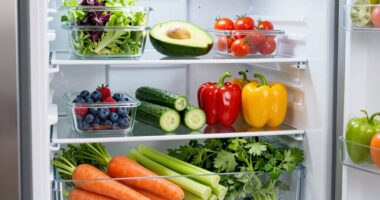
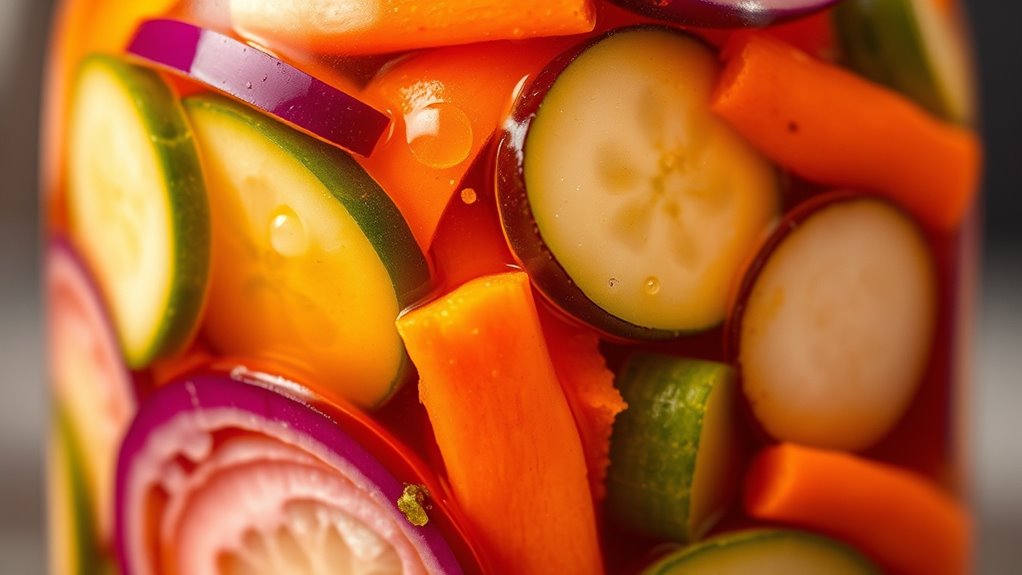

To quickly pickle vegetables in just 15 minutes, start by slicing crisp produce like cucumbers, carrots, or radishes evenly. Make a simple vinegar-based brine with water, vinegar, salt, and a bit of sugar, then add flavors like garlic, dill, or chili flakes. Submerge the vegetables fully and wait for them to absorb the tangy, crunchy goodness. For more tips on customizing your quick-pickles and maximizing flavor, keep exploring this method.
Listen free for 30 days with Audible
Thousands of audiobooks and originals — cancel anytime.
As an affiliate, we earn on qualifying purchases.
Key Takeaways
- Use crisp vegetables like cucumbers, carrots, radishes, or onions, sliced uniformly for even pickling.
- Prepare a simple vinegar-based brine with water, sugar, and salt; add flavorings like garlic or chili flakes as desired.
- Fully submerge vegetables in the brine and let sit for at least 15 minutes for maximum crunch and tang.
- The quick process preserves probiotics and creates a tangy, crunchy snack suitable for salads, tacos, or sandwiches.
- Customize flavors with herbs, spices, or sweeteners like honey to enhance versatility and taste in various dishes.

Quick-pickling is one of the easiest ways to add bright, tangy flavor to just about anything in your kitchen. In just 15 minutes, you can transform fresh vegetables into crunchy, flavorful treats that elevate any dish. Plus, quick-pickling offers more than just great taste—there are fermentation health benefits too. Unlike traditional fermentation, which relies on natural bacteria over days or weeks, quick-pickling uses vinegar, making it a faster process. However, some of the probiotic qualities of fermented foods are preserved, supporting your gut health. This method provides a convenient way to enjoy the advantages of fermented foods, like improved digestion and immune support, without the lengthy wait.
When you begin, choose crisp vegetables like cucumbers, carrots, radishes, or red onions. Slice them uniformly to ensure even pickling and consistent texture. Prepare a simple brine with vinegar, water, sugar, and salt—feel free to experiment with flavors by adding garlic, peppercorns, dill, or chili flakes. The acidity of vinegar is key to quick-pickling, as it creates an environment that halts bacterial growth, making the process safe and fast. Once your vegetables are submerged in the brine, they start absorbing the flavors immediately. As they sit, you’ll notice their colors intensify and textures crisp up, resulting in a tangy, crunchy snack in just minutes.
Incorporating spiritual energy into your daily routine can help you approach even simple tasks, like pickling, with mindfulness and gratitude, enhancing the overall experience. Flavor pairing tips can make your quick-pickled creations even more exciting. For instance, pairing spicy radishes with a touch of honey in the brine balances heat and sweetness. For a more herbal note, add fresh dill or coriander seeds. If you’re aiming for a more complex flavor, try incorporating ginger slices or a dash of soy sauce. These small tweaks enhance the natural flavors of your veggies and make them versatile for various dishes. Use your quick-pickled vegetables on salads, tacos, sandwiches, or as a tangy side. Their vibrant acidity acts as a flavor enhancer, brightening up otherwise bland dishes.
As an affiliate, we earn on qualifying purchases.
Frequently Asked Questions
Can I Use This Method for Fruits?
You can definitely use this quick-pickling method for fruits, as they’re generally compatible with the process. Fruits like strawberries, peaches, and cherries work well, and you can experiment with flavor variations by adding spices or herbs. Just keep in mind that some fruits may soften faster or need a slightly different brine ratio. Overall, it’s a versatile method that lets you enjoy crunchy, tangy fruit snacks in just 15 minutes.
How Long Do Quick Pickles Last in the Fridge?
Thinking about your quick pickle stash, you’ll want to keep an eye on fermentation safety and flavor variation. Usually, they stay good in the fridge for about 2 to 3 weeks. As time goes on, flavors can shift, and safety might become a concern if they’re left too long. For the best crunch and tang, enjoy them within this window, and always check for any signs of spoilage before diving in.
Can I Reuse the Pickling Brine?
You can reuse the pickling brine, but make certain to sterilize it first to prevent bacteria growth. Boil the brine for a few minutes to sterilize and kill any lingering microbes. Reusing the brine can preserve flavor, but it might be less tangy over time. For best results, taste the brine before reuse. Adding fresh vinegar or spices can boost flavor preservation and ensure your pickles stay crunchy and delicious.
Are There Specific Vegetables That Don’T Work Well?
Some vegetables don’t work well for quick pickling because of their texture or flavor, which affects vegetable compatibility. For example, watery or soft vegetables like lettuce or cucumbers with thick skins may not stay crunchy or develop good flavor variations in just 15 minutes. Carrots and radishes tend to work well, maintaining crunch and vibrant flavor, making them ideal choices for quick pickling. Choose vegetables that hold their texture and absorb flavors efficiently.
Is This Method Suitable for Canning Long-Term?
Oh, sure, go ahead and can your quick-pickled wonders long-term—because nothing says “culinary disaster” like risking botulism with fast methods. This technique is great for immediate munching, but it’s not designed for long-term preservation or consistent flavor variations across botanical varieties. If you want safe, shelf-stable results, stick to proper canning methods. Otherwise, enjoy them fresh and skip the long-term canning dreams.
As an affiliate, we earn on qualifying purchases.
Conclusion
Now that you’ve got this quick-pickling method down, you can turn any veggie into a tangy, crunchy treat in just 15 minutes. It’s like having a flavor-packed secret weapon in your fridge—ready to elevate salads, sandwiches, or snacks instantly. So go ahead, experiment with your favorite vegetables, and enjoy the satisfying crunch and zing. Before you know it, you’ll be craving that irresistible tang, just like a bee drawn to sweet nectar.
As an affiliate, we earn on qualifying purchases.
As an affiliate, we earn on qualifying purchases.
Flea & tick season Picks
flea and tick prevention
As an affiliate, we earn on qualifying purchases.