
TL;DR

Get health and wellness essentials delivered free with Prime
- Fast, free delivery on millions of items
- Prime Video, Amazon Music and more included
- Member-only deals all year
Certified trainer Francesco Zen told Fit&Well that shifting weight toward the outer edges of the feet and pushing the knees outward helped him engage his glutes during the overhead squat. He recommends building the movement gradually, beginning with mobility work and an exercise stick or pipe before attempting a barbell.
Certified personal trainer Francesco Zen says a small adjustment to foot pressure and knee position helped him improve his overhead squat: shift weight toward the outer parts of the feet and push the knees outward while lowering. In a report by Fit&Well, Zen said the cue supports glute engagement in a demanding movement that also requires mobility, core control and stability.
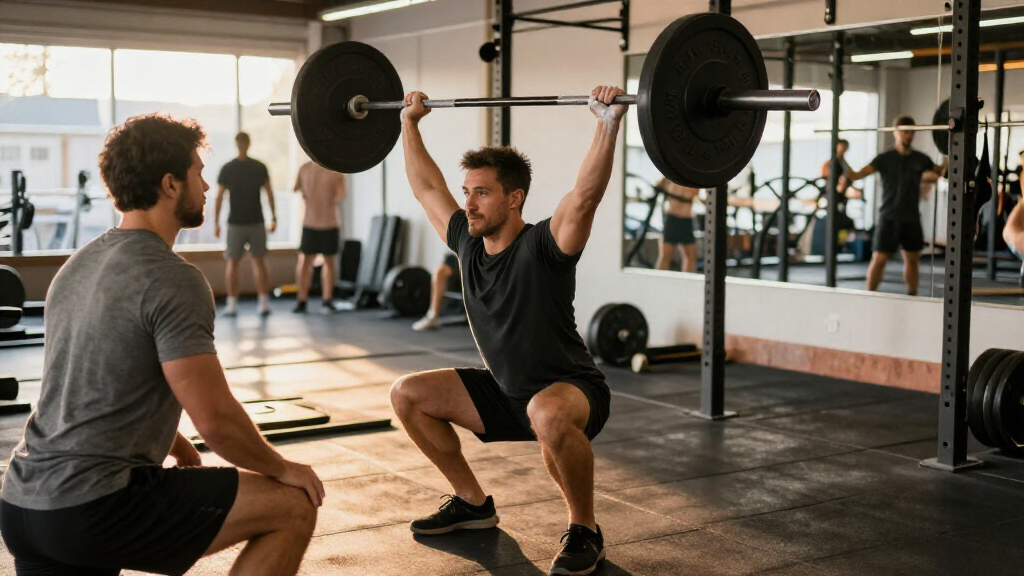
Zen, founder of ZLIFE, described the overhead squat as a full-body exercise. The movement involves squatting while holding a pipe, dowel or barbell overhead, with the arms raised and the implement steady above the shoulders. Zen said the glutes play a central role in supporting the movement from top to bottom, alongside the quadriceps and core.
His practical cue is to direct pressure toward the outer edges of the feet and keep the knees moving outward as the body lowers. Zen told Fit&Well that changing the angle of the position can alter how the movement feels. This is his coaching guidance, not a claim that the cue will produce the same result for every person.
The report recommends learning the exercise in stages. It says beginners can first practice a bodyweight squat with the arms raised, then use a dowel, plastic pipe or broom to work on shoulder and spine alignment. It also describes the Frankenstein squat, in which the arms extend forward at shoulder height, as an easier variation for practicing related stability and mobility.
A Cue for Better Squat Control
The tip gives readers a specific technique to test in an exercise that can be difficult to coordinate. The overhead squat combines a squat with the challenge of keeping an object overhead, so control at the feet and knees must work alongside shoulder and spinal positioning. Zen’s advice focuses on one part of that coordination: maintaining outward knee tracking and using the feet to support the stance.
The progression matters because the overhead version is more demanding than an ordinary squat. Practicing with a dowel or pipe allows someone to work on the position without the added load of a barbell. The report also notes that preparatory mobility and squat practice can be useful even for people who do not intend to lift a bar overhead. No evidence in the supplied material establishes that Zen’s cue is a universal fix or guarantees a particular performance outcome.
wooden mobility dowel stick for overhead squat practice
As an affiliate, we earn on qualifying purchases.
As an affiliate, we earn on qualifying purchases.
Building Up to the Overhead Position
The Fit&Well report frames Zen’s tip as part of a broader progression, rather than a standalone shortcut. It says the movement calls for mobility through the ankles, hips, spine and shoulders, as well as strength and stability to maintain an upright position while squatting. The source recommends starting with bodyweight practice and raised arms before adding a stick or pipe.
For the Frankenstein squat, the arms are held forward at shoulder height, making the position easier to stabilize than holding them overhead. Zen said it works on similar core, glute and mobility foundations. The report’s instructions say to keep the back upright, let the knees track outward over the toes, and push through the feet to stand. For the full overhead squat, it advises keeping the bar or pipe over the shoulders, bracing the core and controlling the descent.
“The glutes support the whole movement, top to bottom.”
— Francesco Zen, speaking to Fit&Well
PVC exercise pipe for squat mobility training
As an affiliate, we earn on qualifying purchases.
As an affiliate, we earn on qualifying purchases.
What the Tip Cannot Establish
The source presents the outer-foot and outward-knee cue as Zen’s personal coaching advice and says it helped him improve his form. It does not provide a study, measurements or a comparison showing how much the cue changed his performance, nor does it establish that it suits every lifter. The report also does not specify the trainer’s prior technique, training duration or the exact conditions in which he applied the cue.
Individual mobility, experience and comfort can vary. The supplied article advises using an exercise stick or plastic pipe before attempting the movement with a barbell and suggests working with an exercise professional or spotter where possible. It does not give individualized guidance for readers with injuries or other limitations.
lightweight training barbell for overhead squat practice
As an affiliate, we earn on qualifying purchases.
As an affiliate, we earn on qualifying purchases.
Practice Before Adding Load
The next step described in the report is repeated practice through progressively harder versions: bodyweight squats with the arms raised, pipe or dowel work, and then the Frankenstein squat before attempting a full overhead squat. Readers who try the movement are advised by the source to master it with a light implement before considering a barbell. The article provides no follow-up information about Zen’s training or any later evaluation of the cue.
For the full variation, the report’s instructions call for a stable overhead position, a braced core, knees tracking over the feet and a controlled return to standing. It recommends seeking help from an exercise professional or spotter for the advanced move. Whether a reader is ready to add load depends on their own technique and capability; the source does not set a universal timetable.
resistance bands for shoulder and ankle mobility warm up
As an affiliate, we earn on qualifying purchases.
As an affiliate, we earn on qualifying purchases.
Key Questions
What squat tip did Francesco Zen share?
Zen said to shift weight toward the outer parts of the feet and push the knees outward while lowering, a cue he says helped him engage his glutes during the overhead squat.
What is an overhead squat?
It is a squat performed while holding a pipe, dowel or barbell overhead, with the implement kept above the shoulders as the person lowers and stands.
How does the Frankenstein squat differ?
In the Frankenstein squat, the arms extend forward at shoulder height rather than overhead. Zen told Fit&Well that this position is easier to stabilize while practicing related squat control.
Should beginners start with a barbell?
No. The report recommends first practicing with bodyweight and then using an exercise stick, dowel or plastic pipe. It describes the overhead squat as advanced and suggests working with an exercise professional or spotter when possible.
Does Zen’s cue work for everyone?
The source reports Zen’s personal experience and coaching advice but does not establish that the cue works the same way for everyone. It provides no comparative study or individual assessment.
Source: rss
Cold & flu season Picks
humidifiers
As an affiliate, we earn on qualifying purchases.