
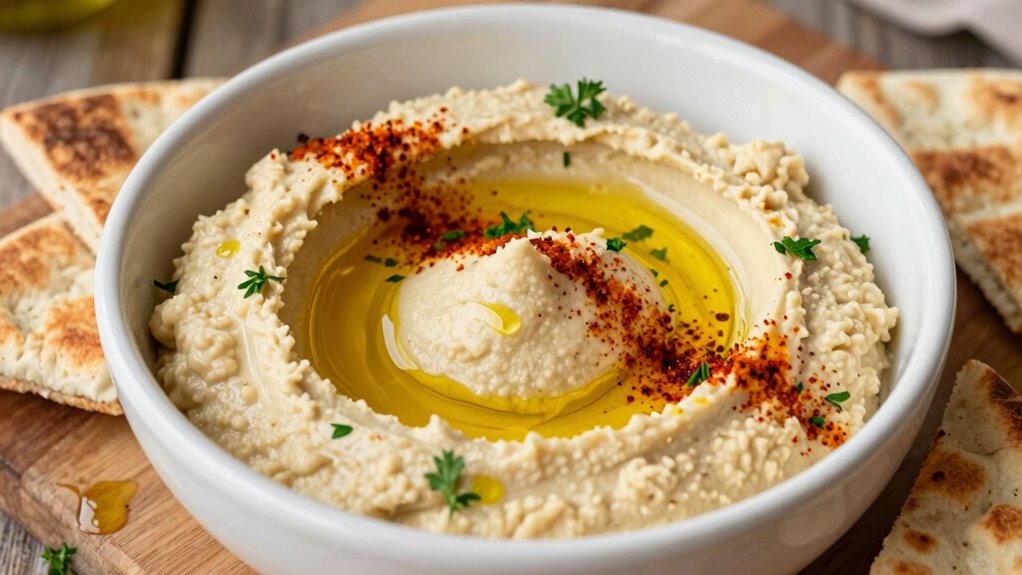

To make homemade hummus taste restaurant-level, focus on using high-quality ingredients like fresh lemon juice, premium tahini, and dried chickpeas cooked from scratch. master your blending technique by adding ice-cold water for extra creaminess and controlling speed for a silky texture. Enhance flavor with subtle spices, a drizzle of good olive oil, and fresh herbs. Keep tweaking and balancing flavors, and you’ll create a perfectly smooth, vibrant hummus that rivals any restaurant. Keep exploring for more tips.

Get health and wellness essentials delivered free with Prime
- Fast, free delivery on millions of items
- Prime Video, Amazon Music and more included
- Member-only deals all year
Key Takeaways
- Use high-quality, fresh ingredients like premium tahini, fresh lemon juice, and dried chickpeas for depth and flavor.
- Incorporate flavor-building techniques such as roasting garlic or adding smoked paprika for complexity.
- Achieve a silky, smooth texture by blending with ice-cold water and controlling blending speed.
- Adjust seasonings gradually and taste frequently to balance acidity, salt, and spice perfectly.
- Finish with a drizzle of good olive oil and fresh herbs for richness and vibrant presentation.
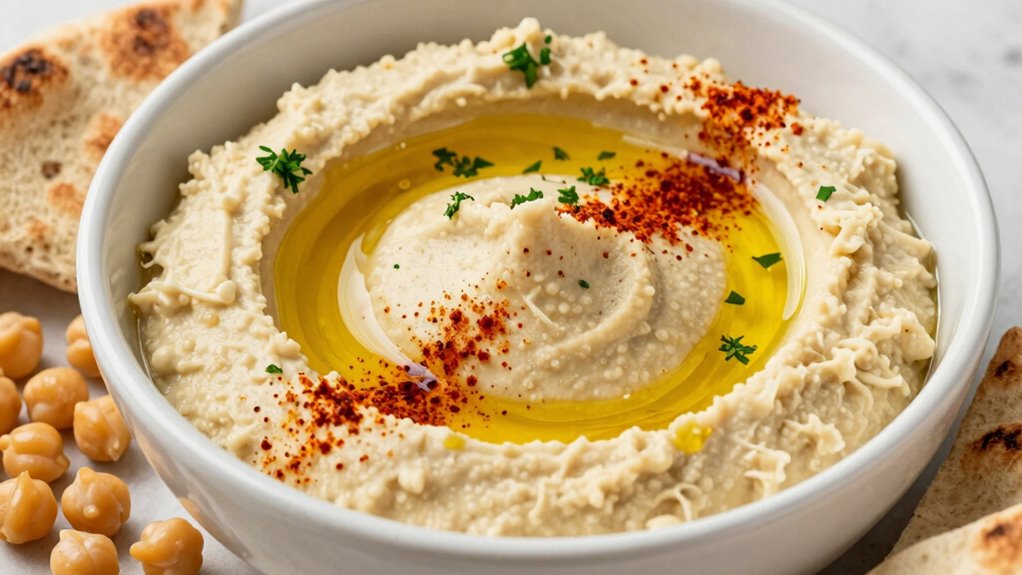
If you’ve ever wondered how to make hummus that tastes just like it’s served at your favorite restaurant, you’re in luck. Achieving that smooth, flavorful, and perfectly balanced hummus at home isn’t just about blending chickpeas and tahini; it’s about understanding the small details that elevate it to restaurant-quality. One of the key secrets lies in flavor enhancements. Restaurants often add subtle touches—like a splash of good quality olive oil, a squeeze of fresh lemon, or a pinch of smoked paprika—that make their hummus stand out. Incorporate these small flavor boosts into your recipe to create depth and complexity. For example, a dash of cumin or a hint of garlic roasted until golden can transform ordinary hummus into something extraordinary. These flavor enhancements don’t have to be complicated or overpowering; they just need to complement the natural nuttiness of the tahini and the earthiness of the chickpeas.
Another way to get that authentic, restaurant-like taste is through ingredient substitutions. Instead of canned chickpeas, try cooking dried ones from scratch for a creamier, more flavorful base. Use high-quality tahini—sometimes a small upgrade here makes a noticeable difference. For acidity, freshly squeezed lemon juice beats bottled every time, offering brightness that brightens the entire dish. Some restaurants even add a touch of ice-cold water during blending, which helps achieve that ultra-smooth, velvety texture. Don’t hesitate to experiment with alternative oils, like a drizzle of good olive oil right before serving, to add richness and shine. Even substitutions such as adding a teaspoon of yogurt or a pinch of smoked salt can deepen the flavor profile, bringing your homemade hummus closer to restaurant standards. Additionally, understanding watt-hours and capacity can help you better plan the equipment needed for consistent blending and achieving that perfect texture. Paying attention to ingredient quality can also make a significant difference in the final taste and texture. Properly controlling temperature during blending can help maintain the smoothness and prevent the hummus from becoming too thick or gritty. Furthermore, incorporating techniques like proper blending speed can ensure the hummus remains silky and well-incorporated.
Balancing these flavor enhancements and ingredient substitutions is essential. Taste your hummus as you go, adjusting seasonings gradually. If it feels too thick, a splash of water or ice-cold lemon juice can lighten it without watering down the flavor. Also, using fresh herbs such as parsley or cilantro can add a burst of freshness that elevates the overall flavor profile. Remember, the best hummus has a silky, smooth consistency with a well-rounded flavor that hits all the right notes. The small tweaks—whether in seasonings or ingredient choices—are what set apart good homemade hummus from the truly exceptional. With attention to these details, you’ll find that creating restaurant-quality hummus at home is not only achievable but also a rewarding process. The next time you serve it, your friends and family will be amazed at how close your homemade version comes to the hummus they love at their favorite restaurant.
As an affiliate, we earn on qualifying purchases.
Frequently Asked Questions
Can Using Canned Chickpeas Affect the Flavor?
Using canned chickpeas can slightly affect the flavor, but you can still achieve restaurant-quality hummus by focusing on flavor enhancement. Rinse the chickpeas thoroughly to remove the can’s metallic taste and peel off the skins for a smoother, fresher flavor. Fresh ingredients make a big difference, so consider adding fresh lemon juice, garlic, and high-quality tahini. These steps help guarantee your hummus tastes vibrant and authentic, even with canned chickpeas.
Is There a Preferred Type of Tahini for Authentic Taste?
Think of tahini as the soul of your hummus; its quality directly influences authentic flavor. Opt for high-quality, well-stirred tahini made from roasted sesame seeds to bring depth and richness. Middle Eastern brands or freshly ground options often offer the best taste. Skimping on quality dulls the flavor’s vibrancy, while premium tahini elevates your hummus to restaurant-level perfection, making every bite a flavorful masterpiece.
Should I Peel the Chickpeas for Smoother Hummus?
Peeling chickpeas can considerably improve the texture of your hummus, making it smoother and creamier. While it’s a bit time-consuming, peeling removes the outer skins that can cause a gritty or grainy consistency. If you’re aiming for restaurant-quality hummus, peeling the chickpeas is worth the effort for that ultra-smooth, velvety finish. However, if you’re short on time, using unpeeled chickpeas still yields delicious results, just with a slightly chunkier texture.
How Does Resting Time Improve Hummus Flavor?
Resting time considerably boosts hummus flavor, with some chefs recommending up to 24 hours for ideal taste. During this period, flavor development occurs as the ingredients meld, deepening the overall profile. It also enhances texture, making the hummus creamier and more cohesive. So, give your hummus ample resting time — it’s a simple step that transforms basic ingredients into a restaurant-quality dip with richer flavor and improved texture.
What’s the Best Way to Achieve a Creamy Texture?
To achieve a creamy texture, you should blend your hummus thoroughly, gradually adding liquid like olive oil or aquafaba until it’s smooth and silky. Use high-quality tahini to enhance flavor balance, and consider peeling your chickpeas for extra smoothness. Incorporate a bit of lemon juice and salt to enhance flavor, and blend until the texture is perfectly velvety. This approach guarantees a rich, restaurant-quality hummus every time.
dried chickpeas for homemade hummus
As an affiliate, we earn on qualifying purchases.
As an affiliate, we earn on qualifying purchases.
Conclusion
To elevate your homemade hummus to restaurant-level, focus on balancing flavors, mastering the technique, and selecting quality ingredients. Embrace the process of tasting, adjusting, and refining, just as chefs do in professional kitchens. Consistency in technique, attention to detail, and a passion for perfection make all the difference. When you blend these elements—flavor, technique, quality—you create not just hummus, but a creamy, delicious experience that rivals any restaurant’s.
As an affiliate, we earn on qualifying purchases.
extra virgin olive oil for cooking
As an affiliate, we earn on qualifying purchases.
As an affiliate, we earn on qualifying purchases.
Halloween Picks
halloween
As an affiliate, we earn on qualifying purchases.