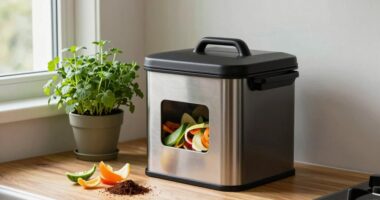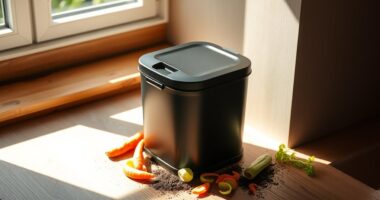
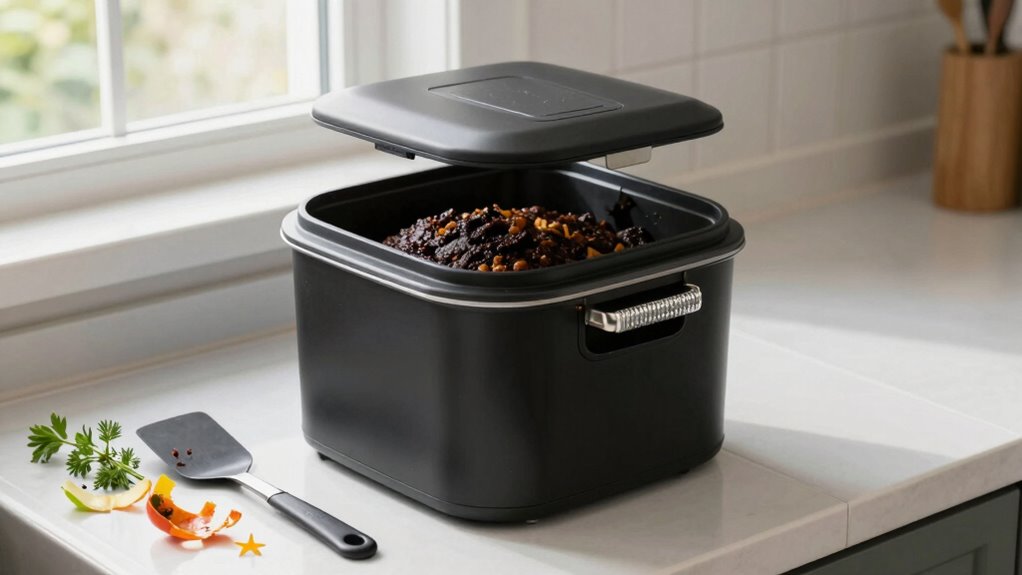

If you’re looking for an odor-free, space-efficient way to compost in your apartment, bokashi systems might be just what you need. They work well in small kitchens or balconies, turning food scraps into nutrient-rich compost without mess or strong odors. They’re easy to set up, require little maintenance, and help reduce your waste sent to landfills. Keep exploring to discover how bokashi can make indoor composting simple and practical for you.

Get health and wellness essentials delivered free with Prime
- Fast, free delivery on millions of items
- Prime Video, Amazon Music and more included
- Member-only deals all year
Key Takeaways
- Bokashi composting is ideal for small apartment spaces like kitchens and balconies.
- It produces odorless, pre-compost material suitable for indoor environments.
- No outdoor yard or large space is required, making it accessible for apartment dwellers.
- The process is simple, quick, and involves minimal maintenance—perfect for beginners.
- It reduces organic waste sent to landfills, supporting eco-friendly and sustainable living.
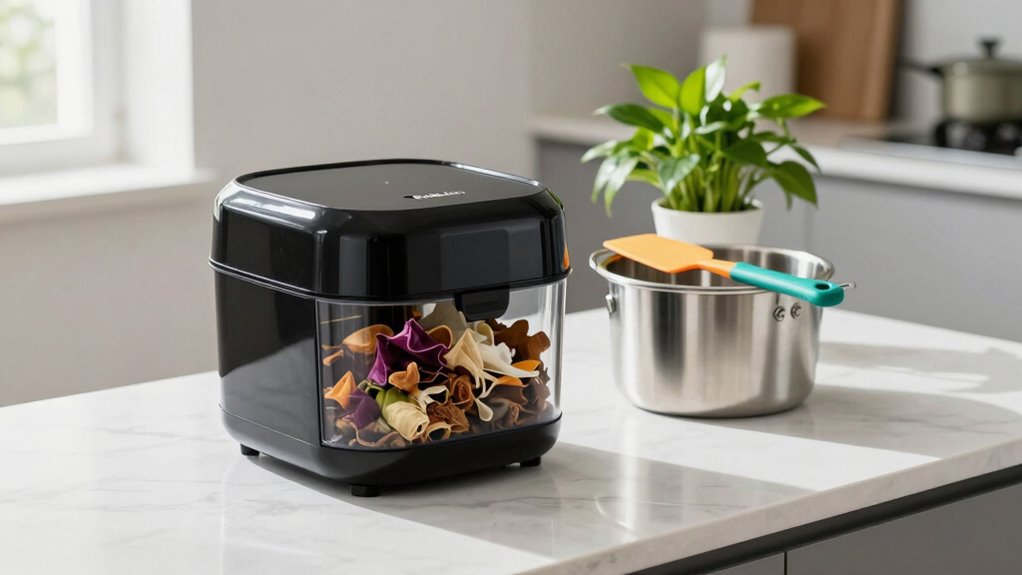
Living in an apartment doesn’t mean you have to give up on composting; in fact, bokashi systems make it easy and convenient to turn kitchen scraps into nutrient-rich soil right in your home. Many people believe composting is complicated, messy, or only suitable for houses with yards, but those are common composting myths. Bokashi composting dispels these misconceptions by offering a simple, odor-free method that works perfectly in small spaces. Instead of traditional compost bins that require outdoor space and frequent maintenance, bokashi involves fermenting organic waste with beneficial microbes, which markedly reduces the mess and smell. This makes it ideal for apartment living, where space and odor control are priorities.
Bokashi makes apartment composting simple, odor-free, and perfect for small spaces.
You might not realize it, but composting in an apartment can substantially contribute to organic waste reduction. Every peel, coffee ground, or fruit core you toss into your bokashi bin gets transformed into valuable compost rather than ending up in the trash. This not only cuts down on the amount of waste sent to landfills but also helps reduce methane emissions, which are a major concern with organic waste in landfills. By actively composting, you become part of the solution, turning what would be waste into a resource that nourishes plants or your container garden. It’s a simple step that makes a big difference, especially when you’re committed to sustainable living.
Bokashi composting is straightforward and quick to set up. You start by layering your kitchen scraps into a sealed bin, sprinkling the bokashi bran — a mix of fermented microorganisms — over each layer. Within a few weeks, your waste ferments into a pre-compost that can be buried in soil or added to a compost pile once it’s fully fermented. Unlike traditional composting, there’s no need to turn the bin or worry about pests or odors. You’ll find that this process fits seamlessly into your daily routine, and the compact size of the bokashi bin means it won’t take up much space in your kitchen or balcony. Additionally, the microbial fermentation process enhances waste breakdown and makes composting even more efficient in small spaces. Incorporating bokashi into your routine can also help you learn about microbial fermentation, which is an eco-friendly alternative to traditional composting methods.
Adopting bokashi as your apartment composting method also introduces you to a microbial fermentation process, which is different from traditional composting and enhances the overall efficiency of waste breakdown. This process not only accelerates decomposition but also produces a nutrient-rich leachate that can be used as a plant fertilizer. Embracing bokashi as your apartment composting method helps you overcome many misconceptions about composting. It’s clean, odorless, and efficient, making it easier than ever to participate in organic waste reduction. Plus, you get to enjoy the satisfaction of turning organic waste into a valuable resource, supporting your plants or garden. Whether you’re a seasoned eco-enthusiast or just starting your sustainable journey, bokashi systems prove that composting in an apartment is not only possible but also practical and rewarding.
Bokashi compost bin for apartment
As an affiliate, we earn on qualifying purchases.
As an affiliate, we earn on qualifying purchases.
Frequently Asked Questions
Can Bokashi Composting Handle Dairy and Meat Waste?
Yes, bokashi composting handles dairy disposal and meat management well. You can safely add dairy and meat scraps to your bokashi bin, as the fermentation process breaks down fats and proteins efficiently. This method minimizes odors and pests, making it ideal for apartment settings. Just guarantee you layer scraps properly and drain excess liquid regularly. With bokashi, managing dairy and meat waste becomes simple, clean, and eco-friendly.
How Often Do I Need to Empty the Bokashi Bin?
You should empty your bokashi bin every 2 to 4 weeks, depending on how much kitchen waste you generate. Think of it as maintaining a well-oiled machine—regular attention keeps everything running smoothly. To keep your kitchen organized and waste reduction strategies effective, monitor the level of fermenting material and empty the bin prior to it overflows. Consistent care ensures your bokashi system stays efficient and odor-free.
Is Bokashi Composting Odor-Free Indoors?
Yes, bokashi composting indoors can be odor-free if you manage it properly. You control indoor odor by sealing the lid tightly and draining excess liquid regularly, which enhances composting efficiency and prevents unpleasant smells. Keep the bin in a cool, well-ventilated spot, and avoid overfilling. With consistent maintenance, you can enjoy a clean, odorless composting experience right inside your apartment.
What Is the Cost Comparison With Traditional Composting?
You’ll find that bokashi composting costs a fraction of traditional composting’s setup expenses and ongoing maintenance. While traditional methods might require expensive bins, aerators, and space, bokashi needs just a small, inexpensive bucket and some bran. The financial benefits quickly add up as you avoid purchasing bulky equipment and save on water and energy. Plus, it’s mess-free and perfect for apartments, making it a smarter, cheaper choice overall.
Can Bokashi Compost Be Used Directly on Plants?
Yes, you can use bokashi compost directly on plants. It enriches the soil, providing essential nutrients that boost plant health. Just bury the fermented waste a few inches into the soil or mix it with potting soil before planting. This method enhances soil fertility, promotes vigorous growth, and improves overall plant health, making bokashi compost an effective, natural way to nourish your garden or indoor plants.
odorless indoor composting system
As an affiliate, we earn on qualifying purchases.
As an affiliate, we earn on qualifying purchases.
Conclusion
If you’re living in an apartment, bokashi systems make composting simple and odor-free. With over 60% of urban residents interested in sustainable waste solutions, adopting bokashi can help you reduce your household trash and support eco-friendly living. It’s an easy, efficient way to turn food scraps into nutrient-rich compost, even in small spaces. So, why not give it a try? You’ll be surprised how much you can compost and how little space it takes.
small space compost bin with microbes
As an affiliate, we earn on qualifying purchases.
As an affiliate, we earn on qualifying purchases.
As an affiliate, we earn on qualifying purchases.
Cold & flu season Picks
humidifiers
As an affiliate, we earn on qualifying purchases.