
Choosing climate-friendly proteins like plant-based foods, insects, and cultured meat can dramatically lower your environmental impact. Plant proteins require less water, land, and emit fewer greenhouse gases, making them easy to integrate into your diet. Insects need even fewer resources and produce minimal emissions, perfect for urban farms. Cultured meat offers a familiar option with markedly reduced land and water use. Keep exploring to see how each option helps combat climate change and supports sustainable eating habits.
Key Takeaways
- Plant-based proteins have the lowest environmental footprint, requiring minimal land, water, and energy for production.
- Insect proteins are highly efficient, producing minimal greenhouse gases and using less land and water than traditional livestock.
- Cultured meat significantly reduces land use, water consumption, and emissions while offering a familiar meat source.
- All three options contribute to climate change mitigation by lowering overall environmental impacts compared to conventional meat.
- The choice among them depends on factors like scalability, consumer acceptance, and technological advancements.

As the world faces the urgent need to reduce greenhouse gas emissions, climate-friendly proteins offer a promising solution. These proteins, derived from plant-based sources, insects, or cultured meat, can notably lower our environmental impact compared to traditional animal agriculture. One key advantage is their potential to support sustainable farming practices. Unlike conventional livestock farming, which often requires extensive land, water, and feed resources, alternative protein sources can be produced more efficiently and with less environmental strain. Switching to plant-based proteins, for instance, reduces deforestation, water use, and greenhouse gases, making it a vital step toward more sustainable farming systems.
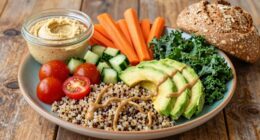
Plant proteins, such as legumes, grains, and vegetables, are among the most accessible and widely adopted climate-friendly options. They thrive on minimal inputs and can be integrated into existing agricultural systems with relative ease. These sources are rich in essential nutrients and can replace meat in many diets without sacrificing flavor or texture. As you consider your dietary choices, incorporating more plant-based proteins helps lessen your carbon footprint and promotes sustainable farming practices that prioritize long-term environmental health.
Choosing plant proteins like legumes and grains supports eco-friendly diets and sustainable farming practices for a healthier planet
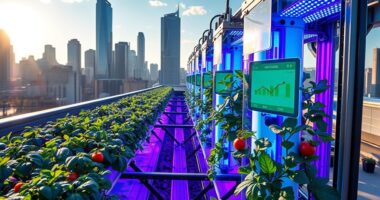
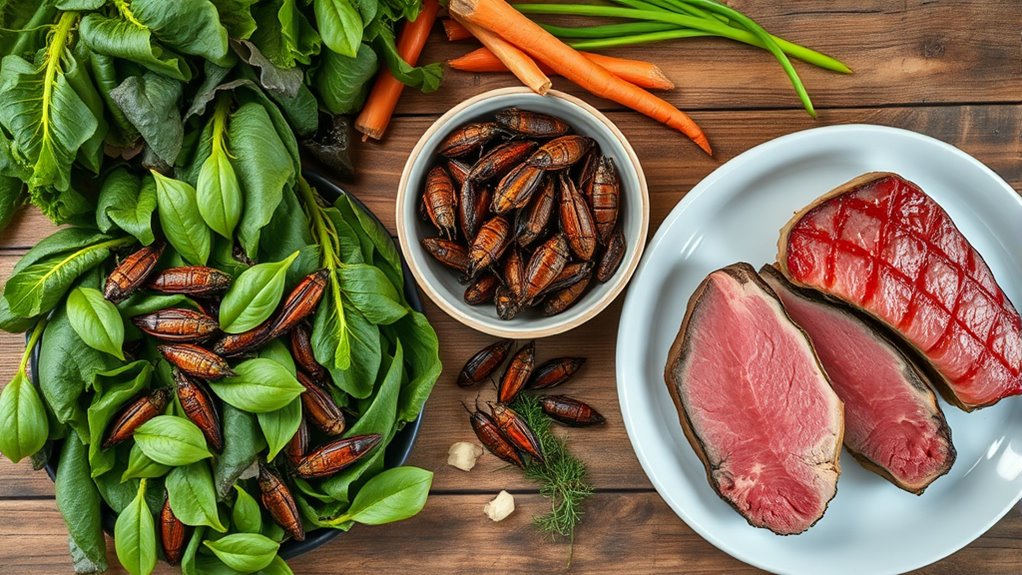
Insect-based proteins are gaining recognition as a highly efficient alternative protein source. Insects require far less land, water, and feed than traditional livestock, and they produce minimal greenhouse gases. Farming insects like crickets or mealworms can be done vertically, making it suitable even for urban environments. This method not only conserves natural resources but also offers a compact, scalable way to meet global protein demands. For consumers seeking innovative, eco-friendly options, insects represent a practical and sustainable choice that aligns with the goal of reducing environmental impacts associated with traditional meat production.
Cultured meat, also known as lab-grown meat, offers another compelling alternative. It involves growing muscle tissue from animal cells in controlled environments, eliminating the need for raising and slaughtering animals. This method drastically reduces land use, water consumption, and emissions linked to conventional meat production. Although still in development, cultured meat has the potential to revolutionize food systems by providing a familiar protein source without the environmental toll. As you explore options for climate-friendly proteins, cultured meat might become a feasible, sustainable choice that bridges the gap between traditional meat and plant-based alternatives.
Each of these options—plant-based, insect, or cultured meat—contributes to a more sustainable farming landscape. By choosing alternative protein sources, you support a shift toward food systems that are less damaging to the planet, helping to combat climate change while still enjoying nutritious, satisfying meals. Additionally, embracing innovations such as sustainable farming practices can further amplify the positive environmental impact of your dietary choices.
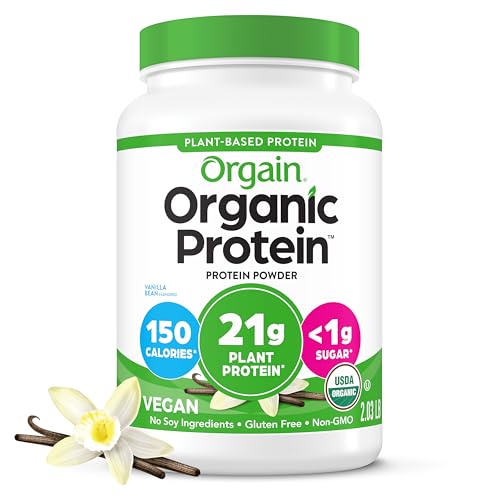
Orgain Organic Vegan Protein Powder, Vanilla Bean – 21g Plant Protein, 6g Prebiotic Fiber, No Lactose Ingredients, No Added Sugar, Non-GMO, For Shakes & Smoothies, 2.03 lb (Packaging May Vary)
CLEANER INGREDIENTS: 21g of Organic plant based protein and 1g sugar. Our protein blend contains Organic peas, brown…
As an affiliate, we earn on qualifying purchases.
As an affiliate, we earn on qualifying purchases.
Frequently Asked Questions
How Do Plant-Based Proteins Compare Nutritionally to Animal Proteins?
You’ll find plant-based proteins offer good nutritional balance, but their protein bioavailability can vary compared to animal proteins. While plant sources often lack some essential amino acids, combining different plant foods can improve their overall profile. Animal proteins generally provide complete amino acids and are more easily absorbed, making them more efficient for meeting your daily protein needs. However, plant proteins can be just as nutritious with mindful pairing and proper intake.
What Are the Environmental Impacts of Insect Farming?
Insect farming reduces land use, cuts greenhouse gases, and promotes sustainable farming. It transforms organic waste into valuable protein, improving waste management and lowering environmental impact. You can picture insects thriving on food scraps, efficiently converting waste into nutritious food, unlike traditional livestock that consumes vast resources. This eco-friendly approach minimizes deforestation and pollution, making insect farming a smart, sustainable choice for a greener future.
Are Cultured Meats Cost-Effective at Scale?
Cultured meats can be cost-effective at scale, but it depends on overcoming scalability challenges. A thorough cost analysis shows that as production methods improve and demand rises, prices will likely decrease. Currently, high lab and infrastructure costs make large-scale production expensive, but ongoing technological advances could make cultured meat more affordable and competitive with traditional meat, encouraging wider adoption and environmental benefits.
How Do Consumer Acceptance Rates Vary Globally?
You’ll find that consumer acceptance rates vary globally due to cultural attitudes and marketing strategies. In some regions, like Europe, people are more open to plant-based and cultured meats because of environmental concerns, while others, like parts of Asia, favor traditional diets. Effective marketing that respects local values and highlights health and sustainability benefits can boost acceptance, helping you embrace these climate-friendly proteins more readily across different cultures.
What Are the Regulatory Hurdles for Alternative Proteins?
They say, “the devil is in the details,” and for alternative proteins, regulatory hurdles can be tricky. You face evolving regulatory frameworks that may vary by country, making approval processes complex. Labeling standards are also critical, as clear, consistent labels help build consumer trust. Managing these regulations requires careful compliance, but progress is being made to accommodate innovative foods and ensure safety while promoting sustainability.

Don Bugito Planet-Friendly Edible Insect Protein Snacks (Dark Chocolate Covered Crickets)
Don Bugito, the Prehispanic Snackeria, is a San Francisco based company focused on planet-friendly protein snacks, featuring delicious…
As an affiliate, we earn on qualifying purchases.
As an affiliate, we earn on qualifying purchases.
Conclusion
As you explore plant, insect, and cultured meats, consider that while all aim to reduce environmental impact, the sustainability of each depends on factors like resource use and scalability. Current research suggests cultured meat might be the most promising in balancing taste and ecological footprint, but it’s still evolving. Embracing a diversified approach could be your best bet, as investing in multiple sustainable options might better address climate challenges than relying on a single solution.

Beef Burger Steakhouse
All meat from the Whole Foods Market Meat department must meet standards for animal welfare, feed and more,…
As an affiliate, we earn on qualifying purchases.
As an affiliate, we earn on qualifying purchases.