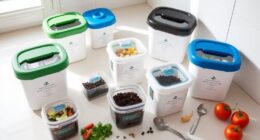
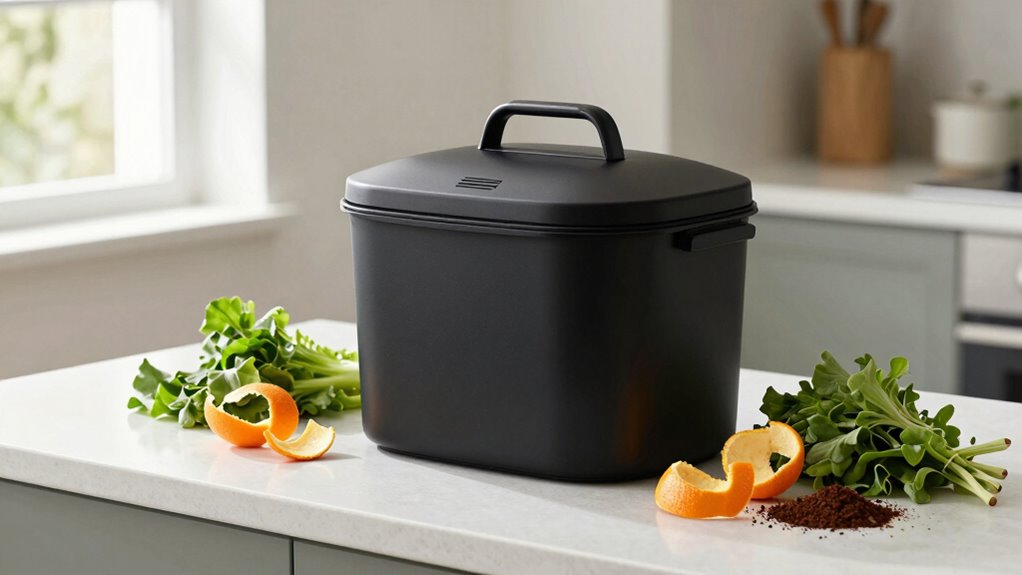

If you’re looking to start zero-waste living in your vegan kitchen, compost bins are the first tool to contemplate. They help you turn food scraps into nutrient-rich compost, reducing waste sent to landfills and lowering methane emissions. Composting supports sustainable urban gardening and aligns with your eco-conscious values. By managing food waste efficiently, you can enrich your soil naturally and reduce your carbon footprint. Keep exploring to discover simple steps to begin your composting journey.

Get health and wellness essentials delivered free — and shop member deals
- Fast, free delivery on millions of items
- Access to Prime Big Deal Days deals on October 6–7
- Prime Video, Amazon Music and more included
Key Takeaways
- Compost bins convert kitchen food scraps into nutrient-rich soil, reducing waste and supporting sustainable gardening efforts.
- They help vegan households minimize landfill waste and lower greenhouse gas emissions.
- Composting aligns with vegan ethics by promoting eco-friendly, zero-waste living practices.
- Easy to start and maintain, compost bins are accessible for small or urban kitchens.
- They foster self-sufficiency and biodiversity by enabling home-grown plants and reducing reliance on store-bought produce.
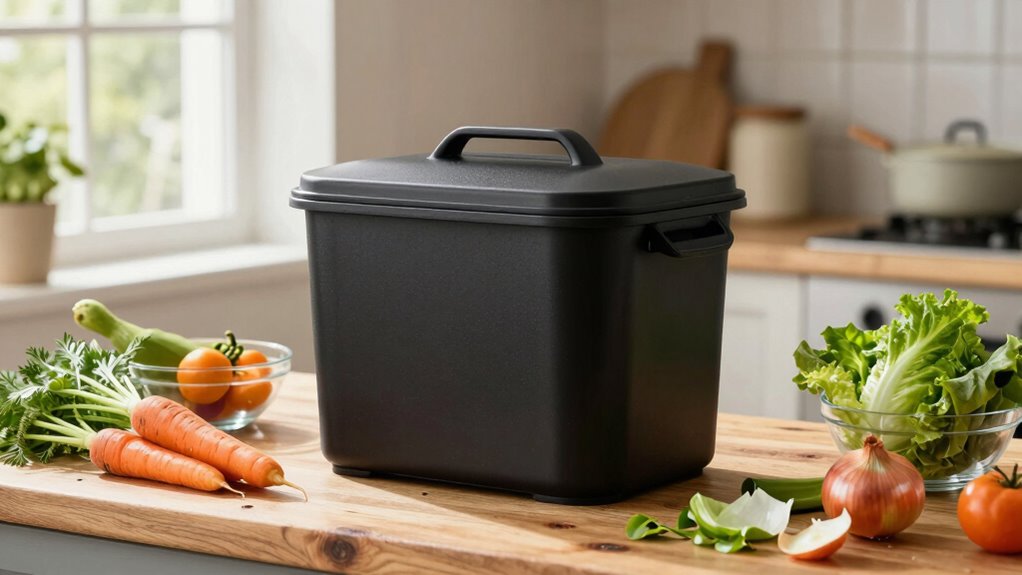
Have you ever considered how compost bins can transform your vegan kitchen? If you’re passionate about reducing waste and supporting sustainable living, a compost bin is an indispensable tool. It allows you to turn food scraps into nutrient-rich compost, which you can use to nourish your plants. This simple addition not only minimizes your impact on landfills but also encourages urban gardening, even if you only have a small balcony or windowsill. Composting helps close the loop in your food system, making your kitchen more eco-friendly and aligned with vegan principles of reducing harm and waste.
By incorporating a compost bin into your routine, you take an active role in food waste reduction. Instead of tossing vegetable peelings, coffee grounds, or fruit scraps into the trash, you feed them into your compost container. Over time, these scraps break down into healthy compost that supports your home garden or indoor plants. This process reduces the amount of waste sent to landfills, where organic material produces methane, a potent greenhouse gas. Composting therefore becomes an essential part of your effort to minimize your carbon footprint and live more sustainably. Additionally, understanding composting processes can help you optimize your bin’s efficiency and speed up compost creation.
Feeding food scraps into compost reduces waste, cuts methane emissions, and supports sustainable urban gardening.
Urban gardening benefits considerably from compost bins because they provide a continuous source of organic matter to your plants. When you use compost generated from your food waste, you enrich your soil naturally without relying on chemical fertilizers. This is especially important if you’re growing herbs, vegetables, or other edible plants in limited space. The nutrients in compost improve soil structure, retain moisture, and promote healthy plant growth—all indispensable for thriving urban gardens. It’s a cycle that supports your vegan lifestyle by growing your own produce and reducing dependence on store-bought goods. Moreover, choosing the right compost bin can make the process easier and more efficient, especially in small spaces.
Starting with a compost bin is straightforward. You can choose a small indoor bin or a larger outdoor one, depending on your space and needs. Just make sure it has proper ventilation and an easy way to manage moisture. Regularly adding scraps, turning the compost, and monitoring its moisture levels will keep the process efficient. Proper moisture management is vital for maintaining healthy compost and avoiding unpleasant odors. Over weeks, you’ll see your scraps transform into dark, crumbly compost ready to nourish your plants. This ongoing process creates a sustainable system that reduces waste and enhances your urban gardening efforts.
Ultimately, a compost bin in your vegan kitchen is more than just a waste management tool; it’s a step toward a zero-waste lifestyle. It keeps food waste out of landfills, supports healthy urban gardening, and aligns with your values of sustainability and compassion. Incorporating composting also encourages awareness of biodiversity and the importance of maintaining healthy ecosystems. By adopting composting, you’re not only reducing your environmental impact but also cultivating a more self-sufficient, eco-conscious way of living.
As an affiliate, we earn on qualifying purchases.
Frequently Asked Questions
How Often Should I Clean My Compost Bin?
You should clean your compost bin at least once a month to maintain proper compost bin maintenance. Regular cleaning helps prevent odor control issues and keeps pests away. After emptying, rinse the bin with water and use natural odor control techniques like sprinkling baking soda or adding dry leaves. Consistent cleaning guarantees your compost bin stays fresh, odor-free, and effective for your zero-waste kitchen efforts.
Can Compost Bins Be Used Indoors?
You can definitely use compost bins indoors, but you need to keep an eye on indoor air quality. Look for space-saving designs that fit snugly in your kitchen without taking up too much room. To avoid foul odors and keep your indoor air fresh, choose bins with lids and proper ventilation. With the right setup, you can turn kitchen scraps into compost without turning your home into a stinky mess.
What Materials Are Best for Compost Bins?
You should choose compost bin materials that balance durability and aesthetics. Stainless steel and heavy-duty plastic are great because they withstand moisture and regular use. If you prefer something more stylish, ceramic or bamboo options offer aesthetic appeal but may need extra care. Consider your kitchen’s space and look for materials that resist odors and leaks, ensuring your compost bin stays functional and attractive for everyday use.
How Do I Prevent Odors in My Compost Bin?
To prevent odors in your compost bin, focus on odor control and bin ventilation. Regularly turn or mix your compost to aerate it, which helps reduce smell. Cover food scraps with dry, carbon-rich materials like leaves or shredded paper to absorb moisture and odors. Make certain your bin has proper ventilation holes to allow air flow, which keeps the compost dry and odor-free. Proper maintenance keeps your compost bin fresh and odorless.
Is There a Specific Size for a Vegan Kitchen Compost Bin?
You should choose a compost bin size that fits your kitchen space considerations and daily waste output. A small to medium-sized bin, around 1 to 3 gallons, usually works well for vegan kitchens with limited space. If you generate more compostable waste, opt for a larger bin or one with a secure lid for odor control. Make sure it’s easily accessible to encourage regular composting habits.
As an affiliate, we earn on qualifying purchases.
Conclusion
By starting with a compost bin, you’re taking a simple step toward reducing waste and living more sustainably. It’s a small act that can make a big difference, proving that “every little bit counts.” As you continue your vegan journey, remember that embracing eco-friendly habits like composting not only benefits the planet but also aligns with your values. Keep pushing forward—your efforts truly matter, and change begins with you.
As an affiliate, we earn on qualifying purchases.
urban gardening compost container
As an affiliate, we earn on qualifying purchases.
As an affiliate, we earn on qualifying purchases.
Cold & flu season Picks
humidifiers
As an affiliate, we earn on qualifying purchases.