TL;DR

Get health and wellness essentials delivered free with Prime
- Fast, free delivery on millions of items
- Prime Video, Amazon Music and more included
- Member-only deals all year
A randomized crossover trial found that adults aged 60 to 75 had different cerebral blood-flow responses to intranasal insulin after eating 60 grams of unsalted, skin-roasted peanuts daily for 16 weeks. The response changed in a cluster including memory-related regions, but the scan measure was indirect and the study does not show that peanuts improve memory or prevent disease.
A 16-week randomized crossover trial in adults aged 60 to 75 found that eating 60 grams of unsalted, skin-roasted peanuts each day was associated with a changed blood-flow response to insulin in a cluster of brain regions, including the hippocampus. The study, published in Food & Function, measured that response indirectly with MRI; it does not establish that peanuts improve cognition or prevent cognitive disorders.
Thirty-six participants were randomized to start with either the peanut period or the control period. Thirty-one people completed the study: 15 women and 16 men, with an average age of 67 and an average body mass index of 26.7. Each participant completed a 16-week period eating peanuts and a 16-week period without peanuts or other nuts, separated by an eight-week washout. The study was single-blind and controlled, and participants were asked to avoid certain nuts and seeds during the trial.
At the end of each period, researchers used arterial spin labeling MRI to measure cerebral blood flow before and 30 minutes after intranasal insulin. The change in blood flow was treated as an indirect measure of regional brain insulin responsiveness, not a direct measurement of insulin signaling in neurons. After the peanut period, a cluster in the right hemisphere—primarily involving the lingual gyrus, hippocampus and parahippocampal gyrus—showed a significantly lower blood-flow response to insulin than after the control period.
The report says peanut intake was generally well tolerated and adherence was high. One participant withdrew because of gastrointestinal discomfort after eating peanuts; no study-related serious adverse events were reported. The intervention also raised participants’ total energy intake and changed the mix of nutrients they consumed, including higher unsaturated fat and fiber and lower carbohydrate, saturated fat and cholesterol intake. Body measurements remained stable during the trial.
What the Brain Scan Can Show
The findings add a possible biological clue to earlier research suggesting that daily skin-roasted peanut consumption may affect memory and brain vascular function in older adults. By testing insulin-related blood-flow responses, the researchers examined one possible pathway through which diet might relate to brain function. The change in regions including the hippocampus, which is involved in memory, gives researchers a specific signal to investigate further.
But the result should not be read as proof of a cognitive benefit. The scan recorded a blood-flow change following insulin, which the study used as a proxy for brain insulin responsiveness. A lower response is not, by itself, evidence of improved or worsened neuronal function. The report also does not establish that the observed change led to better memory, altered disease risk or a meaningful day-to-day effect.
The trial’s small number of completers and its tightly defined group also limit how broadly its results can be applied. Participants were older adults who met specific health and eligibility criteria, including being left-handed and having no peanut allergy. The study therefore offers a research finding, not a general dietary recommendation or evidence that the same response would occur in all older adults.
Products Worth Considering

Garmin Forerunner 570 GPS Running Smartwatch, 47mm, Aluminum, Black

Garmin Forerunner 55 GPS Running Smartwatch, Black

Theragun Relief Special Edition Bundle
As an affiliate, we earn on qualifying purchases.
How Researchers Tested Insulin Response
Brain insulin responsiveness describes how brain regions respond to insulin, a hormone that can influence neuronal activity as well as appetite and energy balance. Although most glucose uptake in the brain does not depend on insulin, the hormone has region-specific roles. The hippocampus and prefrontal cortex are among the areas with many insulin receptors. Disrupted signaling has been associated with metabolic and cognitive conditions, but an association does not show that a dietary change will prevent or treat them.
The trial followed earlier work reporting possible vascular and memory benefits associated with daily skin-roasted peanuts in older people. Its authors set out to examine whether long-term peanut intake was also linked to changes in brain insulin responsiveness. Participants received prepackaged 60-gram servings during the peanut phase and attended study visits at the beginning, middle and end of each period. The overnight-fasting visits included blood sampling, while the MRI assessment took place at the end of each period.
The crossover design meant participants served as their own comparison: each completed both the peanut and no-peanut periods, with the order randomized. This can help compare responses within individuals, though the small completed sample remains a limit. The eight-week washout separated the two phases. The intervention was not simply the addition of peanuts without other dietary changes: researchers recorded a rise in total energy intake and shifts in nutrient intake during the peanut phase.
“The peanut intervention was associated with a significantly lower cerebral blood-flow response to intranasal insulin in a right-hemisphere cluster that included the lingual gyrus, hippocampus and parahippocampal gyrus.”
— The study authors, in the report published in Food & Function
What the Trial Cannot Establish
The study does not show whether the altered MRI response reflects a beneficial change, nor whether it affects memory, thinking or daily functioning. The report notes earlier research on memory and vascular function, but this trial’s described primary outcome was the blood-flow response after intranasal insulin. It does not establish that the imaging result caused or explains cognitive changes.
It is also unclear how durable the response might be after people stop eating peanuts, whether different amounts or forms of peanuts would have the same effect, or whether results would extend to people outside this selected group. With 31 participants completing the trial, larger studies would be needed to test the finding and its relevance to cognition. The dietary changes accompanying peanut intake also make it difficult to attribute the observed result to any single nutrient.
Further Trials Must Test Cognition
The immediate next step is replication in larger and more diverse groups, with researchers testing whether the regional blood-flow response is consistent and whether it tracks with changes in memory or other cognitive measures. Longer follow-up could also show whether the response persists beyond the 16-week intervention. The report does not specify a next trial or a timetable for further results.
Until additional evidence is available, the finding is best treated as an early controlled-study result about an MRI measure, rather than proof that daily peanuts protect the aging brain. Future research will need to separate the effects of peanuts from the accompanying rise in energy intake and changes in other nutrients, and clarify what a lower insulin-related blood-flow response means for brain function.
Key Questions
How many peanuts did participants eat each day?
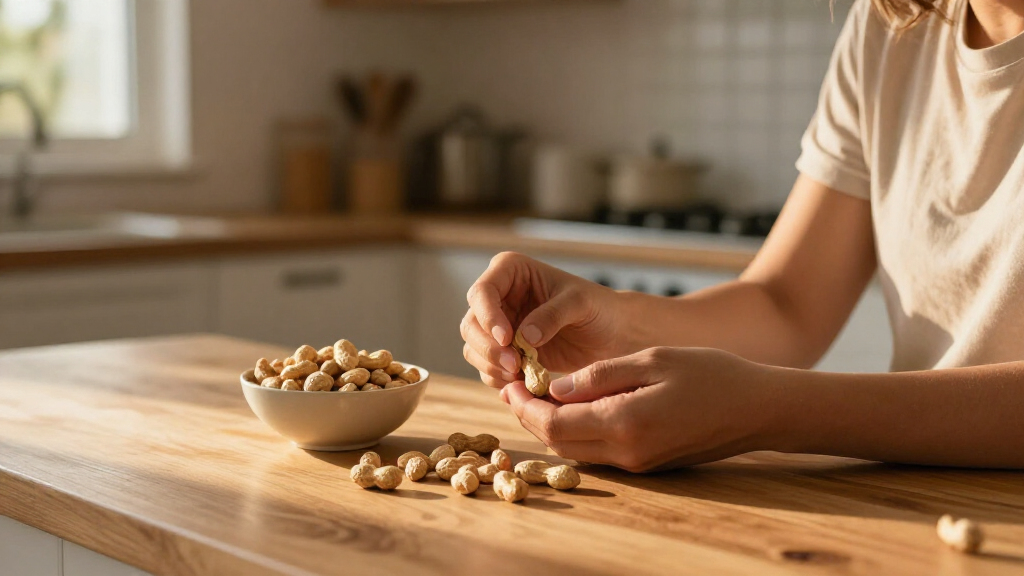
Participants ate 60 grams of unsalted, skin-roasted peanuts daily during the 16-week intervention.
Did the study show that peanuts improve memory?
Not in the reported main finding. The trial measured changes in blood flow after intranasal insulin as an indirect measure of brain insulin responsiveness. It does not establish that peanuts improved memory.
Which brain regions showed a changed response?
A right-hemisphere cluster showed a lower blood-flow response after the peanut period. It primarily included the lingual gyrus, hippocampus and parahippocampal gyrus.
How strong is the evidence?
The study used a randomized crossover design, but only 31 participants completed it. The MRI measure was indirect, and the findings need replication and further testing against cognitive outcomes.
Source: news-medical.net