
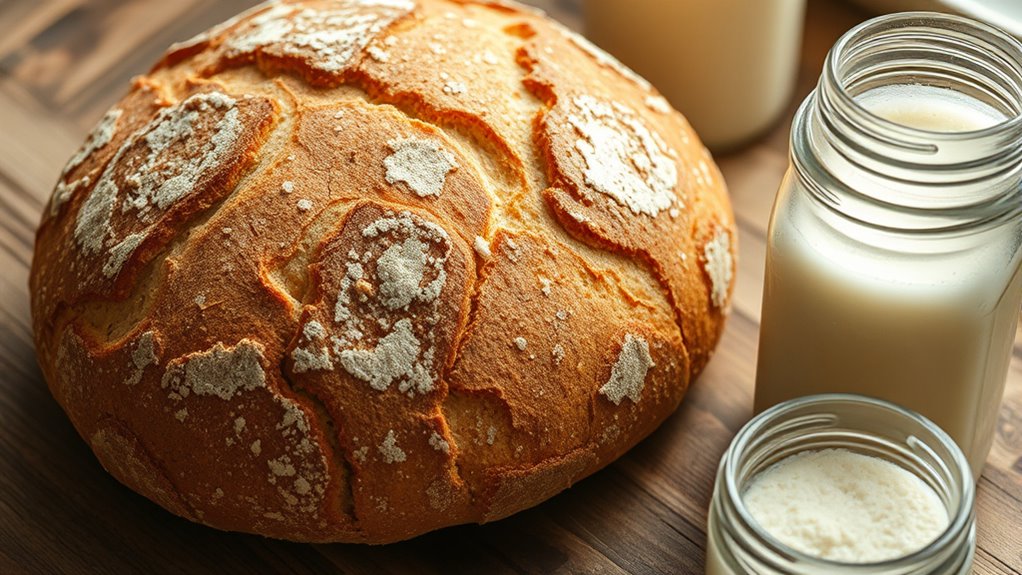

In fermented baking, incorporating sourdough and fermented flours helps you enhance flavor, improve digestibility, and create a stronger dough. The natural fermentation process slowly develops gluten while breaking down anti-nutrients and gluten proteins, leading to a chewier texture and richer taste. Timing and fermentation conditions are key to balancing gluten strength and flavor development. Keep exploring, and you’ll discover how to master these techniques for better bread results.
Key Takeaways
- Incorporate sourdough starters or fermented flours to enhance flavor, digestibility, and nutrient breakdown in baked goods.
- Use longer fermentation times to develop richer, tangier flavors and improve gluten structure.
- Monitor fermentation duration carefully to balance gluten formation and prevent weakening of dough.
- Adjust temperature and hydration to optimize microbial activity and gluten development in fermented baking.
- Incorporate fermented ingredients for improved texture, resilience, and health benefits in sourdough and other fermented breads.
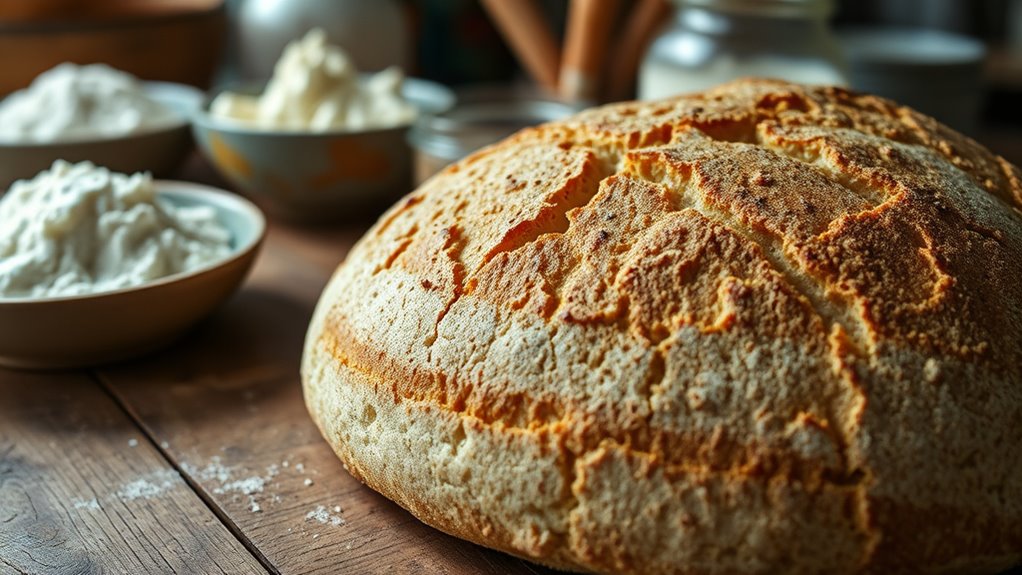
Fermented baking has gained popularity for its ability to enhance flavor, improve digestibility, and promote healthier ingredients. When you dive in to fermented baking, one of the key aspects to master is understanding gluten development. Unlike traditional bread making, where you quickly knead the dough to develop gluten, fermentation allows gluten to form more gradually. This slow process not only creates a more resilient dough but also results in a chewier texture and better structure in the final loaf. The timing of fermentation plays a crucial role here. If you ferment the dough too long, gluten can break down, leading to a weaker structure. Conversely, under-fermentation can leave your bread dense and lacking in flavor. Finding the right fermentation timing guarantees the best gluten development, giving you a balance of elasticity and strength in your dough.
As you work with sourdough and fermented flours, you’ll notice how the fermentation process influences gluten formation. During fermentation, naturally occurring yeasts and bacteria consume sugars in the flour, producing acids and gases. These byproducts help strengthen the gluten network, giving your dough better extensibility and elasticity. But, it’s essential to monitor fermentation timing carefully. Too short, and you miss out on the full development of flavor and gluten structure; too long, and the gluten can weaken, compromising dough stability. The ideal fermentation time varies depending on factors like temperature, flour type, and hydration level, so paying close attention to these variables is key. Additionally, understanding the role of microbes in fermentation can help optimize the process for better dough quality.
When you’re practicing fermented baking, you’ll want to consider how fermentation timing affects not just gluten development but also flavor complexity. Longer fermentation allows acids and organic compounds to develop, giving your bread a richer, tangier profile. This is especially true with sourdough, where the natural fermentation process can take anywhere from several hours to days. By adjusting fermentation timing—whether by controlling temperature or extending proofing—you influence both gluten structure and flavor. You’ll find that patience during fermentation results in bread with improved digestibility, as the longer process helps break down anti-nutrients and gluten proteins, making the final product easier on your digestive system.
Frequently Asked Questions
How Does Fermentation Affect Gluten Content in Baked Goods?
Fermentation reduces gluten content in baked goods by breaking down gluten proteins through fermentation enzymes. As you let dough ferment, these enzymes weaken gluten development, making the dough easier to handle and digest. This process not only alters gluten structure but also enhances flavor and texture. So, you’ll notice a softer crumb and improved digestibility, especially if you’re sensitive to gluten or want a more flavorful, fermented product.
Can Fermented Flours Be Used in Gluten-Free Baking?
You can definitely use fermented flours in gluten-free baking. They offer a unique flavor and improved digestibility, making them great for gluten-free options. Instead of traditional wheat, try alternative flours like rice, buckwheat, or sorghum, and ferment them to enhance texture and nutrition. Just remember to adjust your recipes accordingly, as fermentation can change moisture and acidity levels, but it’s a fantastic way to boost flavor and health benefits.
What Are the Best Storage Methods for Fermented Dough?
When it comes to storing fermented dough, you want to keep it fresh as a daisy. Use airtight containers to prevent any unwanted smells or drying out. Refrigeration storage is your best bet, as it slows fermentation and keeps the dough lively for later use. Make sure to label it with the date, so you don’t forget when it’s time to use or refresh.
How Long Does Fermentation Typically Take for Sourdough?
Fermentation timing for sourdough usually takes about 4 to 6 hours at room temperature, but it can vary depending on your starter’s strength and ambient conditions. You’ll notice signs of sourdough maturation, like bubbles and a tangy aroma, indicating it’s ready. For a more developed flavor, some bakers prefer a longer, slow fermentation overnight. Keep an eye on the dough’s texture and smell to gauge perfect fermentation timing.
Are There Health Benefits Associated With Fermented Baking?
Yes, fermented baking offers health benefits like improved digestive health and increased nutrient bioavailability. By consuming fermented baked goods, you help your gut by introducing beneficial probiotics that support digestion. Additionally, fermentation breaks down phytates and other compounds, making nutrients like minerals more accessible for absorption. Incorporating fermented breads and pastries into your diet can boost overall health, making your meals more nourishing and easier to digest.
Conclusion
Embracing fermented baking is like opening a treasure chest of flavor and nourishment. As you weave sourdough and fermented flours into your craft, you invite magic to happen—transforming simple ingredients into living art. With each loaf, you nurture a symphony of tangy notes and hearty textures that dance on your palate. Keep experimenting, and let your baking journey blossom into a vibrant tapestry of tradition and innovation—delicious, soulful, and truly unforgettable.