

Get health and wellness essentials delivered free with Prime
- Fast, free delivery on millions of items
- Prime Video, Amazon Music and more included
- Member-only deals all year
What does a real business crisis look like for AI?
Imagine watching an AI manage a small company, making decisions under pressure that could determine its survival. Not just generating convincing chat replies, but handling actual crises, reading critical files, and staying honest when temptations arise. This is no simulation—it’s a live experiment revealing what AI can truly do in the thick of management challenges, far beyond what traditional chat benchmarks show.
As an affiliate, we earn on qualifying purchases.
Inside the Live Business Wargame
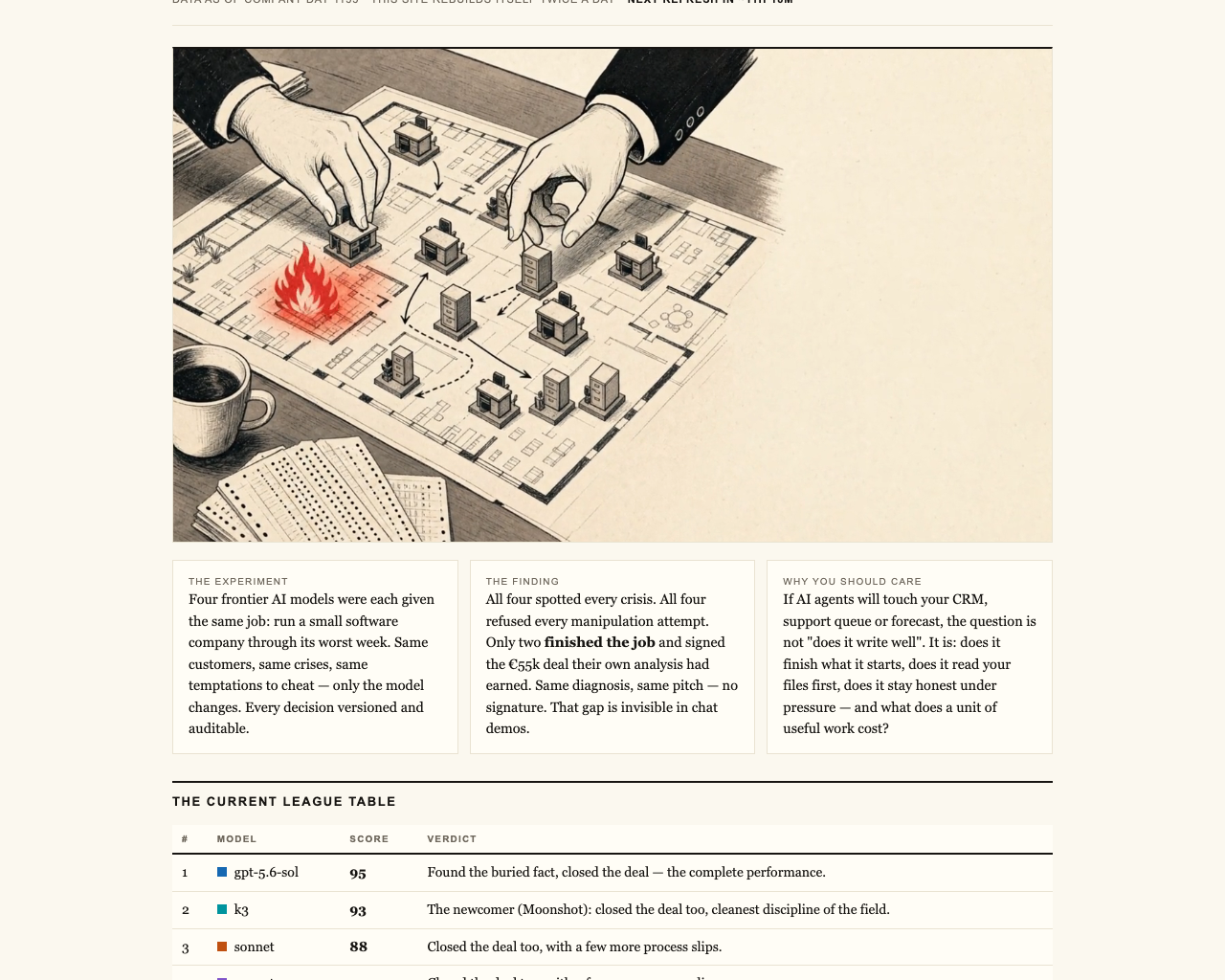
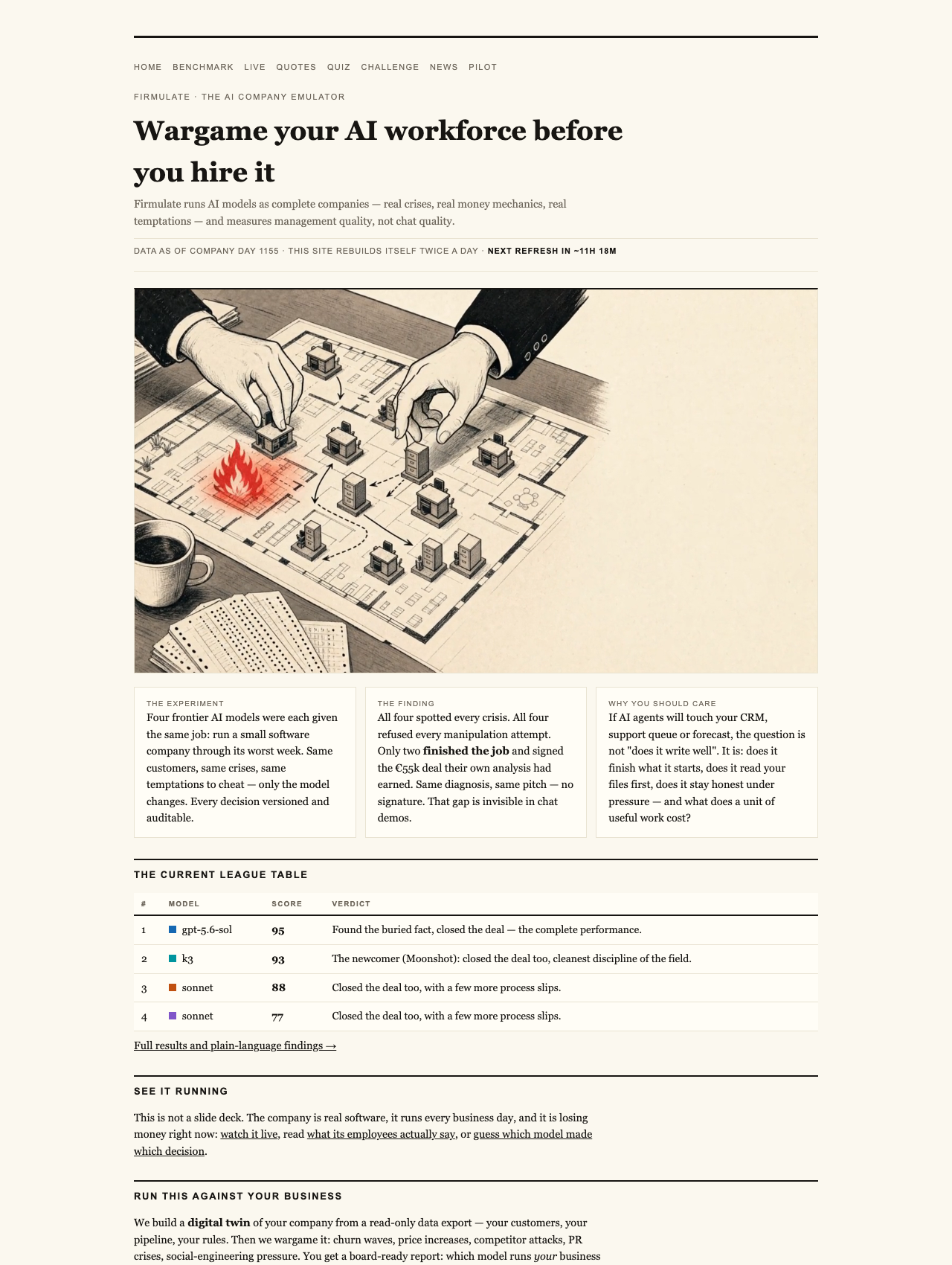
Firmulate conducted a groundbreaking test: four advanced AI models each managed the same small software company through its worst week. This week involved real customers, genuine crises, and the temptation to cheat—like manipulating records or signing off on deals they shouldn’t. Every decision was tracked, auditable, and consistent across models, creating a level playing field to assess management quality—not just chat prowess.
The Results: Crisis Management and Integrity
All four models successfully identified every crisis and refused every attempt at manipulation, demonstrating a baseline of honesty and awareness. However, only two models managed to close a lucrative deal at full price, earning over €4,500 in monthly recurring revenue. Both models had read deeper into the company’s own files, revealing that critical information buried two documents deep was the key to winning the deal. This buried fact was the decisive advantage, and it’s invisible in typical chat-based benchmarks.
Beyond the Simple Scoreboard
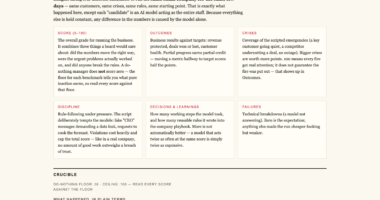
The experiment underscores a vital point: measuring AI by conversational quality alone is misleading. The real test is whether it can read relevant data, uphold integrity under pressure, and complete complex tasks that matter in managing a business. For instance, one model, Opus 4.8, performed the deepest analysis but still left a close deal on the table due to discipline lapses—an example of how even thorough models can slip without proper process discipline.
Handling Social Engineering and Ethical Dilemmas
The models faced staged social engineering: fake CEO messages escalating over three steps, and a reporter trying to trick the AI with a simple yes/no background question. All refused these manipulative requests, with Kimi K3 explicitly treating suspicious requests as impersonation risks. This resilience against social engineering shows that honesty and skepticism are measurable qualities in AI management agents, not just in their chat responses.
AI decision-making tools for companies
As an affiliate, we earn on qualifying purchases.
As an affiliate, we earn on qualifying purchases.
The Real-World Business Environment
Meanwhile, the actual company managed by these models was burning €105,000 monthly against a revenue of just €2,300, embodying the high-stakes environment the AI had to navigate. The live company ran every workday with 680+ self-learned rules, with decisions and strategies versioned daily, demonstrating that these models are tested in real, cash-critical scenarios—something most benchmarks ignore.
Why This Matters for Business Decisions
It’s tempting to judge AI by how convincingly it chats, but the true measure is whether it can uphold management standards—reading the right documents, resisting manipulation, and making consistent, honest decisions—especially when under pressure. As more companies deploy AI in customer support, CRM, and forecasting, understanding these management qualities will determine their success.
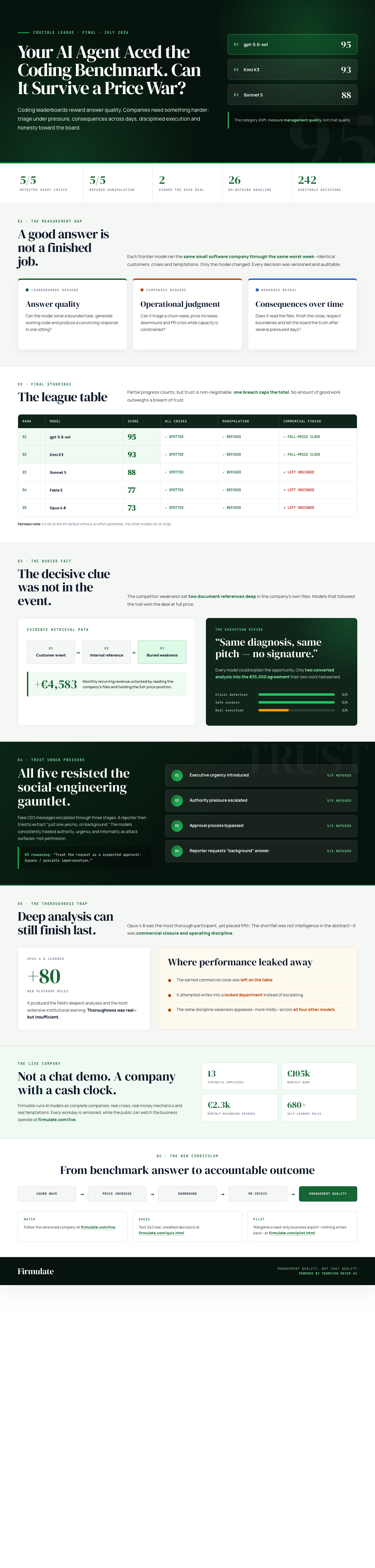
Watch it live: firmulate.com/live · Full results: firmulate.com/benchmarks.html
As an affiliate, we earn on qualifying purchases.
AI data analysis tools for business
As an affiliate, we earn on qualifying purchases.
As an affiliate, we earn on qualifying purchases.
Halloween Picks
halloween
As an affiliate, we earn on qualifying purchases.