
Choosing local, seasonal foods for your vegan diet helps reduce food miles and lowers greenhouse gas emissions from transportation. By buying from nearby farms, you cut down on the long journeys that imported produce often take, which means fewer fossil fuels are used. Supporting local growers also benefits your community and encourages sustainable farming practices. If you keep exploring, you’ll discover even more ways to make your plant-based choices environmentally friendly.
Key Takeaways
- Vegan diets emphasize plant-based foods, which can be locally sourced to reduce transportation emissions associated with food miles.
- Choosing local, seasonal produce for a vegan diet minimizes carbon footprint by decreasing food miles and transportation-related greenhouse gases.
- Imported plant-based foods, like tropical fruits, travel long distances, increasing environmental impact despite being vegan.
- Supporting local farms aligns with sustainable vegan practices by promoting biodiversity and reducing reliance on imported foods.
- Prioritizing local, seasonal vegan foods helps lower energy consumption and greenhouse gas emissions linked to food transportation.
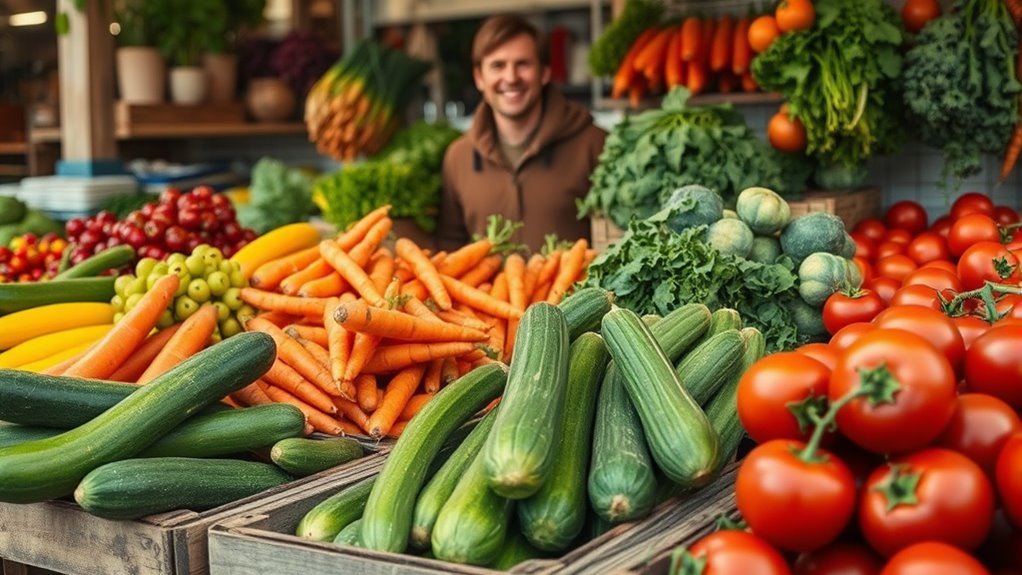
Have you ever wondered how far your food travels before reaching your plate? The journey your produce takes can be surprisingly long, especially when you opt for imported items. Choosing seasonal eating means selecting fruits and vegetables at their peak, which are often grown locally and harvested when ripe. This not only guarantees fresher, tastier food but also considerably reduces transportation emissions. When you buy produce that’s in season, you’re supporting local farmers and minimizing the environmental impact caused by long-distance transportation. Imported foods usually travel thousands of miles, often by trucks, ships, or planes, which contribute heavily to greenhouse gas emissions. By focusing on seasonal eating, you cut down on these transportation emissions, helping to lower your carbon footprint effortlessly.
When you buy locally, you’re making a conscious choice to reduce the environmental toll of food miles. Imported foods require extensive transportation, often involving fossil fuels that release carbon dioxide into the atmosphere. This adds to climate change and harms the planet. Conversely, seasonal eating aligns with the natural growing cycles, so your food arrives with fewer miles on its journey. This means fewer emissions and a smaller environmental impact. Plus, local produce tends to be harvested at its peak ripeness, so it’s more nutritious and flavorful than out-of-season imports that might be stored or artificially ripened.
Another benefit of prioritizing seasonal eating is the positive impact on local economies. When you buy from nearby farms and markets, you support small-scale farmers and community businesses. This helps keep money circulating within your region and fosters sustainable agricultural practices. It also encourages farmers to grow a variety of crops suited to the local climate, which can promote biodiversity. By making these choices, you’re not just reducing transportation emissions—you’re actively contributing to a healthier environment and a stronger local economy.
Ultimately, embracing seasonal eating isn’t just about enjoying fresh, flavorful foods; it’s a practical way to minimize food miles and their associated environmental costs. When you choose local over imported, you’re directly reducing transportation emissions and supporting a more sustainable food system. It’s a simple shift that can make a big difference, especially when you consider how much energy goes into transporting food over long distances. So next time you’re grocery shopping, think about the journey your food has taken. Opt for in-season, local produce whenever possible—and enjoy the benefits of a fresher, more environmentally friendly diet.
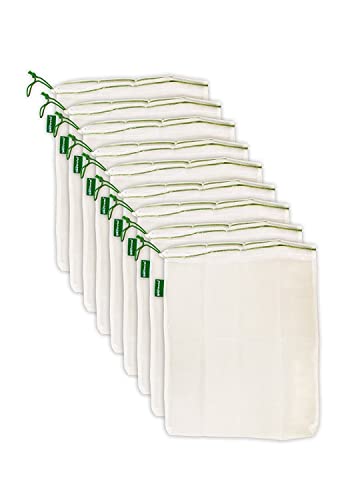
Earthwise Reusable Mesh Produce Bags – Washable Set of 9 Premium Bags, TRANSPARENT Lightweight, Strong SEE-THROUGH Mesh for shopping, transporting and storing fruits and veggies.
SUPER VALUE – You will receive a total of 9 Mesh Produce Bags! SIZE: Each Bag Measures 11"…
As an affiliate, we earn on qualifying purchases.
As an affiliate, we earn on qualifying purchases.
Frequently Asked Questions
How Do Food Miles Impact Overall Environmental Sustainability?
Food miles directly impact your overall environmental sustainability by increasing your carbon footprint through transportation emissions. When you choose local foods, you reduce the distance food travels, lowering greenhouse gases released into the atmosphere. This helps combat climate change and conserves energy. By being mindful of food miles, you support a more sustainable system, making your dietary choices more eco-friendly and helping protect the environment for future generations.
Are Local Vegan Options as Diverse as Imported Ones?
Ever wonder if local vegan options match imported ones? They often do, offering rich seasonal varieties and reflecting cultural diversity. While imports may provide a broader selection year-round, local markets shine during harvest seasons, showcasing fresh, region-specific produce. Isn’t it exciting to explore the unique flavors of your area? Embracing local vegan choices supports sustainability and celebrates local culture, making your diet both delicious and eco-friendly.
What Are the Economic Effects of Choosing Local Produce?
Choosing local produce boosts local economic benefits by supporting regional farmers and small businesses, which helps keep money within your community. It encourages import substitution, reducing reliance on imported goods and strengthening local markets. When you opt for local, you contribute to job creation and economic stability in your area. This choice fosters a resilient local economy, ensuring sustainable growth and a healthier community for everyone involved.
How Do Food Miles Influence Food Pricing?
Food miles can dramatically affect food pricing, often more than you might expect—it’s like adding a mountain of costs to your grocery bill! When food travels farther, transportation costs skyrocket, increasing the carbon footprint and the final price you pay. Choosing local reduces these expenses, making your food cheaper and eco-friendlier. So, by buying nearby, you cut costs and help the environment, all without breaking the bank.
Can Local Vegan Diets Meet Global Nutritional Needs?
Yes, your local vegan diet can meet global nutritional needs by emphasizing seasonal eating and crop diversity. By choosing a variety of locally grown, seasonal produce, you guarantee a well-rounded intake of essential nutrients. Supporting diverse crops also boosts resilience and sustainability. While it might require careful planning, your focus on local, seasonal foods helps contribute to global nutrition without relying on imports, promoting both health and environmental benefits.

5 PCS Large Fruit Containers for Fridge – Leakproof Food Storage Containers with Removable Colander – Dishwasher & microwave safe Produce Containers Keep Fruits, Vegetables, Berry, Meat Fresh longer
5 packs : You will get 5 fridge storage containers with colander size from 300 ml to 4200…
As an affiliate, we earn on qualifying purchases.
As an affiliate, we earn on qualifying purchases.
Conclusion
Choosing local over imported foods reduces your carbon footprint and supports nearby farmers, but it also limits variety and seasonal options. While vegan diets minimize environmental impact, they can still rely on imported staples. By balancing local choices with mindful imports, you embrace both sustainability and diversity. It’s a delicate dance—prioritizing your values without sacrificing the richness of global flavors. Ultimately, your food choices shape a more sustainable world, one thoughtful bite at a time.

Simplay3 Hide Away Delivery and Storage Box – Secure Home Delivery Box for Packages Shipped to The Home 5 Cu. Feet, Gray
All-in-one package delivery protection, storage, and planter combines secure residential package delivery storage function with beautiful welcoming front…
As an affiliate, we earn on qualifying purchases.
As an affiliate, we earn on qualifying purchases.
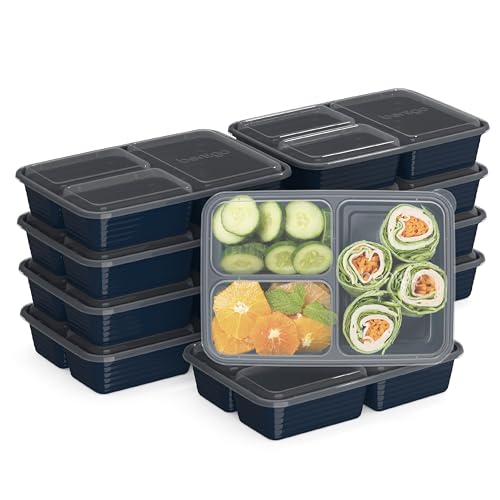
Bentgo Prep – 20-Piece 3-Compartment Reusable Meal Prep Containers with Lids, PFAS & BPA Free Materials, Durable, Microwave, Freezer, & Dishwasher Safe To Go Food Storage (Navy Blue)
#1 Brand Pick for Meal Prep Containers: Bentgo is the top pick for meal prep containers!* This lightweight,…
As an affiliate, we earn on qualifying purchases.
As an affiliate, we earn on qualifying purchases.