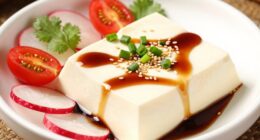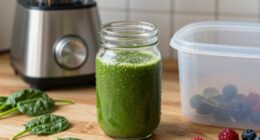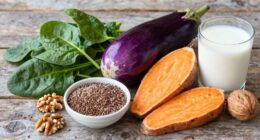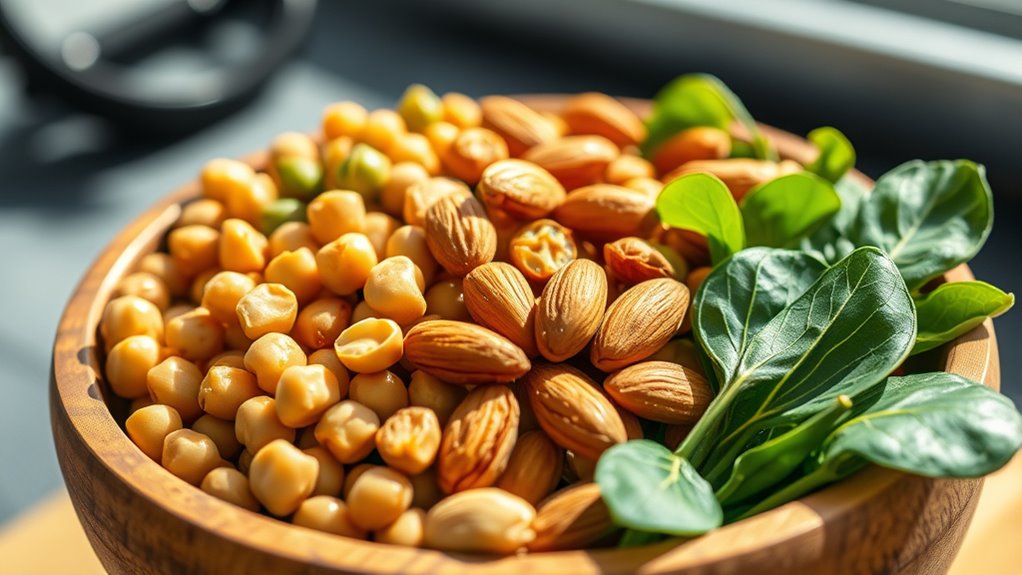
To meet your training demands with plant foods, focus on high-protein options like beans, lentils, quinoa, tofu, and tempeh, which provide essential amino acids. Combining different plant sources throughout the day guarantees muscle repair and growth. Aim to consume protein-rich meals within 30 to 60 minutes after workouts and spread intake evenly. Staying consistent with diverse plant-based foods will boost recovery and performance—keep going to discover more tips for optimizing your plant-based nutrition.
Key Takeaways
- Combining diverse plant sources like beans, lentils, quinoa, and soy ensures complete amino acid profiles for optimal muscle repair.
- Consuming plant-based proteins within 30-60 minutes post-exercise enhances muscle synthesis and recovery.
- Spreading protein intake evenly throughout the day with small, plant-rich meals supports continuous muscle building.
- Incorporating high-protein plant foods such as hummus, pea protein smoothies, and tofu aligns with training demands.
- Adequate plant-based protein and carbohydrate intake around workouts help replenish glycogen and reduce muscle fatigue.
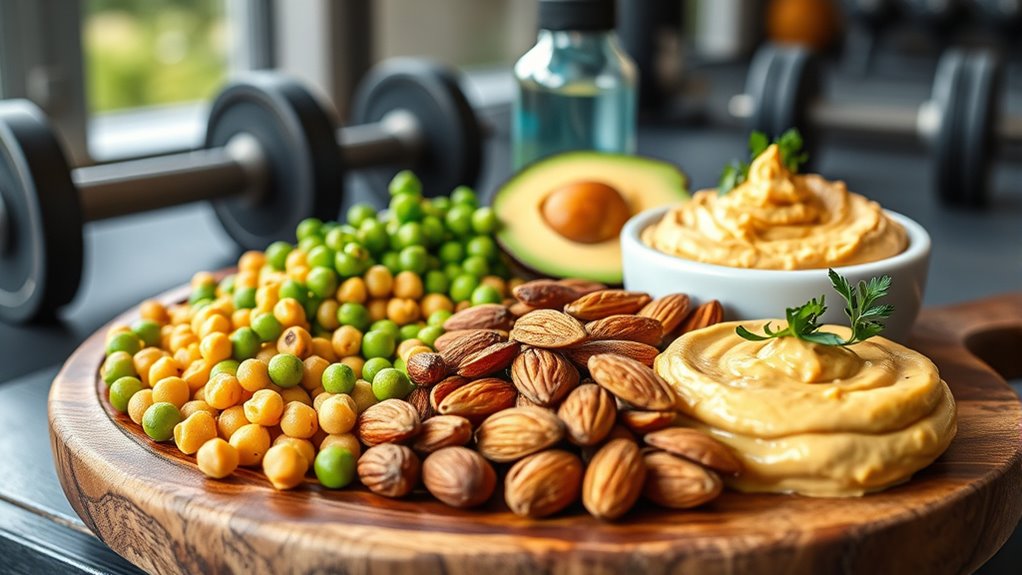
Are plant foods a powerful choice for athletes aiming to optimize performance and recovery? Absolutely. Many assume that animal products are the only way to get enough protein, but plant-based options can be just as effective when you understand how to maximize protein quality and meal timing. Plant proteins often have a different amino acid profile compared to animal proteins, which can impact how well your body builds and repairs muscle. However, by combining various plant sources—like beans, lentils, quinoa, and soy—you can guarantee you’re getting all essential amino acids, improving protein quality overall. This approach helps your body recover faster and adapt to training stresses more efficiently.
Plant-based sources provide complete amino acids for optimal muscle recovery and performance.
Timing your meals around your training sessions makes a significant difference. Consuming a high-protein plant-based meal or snack within a window of 30 to 60 minutes post-exercise can enhance muscle synthesis and replenish glycogen stores. Think of it as giving your muscles the right fuel when they need it most. Incorporate foods like hummus with whole-grain bread, a smoothie with pea protein and fruits, or a tofu stir-fry to supply the nutrients your muscles crave. These meals don’t need to be overly complex, but they should be well-balanced and rich in plant-based proteins to support your recovery process. Additionally, understanding the role of contrast ratio in projectors can help you optimize your viewing experience, especially in dark environments, which is also beneficial for athletes recovering with visual relaxation.
It’s also essential to spread your protein intake evenly throughout the day. Instead of loading up on one large meal, aim for smaller, protein-rich meals or snacks every few hours. This strategy boosts protein synthesis more consistently, helping you build strength and recover more effectively between training sessions. Incorporate a variety of plant foods to cover your amino acid needs, such as nuts, seeds, whole grains, and legumes. These foods not only provide the necessary protein but also supply fiber, vitamins, and minerals that support overall health and performance.
Additionally, don’t forget about the importance of meal timing relative to your training schedule. Consuming protein-rich foods before your workout can provide sustained energy and help reduce muscle breakdown. Post-workout, focus on replenishing glycogen and repairing tissues with easily digestible plant proteins combined with carbs. Planning your meals around your activity helps you stay energized, recover faster, and keep your training consistent.

Birdman Falcon Performance Vegan Protein Powder, 31g Protein, 5g Creatine, 5g BCAA, Probiotics, Electrolytes, Pre Workout, Low Carb, Sugar Free & Dairy Free, Plant Based Chocolate Protein -19 servings
31g of sport protein + 5g of creatine monohydrate and BCAAs, all in one scoop – Get the…
As an affiliate, we earn on qualifying purchases.
As an affiliate, we earn on qualifying purchases.
Frequently Asked Questions
Can Plant Proteins Fully Replace Animal Proteins for Muscle Building?
Plant proteins can fully replace animal proteins for muscle building, but you should be aware of plant protein limitations like lower levels of certain amino acids. To maximize muscle synthesis impact, combine different plant sources to guarantee a complete amino acid profile. While it might take more planning, a varied plant-based diet can support your training needs effectively. Just stay mindful of these factors to optimize your muscle growth.
Are Plant-Based Protein Sources Suitable for High-Intensity Athletes?
Playing to your strengths, plant-based protein sources suit high-intensity athletes perfectly. You can fuel fierce workouts with plant-based smoothies packed with potent protein, and energize between bouts with vegan protein snacks. While they might require planning, these plant-powered products provide plenty of protein, supporting strength, stamina, and recovery. So, yes, plant-based options are suitable, helping you hit your high-performance goals without sacrificing your values or energy.
How Do Plant Proteins Compare in Digestibility to Animal Proteins?
Plant proteins generally have lower protein bioavailability and digestibility differences compared to animal proteins. You might find that plant sources, like legumes and grains, are less easily absorbed and utilized by your body. However, combining various plant proteins can improve overall digestibility and amino acid profiles. While animal proteins often offer higher digestibility, plant proteins still support your training needs when consumed strategically and in adequate amounts.
What Are the Best Plant Foods for Quick Post-Workout Recovery?
Think of your post-workout recovery as tending to a delicate garden—you need the right nutrients to flourish. Opt for quick-absorbing plant foods like hummus with whole-grain crackers, a banana with almond butter, or fruit smoothies with chia seeds. Incorporate plant snack ideas that boost protein and carbs. Don’t forget hydration strategies; water and electrolyte drinks help replenish lost fluids, speeding up your recovery and preparing you for the next session.
Do Plant Proteins Contain All Essential Amino Acids?
Plant proteins often lack one or more essential amino acids, but with plant protein diversification and amino acid complementation, you can guarantee you’re getting all the nutrients your body needs. By combining foods like beans with grains or seeds, you create a complete amino acid profile. This strategy allows you to meet your protein requirements effectively, supporting your training and recovery without relying solely on animal-based sources.
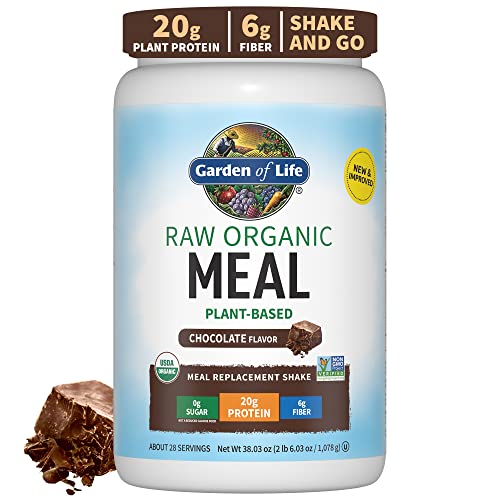
Garden of Life Meal Replacement Shakes, Raw Organic, Chocolate Protein Powder with Plant Based Pea Protein, Sprouts, Greens, Probiotics, Dairy Free 28 Servings
WHAT’S THE SCOOP: Why have a snack when you can have the whole meal? These all-in-one protein shakes…
As an affiliate, we earn on qualifying purchases.
As an affiliate, we earn on qualifying purchases.
Conclusion
By incorporating these high-protein plant foods into your diet, you’re releasing a powerhouse of energy and strength like never before. Imagine fueling your muscles with the ultimate plant-based superfoods, transforming you into an unstoppable force of nature. Don’t settle for ordinary—reach for these incredible foods and elevate your training to legendary heights. Your body deserves nothing less than the best. Get ready to crush your goals and become the athlete you were born to be!

IQBAR Clean Plant Protein Bars – Chocolate Lovers Variety – 12 Count – Keto, Vegan, High Fiber, Gluten and Dairy Free, Low Sugar Snack – Brain and Body Nutrients for Focus, Energy, Meal Replacement
CLEAN LABEL PROJECT CERTIFIED: IQBAR is a clean-label, healthy, low carb snack bar with 12g plant protein, 1–2g…
As an affiliate, we earn on qualifying purchases.
As an affiliate, we earn on qualifying purchases.

Garden of Life Organic Vegan Protein Powder, Plant Based & BCAAs, Organic Protein Powder with Probiotics & Enzymes, Non-GMO, Gluten-Free Lactose Free 1.2 LB
WHAT'S THE SCOOP: Build and repair muscle and reduce recovery time with 22g of complete plant based protein…
As an affiliate, we earn on qualifying purchases.
As an affiliate, we earn on qualifying purchases.