


To host a successful vegan gathering, plan a diverse menu that showcases plant-based proteins, flavorful sides, and colorful, appealing presentations. Label dishes clearly to boost confidence and include options for different dietary needs. Mix familiar favorites with innovative creations to encourage guests to try new foods while feeling comfortable. Focus on inclusive, thoughtful choices that celebrate dietary diversity and foster connection. Keep exploring for more tips to create a memorable, meaningful experience for all your guests.
Key Takeaways
- Include a variety of plant-based proteins, vegetables, and grains for balanced, inclusive meal options.
- Label dishes clearly to inform guests about ingredients and accommodate dietary restrictions.
- Incorporate familiar favorites like vegan pizza or sliders to encourage trying new plant-based foods.
- Use vibrant presentation to highlight colors and textures, enhancing visual appeal and guest engagement.
- Foster an inclusive atmosphere by offering diverse options that respect allergies and dietary preferences.
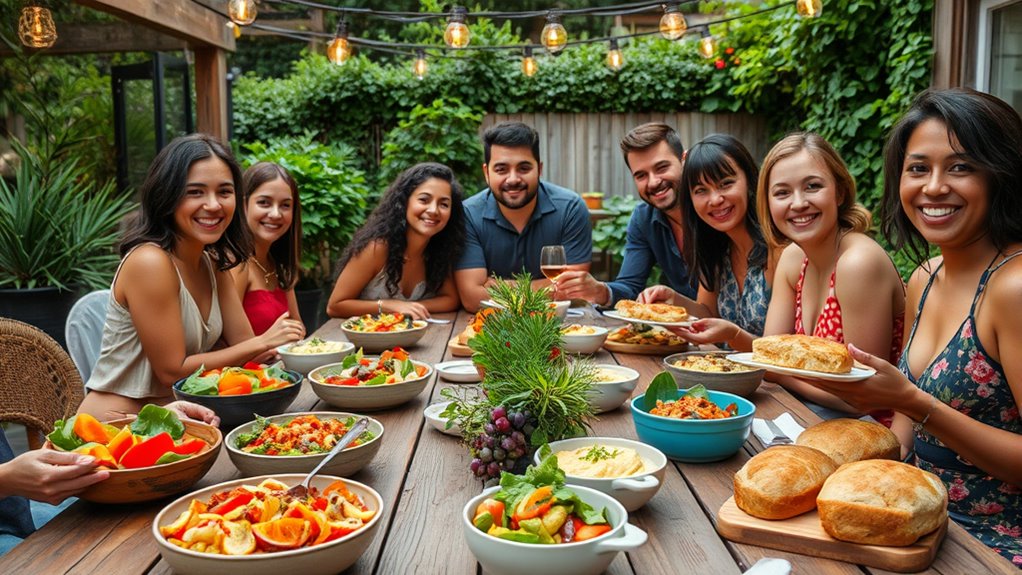
Hosting vegan gatherings can be a rewarding way to bring friends together around delicious, plant-based food. When planning your menu, consider incorporating a variety of plant-based alternatives to appeal to all tastes and dietary preferences. These alternatives, such as tofu, tempeh, jackfruit, and jackfruit, can mimic the textures and flavors of traditional ingredients, making dishes more familiar and enjoyable for everyone. Offering a diverse range of options not only showcases the versatility of plant-based cooking but also encourages guests to try new ingredients without feeling singled out. Aiming for dietary diversity ensures that your menu caters to a broad spectrum of needs, including those who may have allergies or specific dietary restrictions. This approach demonstrates thoughtfulness and inclusivity, making your gathering more welcoming.
Hosting vegan events with diverse plant-based options fosters inclusion and showcases culinary creativity.
When selecting dishes, think about balance — include proteins, healthy fats, and vegetables to create well-rounded meals. For instance, a vibrant Buddha bowl with grains, roasted vegetables, and a savory tahini dressing can serve as a hearty main. Sides like hummus with veggie sticks or stuffed grape leaves add variety and flavor. Don’t forget to incorporate a few crowd-pleasers, such as vegan pizza or sliders made with plant-based patties, to ensure everyone leaves satisfied. By offering a mix of familiar and innovative dishes, you make it easier for guests to find options they enjoy, reducing any hesitation about trying plant-based foods.
Presentation also plays an essential role. Arrange your dishes in an appealing way, emphasizing colors and textures to stimulate appetites. Clearly label each dish to inform guests about ingredients, especially if some are using plant-based alternatives they might not be familiar with. This small step helps guests feel confident trying new foods and emphasizes your intention to accommodate everyone’s needs. Additionally, consider including some gluten-free, nut-free, or allergen-friendly options to ensure dietary restrictions don’t limit anyone’s enjoyment.
Creating a menu that celebrates dietary diversity isn’t just about food — it’s about fostering a sense of community and respect. As you prepare, keep in mind that your effort to include different dietary needs and preferences signals that you value each guest’s health and choices. Incorporating mindfulness in practice, which aligns with yoga principles emphasizing awareness and presence, can enhance the overall experience and promote a more thoughtful gathering. This thoughtful approach turns a simple gathering into an inclusive experience, encouraging conversations about food, culture, and sustainability. Ultimately, your focus on plant-based alternatives and diverse options will help everyone feel comfortable, appreciated, and enthusiastic to share in the joy of your thoughtfully curated vegan feast.
Frequently Asked Questions
How Do I Handle Guests With Food Allergies?
You handle guests with food allergies by asking about their specific allergies beforehand, then clearly labeling dishes. Incorporate safe vegan dessert options and include plant-based protein sources like tofu or beans to guarantee everyone’s dietary needs are met. Keep cross-contamination in mind by using separate utensils and prep areas. This proactive approach makes your gathering inclusive and enjoyable, ensuring all guests feel cared for and safe.
What Are Budget-Friendly Vegan Menu Options?
To create budget-friendly vegan menus, focus on simple, filling dishes like pasta with tomato sauce, vegetable stir-fries, or bean salads. Use affordable plant-based proteins such as chickpeas, lentils, or tofu, and add vegan cheese for extra flavor. These options are cost-effective, easy to prepare, and appeal to a variety of tastes, making your gathering inclusive and delicious without breaking the bank.
How Can I Accommodate Gluten-Free Vegans?
Think of gluten-free vegans like a puzzle piece that needs a perfect fit. You can accommodate them by offering gluten-free options like gluten-free baking bread and wraps. Use vegan cheese alternatives made from nuts or soy, ensuring everyone feels included. When you plan with these in mind, the gathering becomes a seamless mosaic of flavors, where every piece fits perfectly, creating an inclusive and delicious experience for all your guests.
What Are Creative Vegan Appetizer Ideas?
You can impress guests with creative vegan appetizers like colorful plant-based dips such as hummus, guacamole, or beetroot dip. Serve them on a decorative platter, arranging sliced vegetables, olives, and fresh herbs for visual appeal. Consider adding stuffed dates or rice paper rolls for variety. These ideas are both tasty and eye-catching, making your vegan gathering memorable and inclusive for all guests.
How Do I Manage Dietary Restrictions Respectfully?
You manage dietary restrictions respectfully by asking guests about their needs beforehand and offering a variety of options. Use eco-friendly utensils to show environmental care, and include plant-based beverages for inclusive choices. Clearly label all dishes so guests can easily identify what suits their diet. Stay attentive during the event to accommodate any additional preferences or restrictions, making everyone feel comfortable and valued.
Conclusion
By planning thoughtfully and prioritizing inclusivity, your vegan gatherings can become legendary events that everyone raves about. Remember, a truly welcoming menu can turn even the pickiest eater into a plant-based enthusiast overnight. Keep experimenting, stay open-minded, and you’ll create an experience so unforgettable it’ll be talked about for years to come. Your effort can transform a simple meal into a monumental celebration of compassion and community—more impactful than you ever imagined!