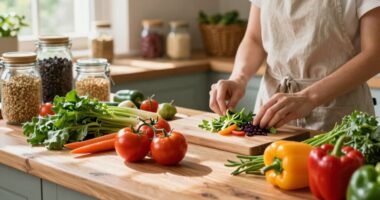


Starting a vegan garden at home allows you to grow fresh, organic produce while supporting eco-friendly practices. By using companion planting, you can boost plant health, improve flavor, and naturally deter pests without chemicals. Maintaining healthy soil and using natural pest management not only enhances plant growth but also creates a sustainable, balanced environment. If you want to discover simple tips to make your garden thrive, you’ll find useful insights to help you succeed.

Get health and wellness essentials delivered free with Prime
- Fast, free delivery on millions of items
- Prime Video, Amazon Music and more included
- Member-only deals all year
Key Takeaways
- Choose nutrient-rich, organic soil and incorporate compost for healthy plant growth and pest resistance.
- Implement companion planting to boost growth, flavor, and natural pest control.
- Attract beneficial insects with flowers like dill, fennel, or sunflowers to manage pests naturally.
- Use physical barriers and crop rotation to prevent pests and maintain soil health.
- Mulch regularly and water early to conserve moisture, suppress weeds, and reduce fungal diseases.
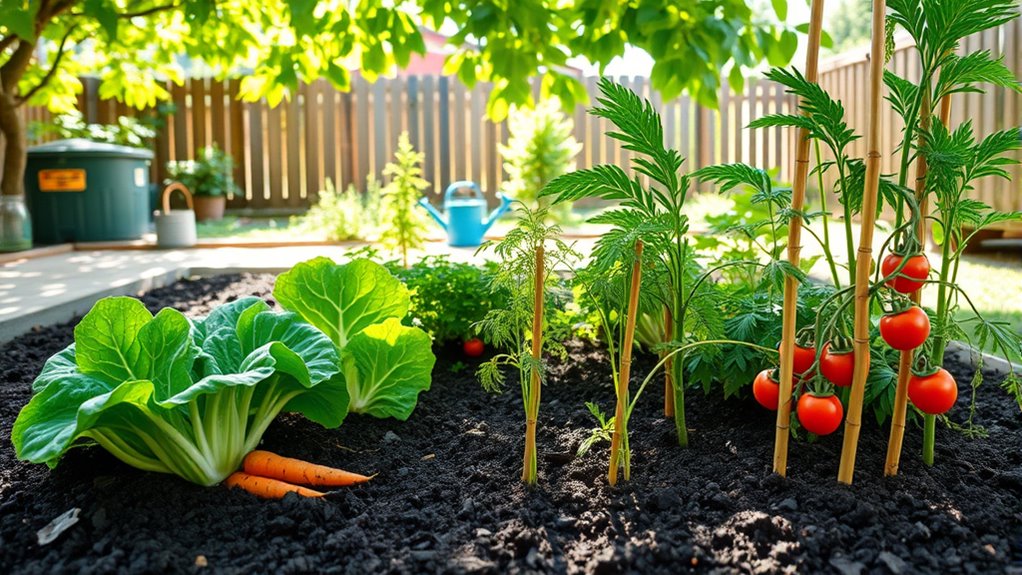
Starting a vegan garden at home is an excellent way to enjoy fresh, organic produce while reducing your environmental footprint. When you plan your garden, consider the benefits of companion planting. This technique involves pairing certain plants together to enhance their growth, improve soil health, and naturally repel pests. For example, planting basil near tomatoes can boost their flavor and deter pests like aphids and whiteflies. Similarly, marigolds can be interspersed with vegetables to ward off nematodes and other harmful insects. By strategically choosing plant companions, you create a balanced ecosystem that minimizes the need for chemical pest control methods, making your garden more sustainable and eco-friendly.
Starting a vegan garden benefits from companion planting to naturally boost growth and reduce pests.
Effective pest management is essential for maintaining a healthy, thriving vegan garden. Instead of relying on pesticides, focus on preventative strategies. Regularly inspect your plants for signs of pests or disease so you can catch problems early. Encouraging beneficial insects like ladybugs and lacewings can help control pest populations naturally. You can attract these helpful insects by planting flowers such as dill, fennel, or sunflowers around your garden. Additionally, using physical barriers like row covers can protect vulnerable plants during peak pest seasons. Companion planting plays an important role here, as certain plant combinations can discourage pests from settling in your garden. For example, nasturtiums are known to repel aphids and beetles, making them an ideal addition to vegetable patches.
Another key aspect of pest management is maintaining healthy soil and plants. Healthy plants are more resistant to pests and diseases, so ensure your soil is rich in organic matter. Composting kitchen scraps and garden waste adds essential nutrients and fosters beneficial microbial activity. Mulching around your plants helps retain moisture, suppress weeds, and create a physical barrier against crawling pests. Water your garden early in the day to prevent excess humidity, which can attract pests and promote fungal diseases. Keep your garden clean by removing fallen leaves and debris that can harbor pests or serve as breeding grounds. By combining these cultural practices with companion planting, you establish a resilient garden that naturally minimizes pest problems without synthetic chemicals.
Starting a vegan garden at home empowers you to grow nutritious, plant-based foods while supporting ecological balance. Focus on companion planting to optimize plant health and deter pests naturally. Implement effective pest management strategies by maintaining healthy soil, encouraging beneficial insects, and practicing good garden hygiene. With patience and attention, your garden will flourish, providing a sustainable source of fresh produce that aligns with your vegan lifestyle.
organic vegetable garden starter kit
As an affiliate, we earn on qualifying purchases.
As an affiliate, we earn on qualifying purchases.
Frequently Asked Questions
What Are the Best Beginner-Friendly Vegan Garden Plants?
You should start with easy, beginner-friendly vegan garden plants like lettuce, radishes, and herbs such as basil and mint. Use companion planting to boost growth and deter pests naturally. Incorporate organic fertilizers to nurture your plants without chemicals. These choices are low-maintenance, fast-growing, and perfect for beginners, helping you enjoy fresh, home-grown produce while learning the fundamentals of vegan gardening efficiently.
How Much Space Do I Need for a Vegan Garden?
You’ll need about 10 to 20 square feet for a small vegan garden, but it depends on what you want to grow. Use composting techniques to enrich your soil and establish a consistent watering schedule to keep plants healthy. If space is tight, consider vertical gardening or container planting. Regularly monitor your garden to adjust watering and composting as plants grow, maximizing your space efficiently.
Can I Grow a Vegan Garden Indoors Year-Round?
Yes, you can grow a vegan garden indoors year-round, turning your space into a lush oasis. Think of indoor lighting as the sun’s warm embrace, fueling your plants’ growth. Container gardening allows flexibility and control over soil and watering. With proper lighting, humidity, and care, you’ll nurture fresh greens and veggies all year, proving that even in small spaces, nature’s bounty thrives when you give it attention.
What Are Common Pests in Vegan Gardens?
You’ll often face pests like aphids, beetles, and caterpillars in your vegan garden. To combat these, try companion planting with marigolds or basil, which naturally repel pests. Additionally, choose pest-resistant varieties of your vegetables and herbs. Regularly inspect your plants and remove pests by hand or use organic solutions. These strategies help keep your garden healthy and productive without harmful chemicals.
How Do I Maintain Soil Health Without Animal Products?
Imagine your soil teeming with life, thriving without animal products. You can achieve this by using composting techniques that turn kitchen scraps into rich, natural fertilizers. Regularly add plant-based compost, organic matter, and cover crops to nourish your soil. These methods create a vibrant ecosystem beneath the surface, supporting healthy growth and ensuring your vegan garden stays fertile and productive without relying on any animal-derived inputs.
beneficial insect attractant flowers
As an affiliate, we earn on qualifying purchases.
As an affiliate, we earn on qualifying purchases.
Conclusion
Creating your own vegan garden is like planting seeds of joy and nourishment right in your backyard. As you nurture each plant, you’ll discover a quiet, rewarding rhythm that brings fresh flavors to your table and a gentle sense of accomplishment. With patience and care, your garden becomes a peaceful sanctuary where nature’s bounty quietly flourishes. Enjoy this delightful journey—each sprout a small reminder that simple efforts can blossom into something truly nourishing and delightful.
As an affiliate, we earn on qualifying purchases.
compost bin for vegetable garden
As an affiliate, we earn on qualifying purchases.
As an affiliate, we earn on qualifying purchases.
Columbus Day / Indigenous Peoples' Day Picks
long weekend sales
As an affiliate, we earn on qualifying purchases.