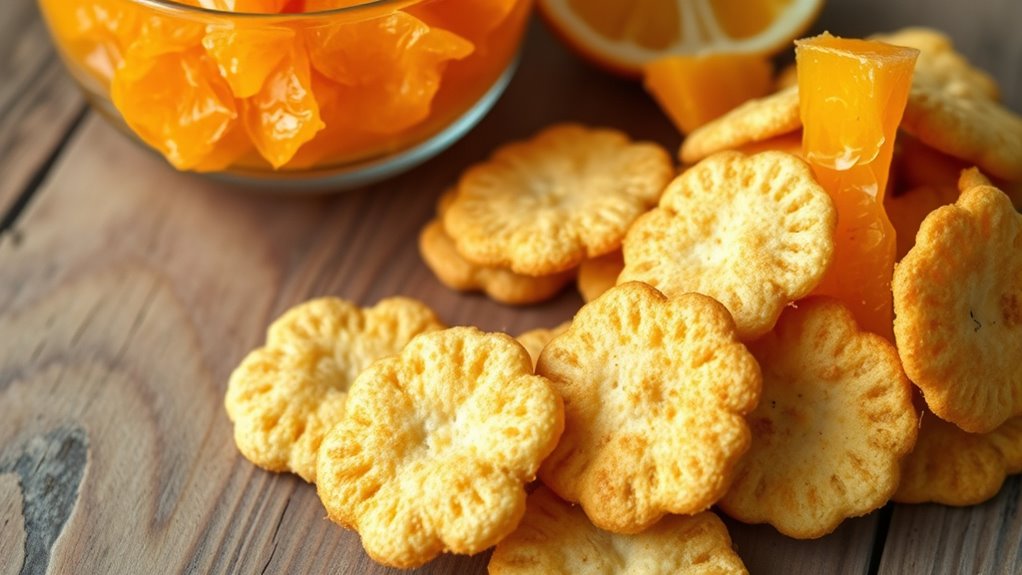
Turn your leftover juice pulp into fiber-rich crackers by mixing it with flour, seeds, herbs, and a little oil. Roll out the dough and bake until crispy for a healthy, zero-waste snack. This simple process boosts your fiber intake, supports sustainable habits, and minimizes waste by repurposing pulp and glass jars. If you keep going, you’ll discover easy tips to customize flavors and enjoy delicious, eco-friendly snacks made at home.

Get health and wellness essentials delivered free with Prime
- Fast, free delivery on millions of items
- Prime Video, Amazon Music and more included
- Member-only deals all year
Key Takeaways
- Incorporate leftover juice pulp into cracker dough to boost fiber and nutrient content naturally.
- Use eco-friendly packaging and reusable jars to store homemade crackers, reducing waste.
- Customize flavors with herbs, seeds, or sweet spices for nutritious, zero-waste snacks.
- Mix pulp with flour, seeds, and oil, then roll and bake for quick, fiber-rich crackers.
- Repurposing pulp minimizes kitchen waste and supports sustainable, responsible snacking habits.
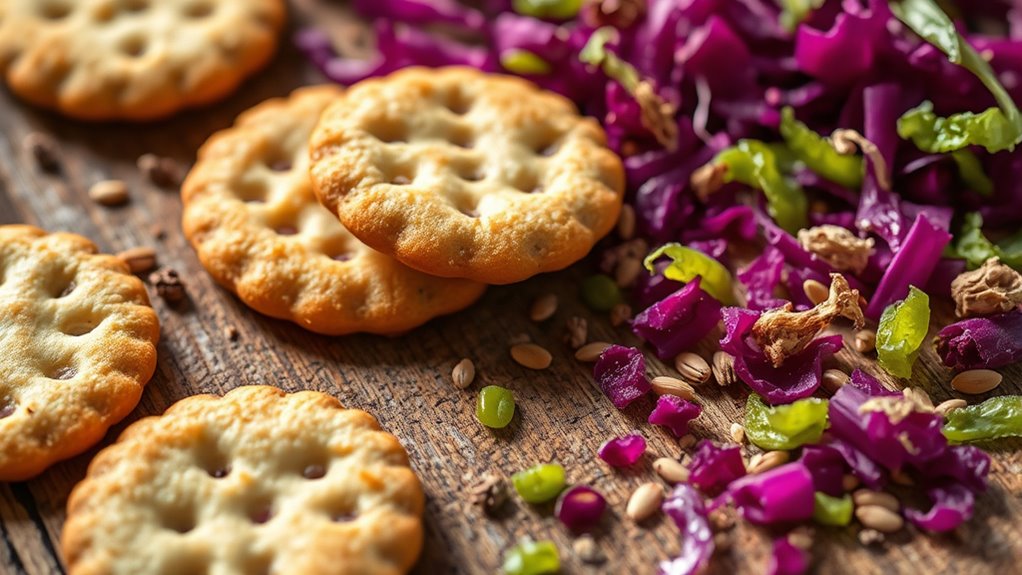
Juice pulp crackers are a creative way to reduce waste and add flavor to your snacks. By transforming leftover pulp from juicing into delicious, fiber-rich crackers, you’re embracing a zero-waste approach that benefits both the environment and your health. These crackers make use of pulp that would otherwise be discarded, giving you a chance to repurpose ingredients in a way that’s both sustainable and nutritious.
Transform leftover juice pulp into nutritious, eco-friendly crackers that reduce waste and boost your health.
One of the key advantages of making juice pulp crackers is the opportunity to incorporate sustainable packaging into your routine. You can store the crackers in eco-friendly containers or reuse glass jars, minimizing single-use plastics and reducing your carbon footprint. This approach aligns with a commitment to sustainability, helping you cut down on waste not just in your kitchen but across your entire lifestyle. Plus, because you’re using pulp that’s already been processed, you’re making the most of every part of your produce, reducing overall food waste and promoting responsible consumption.
From a nutritional standpoint, these crackers offer considerable benefits. Juice pulp is packed with fiber, vitamins, and antioxidants, which can help support digestion, boost your immune system, and promote overall wellness. When you turn pulp into crackers, you’re enriching your snack options with these nutrients, making your diet more balanced and wholesome. The fiber content helps keep you full longer, reducing cravings and aiding in weight management. Additionally, incorporating pulp into your snacks preserves the natural flavors of the fruits and vegetables, giving you a tasty, healthful treat that’s far more nourishing than many store-bought snack options.
Making your own juice pulp crackers is simple and flexible. You can customize the ingredients based on your taste preferences and the type of pulp you have. Mix the pulp with some flour, seeds, herbs, and a bit of oil to create a dough, then roll it out and bake until crispy. The process is quick, and you can experiment with different flavor combinations, such as cinnamon and apple pulp or savory herbs with carrot pulp. These crackers are perfect for snacking at home or packing into lunchboxes, providing a nutritious alternative to processed snacks.
reusable glass jars for food storage
As an affiliate, we earn on qualifying purchases.
As an affiliate, we earn on qualifying purchases.
Frequently Asked Questions
How Long Do Juice Pulp Crackers Stay Fresh?
Your juice pulp crackers stay fresh for about 3 to 5 days if stored properly. To maximize shelf life, keep them in an airtight container at room temperature or in the fridge. Storage tips include placing a paper towel in the container to absorb moisture and prevent sogginess. For longer freshness, consider freezing them and reheating as needed. Always check for signs of spoilage before snacking.
Can Pulp Crackers Be Stored at Room Temperature?
While it might seem convenient to keep pulp crackers at room temperature, their shelf life depends on proper storage. To stay fresh longer, store them in an airtight container in a cool, dry place. Room temperature is fine for a few days, but for extended freshness, refrigeration is best. Follow these storage tips to prevent spoilage and enjoy your fiber-rich crackers at their peak.
Are There Gluten-Free Options for Pulp Crackers?
You can definitely find gluten-free options for pulp crackers. Look for recipes using gluten-free grains like rice, buckwheat, or quinoa, which provide a sturdy base. Nut-based alternatives, such as almond or cashew flour, also work well to create tasty, gluten-free crackers. These options allow you to enjoy a fiber-rich, zero-waste snack that’s suitable for various dietary needs and preferences.
How Can I Customize Flavor in Pulp Cracker Recipes?
Think of your pulp crackers as a canvas, ready for flavor masterpieces. To customize, experiment with flavor combinations like herbs, garlic, or lemon zest. Spice infusions such as cumin or paprika can add depth. I once added cinnamon and nutmeg, transforming a simple recipe into a warm treat. Play around with your favorite seasonings, and you’ll create unique, delicious crackers tailored perfectly to your taste buds.
Is There a Recommended Serving Size for Pulp Crackers?
For snack portioning, a recommended serving size for pulp crackers is about 2 to 3 crackers, roughly 1 ounce. This helps you enjoy the fiber-rich benefits without overdoing it. Use serving suggestions like pairing them with hummus or cheese to make your snack more satisfying. Keep in mind, adjusting portion sizes based on your dietary needs guarantees you get the most out of your zero-waste snack.
As an affiliate, we earn on qualifying purchases.
Conclusion
By turning juice pulp into fiber-rich crackers, you’re not just making a snack—you’re giving waste a second chance to shine. This simple act transforms what’s leftover into nourishment, proving that sustainability isn’t just a goal but a delicious reality. Think of it as weaving threads of consciousness into every bite, a reminder that small choices ripple outward. Embrace this zero-waste hack and let your snack be a demonstration of mindful living—where every crumb counts.
As an affiliate, we earn on qualifying purchases.
eco-friendly food storage containers
As an affiliate, we earn on qualifying purchases.
As an affiliate, we earn on qualifying purchases.
Halloween Picks
halloween
As an affiliate, we earn on qualifying purchases.