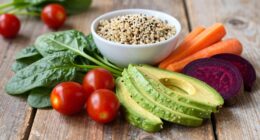


To optimize circadian health on a plant-based diet, you should align your meal timing with your natural body rhythms by eating within consistent daily windows, ideally earlier in the day. This supports hormone balance, digestion, and sleep quality. Incorporating practices like intermittent fasting helps synchronize your internal clock with your food intake, boosting nutrient absorption. If you keep these habits in mind, you’ll discover more ways to enhance your overall well-being through mindful meal timing.
Key Takeaways
- Aligning meal timing with circadian rhythms enhances digestion, nutrient absorption, and metabolic efficiency on a plant-based diet.
- Consistent eating schedules support hormonal balance, improving sleep quality and energy levels.
- Intermittent fasting during early hours optimizes insulin sensitivity and melatonin production in plant-based eating patterns.
- Regular meal times help maintain gut health and prevent digestive issues common in plant-based diets.
- Synchronizing meals with natural circadian cues promotes overall well-being and maximizes plant food benefits.

Maintaining a healthy circadian rhythm is essential for overall well-being, especially when following a plant-based diet. Your body’s internal clock influences sleep, hormone production, digestion, and energy levels. When your circadian rhythm stays in sync, you experience better digestion, improved sleep quality, and increased vitality. One effective way to support this rhythm is through mindful meal timing, which can be enhanced with practices like intermittent fasting and establishing consistent meal regularity. By aligning your eating patterns with your natural circadian cues, you help your body optimize nutrient absorption and metabolic processes.
Intermittent fasting is a popular method that can help regulate your circadian rhythm. It involves restricting food intake to specific windows during the day, such as an 8- or 10-hour eating window, and fasting during the remaining hours. When you time your meals earlier in the day, you align your eating schedule with your body’s natural peak alertness and digestion periods. This synchronization supports hormonal balance, such as insulin sensitivity and melatonin production, which regulate sleep and metabolic health. For those on a plant-based diet, incorporating intermittent fasting can also encourage mindful eating habits, helping you focus on nutrient-dense foods like fruits, vegetables, grains, and legumes during your designated eating window. This practice not only helps maintain energy levels but also reduces unnecessary snacking, which can disrupt your internal clock.
Meal regularity plays a pivotal role in maintaining circadian health. When you eat at consistent times each day, your body anticipates food intake and adjusts hormone levels accordingly. This predictability fosters better digestion, stabilizes blood sugar, and enhances sleep quality. For a plant-based eater, sticking to regular meal times ensures that your body receives a steady supply of nutrients, preventing fluctuations that can throw off your internal clock. Consistent meal schedules also support gut health, as your digestive system adapts to predictable patterns, leading to more efficient nutrient absorption and fewer digestive issues. Furthermore, regularity helps you develop a routine that reinforces your circadian rhythm, making it easier to fall asleep and wake up feeling refreshed.

Vegan Intermittent Fasting: Lose Weight, Reduce Inflammation, and Live Longer―The 16:8 Way―With over 100 Plant-Powered Recipes to Keep You Fuller Longer
As an affiliate, we earn on qualifying purchases.
As an affiliate, we earn on qualifying purchases.
Frequently Asked Questions
How Does Meal Timing Affect Hormonal Balance on a Plant-Based Diet?
You can improve hormonal regulation by paying attention to meal timing on a plant-based diet. Eating regularly and aligning meals with your circadian rhythms helps balance hormones like insulin and cortisol. Avoid late-night eating, which can disrupt this balance. When you eat at consistent times, your body better manages hunger, energy, and stress hormones, leading to improved overall hormonal health and better support for your plant-based lifestyle.
Can Plant-Based Diets Improve Sleep Quality Through Circadian Regulation?
Yes, a plant-based diet can improve your sleep quality by supporting circadian regulation. Incorporate plant-based fasting, which aligns eating patterns with your natural rhythms, and guarantee you get plenty of sunlight exposure during the day. This combination helps synchronize your internal clock, boosting melatonin production at night, leading to better sleep. Prioritizing these habits can help you feel more rested and energized throughout the day.
What Are the Best Times to Consume High-Protein Plant Foods?
You should consume high-protein plant foods earlier in the day, ideally during breakfast or lunch, to optimize your meal timing and support circadian health. Spreading your protein intake evenly helps regulate your energy levels and sleep patterns. Avoid heavy protein meals late at night, as they can disrupt your sleep. Prioritize plant-based proteins like beans, lentils, and tofu during daytime meals for best results.
How Does Circadian Alignment Influence Nutrient Absorption in Vegans?
Did you know that aligning your eating patterns with your circadian rhythm can boost photosynthesis efficiency and nutrient bioavailability? When you eat during your natural sleep-wake cycle, your body absorbs nutrients more effectively, especially plant-based ones. This synchronization helps optimize digestion and enhances nutrient absorption, ensuring you get the maximum benefit from your vegan diet. Staying consistent with meal timing supports your circadian health and overall well-being.
Are There Specific Plant-Based Foods That Support Circadian Health?
You can support your circadian health with specific plant-based foods that offer superfood synergies and phytochemical phases. Incorporate berries, leafy greens, and turmeric, which contain antioxidants and anti-inflammatory compounds that promote sleep and hormonal balance. Eating these foods at regular times aligns your body’s natural rhythms, enhancing nutrient absorption and overall well-being. Remember, timing your intake helps optimize the benefits of these powerful plant-based options.

Sleep & Circadian Rhythm Log Book: Compact 5.25" x 8" Tracker for Sleep Quality, Morning Sunlight & Evening Routine – Midnight Edition (The Vital Health Series)
As an affiliate, we earn on qualifying purchases.
As an affiliate, we earn on qualifying purchases.
Conclusion
Prioritizing meal timing on a plant-based diet can markedly boost your circadian health. Research shows that aligning eating patterns with your body’s natural rhythms can improve sleep quality and energy levels. Did you know that skipping breakfast increases your risk of heart disease by 27%? By syncing your meals with your circadian clock, you’re not just nourishing your body—you’re investing in your long-term well-being. Make mindful timing a key part of your plant-based journey today.
meal timing app for plant-based diet
As an affiliate, we earn on qualifying purchases.
As an affiliate, we earn on qualifying purchases.
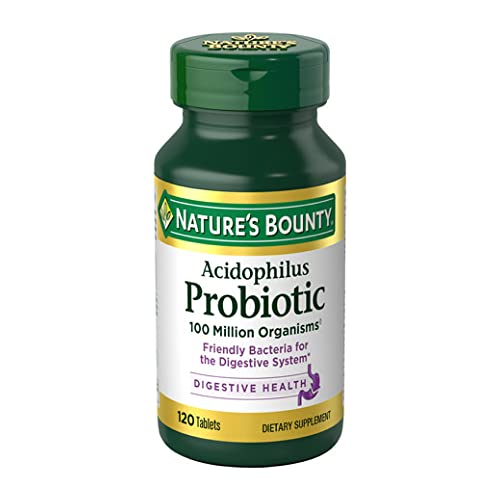
Nature's Bounty Lactobacillus Acidophilus Probiotic Supplement – Daily Probiotic for Women/Men Digestive Health, 100 Million Organisms, Vegetarian, 1 Serving per Day, 120 Tablets
SUPPORTS DIGESTIVE HEALTH (1): Nature’s Bounty Lactobacillus probiotic tablets provide 100 million active cultures; supporting your digestive health…
As an affiliate, we earn on qualifying purchases.
As an affiliate, we earn on qualifying purchases.