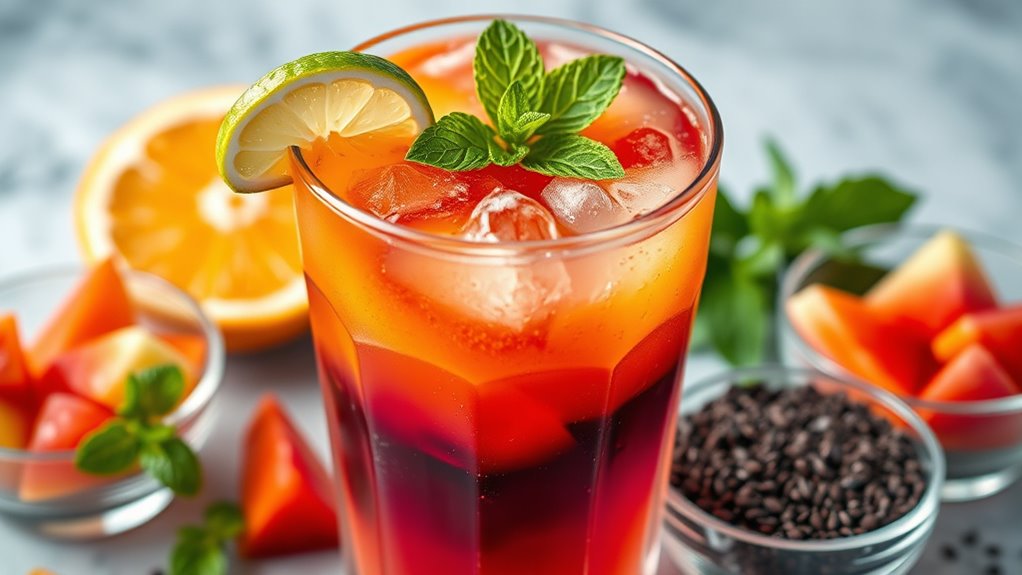

When choosing nonalcoholic drinks and mocktails, consider their ingredients to manage sugar, artificial additives, and calorie content. Opt for options with fresh fruits, herbs, and natural flavorings to enjoy nutritional benefits like vitamins and antioxidants. Be mindful that some commercial alcohol alternatives may contain fortifications like electrolytes or vitamins. By exploring healthier ingredient choices, you can craft satisfying beverages that balance flavor with nutrition—keep exploring to discover how to make nourishing, delicious mocktails tailored to your wellness goals.
Key Takeaways
- Many mocktails can be high in sugar and artificial ingredients, so choosing natural, fresh ingredients helps maintain nutritional balance.
- Infused waters with fruits and herbs provide vitamins, antioxidants, and hydration benefits without added calories.
- Incorporating functional ingredients like ginger, turmeric, or chia seeds boosts health and adds nutritional value.
- Fortified alcohol alternatives often contain electrolytes or vitamins, offering additional health benefits beyond hydration.
- Visual appeal and ingredient quality enhance enjoyment while supporting health-conscious, guilt-free beverage choices.
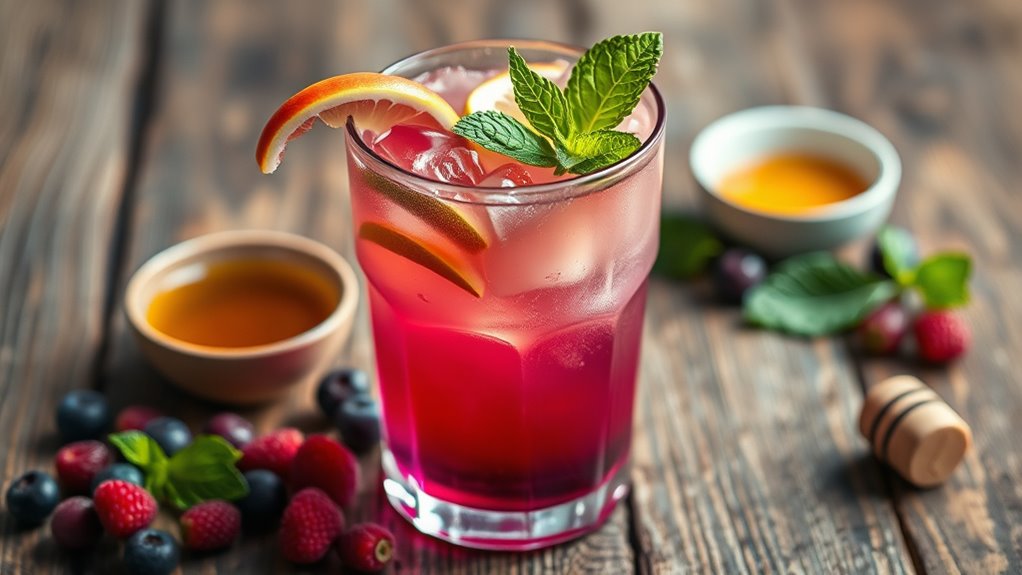
Have you ever wondered how to enjoy festive, flavorful beverages without alcohol? The good news is that there are plenty of nonalcoholic drinks and mocktails that can satisfy your cravings while aligning with current beverage trends. These alcohol alternatives come in many forms, from sparkling waters infused with fruit to sophisticated mocktails that mimic classic cocktails. As more people seek healthier options and mindful drinking choices, the popularity of these beverages continues to grow, making it easier than ever to find something delicious and nutritious.
When you’re exploring nonalcoholic drinks, it’s essential to contemplate their nutritional aspects. While many mocktails are beautiful and tasty, some can be surprisingly high in sugar, artificial ingredients, or empty calories. To enjoy these beverages without compromising your health, look for recipes that incorporate fresh fruit, herbs, and natural flavorings. For example, a sparkling water infused with lemon, mint, and berries can be a revitalizing, low-calorie alternative to sugary sodas or cocktails. These choices not only keep your calorie count in check but also provide vitamins and antioxidants beneficial for your health.
Choose mocktails with fresh fruit and herbs for a flavorful, nutritious, low-calorie beverage option.
Another key consideration is the type of ingredients used in your mocktail or nonalcoholic beverage. Opt for whole, minimally processed ingredients whenever possible. Freshly squeezed citrus juices, muddled herbs, and whole fruits add flavor without excess sugar or preservatives. By doing so, you’re embracing a more nutritious approach that aligns with current beverage trends favoring clean and natural ingredients. Plus, these choices tend to be more satisfying and can help curb cravings for less healthy options.
Many beverage trends focus on functional drinks that offer more than just hydration—they provide vitamins, minerals, or even adaptogens to boost your wellness. Incorporating ingredients like ginger, turmeric, or chia seeds into your mocktails can enhance their nutritional profile. These additions not only add flavor but also deliver health benefits, making your nonalcoholic beverage a nourishing choice. It’s also worth noting that many commercial alcohol alternatives are now fortified with electrolytes or vitamins, catering to consumers who want flavorful drinks without sacrificing health benefits.
Additionally, anime-inspired mocktail recipes featuring vibrant colors and creative presentations can make your beverage experience more enjoyable and visually appealing. Ultimately, the key to enjoying nonalcoholic drinks and mocktails is balancing flavor with nutrition. By paying attention to ingredients and choosing options aligned with beverage trends, you can indulge in festive drinks that are both enjoyable and health-conscious. Whether you’re hosting a gathering or simply treating yourself, these mindful choices ensure you savor the moment without guilt. So go ahead—explore new recipes and ingredients, and discover how satisfying and nourishing alcohol alternatives can be.

Fruit Infused Water Recipes: Recipes for your water bottle infuser, pitcher or jar
Delicious unique flavored water recipes made from fruit
As an affiliate, we earn on qualifying purchases.
As an affiliate, we earn on qualifying purchases.
Frequently Asked Questions
Are Nonalcoholic Drinks Suitable for People With Diabetes?
Yes, nonalcoholic drinks can be suitable for people with diabetes if you pay attention to ingredients. You should consider the blood sugar impact of added sugars and opt for ingredient substitutions like sugar-free syrups or natural sweeteners. Always check labels and choose drinks with low or no added sugars. By making mindful choices, you can enjoy nonalcoholic beverages without causing blood sugar spikes.
How Do Mocktails Compare Calorically to Alcoholic Cocktails?
You might be surprised to learn that mocktails often have fewer calories than alcoholic cocktails, but it depends on ingredients. The calorie content comparison hinges on mixers, sweeteners, and garnishes—most of which are calorie sources. When you choose fresh fruit juices or soda water over sugary syrups, you cut calories considerably. So, yes, mocktails can be lighter, helping you enjoy flavorful drinks without the extra calorie load.
Can Nonalcoholic Beverages Affect Medication Effectiveness?
Nonalcoholic beverages can affect medication effectiveness by influencing drug interactions and medication absorption. You might not realize it, but certain drinks—like grapefruit juice or caffeinated sodas—can interfere with how your body processes medications, potentially reducing their effectiveness or causing side effects. To stay safe, always check with your healthcare provider or pharmacist before adding new drinks to your routine, especially if you’re on medication.
What Are Healthy Sweetening Options for Mocktails?
Think of your mocktail as a garden—you want sweet blooms without the invasive weeds. You can use natural sweeteners like honey, maple syrup, or agave nectar for a gentle touch of sweetness. Alternatively, sugar substitutes like stevia or monk fruit offer sweetness without spikes in blood sugar. These options keep your drinks flavorful and healthy, letting you enjoy the sweetness without the guilt or health risks.
Are There Allergen Concerns With Common Mocktail Ingredients?
You should be aware that common mocktail ingredients can pose allergen concerns due to allergen cross contact or their status as common allergen sources. For example, citrus, nuts, or dairy might trigger reactions if you’re sensitive. Always check ingredient labels and ask about cross contact risks to avoid accidental exposure. Being cautious helps you enjoy your mocktails safely without risking allergic reactions from hidden or shared ingredients.

The Mocktail Deck: 52 Classic and Modern Mocktail Recipe Cards for Every Occasion
As an affiliate, we earn on qualifying purchases.
As an affiliate, we earn on qualifying purchases.
Conclusion
As you enjoy nonalcoholic drinks and mocktails, remember they can be both delicious and nutritious. Did you know that some crafted mocktails can contain up to 50% less sugar than traditional cocktails? Choosing wisely helps you stay mindful of your health without sacrificing flavor. So next time you sip, consider the ingredients and enjoy a invigorating beverage that supports your wellness goals. Cheers to smarter, tastier choices!

Brimma Fruit Infuser Water Bottle – 32 oz Large, Leakproof Plastic Fruit Infusion Water Bottle for Gym, Camping, and Travel
As an affiliate, we earn on qualifying purchases.
As an affiliate, we earn on qualifying purchases.

Jessie's Refreshing Adaptogen Drink with Ashwagandha, Vitamins & Zinc I Mixologist approved I Non-Alcoholic Craft Beverage with Organic Blue Agave I White Cosmo 12 oz Cans, 6-Pack
CLASSIC COSMO, MODERN TWIST: Jessie’s Cosmopolitan delivers the familiar tart-sweet balance of a classic Cosmo with bold flavor…
As an affiliate, we earn on qualifying purchases.
As an affiliate, we earn on qualifying purchases.