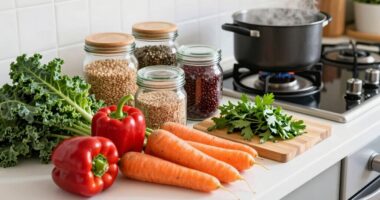


To build a plant-based routine around what’s in season, focus on local markets and seasonal produce to enjoy peak flavor and nutrition. Plan meals ahead to reduce waste and incorporate fresh, minimally processed ingredients. Experiment with herbs, spices, and simple cooking techniques to highlight natural flavors. As you explore seasonal options, you’ll find inspiration to keep meals varied and exciting while supporting sustainability. Keep exploring for more tips on creating a flavorful, eco-friendly routine.

Get health and wellness essentials delivered free with Prime
- Fast, free delivery on millions of items
- Prime Video, Amazon Music and more included
- Member-only deals all year
Key Takeaways
- Prioritize seasonal produce to maximize flavor, nutrients, and freshness in your plant-based meals.
- Plan weekly meals around local markets’ seasonal offerings to ensure ingredient availability.
- Incorporate a variety of seasonal fruits and vegetables for diverse nutrients and creative meal options.
- Use simple cooking techniques like roasting or steaming to enhance natural flavors of seasonal ingredients.
- Support sustainability by sourcing locally and reducing food waste through meal prep and ingredient planning.
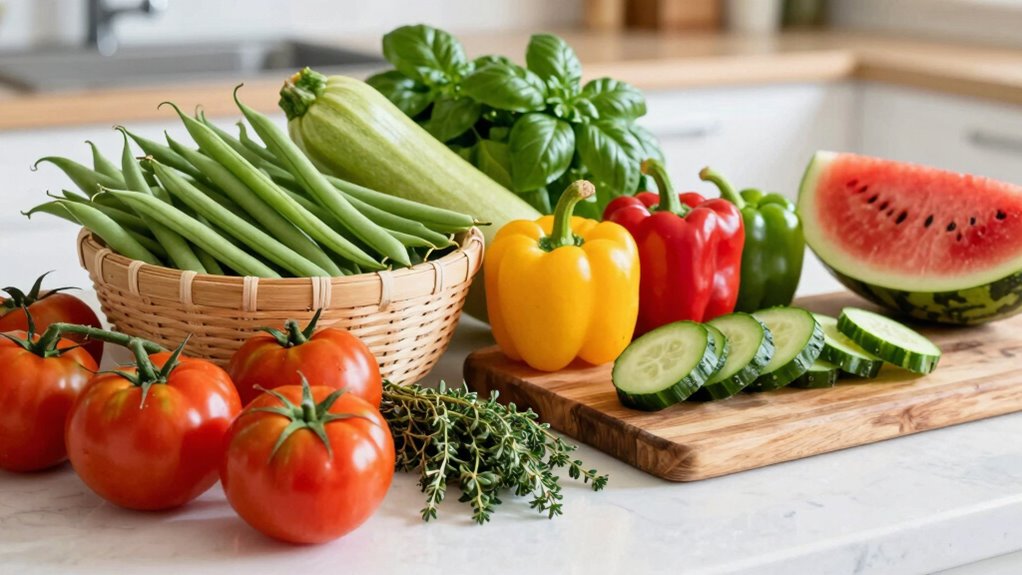
Creating a plant-based routine that aligns with seasonal foods is a simple way to boost your health and enjoy fresher flavors year-round. When you focus on seasonal produce, you naturally incorporate a variety of nutrients that support your well-being. To make this routine sustainable, you should plan your meals ahead of time, which is where meal prepping comes into play. By dedicating time to prepare ingredients in advance, you minimize last-minute decisions, reduce waste, and ensure you always have healthy, plant-based options ready to go. Meal prepping also allows you to experiment with different flavors and textures, making your meals more exciting and satisfying.
Focusing on what’s in season makes it easier to incorporate a wide range of fruits, vegetables, and grains into your diet. This variety not only keeps your meals interesting but also provides the best flavor and nutritional profile. When you shop for seasonal produce, you typically get items at their peak ripeness, which means they’re more flavorful and nutrient-dense. Use this to your advantage by preparing simple dishes that highlight the natural flavor of each ingredient. For example, roasted root vegetables in the fall or fresh berry salads in summer are perfect ways to maximize flavor enhancement without relying on heavy sauces or processed ingredients. Additionally, understanding seasonal availability can help you plan your meals around the freshest, most nutrient-rich options.
Building your routine around seasonal foods also encourages you to be creative with flavor combinations. Use herbs, spices, and citrus to elevate your dishes, making them more vibrant and appealing. For instance, adding fresh basil and lemon juice to a summer vegetable salad can transform it into a revitalizing, flavorful meal. When you plan your weekly menu, think about how different ingredients complement each other, and incorporate techniques like roasting, steaming, or grilling to bring out their best qualities. These methods help you enhance natural flavors without adding excess salt or sugar, making your meals healthier and more satisfying. Additionally, paying attention to color accuracy in your ingredients can help you select produce that looks as fresh and appealing as it tastes. Exploring local markets can further support your seasonal eating habits and provide opportunities to source high-quality ingredients directly from growers. Moreover, incorporating knowledge of electric bikes and their capabilities can inspire sustainable transportation options for sourcing fresh, seasonal ingredients from nearby markets.
As an affiliate, we earn on qualifying purchases.
Frequently Asked Questions
How Can I Incorporate Seasonal Foods Into Quick Weeknight Meals?
You can incorporate seasonal foods into quick weeknight meals by doing some meal prep ahead of time, like roasting seasonal vegetables or prepping grains and legumes. Use flavor enhancements such as fresh herbs, citrus, or spices to boost taste. Combining prepped ingredients with quick-cooking methods like sautéing or stir-frying saves time, ensuring you enjoy nutritious, flavorful meals that highlight what’s in season without spending hours in the kitchen.
Are There Specific Nutrients to Watch for in Seasonal Plant-Based Diets?
Think of your diet as a vibrant garden—each season offers unique nutrients. In seasonal plant-based diets, watch for nutrient deficiencies like vitamin B12 or iron, which can be overlooked. Incorporate seasonal antioxidants—like berries in summer or pumpkins in fall—to boost immunity. Staying mindful guarantees you get a well-rounded intake, nourishing your body with the best nature has to offer while avoiding gaps in your nutrient profile.
How Do I Store Seasonal Produce to Maximize Freshness?
To maximize freshness, store seasonal produce properly with these storage tips. Keep leafy greens in a damp paper towel inside a breathable bag to preserve crispness. Store berries in a shallow container lined with paper towels, avoiding overcrowding. Root vegetables do well in a cool, dark place or the fridge’s crisper drawer. Regularly check for spoilage, and wash produce just before use to maintain freshness and flavor longer.
Can Seasonal Foods Help With Weight Management?
Seasonal foods can definitely aid your weight management, despite some seasonal food myths suggesting otherwise. They’re naturally lower in calories, rich in fiber, and packed with nutrients, helping you feel full longer. Many plant-based weight myths claim you need special diets to lose weight, but eating in-season produce offers a sustainable, delicious way to stay satisfied and energized. Incorporate a variety of seasonal foods into your meals to support your goals effectively.
What Are Some Budget-Friendly Seasonal Plant-Based Meal Ideas?
Think of seasonal plant-based meals as a treasure hunt—you find hidden gems without spending a fortune. To beat seasonal food myths, stick to local markets and buy in bulk. Use plant-based shopping tips like choosing versatile ingredients such as root vegetables and greens. Prepare hearty stews, roasted veggie bowls, or simple salads that stretch your dollars and nourish your body, all while supporting local farms and reducing waste.
As an affiliate, we earn on qualifying purchases.
Conclusion
By embracing seasonal foods, you weave a tapestry of health and sustainability into your daily routine. As nature’s rhythm guides your choices, you not only nourish your body but also honor the world around you. Remember, eating with the seasons isn’t just about freshness—it’s about harmony, connection, and respecting the endless cycle of life. So, let your plate be a reflection of nature’s wisdom, and watch your well-being flourish like a garden in full bloom.
As an affiliate, we earn on qualifying purchases.
meal prep containers for vegetables
As an affiliate, we earn on qualifying purchases.
As an affiliate, we earn on qualifying purchases.
Fall Picks
fall essentials
As an affiliate, we earn on qualifying purchases.