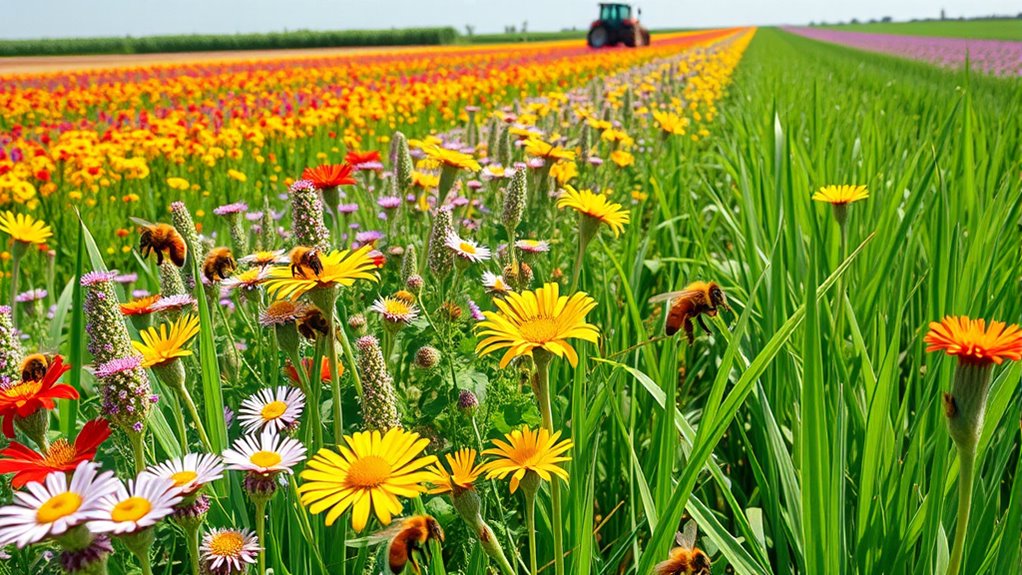

Implementing native plant-based pollinator strips is a smart way to support bee populations and boost sustainable farming. These strips provide essential nectar and pollen sources, reducing reliance on pesticides and creating safe habitats for bees. By introducing native plants along field margins or within your farm, you help restore natural habitats and promote biodiversity. If you want to discover more about how these innovative strips can make a real difference, keep exploring the options available for your farm.
Key Takeaways
- Plant-based agriculture supports bee health by providing native flowering plants that serve as alternative foraging sources.
- Pollinator strips act as habitat refuges, offering nectar and pollen throughout the growing season.
- Incorporating native flowering plants in strips reduces pesticide exposure and encourages habitat restoration.
- Strategically placed strips enhance biodiversity, supporting diverse beneficial insects and natural ecosystems.
- Implementing pollinator strips promotes sustainable farming, improves crop pollination, and helps reverse bee declines.
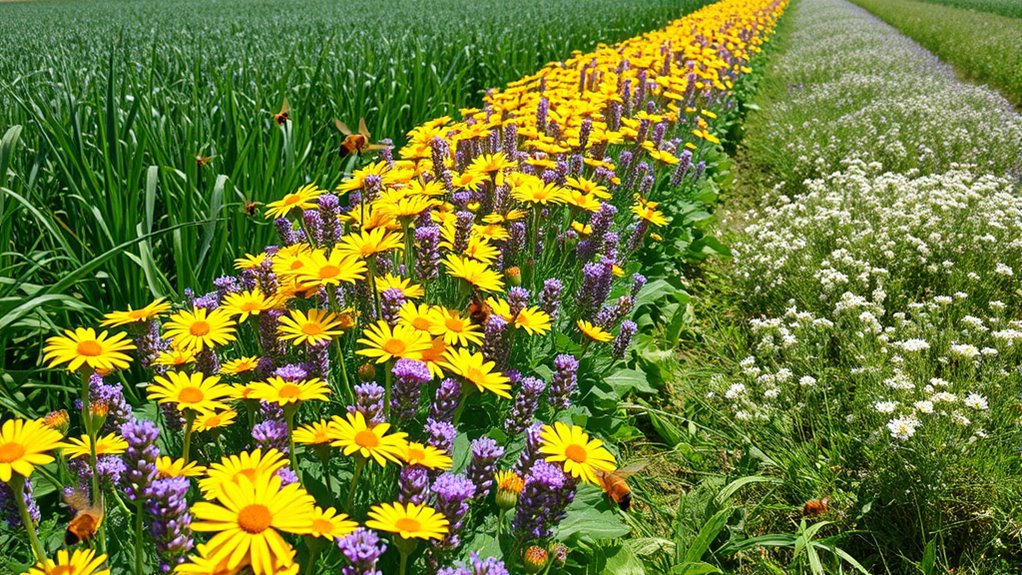
As bee populations continue to decline, shifting toward plant-based agriculture offers a promising solution to protect these essential pollinators. One effective approach involves creating pollinator strips filled with native flowering plants that serve dual purposes: reducing the need for pesticides and restoring vital habitats. By integrating these strips into your farming practices, you directly support bee health and foster a more sustainable ecosystem. Pesticide reduction is crucial because many chemicals used in conventional farming harm bees, impair their ability to forage and reproduce, and can even cause colony collapse. Plant-based agriculture naturally minimizes this threat, as native flowering plants attract bees away from chemically treated crops and provide safe foraging options. These pollinator strips act as refuges, offering abundant nectar and pollen sources that help sustain bee populations throughout the season.
Habitat restoration is another key benefit of planting pollinator strips. Natural bee habitats are disappearing due to urbanization, monoculture farming, and land conversion. By restoring these habitats with diverse, native plants, you create safe havens where bees can thrive, reproduce, and build resilient colonies. These strips also contribute to biodiversity, supporting not only bees but other beneficial insects and wildlife. You might notice an increase in pollination efficiency across your entire farm—plants flourish, and yields improve as bees become more abundant and healthier. Furthermore, these strips can be tailored to local ecosystems, ensuring they are well-suited to the specific needs of native bee species and other pollinators in your region. Incorporating spatial diversity into your planting design enhances the resilience of pollinator habitats and encourages a broader range of beneficial insects.
Restoring native habitats with diverse plants boosts bee health and farm productivity.
Implementing plant-based agriculture with integrated pollinator strips doesn’t require a complete overhaul of your farming system. You can designate small areas along field margins, intersperse strips within crop fields, or establish dedicated zones for native plants. This strategic placement maximizes their impact, encouraging bees to forage locally and reducing their exposure to pesticides used elsewhere on the farm. Additionally, maintaining these strips through seasonal planting and minimal disturbance ensures they remain productive and attractive to pollinators year after year.
Ultimately, by adopting plant-based agriculture focused on habitat restoration and pesticide reduction, you take a proactive step toward reversing bee decline. These pollinator strips serve as living buffers that support bee health, promote biodiversity, and foster a more resilient agricultural system. Through thoughtful implementation, your farm can become a sanctuary for pollinators, helping secure their future while enhancing your crop productivity naturally.
Frequently Asked Questions
How Do Pollinator Strips Affect Crop Yields Long-Term?
Pollinator strips can positively impact your crop yields long-term by enhancing pest control benefits and improving soil health. As pollinators thrive, they help reduce pest populations naturally, decreasing the need for chemicals. Additionally, these strips boost soil health by increasing biodiversity and nutrient cycling. Over time, this leads to healthier plants, better resilience against pests and diseases, and ultimately, increased crop productivity without compromising environmental sustainability.
What Native Plants Are Most Effective for Pollinator Strips?
When choosing native plants for pollinator strips, consider selecting species that attract a wide variety of pollinators, enhancing pollinator strip diversity. You should focus on native plant selection that provides nectar and pollen throughout the growing season. For effectiveness, include plants like milkweed, goldenrod, and bee balm. These plants support native bees and butterflies, boosting pollination and benefiting your crops long-term. Prioritize native plants for a resilient, sustainable pollinator habitat.
Can Urban Farms Implement Pollinator Strips Successfully?
Urban farms can successfully implement pollinator strips by integrating native plants that attract bees and other pollinators. You should focus on selecting hardy, native species suited to your local climate, which also encourages community engagement. By involving neighbors and local groups, you foster awareness and support for urban farming initiatives. With proper planning and maintenance, pollinator strips enhance biodiversity, pollination, and sustainability on your urban farm, benefiting both the environment and your community.
How Do Pollinator Strips Impact Local Biodiversity?
Pollinator strips substantially boost local biodiversity by supporting native plant selection, which attracts diverse pollinators and other wildlife. When you implement these strips, you enhance ecosystem resilience, creating habitats that sustain pollinators, insects, and birds. This diversity strengthens ecological balance and resilience. By choosing native plants, you guarantee the strips are well-adapted, fostering a vibrant, sustainable environment that benefits both your community and the broader ecosystem.
What Funding Sources Support Planting Pollinator Strips?
Funding for planting pollinator strips acts like a lifeline, keeping these essential habitats thriving. You can access support through government grants, which are often available for agricultural conservation projects, or attract private donations from environmentally conscious organizations and individuals. These resources help cover costs and encourage widespread adoption of pollinator-friendly practices. By tapping into these funding sources, you actively contribute to protecting bees and enhancing biodiversity in your community.
Conclusion
So, here’s the irony: by turning to plant-based agriculture and creating pollinator strips, you’re actually saving bees—those tiny, essential workers—by giving them more flowers to visit. Instead of battling nature, you’re working with it. It’s almost funny how something as simple as planting a strip of wildflowers can make such a big difference. Maybe, just maybe, the key to saving our bees is to let nature do what it does best—while we get out of the way.