

When choosing rainforest-safe palm oil, look for reputable certification labels like RSPO (Roundtable on Sustainable Palm Oil) or Palm Oil Innovation Group (POIG). These credentials guarantee your product was produced sustainably, protecting ecosystems and respecting social standards. Certification guarantees transparency, traceability, and adherence to strict environmental practices. By prioritizing these labels, you help promote responsible farming and conservation efforts. Stay with us to discover more about trusted standards and how they make a difference.
Key Takeaways
- Certification labels ensure palm oil meets strict environmental and social standards, promoting sustainable and rainforest-safe practices.
- Trusted certifications like RSPO, Rainforest Alliance, and Fair Trade verify adherence to conservation and fair labor criteria.
- Certification processes include regular audits and traceability, preventing deforestation and habitat destruction.
- Verified labels help consumers make ethical choices supporting responsible sourcing and ecosystem preservation.
- Recognized standards reinforce supply chain transparency and accountability in rainforest-safe palm oil production.
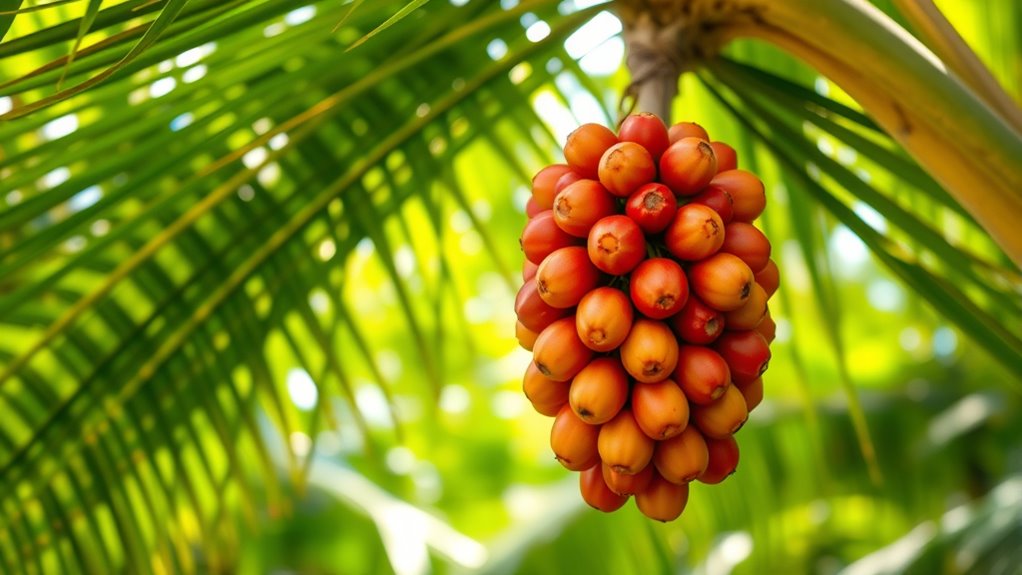
Rainforest-safe palm oil offers a sustainable alternative to traditional palm oil production that often harms delicate ecosystems. When you choose products made with rainforest-safe palm oil, you’re supporting practices that prioritize environmental health and social responsibility. This type of palm oil is produced through sustainable farming methods that minimize deforestation, protect wildlife habitats, and reduce chemical use. Unlike conventional palm oil, which can be linked to illegal clearing and habitat destruction, rainforest-safe options are certified to meet strict standards that promote ecological preservation. These standards ensure that the entire supply chain operates transparently, so you can trust that your purchase contributes to positive change rather than environmental damage.
Rainforest-safe palm oil supports sustainable farming, protects ecosystems, and promotes transparent supply chains for ethical products.
Sustainable farming is at the core of rainforest-safe palm oil certification. Farmers who engage in these practices avoid clearing forests and instead cultivate palm oil in ways that preserve soil health and biodiversity. They often implement agroforestry techniques, integrate wildlife corridors, and reduce reliance on harmful chemicals. By choosing products with rainforest-safe labels, you’re endorsing these sustainable methods, encouraging more farmers to adopt environmentally friendly practices. This shift not only protects ecosystems but also fosters resilient local communities that depend on the land for their livelihoods.
Supply chain transparency is another critical aspect that sets rainforest-safe palm oil apart. Certification labels ensure that every step — from plantation to processing to retail — adheres to rigorous standards. This transparency means you can trace the origins of the palm oil in your products, giving you peace of mind that you’re not unknowingly supporting deforestation or exploitative labor practices. Certification programs often require detailed documentation and regular audits, making it harder for unsustainable practices to infiltrate the supply chain. When you see a rainforest-safe label, you’re essentially endorsing a product whose entire journey has been scrutinized for environmental and social responsibility.
Choosing rainforest-safe palm oil is a straightforward way to make a positive impact. It aligns your purchasing power with sustainable farming practices and demands greater supply chain transparency from producers. This not only helps conserve crucial ecosystems but also promotes fair labor and community development. As consumers become more aware and discerning, more brands are adopting these certifications to meet demand for ethically sourced products. Your support for rainforest-safe palm oil sends a clear message to producers and retailers: sustainability and transparency matter. By making informed choices, you contribute to a future where palm oil is produced responsibly, protecting rainforests and supporting local communities rather than destroying them.
Additionally, adhering to proper certification standards helps combat the environmental damage associated with illegal clearing and habitat destruction often linked to conventional palm oil production.
Top picks for "rainforest safe palm"
Open Amazon search results for this keyword.
As an affiliate, we earn on qualifying purchases.
Frequently Asked Questions
How Do Certification Labels Impact Local Communities?
Certification labels directly impact local communities by promoting sustainable practices that protect indigenous livelihoods and support community development. When you choose products with trusted labels, you help guarantee that palm oil production doesn’t harm the environment or displace communities. This encourages responsible farming, fair wages, and local empowerment, fostering a positive cycle of growth. By supporting certified products, you contribute to preserving cultural heritage and strengthening community resilience.
Are Rainforest-Safe Palm Oils More Expensive?
You might notice that rainforest-safe palm oils often cost more than conventional options. The cost comparison reflects the sustainable practices and certifications involved, which can increase production expenses. Market availability can be limited initially, making these products less accessible and sometimes pricier. However, supporting sustainable palm oil helps protect ecosystems and communities, making the higher price a worthwhile investment for environmental and social responsibility.
How Can Consumers Verify Certification Authenticity?
You can verify certification authenticity by checking for trusted labels like RSPO, Fairtrade, or Rainforest Alliance. Look for supply chain transparency details on packaging or official websites, and confirm the certification is current. Enhancing your consumer awareness helps you make informed choices, so always research the certifying organization. This way, you support sustainable practices and reduce the risk of falling for false claims.
What Efforts Are Companies Making Beyond Certification?
You can look for companies that go beyond certification by actively supporting sustainable farming practices and demonstrating corporate responsibility. Many brands invest in traceability initiatives, partner with local communities, and implement transparent supply chains. These efforts show their commitment to ethical sourcing. By choosing brands that prioritize sustainable farming and openly share their sustainability strategies, you’re supporting companies dedicated to reducing environmental impact and promoting responsible palm oil production.
Can Rainforest-Safe Palm Oil Be Used in All Products?
Think of rainforest-safe palm oil as a key to a greener future. You can use it in many products, but not all, because sustainable farming practices and minimizing environmental impact are essential. Companies are working to source this oil responsibly, yet some products still rely on less sustainable options. By choosing products with certified rainforest-safe palm oil, you support environmental health and encourage broader adoption of sustainable practices.
Conclusion
By choosing products with trusted rainforest-safe palm oil certifications, you’re helping protect crucial ecosystems and support sustainable practices. Isn’t it worth ensuring that your everyday choices don’t contribute to deforestation and habitat loss? When you look for these labels, you’re making a powerful statement—one that promotes responsible production and a healthier planet. So next time you shop, ask yourself: are you ready to make a positive impact with just a simple, informed choice?