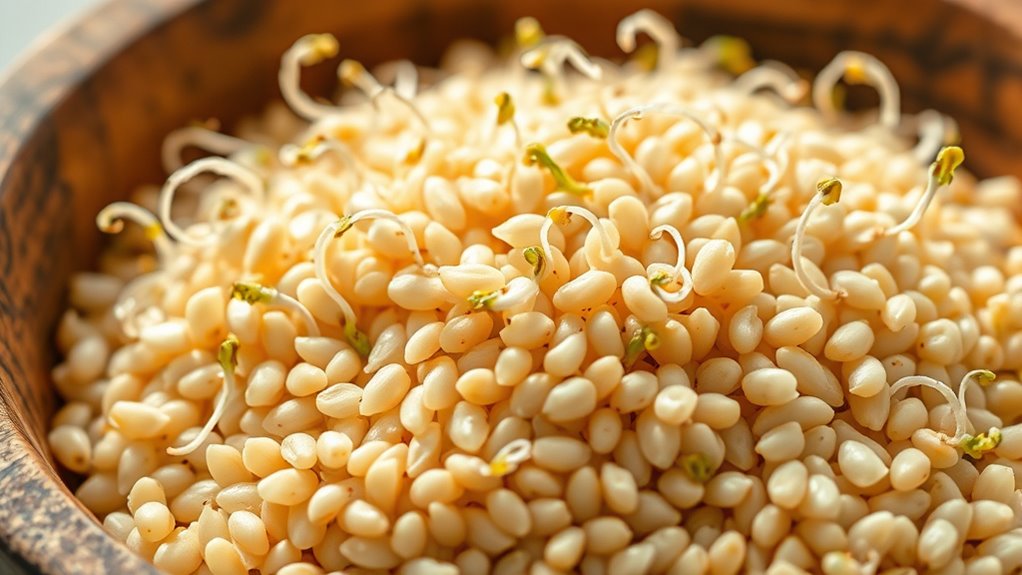

Sprouting quinoa for 48 hours activates enzymes that break down complex proteins, increasing their digestibility by up to 30%. The process reduces antinutrients like phytic acid, making minerals more accessible and improving overall nutrient absorption. It also transforms starches into simpler sugars, easing digestion. This results in softer, milder-tasting quinoa that’s easier on your stomach. Keep exploring, and you’ll discover how this simple step unfastens even more health benefits.
Key Takeaways
- Sprouting quinoa for 48 hours activates enzymes that break down complex proteins, enhancing digestibility by up to 30%.
- Germination reduces antinutrients like phytic acid, improving mineral absorption and overall nutrient utilization.
- The process converts some starches into simpler sugars, making proteins easier to digest and reducing gastrointestinal discomfort.
- Sprouted quinoa’s milder flavor and softer texture facilitate better digestion and absorption of amino acids.
- Enhanced enzyme activity during sprouting boosts protein bioavailability, supporting improved nutritional intake.
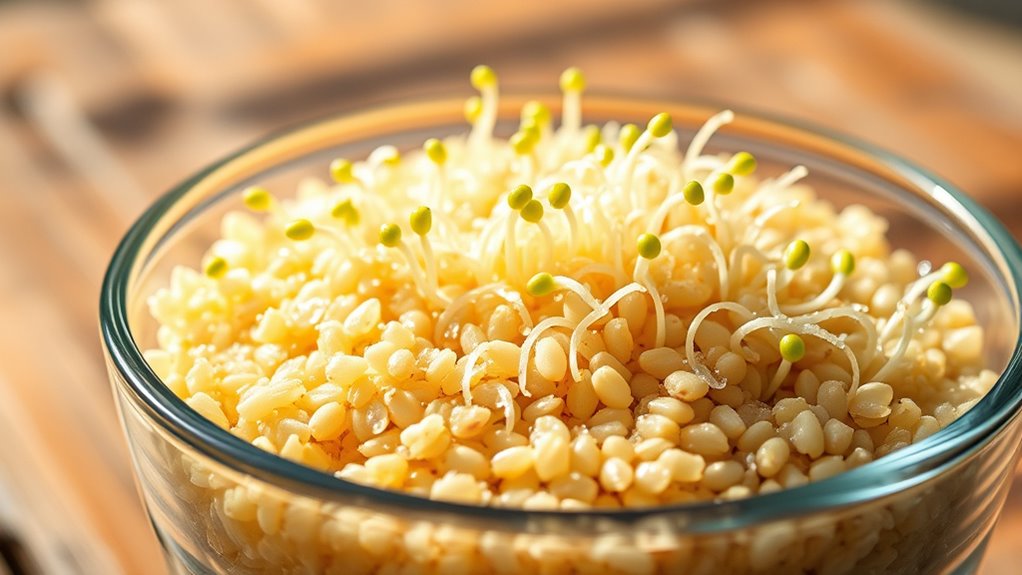
Sprouting quinoa for 48 hours releases its full nutritional potential and enhances its digestibility. When you practice quinoa germination through sprouting, you’re revealing more than just flavor — you’re making its nutrients more accessible and easier to absorb. The sprouting benefits are well-documented: they include increased levels of vitamins, minerals, and antioxidants, along with a reduction in antinutrients like phytic acid that can interfere with mineral absorption. This process transforms ordinary quinoa into a powerhouse of nutrition, perfect for boosting your meals.
During the 48-hour sprouting period, you initiate a natural process where the dormant quinoa seeds begin to activate enzymes and break down complex compounds. You might notice tiny sprouts emerging from the seeds, signaling that the germination process is underway. As you rinse and maintain proper moisture, you’re encouraging the seeds to sprout fully, which amplifies their nutritional profile. This simple step can considerably improve protein digestibility by reducing inhibitors that make plant proteins harder to break down. In fact, sprouted quinoa can boost protein digestibility by up to 30%, meaning your body can absorb and utilize more amino acids from each serving.
The benefits of quinoa germination extend beyond just increased nutrients. Sprouted quinoa is easier on your digestion, reducing bloating or discomfort often associated with raw grains. The sprouting process converts some of the starches into simpler sugars, giving your body a gentler energy source. Plus, the process enhances the bioavailability of essential minerals like iron, zinc, and magnesium, which are vital for your overall health.
You’ll find that sprouted quinoa has a milder, nuttier flavor and a softer texture, making it more versatile for salads, bowls, or even cooked dishes. The sprouting benefits also include a longer shelf life, as the enzymatic activity during germination can slow spoilage. To get the most out of your sprouting, rinse the seeds thoroughly every few hours and keep them in a warm, dark place. After 48 hours, you’ll have sprouted quinoa ready to incorporate into your meals, maximizing both taste and health benefits.
Frequently Asked Questions
How Does Sprouting Affect Quinoa’s Flavor Profile?
When you sprout quinoa, you’ll notice flavor enhancement as the process brings out nuttier, earthier notes. It also introduces a subtle sourness development, adding complexity to its taste. Sprouting breaks down certain compounds, making the flavor profile richer and more nuanced. This transformation makes quinoa more enjoyable and versatile in various dishes, giving you a deeper, more vibrant flavor experience with every bite.
Is 48-Hour Sprouted Quinoa Suitable for All Dietary Restrictions?
Oh, sure, sprouted quinoa is everyone’s dream, right? Well, not quite. If you have gluten intolerance, you’re safe—quinoa is naturally gluten-free. But if you’ve got nut allergies, you’ll need to check for cross-contamination, as processing sometimes involves nuts. So, while 48-hour sprouted quinoa boosts protein digestibility, always verify labels to confirm it suits your dietary needs—because even superfoods need careful scrutiny.
Can Sprouted Quinoa Be Stored Longer Than Unsprouted Varieties?
Sprouted quinoa generally has a shorter storage longevity than unsprouted varieties because the sprouting process increases moisture content, which can lead to quicker spoilage. However, the sprouting benefits, like improved digestibility and nutrient absorption, make it worthwhile to consume sooner. To maximize freshness, store sprouted quinoa in an airtight container in the fridge and consume within a few days. Unsprouted quinoa typically keeps longer, up to a year.
Does Sprouting Alter Quinoa’s Mineral Content Significantly?
Imagine discovering the secret behind sprouted quinoa’s power. You wonder if sprouting substantially alters its mineral content. The truth is, sprouting causes some nutrient variation, but mineral stability remains largely intact. This means you still get essential minerals, just with slight changes. So, while sprouting enhances digestibility and nutrient bioavailability, it doesn’t drastically change the mineral profile, offering you a nutritious boost without losing mineral integrity.
Are There Any Risks or Side Effects From Sprouting Quinoa for Extended Periods?
You might wonder about risks from extended sprouting, but generally, longer sprouting duration doesn’t cause significant nutrient loss or safety issues if you maintain good hygiene. Over-sprouting can increase the risk of mold or bacterial growth, so keep an eye on the quinoa’s smell and appearance. Proper rinsing and controlling sprouting time help guarantee you enjoy the benefits without compromising safety or nutritional quality.
Conclusion
Now that you’ve sprouted your quinoa for 48 hours, you’ve unleashed its full potential, making it as easy to digest as a hot knife through butter. This simple step boosts protein digestibility by 30%, giving your body more nutrients to fuel your day. Think of sprouting as turning a rough stone into a polished gem—small changes can make a big difference. So, enjoy your protein-packed, sprouted quinoa and feel the benefits in every bite!