
Stackable dehydrators can work well in small kitchens if you avoid blocking airflow between the trays. Overpacking or stacking foods unevenly can obstruct the air circulation needed for efficient drying. To keep things running smoothly, leave space between trays and follow manufacturer instructions. Regularly check and rotate trays to prevent damp spots and bacterial growth. Want to discover more tips to maximize your dehydrator’s space and effectiveness? Keep going to learn everything you need to know.

Get health and wellness essentials delivered free with Prime
- Fast, free delivery on millions of items
- Prime Video, Amazon Music and more included
- Member-only deals all year
Key Takeaways
- Ensure proper stacking with adequate space between trays to maintain airflow and prevent uneven drying.
- Follow manufacturer instructions for stacking to avoid obstructing air circulation.
- Use adjustable trays or spacers for optimal airflow and prevent overpacking.
- Regularly check and rotate trays to maintain even dehydration and prevent damp spots.
- Select dehydrators with features like automatic shut-off for safer, more efficient operation in small kitchens.
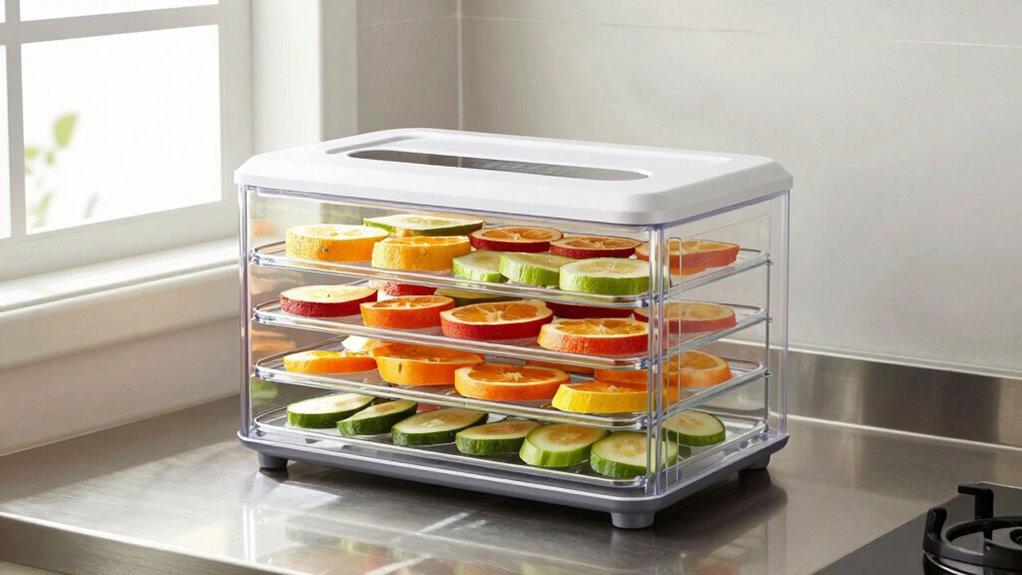
If you’re short on space but still want to enjoy homemade dried snacks, stackable dehydrators are an excellent solution for small kitchens. These versatile appliances maximize limited counter or shelf space by allowing you to layer multiple trays vertically. However, to make the most of a stackable dehydrator and guarantee safe, efficient drying, you need to avoid one common problem: inadequate airflow between trays. When airflow is restricted, your food may not dry evenly, which can compromise food safety and increase the risk of spoilage or bacteria growth. Ensuring proper air circulation is vital to maintain the high standards of food safety you expect from your homemade snacks. Proper airflow also plays a pivotal role in energy efficiency, helping you save on electricity costs. When air moves freely around each tray, the dehydrator works more efficiently, using less electricity to achieve the same drying results. If trays are packed too tightly or if you stack them improperly, the dehydrator has to work harder, consuming more energy and prolonging drying times. This, in turn, can lead to higher energy consumption, which adds to your utility bills. To avoid this, you should leave enough space between trays and follow the manufacturer’s instructions for stacking. Some dehydrators come with adjustable trays or removable spacers, which help maintain ideal airflow. Properly spaced trays also allow for better air circulation, which enhances drying performance. Regularly checking and rotating trays during the drying process also helps maintain consistent airflow, ensuring all your snacks are safe and delicious. Additionally, choosing the right type of dehydrator with features like automatic shut-off can further improve safety and efficiency. Being mindful of the dehydration process and your food placement ensures the best results and prevents unnecessary waste. Overloading trays or stacking foods unevenly can obstruct airflow at critical points, leading to uneven drying. When foods are too close or overlapping, moisture may not escape properly, creating damp spots that could become breeding grounds for bacteria. To prevent this, spread your sliced fruits, vegetables, or herbs in a single layer and avoid stacking too tightly. Regularly checking and rotating trays during the drying process also helps maintain consistent airflow, ensuring all your snacks are safe and delicious.
stackable food dehydrator with adjustable trays
As an affiliate, we earn on qualifying purchases.
As an affiliate, we earn on qualifying purchases.
Frequently Asked Questions
How Do I Prevent Stacking Dehydration From Uneven Drying?
To prevent uneven drying when stacking your dehydrator, make certain to rotate the trays regularly during the process. Keep moisture control in mind by spacing out fruit leather and other items evenly across each tray. Avoid overcrowding, which can trap moisture and cause uneven drying. Monitoring the temperature and airflow ensures consistent results. With these steps, you’ll achieve perfectly dried fruit leather and other snacks, even in a small kitchen.
What Is the Ideal Countertop Space for a Stackable Dehydrator?
The ideal countertop space for a stackable dehydrator is about 12 to 18 inches wide, allowing enough room for proper dehydration and airflow. Use countertop tips like placing it in a well-ventilated, stable spot, away from heat sources, to optimize dehydration. Proper dehydrator placement guarantees even drying and prevents overheating. Keep it accessible for easy loading and removal, making your dehydrating process efficient and hassle-free.
Can Stackable Dehydrators Be Stored Away Easily?
Yes, stackable dehydrators can be stored away easily with effective storage solutions. To optimize space, you can nest the trays or disassemble the unit when not in use. Using vertical storage options or designated cabinet space helps maintain space optimization in small kitchens. Keep it accessible yet out of the way, so you can quickly set it up when needed without cluttering your countertops.
Are There Noise Concerns With Multiple Trays?
Think of a stackable dehydrator as a gentle whisper rather than a roaring lion. Noise levels are generally low, but multiple trays can amplify sound slightly. To keep noise concerns minimal, look for models with sound insulation features. While some noise is inevitable, good insulation helps contain it, ensuring your small kitchen remains peaceful. So, choose wisely, and you’ll hardly notice the dehydrator’s hum amid your busy space.
How Do I Clean Between Dehydration Cycles?
To clean between dehydration cycles, you should first unplug the dehydrator and let it cool down. Remove trays and wipe them with warm, soapy water, guaranteeing food residue is gone. Use a damp cloth to clean the interior and guarantee no mold or residue remains. Follow food safety and dehydration tips by keeping your dehydrator clean to prevent bacteria growth and maintain peak performance. Regular cleaning extends your dehydrator’s lifespan.
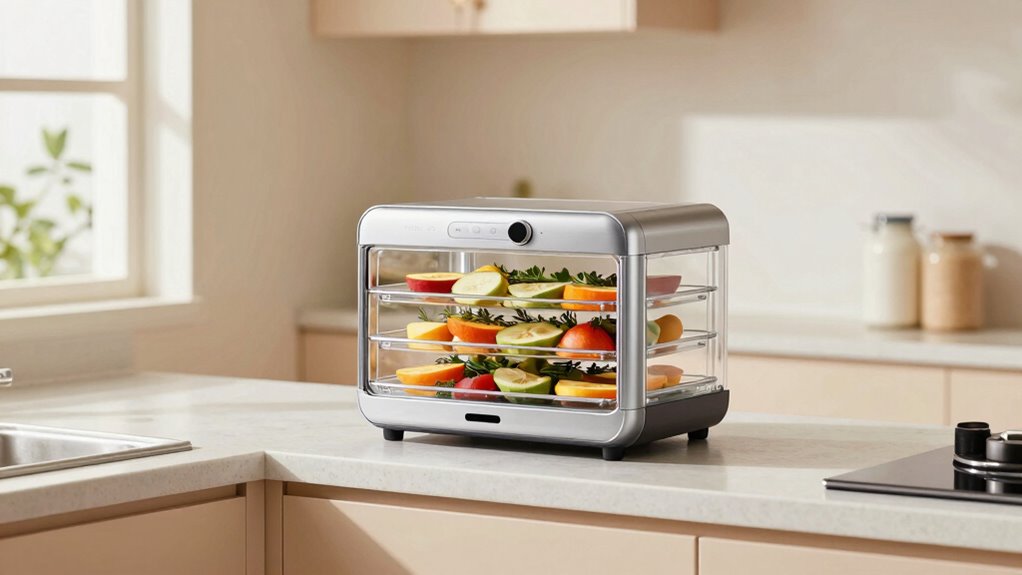
small countertop dehydrator for fruits and herbs
As an affiliate, we earn on qualifying purchases.
As an affiliate, we earn on qualifying purchases.
Conclusion
To make stackable dehydrators work in your small kitchen, avoid overloading them, which can hinder airflow and drying efficiency. Some believe that stacking reduces dehydration time, but in reality, proper spacing is key. By understanding airflow dynamics, you’ll guarantee your dehydrator functions efficiently. So, while space-saving is great, don’t compromise on ventilation—maintaining a balance ensures perfect results without sacrificing your limited kitchen space.
automatic shut-off food dehydrator
As an affiliate, we earn on qualifying purchases.
As an affiliate, we earn on qualifying purchases.
compact vertical dehydrator for small kitchens
As an affiliate, we earn on qualifying purchases.
As an affiliate, we earn on qualifying purchases.
Halloween Picks
halloween
As an affiliate, we earn on qualifying purchases.