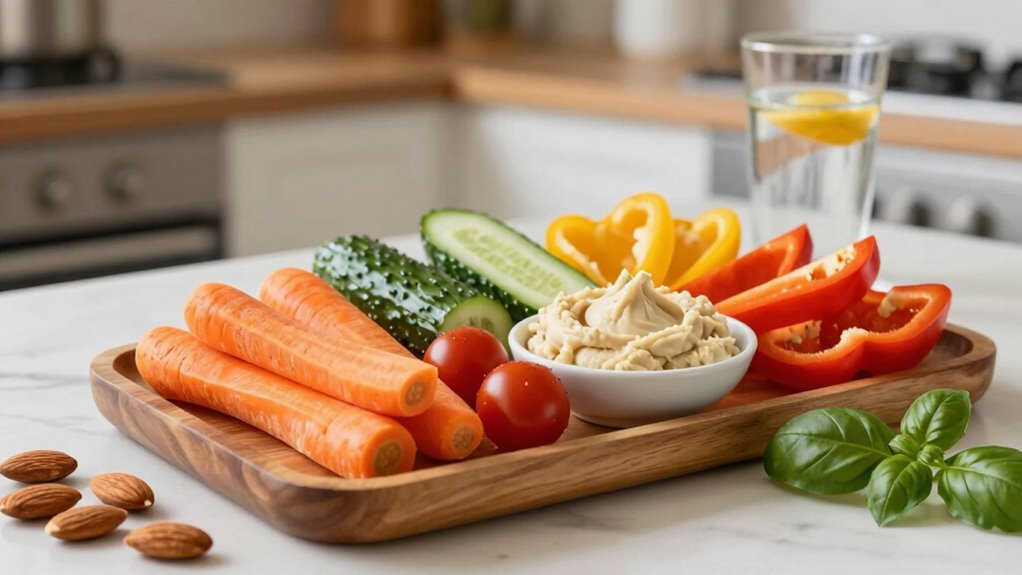

To stop mindless snacking on a plant-based diet, focus on planning ahead with nutritious options like fruit, veggie sticks, or nuts. Practice mindful eating by slowing down, savoring each bite, and paying attention to fullness signals. Keep healthy snacks accessible and visually appealing while removing tempting, less nutritious choices from sight. Establish routine snack times and stay hydrated to differentiate hunger from thirst. Continue exploring these habits to make mindful choices your new norm.

Get health and wellness essentials delivered free with Prime
- Fast, free delivery on millions of items
- Prime Video, Amazon Music and more included
- Member-only deals all year
Key Takeaways
- Prepare and portion plant-based snacks in advance to promote mindful, intentional eating.
- Incorporate fiber-rich fruits, vegetables, and nuts to increase satiety and reduce impulsive snacking.
- Practice mindful eating by savoring textures and flavors, paying attention to hunger cues.
- Keep tempting, less healthy plant-based snacks out of sight and make nutritious options more visually appealing.
- Establish regular snack times and hydrate beforehand to differentiate true hunger from boredom or emotional triggers.
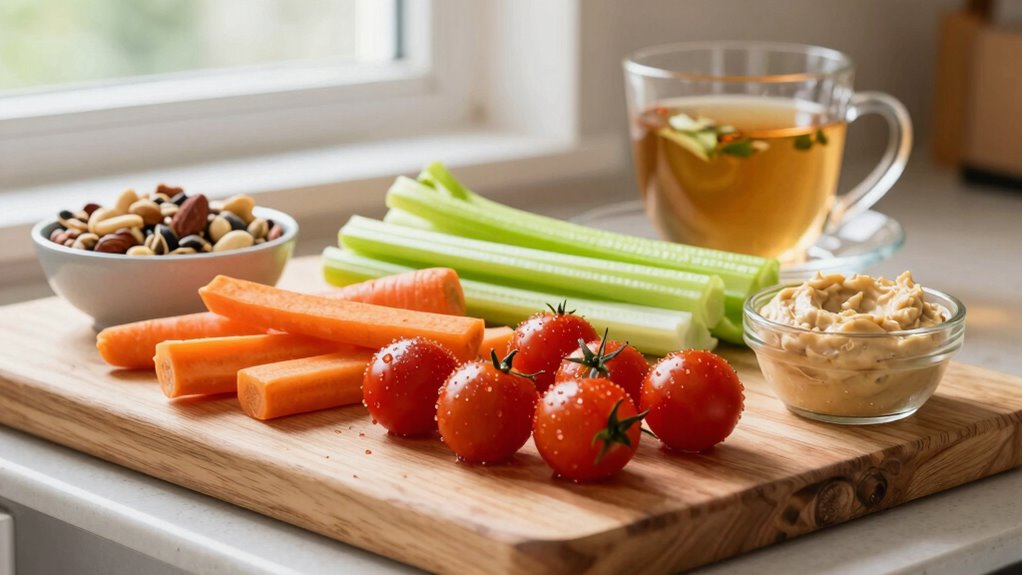
Snacking mindlessly can sabotage your efforts on a plant-based diet, but with a few mindful strategies, you can stay on track and enjoy your meals more intentionally. The key is to replace impulsive, unhealthy snacks with healthier options and to practice mindful eating techniques. Instead of reaching for chips or candy when you’re hungry between meals, consider healthy snack swaps that nourish your body and satisfy your taste buds. Think fresh fruit, crunchy veggie sticks, or a handful of nuts. These options provide fiber, healthy fats, and natural sweetness, making them satisfying without the crash that comes from processed snacks.
Choose fresh fruit, veggie sticks, or nuts for satisfying, nourishing snacks on a plant-based diet.
To truly curb mindless snacking, you need to become more aware of your eating habits. Mindful eating techniques are your best tools for this. Start by paying attention to your hunger cues—ask yourself if you’re truly hungry or just bored, stressed, or seeking comfort. When you do eat, slow down and savor each bite. Chew thoroughly, notice the textures and flavors, and stay present during your snack time. This practice not only enhances your enjoyment but also helps you recognize when you’re full, preventing overeating.
Another effective approach is to plan your snacks ahead of time. When you prepare healthy snacks in advance, you’re less likely to resort to convenience foods that aren’t aligned with your diet goals. Keep your stash of nutritious options accessible, and store less healthy temptations out of sight. This makes it easier to make conscious choices instead of grabbing whatever is nearby without thinking. Incorporating mindful eating techniques into your routine can further enhance your awareness and control over snacking habits.
Creating a routine around snack times can also make a big difference. Set specific times for your snacks so your body learns when to expect nourishment, reducing impulsive snacking throughout the day. Drinking water before reaching for a snack can help determine if you’re truly hungry or just dehydrated. Sometimes, thirst can be mistaken for hunger, leading to unnecessary snacking. Additionally, understanding the impact of contrast ratio on visual appeal can help you create an inviting environment that discourages mindless snacking by making your snack area more appealing and satisfying.
As an affiliate, we earn on qualifying purchases.
Frequently Asked Questions
Can Herbal Teas Help Curb Mindless Snacking?
Herbal teas can definitely help curb mindless snacking. Their benefits include natural hydration and a calming effect, which can reduce cravings. When you practice mindful sipping, you become more aware of your body’s hunger signals instead of reaching for snacks automatically. By replacing munching with herbal tea, you create a soothing ritual that helps you enjoy a moment of calm and resist unnecessary snacking, supporting your plant-based diet goals.
How Does Stress Influence Plant-Based Snacking Habits?
Stress triggers emotional eating, and guess what? Your plant-based snacks become the perfect refuge when life’s chaos hits. Instead of reaching for carrots or hummus, you might find yourself munching on more than you planned, seeking comfort. Stress influences your habits, making it harder to stick to mindful choices. Recognize this cycle, breathe deeply, and find healthier ways to manage stress, so your plant-based goals stay on track.
Are There Specific Mindful Eating Techniques for Plant-Based Diets?
To practice mindful eating on a plant-based diet, focus on mindful portioning and savoring flavors. Before snacking, pause and assess your hunger levels, then serve yourself a small portion to avoid overeating. As you eat, slow down, truly taste each bite, and notice the textures and flavors. This helps you stay present, reduces mindless snacking, and fosters a healthier relationship with your plant-based foods.
What Are Healthy Alternatives to Typical Snack Cravings?
To manage cravings, try healthy snack swaps like sliced veggies with hummus, fresh fruit, or nuts. These options satisfy your sweet or crunchy urges while providing nutrients. Craving management becomes easier when you choose plant-based snacks that are satisfying and wholesome. Keep these alternatives handy, and you’ll reduce mindless snacking, stay energized, and support your plant-based diet goals more effectively.
Does Meal Timing Affect Impulsive Snacking?
Yes, meal timing can considerably affect impulsive eating. When you eat at regular intervals, your blood sugar levels stay stable, reducing cravings and impulsive snacking. Skipping meals or waiting too long between them often triggers hunger, leading to impulsive eating of unhealthy snacks. To prevent this, plan balanced meals and snacks throughout the day, ensuring your body gets steady energy, which helps you resist unnecessary snacking.
fiber-rich nuts and dried fruit pack
As an affiliate, we earn on qualifying purchases.
As an affiliate, we earn on qualifying purchases.
Conclusion
By staying mindful of your snacking habits, you can enjoy your plant-based journey without guilt or excess. It’s easy to think you’ll crave snacks forever, but with practice, you’ll develop healthier routines that satisfy your cravings and nourish your body. Remember, it’s not about perfection but progress. So, next time a snack temptation hits, take a deep breath, choose wisely, and trust that your mindful choices will lead to lasting wellness.
As an affiliate, we earn on qualifying purchases.
As an affiliate, we earn on qualifying purchases.
Cold & flu season Picks
humidifiers
As an affiliate, we earn on qualifying purchases.