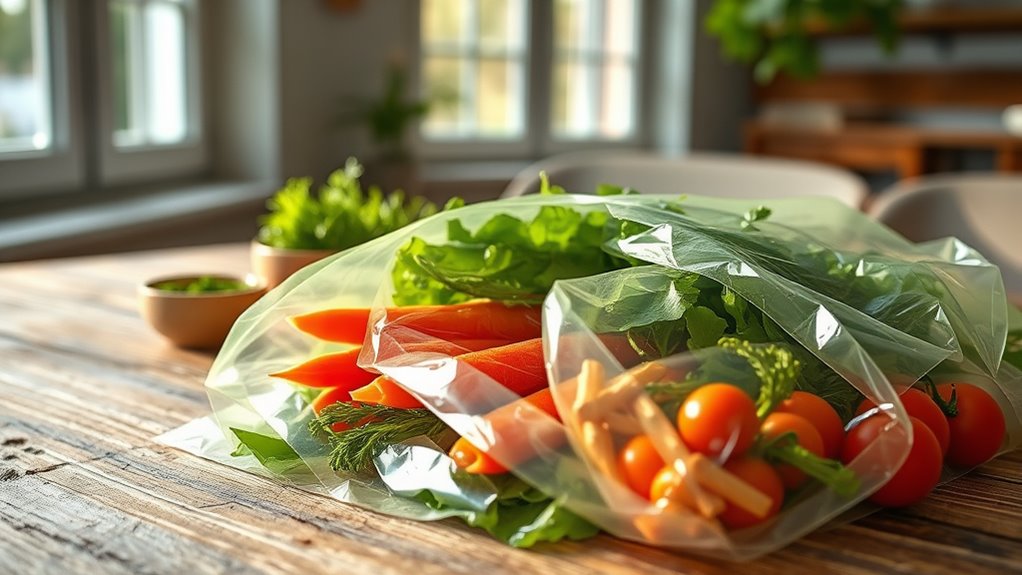

Sustainable packaging with plant-based bioplastics and edible wraps helps you reduce environmental impact by using materials made from renewable resources like cornstarch, sugarcane, or cellulose. These options decompose naturally and lower greenhouse gases, making them a greener alternative to traditional plastics. They’re versatile for food wraps and containers, and their eco-friendly lifecycle supports conservation efforts. Keep exploring to discover how these innovative solutions can create a healthier planet for everyone.
Key Takeaways
- Plant-based bioplastics are renewable, biodegradable materials made from sources like cornstarch and cellulose, offering eco-friendly packaging options.
- Edible wraps made from bioplastics provide sustainable, waste-free alternatives to traditional plastic wraps.
- These materials decompose naturally, reducing landfill accumulation and environmental pollution.
- Using plant-based bioplastics lowers greenhouse gas emissions during production compared to conventional plastics.
- Adoption of these sustainable packaging solutions supports environmental conservation and encourages responsible consumer choices.
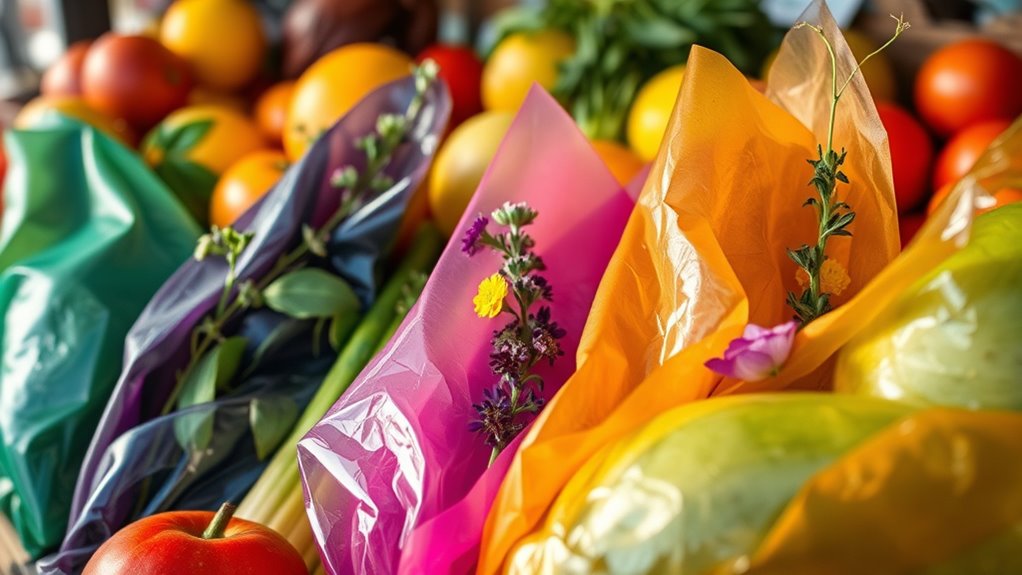
Have you ever wondered how packaging impacts the environment? It’s a vital question because the materials used in packaging can either harm or help our planet. Traditional plastics, especially those derived from fossil fuels, take hundreds of years to decompose, polluting land and waterways. That’s where biodegradable plastics come into play. Unlike conventional plastics, these are designed to break down more quickly and safely when exposed to natural elements. Made from plant-based sources, biodegradable plastics are a significant step toward reducing plastic waste. They’re considered eco friendly materials because they minimize the environmental footprint, especially when disposed of properly. By choosing packaging made from biodegradable plastics, you can help reduce the accumulation of persistent waste in landfills and oceans. This shift not only limits pollution but also conserves natural resources, since plant-based materials often require less energy to produce compared to traditional plastics.
Using plant-based bioplastics isn’t just about choosing a different type of plastic; it’s about embracing sustainable practices that prioritize the health of the planet. These eco friendly materials are derived from renewable biomass, such as cornstarch, sugarcane, or cellulose, making them a far more sustainable option than petroleum-based plastics. When these bioplastics reach the end of their lifecycle, they can often be composted or biologically degraded, returning to the earth without leaving dangerous residues. This biodegradability reduces the burden on landfills and lessens the environmental impact of packaging waste. Additionally, because these materials are sourced from plants, they have the potential to lower greenhouse gas emissions during production, further supporting climate change mitigation efforts. Furthermore, advances in color accuracy in projectors technology are helping consumers enjoy more vibrant and true-to-life visuals, enhancing overall viewing experiences.
Incorporating plant-based bioplastics into packaging isn’t just a trend; it’s a responsible choice that aligns with a more sustainable future. These eco friendly materials are flexible, versatile, and increasingly cost-effective, making them suitable for various applications—from food wraps to containers. As you opt for products packaged with biodegradable plastics, you become part of a movement that encourages brands to innovate and adopt greener alternatives. Ultimately, shifting towards sustainable packaging options like plant-based bioplastics and edible wraps helps you reduce your environmental footprint. It’s about making mindful choices that protect ecosystems, conserve resources, and promote a healthier planet for future generations. Every small act counts, and by understanding the benefits of eco friendly materials, you’re empowering yourself to make smarter, more sustainable decisions every time you pick up a package.

Full Circle Compostable Cling Wrap – 150Sq Ft Roll – Seals and Saves Food – Plant-Based & Plastic-Free, No Microplastics – Dispenser with Slide Cutter
HEAVY DUTY CLING WRAP: This plastic-free wrap is perfect for keeping your leftovers fresh and well-preserved, whether you're…
As an affiliate, we earn on qualifying purchases.
As an affiliate, we earn on qualifying purchases.
Frequently Asked Questions
Are Plant-Based Bioplastics Biodegradable in All Environments?
Plant-based bioplastics aren’t biodegradable in all environments. Their environmental impact depends on manufacturing processes and conditions like temperature and microbial activity. If disposed of in industrial composting facilities, they break down faster, but in regular landfills or oceans, they may persist longer. You should consider where they’ll end up and how the environment supports microbial activity, as these factors influence their biodegradability and overall sustainability.
How Long Do Edible Wraps Typically Last Before Spoiling?
Edible wraps last like a delicate flower, usually 1 to 3 days before spoilage. Your shelf life depends on ingredients and storage conditions. Watch for spoilage indicators like sour smell, sliminess, or discoloration. Keep them refrigerated to extend freshness. If you notice any signs of spoilage, discard the wrap to avoid health risks. Proper storage and timely consumption ensure you enjoy their benefits while they’re still good.
What Are the Cost Differences Between Traditional and Bioplastic Packaging?
You’ll find that bioplastic packaging generally costs more than traditional options, mainly due to production and raw material expenses. Conducting a thorough cost analysis reveals that market pricing for plant-based bioplastics can be higher, but prices are gradually decreasing as technology advances and demand grows. While initial costs are higher, investing in bioplastics supports sustainability and can appeal to eco-conscious consumers, potentially offsetting higher expenses with increased brand loyalty.
Can Bioplastics Be Recycled Alongside Conventional Plastics?
Think of bioplastics like puzzle pieces—they often don’t fit perfectly with conventional plastics. You can recycle some bioplastics with traditional plastics, but recycling compatibility varies. Contamination issues can occur if bioplastics aren’t separated properly, risking the entire batch’s recyclability. So, it’s best to check local guidelines, as mixing incompatible plastics can hinder recycling efforts and cause environmental harm. Proper sorting is key to sustainable waste management.
Are There Any Health Risks Associated With Consuming Edible Wraps?
You should be aware that consuming edible wraps may pose allergy concerns if you’re allergic to ingredients like gluten or nuts. Additionally, some people might experience digestive impacts, such as bloating or discomfort, especially if eaten in large quantities or if the wrap contains additives. Always check ingredient labels and consult your healthcare provider if you have food allergies or sensitivities to guarantee safe consumption.

500 Sheets Transparent Edible Glutinous Rice Paper Candy Coated Wrapping Paper Nougat Chocolate Sugar Wrapper
What you get : 500 sheets comestible transparente wrap sheet .(size: 3×2.56 Inch)
As an affiliate, we earn on qualifying purchases.
As an affiliate, we earn on qualifying purchases.
Conclusion
By choosing plant-based bioplastics and edible wraps, you’re supporting sustainable solutions that soften the strain on our planet. Every eco-friendly effort you make matters, molding a more mindful, manageable future. Embrace environmentally elegant options, empower positive change, and enjoy the journey toward greener, greater good. Together, your small steps can spark significant shifts, showcasing how simple swaps can shape a sustainable, shining future—one wrapper at a time.
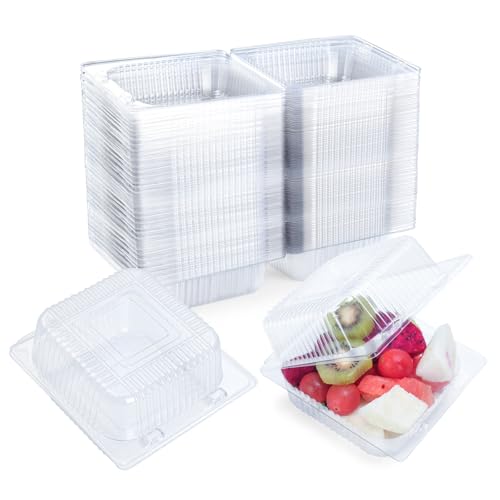
Evnlo 100 Count Clear Plastic Containers with Lids for Food, Thickened Disposable Sandwich Containers Clamshell Boxes for Cake Slice, Dessert, Hamburger, Salad, Pastry, Fruits, Takeout Tray
Thickened Design: Made from sturdy, extra-thick PET plastic, these food containers are sturdy and transparent, showing off your…
As an affiliate, we earn on qualifying purchases.
As an affiliate, we earn on qualifying purchases.

Honeycomb Packing Paper,12 inch x 200 ft Bubble Cushioning Wrap for Packing Moving,Products Gifts Wrapping Paper,Recyclable and Biodegradable Shipping Packing Materials with 20 Fragile Sticker Labels
Environmental Friendly Packing Shipping Supplies :Eco friendly 100% biodegradable kraft paper, green alternative to plastic packaging materials .After…
As an affiliate, we earn on qualifying purchases.
As an affiliate, we earn on qualifying purchases.