
Drinking tea provides you with a rich source of antioxidants and polyphenols that help fight free radicals, which can damage your cells and accelerate aging. These compounds support your immune system and may reduce the risk of chronic diseases like heart disease. The way you brew your tea influences how many of these health benefits you receive. If you keep exploring, you’ll discover more about how tea can boost your overall wellness and vigor.
Key Takeaways
- Tea infusion releases antioxidants and polyphenols that help neutralize free radicals and promote overall health.
- Proper brewing techniques maximize the extraction of health-promoting compounds in tea.
- Regular tea consumption supports immune health and may reduce the risk of chronic diseases like heart disease.
- The antioxidants in tea contribute to anti-aging effects and enhance mental well-being through mindfulness rituals.
- Different types of tea provide unique polyphenol profiles, offering a variety of wellness benefits.
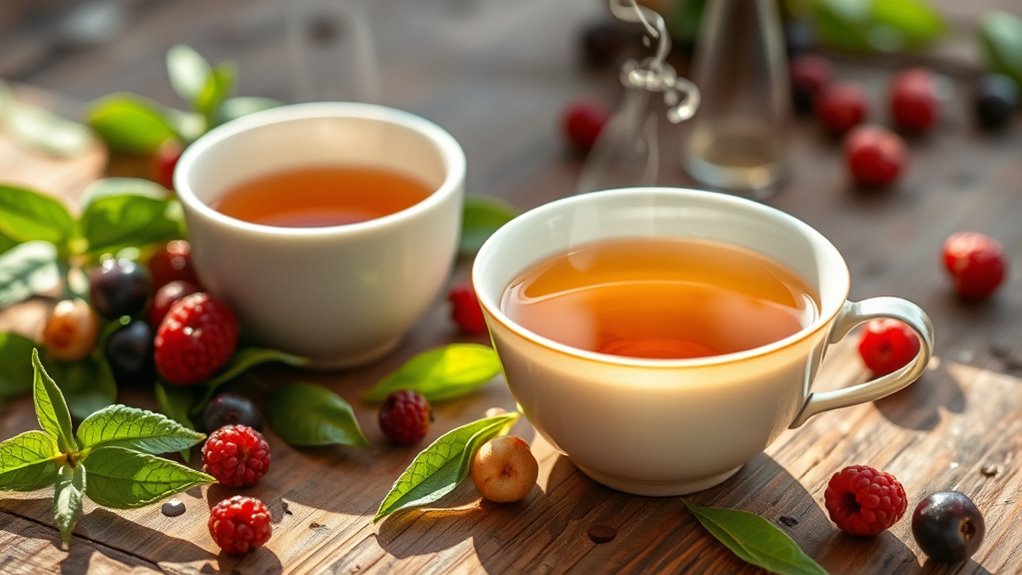
Tea has long been celebrated not just for its inviting flavors but also for its potential health benefits. When you prepare a cup of tea, you’re engaging in a tradition that goes beyond simple refreshment — it’s a ritual rooted in centuries of cultural significance. The process of tea infusion, where hot water carefully extracts flavors and beneficial compounds from tea leaves, plays an essential role in revealing its health-promoting properties. This method influences not only the taste but also the concentration of antioxidants and polyphenols, which are key players in promoting wellness. Different cultures have cherished tea for generations, viewing it as a symbol of hospitality, meditation, and social connection, and this deep-rooted significance often enhances your appreciation for its health perks.
Tea’s infusion process unlocks antioxidants and polyphenols, enhancing its health benefits and cultural significance.
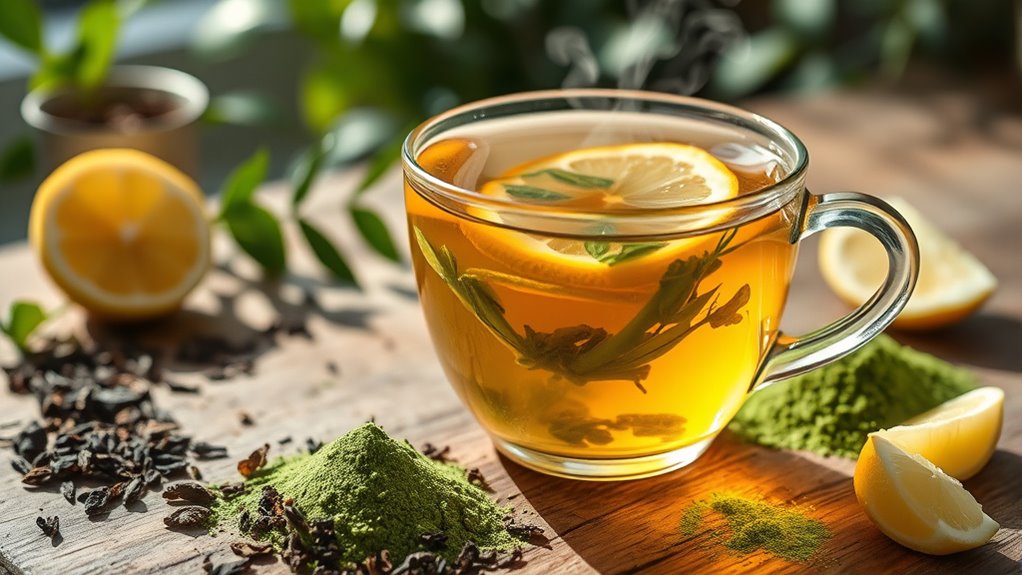
As you steep your tea, you’re not just releasing flavor; you’re also allowing antioxidants to infuse into the water. These natural compounds, particularly polyphenols, act as powerful fighters against free radicals, which can damage cells and contribute to aging and disease. Drinking tea regularly can help support your immune system, improve your overall health, and even reduce the risk of chronic conditions like heart disease. Green, black, white, and oolong teas each contain unique profiles of polyphenols, offering a variety of benefits. The tea infusion process maximizes the extraction of these antioxidants, making each cup a concentrated source of health-boosting compounds. Proper brewing techniques can significantly influence the antioxidant levels, ensuring you get the maximum health benefits from your tea. Whether you prefer a quick brew or a slow, mindful steep, you’re engaging in a practice that’s been valued across cultures for its health-enhancing qualities.
Culturally, tea has served as more than just a beverage; it’s a symbol of peace, reflection, and social bonding. In many societies, sharing tea fosters community and connection, enriching your experience beyond just the physical health benefits. When you participate in these traditions, you’re part of a larger cultural tapestry that underscores the importance of slowing down and appreciating simple pleasures. This mental and emotional aspect adds another layer to tea’s wellness potential, encouraging mindfulness and reducing stress. By embracing the cultural significance of tea, you deepen your understanding of its role in promoting not only physical health but also mental well-being.
In essence, your daily tea ritual combines science and tradition, harnessing the power of tea infusion and cultural significance to support your health. It’s a simple act that offers profound benefits, blending antioxidants and polyphenols with centuries of cultural wisdom. So, each time you sip your tea, remember you’re participating in a timeless practice that nurtures your body and soul.

Chaganju Sencha Green Tea Loose Leaf, JAS Certified Organic Japanese Tea from Uji, Kyoto, 80g Bag, Sencha Tea, Loose Leaf
ORGANIC SENCHA GREEN TEA – Certified 100% organic by JONA and JAS, our premium organic Japanese green tea…
As an affiliate, we earn on qualifying purchases.
As an affiliate, we earn on qualifying purchases.
Frequently Asked Questions
Can Tea Consumption Prevent Chronic Diseases?
Drinking tea, including herbal infusions, may help lower your risk of some chronic diseases, but it’s not a guarantee. You can enjoy its antioxidants and polyphenols while staying aware of potential tea allergies. To maximize benefits, combine tea with a healthy lifestyle. Remember, individual responses vary, so consult your healthcare provider if you have allergies or health concerns related to tea consumption.
Which Type of Tea Has the Highest Antioxidant Content?
You’ll be amazed to learn that matcha green tea boasts the highest antioxidant levels among tea varieties. Its concentrated powder delivers a powerful punch of polyphenols and antioxidants, making it a superfood for your health. Drinking matcha can help boost your immune system and fight free radicals more effectively than regular green or black teas. So, if you want maximum health benefits, this vibrant tea is your best choice.
How Much Tea Should I Drink Daily for Health Benefits?
You should aim for 3 to 4 cups of tea daily to enjoy health benefits. When brewing, use fresh water and steep for 3-5 minutes to maximize antioxidants. Keep in mind, caffeine effects vary; if you’re sensitive, limit intake or choose decaf. Drinking this amount balances antioxidant intake with caffeine’s stimulating effects, supporting your wellness without overdoing it. Always listen to how your body responds.
Are There Any Risks Associated With High Tea Intake?
Drinking too much tea can pose risks if you’re caffeine sensitive or have a tea allergy. For example, someone with caffeine sensitivity might experience insomnia or jitteriness from excess intake, while a tea allergy can cause reactions like hives or stomach issues. To stay safe, limit your tea consumption and monitor how your body responds, especially if you notice symptoms like increased heart rate or allergic reactions.
Does Tea Interact With Common Medications?
Yes, tea can interact with common medications through drug interactions, potentially affecting how your medicines work. You should be cautious if you’re taking blood thinners, antidepressants, or stimulant drugs, as tea’s compounds may alter their effectiveness. Additionally, allergy concerns might arise if you’re sensitive to certain tea ingredients, leading to allergic reactions. Always consult your healthcare provider to confirm tea consumption is safe alongside your medications.

365 by Whole Foods Market, Organic Black Tea, Single-Serve Tea Bags, 70 Count
Robust and lively organic black tea blend
As an affiliate, we earn on qualifying purchases.
As an affiliate, we earn on qualifying purchases.
Conclusion
By drinking tea regularly, you boost your health with powerful antioxidants and polyphenols. Imagine Sarah, who started sipping green tea daily; she noticed increased energy and better digestion after just a month. Incorporating tea into your routine can offer similar benefits, supporting your wellness naturally. So, next time you brew a cup, remember you’re nourishing your body and enhancing your well-being—making each sip a step toward a healthier you.

DOPUDO Glass Tea Cup with Infuser and Lid, 17.6oz/520ml Large Borosilicate Teacup,Tea Glass, Clear Mug for Loose Leaf Tea, Blooming Tea, Microwave & Dishwasher Safe – Tea Maker Gift for Birthday
High-quality Glass: The DOPUDO tea cup is made of high-quality extra thick borosilicate glass, which is lead free,…
As an affiliate, we earn on qualifying purchases.
As an affiliate, we earn on qualifying purchases.

Mora Ceramics Tea Cup with Loose Leaf Infuser, Spoon and Lid, 12 oz, Microwave and Dishwasher Safe Coffee Mug – Rustic Matte Ceramic Glaze, Modern Herbal Tea Strainer – Great Gift for Women, Garnet
IT’S TIME TO HIT PAUSE: Mora Ceramics is more than a mug. Mora is Latin for "Pause", acting…
As an affiliate, we earn on qualifying purchases.
As an affiliate, we earn on qualifying purchases.